



• SHQIPËRI
  • KOSOVË
  • MAQEDONIA E VERIUT
  • MALI I ZI
  • Revista në PDF
20 June, 2026
  • Home
  • OP/ED

    The visit that changed Albania’s strategic future

    Pierre Nora and the institution of memory we lack in Eastern Europe

    The Blueprint of a Diplomatic Debacle: Analyzing Germany’s Historic UNSC Loss

    Between Russia, Iran and Europe: Azerbaijan as a balancing power in the South Caucasus

    The Zero-Tariff Gate: Sovereignty as a Service in the Sino-African Corridor

    Albania vs. the Sea/ Marginal Notes on A. Leka’s Novel The Hidden Side of the Albanian Socialist Garden

    May 9 and the long shadow of a Letter: Is Europe still Schuman’s Project?

    The Arbnesh of Zadar: A living memory of Albanian identity on the Adriatic coast

    Science Diplomacy and Academic Freedom: A strategic nexus for contemporary diplomacy

  • Interview

    Exclusive Interview with Oleksandr Tyshchenko: A 40-Year Legacy of Chernobyl, Nuclear Risks, and Global Responsibility

    INTERVIEW: ZLATKO KRAMARIĆ – THOUGHTS ON THE OLD CONTINENT

    EXCLUSIVE / Ukrainian Ambassador to Albania, Volodymyr Shkurov: “Ukraine wants peace, but not at the expense of its freedom and independence”

    EXCLUSIVE| Ambassador Tayyar Kagan Atay: Türkiye and Albania, a Strategic Partnership Rooted in Shared Heritage and a Common Vision for the Future

    “Diplomacy, Not War”: Palestinian Ambassador to Albania Calls for Justice, Peace, and Global Action for Gaza

    Exclusive: “Even After Tito – Tito”/ Ambassador Zlatko Kramarić on Authoritarian Legacies and Democracy’s Future in the Balkans

    The Conclusion of the Diplomatic Mission / Ambassador Dancho Markovski: Strengthening Albania-North Macedonia Relations for a Shared European Future

    A Century of Diplomatic Relations Between Albania and Russia: Exclusive Interview with the Russian Ambassador to Albania, H.E. Alexey Zaytsev

    Exclusive/ The chairman of the Freedom Party, Ilir Meta: “The will of the citizens will triumph in Albania, as it did in North Macedonia”

  • Realpolitik

    Just kind words  in Tivat! Where is the peace!? A deal yes, peace No!What is happening with USA and  EU?  5 elections but no solution!

    IBAR? ”Sufficiently! Much ado about nothing! Shart contrasts in Beijing! Where is the exit?!

    Neither peace nor war! Peace with bombs?! IBAR in autumn?! Not another Hormuz in Taivan! 

    IBAR – a springing board or an obstacle? Can we catch the EU Negotiation train 2027? When the dress makes the news!  EU electoral April  ends in a draw 1:1!  

    The European Parliament building in Strasbourg, France with flags waving calmly celebrating peace of the Europe. July 12, 2020.

    EU 2027 or 2037! Even half membership failed! No exit strategy!     

    What next?

    “With diplomatic velvet“! Major question marks! In Washington yes, but  in the White House NO! A strange dinner in Brussels!

    From a great ‘apple of disaccord’ to a  point of  cooperation! A bad start! The strange absence in Davos!

    5 lessons from the American 3 January! Don’t count the chicken before they are hatched! Will NATO freeze in Greenland? Wrong diplomatic messages!

  • Current Events

    The Diplomacy of Gas and Algorithms: The Nuances of Official Tirana—Is It Breaking the European Taboo with Azerbaijan?

    Council of Albanian Ambassadors Backs Civic Protests, Calls for Transparency and Protection of National Interests

    Russian Ambassador in Tirana: “Without a Strong and Sovereign Russia, the Creation of a Just World Order Is Impossible”

    EU-Western Balkans Summit 2026: New Impetus for the Enlargement Debate?

    “The Flamingo Revolution”: Day 10 of Protests in Albania Draws International Attention

    Rama alleges ‘hybrid war’ behind protests against Kushner-linked coastal development

    BELGRADE, SERBIA - JUNE 18. 2020: Russian and Serbian flags on display during Russian Foreign Minister Sergei Lavrov's visit to the Liberators of Belgrade Memorial. Valery Sharifulin/TASS,Image: 533095429, License: Rights-managed, Restrictions: UWAGA! Zdjęcia zawierają oryginalny opis dostawcy (ITAR-TASS). Szczególnie w związku z agresją Rosji na Ukrainę mogą zawierać przekaz niezgodny z faktami. Zweryfikuj go przed publikacją, Model Release: no, Credit line: Valery Sharifulin / TASS / Forum

    Balkan Maskirovka: Why Moscow’s “Distancing” Is Only an Operation for the Survival of Vučić’s Regime

    Serbia – China 2026: Technological partnership, geopolitical positioning and a new phase of the Chinese presence in the Western Balkans

    The Digital Protectorate: How the EU AI Act Codified Silicon Valley’s Monopoly

  • Top News

    Daniel Serwer: A Bad War Ending Badly May Still Be Good News

    Friedrich Merz, Keir Starmer, António Costa, Donald Trump, Emmanuel Macron, Mark Carney, Ursula von der Leyen, Giorgia Meloni and Sanae Takaichi

    G7 Leaders Gather in Évian Amid Global Uncertainty, Focus on Security, Economy and International Cooperation

    Russian Ambassador in Tirana: “Without a Strong and Sovereign Russia, the Creation of a Just World Order Is Impossible”

    “The Flamingo Revolution”: Day 10 of Protests in Albania Draws International Attention

    Rama alleges ‘hybrid war’ behind protests against Kushner-linked coastal development

    No End in Sight: Trump, Netanyahu and the Expanding Middle East War

    Tirana – €20 Million EU–Banking Agreement Boosts Albanian SMEs

    “EU4Municipalities II” Project, a Strategic Investment for Strengthening Municipalities and Accelerating Albania’s Path towards the EU

    Albania, Italy deepen defence ties with naval shipbuilding deal

  • YOUR VOICE
  • Shqip
No Result
View All Result
Argumentum
  • Home
  • OP/ED

    The visit that changed Albania’s strategic future

    Pierre Nora and the institution of memory we lack in Eastern Europe

    The Blueprint of a Diplomatic Debacle: Analyzing Germany’s Historic UNSC Loss

    Between Russia, Iran and Europe: Azerbaijan as a balancing power in the South Caucasus

    The Zero-Tariff Gate: Sovereignty as a Service in the Sino-African Corridor

    Albania vs. the Sea/ Marginal Notes on A. Leka’s Novel The Hidden Side of the Albanian Socialist Garden

    May 9 and the long shadow of a Letter: Is Europe still Schuman’s Project?

    The Arbnesh of Zadar: A living memory of Albanian identity on the Adriatic coast

    Science Diplomacy and Academic Freedom: A strategic nexus for contemporary diplomacy

  • Interview

    Exclusive Interview with Oleksandr Tyshchenko: A 40-Year Legacy of Chernobyl, Nuclear Risks, and Global Responsibility

    INTERVIEW: ZLATKO KRAMARIĆ – THOUGHTS ON THE OLD CONTINENT

    EXCLUSIVE / Ukrainian Ambassador to Albania, Volodymyr Shkurov: “Ukraine wants peace, but not at the expense of its freedom and independence”

    EXCLUSIVE| Ambassador Tayyar Kagan Atay: Türkiye and Albania, a Strategic Partnership Rooted in Shared Heritage and a Common Vision for the Future

    “Diplomacy, Not War”: Palestinian Ambassador to Albania Calls for Justice, Peace, and Global Action for Gaza

    Exclusive: “Even After Tito – Tito”/ Ambassador Zlatko Kramarić on Authoritarian Legacies and Democracy’s Future in the Balkans

    The Conclusion of the Diplomatic Mission / Ambassador Dancho Markovski: Strengthening Albania-North Macedonia Relations for a Shared European Future

    A Century of Diplomatic Relations Between Albania and Russia: Exclusive Interview with the Russian Ambassador to Albania, H.E. Alexey Zaytsev

    Exclusive/ The chairman of the Freedom Party, Ilir Meta: “The will of the citizens will triumph in Albania, as it did in North Macedonia”

  • Realpolitik

    Just kind words  in Tivat! Where is the peace!? A deal yes, peace No!What is happening with USA and  EU?  5 elections but no solution!

    IBAR? ”Sufficiently! Much ado about nothing! Shart contrasts in Beijing! Where is the exit?!

    Neither peace nor war! Peace with bombs?! IBAR in autumn?! Not another Hormuz in Taivan! 

    IBAR – a springing board or an obstacle? Can we catch the EU Negotiation train 2027? When the dress makes the news!  EU electoral April  ends in a draw 1:1!  

    The European Parliament building in Strasbourg, France with flags waving calmly celebrating peace of the Europe. July 12, 2020.

    EU 2027 or 2037! Even half membership failed! No exit strategy!     

    What next?

    “With diplomatic velvet“! Major question marks! In Washington yes, but  in the White House NO! A strange dinner in Brussels!

    From a great ‘apple of disaccord’ to a  point of  cooperation! A bad start! The strange absence in Davos!

    5 lessons from the American 3 January! Don’t count the chicken before they are hatched! Will NATO freeze in Greenland? Wrong diplomatic messages!

  • Current Events

    The Diplomacy of Gas and Algorithms: The Nuances of Official Tirana—Is It Breaking the European Taboo with Azerbaijan?

    Council of Albanian Ambassadors Backs Civic Protests, Calls for Transparency and Protection of National Interests

    Russian Ambassador in Tirana: “Without a Strong and Sovereign Russia, the Creation of a Just World Order Is Impossible”

    EU-Western Balkans Summit 2026: New Impetus for the Enlargement Debate?

    “The Flamingo Revolution”: Day 10 of Protests in Albania Draws International Attention

    Rama alleges ‘hybrid war’ behind protests against Kushner-linked coastal development

    BELGRADE, SERBIA - JUNE 18. 2020: Russian and Serbian flags on display during Russian Foreign Minister Sergei Lavrov's visit to the Liberators of Belgrade Memorial. Valery Sharifulin/TASS,Image: 533095429, License: Rights-managed, Restrictions: UWAGA! Zdjęcia zawierają oryginalny opis dostawcy (ITAR-TASS). Szczególnie w związku z agresją Rosji na Ukrainę mogą zawierać przekaz niezgodny z faktami. Zweryfikuj go przed publikacją, Model Release: no, Credit line: Valery Sharifulin / TASS / Forum

    Balkan Maskirovka: Why Moscow’s “Distancing” Is Only an Operation for the Survival of Vučić’s Regime

    Serbia – China 2026: Technological partnership, geopolitical positioning and a new phase of the Chinese presence in the Western Balkans

    The Digital Protectorate: How the EU AI Act Codified Silicon Valley’s Monopoly

  • Top News

    Daniel Serwer: A Bad War Ending Badly May Still Be Good News

    Friedrich Merz, Keir Starmer, António Costa, Donald Trump, Emmanuel Macron, Mark Carney, Ursula von der Leyen, Giorgia Meloni and Sanae Takaichi

    G7 Leaders Gather in Évian Amid Global Uncertainty, Focus on Security, Economy and International Cooperation

    Russian Ambassador in Tirana: “Without a Strong and Sovereign Russia, the Creation of a Just World Order Is Impossible”

    “The Flamingo Revolution”: Day 10 of Protests in Albania Draws International Attention

    Rama alleges ‘hybrid war’ behind protests against Kushner-linked coastal development

    No End in Sight: Trump, Netanyahu and the Expanding Middle East War

    Tirana – €20 Million EU–Banking Agreement Boosts Albanian SMEs

    “EU4Municipalities II” Project, a Strategic Investment for Strengthening Municipalities and Accelerating Albania’s Path towards the EU

    Albania, Italy deepen defence ties with naval shipbuilding deal

  • YOUR VOICE
  • Shqip
No Result
View All Result
Argumentum
No Result
View All Result
Home Balkan Overview

Reactions on the European Council June conclusions

8 July, 2024
in Balkan Overview, ENGLISH, In Focus
A A
Share on FacebookShare on Twitter

BiEPAG Reacts


Intro

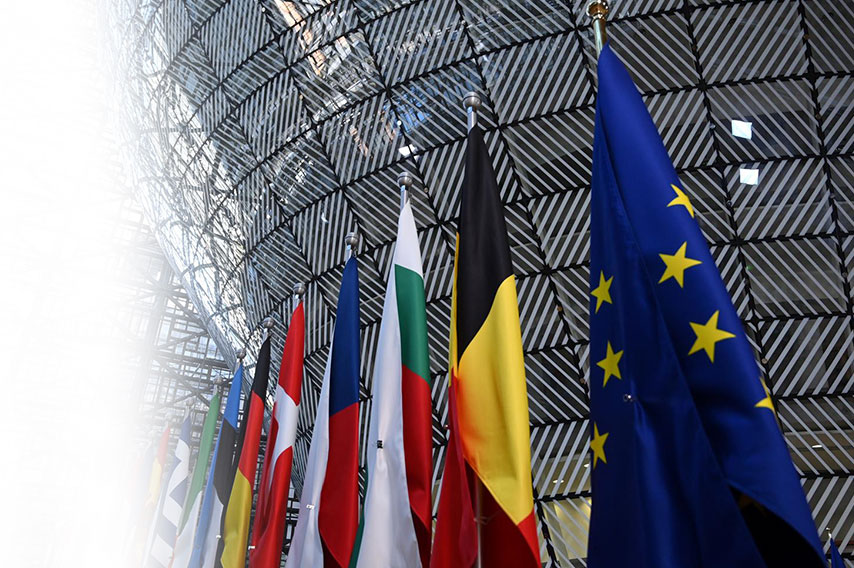
Following the elections for the European Parliament (EP) earlier this month, the first European Council (EUCO) meeting was held on June 27. There were no concrete conclusions regarding Western Balkans’ EU integration path this time. Major topics concerning EU enlargement were related to the start of EU accession talks with Ukraine and Moldova.

However, EUCO discussed important aspect of EU’s future institutional organization and adopted the Strategic Agenda for the Union for 2024-2029, which will have an impact on the future of the EU enlargement process, which includes Western Balkans’ EU accession, too. The Strategy focuses on EU policies that will be in the focus of the new institutional cycle. Among other issues, it refers to EU enlargement “as a geostrategic investment in peace, security, stability and prosperity”.

In the next five years, the EU will use a gradual integration method to offer early benefits to well-performing candidate countries. Assessment of implementation of EU accession requirements will depend on a candidate’s performance concerning respect for the rule of law, regional integration, good neighbourly relations, reconciliation and resolution of bilateral disputes.

EUCO also adopted a conclusion concerning future work on internal reforms which will be prepared in parallel to the EU enlargement process. EUCO took note of the EC’s Communication on pre-enlargement reforms and policy reviews published in spring 2024 and invited the Commission to present in-depth policy reviews on values, policies, budget and governance by spring of 2025.

Bosnia and Herzegovina: Expected cold shower. The Bosnian EU integration stalemate continues

Vedran Džihić

After a major showdown and infighting within the EU-27 in March 2024 on whether Bosnia and Herzegovina should receive a conditional green light for opening accession negotiations once the reform requirements are met, the newest decision of the European Council in June 2024 to completely omit the country from its conclusions came as an expected cold shower.

This lack of mention is a message in its own right, one could argue. What was quite obvious from the very beginning of the “enlargement’s new momentum” rhetoric caused by the Russian aggression against Ukraine and new geopolitical imperative for the EU to integrate Ukraine and Moldova closer into the Union, has been confirmed again – the new engine for enlargement is Ukraine, and this is what the biggest part of the Council’s conclusions is dedicated too. The Western Balkan region, even Montenegro not mentioned with a single world despite the progress it recently made, is left in a limbo which it has inhabited for the last few years.

In the Bosnian case, the politicians this time stayed true to their promise – as soon as the spotlights from March 2024 and the narrative of a huge step made by Bosnia towards the EU got turned off, which happened within few days, the entire Bosnian political establishment went to point zero. Milorad Dodik continued his secessionist threats and joined Vučić in the “historical” fight against the Srebrenica resolution in the UN. The politicians of the so-called Troika coalition went back to their own daily portion of infighting. And now with the arrival of summer, it is time for yet another lengthy holiday season, which this year is just an overture for the municipal elections in the autumn.

Meanwhile, the EU and the West in Bosnia do not seem to have a clue on what to do with this country. The EU sticks to the formal rhetoric of Bosnia as a candidate for EU membership once the criteria are fulfilled while at the same time trying to navigate the broader Western Balkan situation with Vučić and Serbia being at the center of EU’s – stabilitocratic– concern. Certainly, as Dodik and Vučić demonstrate their unity and closeness, any strategy related to Bosnia needs to be checked with Belgrade on the one side, and Zagreb on the other.

While Belgrade de facto has not given up on the notion of the “SrpskiSvet” (Serbian World), Zagreb continues to support Čović’s idea of “legitimate national interests of Croats” in Bosnia, a concept that runs against the idea of functional and citizen-oriented European Bosnia. The US keeps up the aggresive rehetoric against Dodik and warns him of further escalation via the social platform X. With Washington being in the middle of the presidential election campaign and the Biden administration panicking rather than acting pro-actively, it is safe to assume that no major change of the US policy towards Bosnia can be expected. Warnings will most likely just remain warnings.

What can we expect in the second half of 2024 regarding Bosnia’s EU integration? One has to be blunt – nothing. As Bosnia is heading into municipal elections and the Troika coalition at the state level almost not-existent, no major reforms can be expected on the Bosnian side.

Now that Dodik‘s friend in Budapest, Viktor Orban, is in charge of the Council of the EU, we will certainly see some dubious actions in support of Dodik and Vučić while arguing for a quick enlargement in the style of Orban – enlargement for autocratic countries outside of the EU so as to strengthen the EU’s illiberal block. As this is a no-go for the majority of other EU states, the EU enlargement for the Western Balkans will remain on the sidelines.

In more practical terms, it remains to be seen who will get the position of the Commissioner for Enlargement. If a wise decision is taken here, the new EU leadership might opt for another push in the Western Balkans, including Bosnia. Whatever effort from the EU’s side comes the Bosnian way, it is highly unlikely that the country’s political set-up can deliver and is willing to do so. Given all these circumstances it is more realistic to expect for enlargement never to happen in Bosnia and Herzegovina than it to take place any time until the end of this decade.

Montenegro: Bittersweet progress in the process of European integration

Jovana Marović

Montenegro was the only Western Balkan country that was mentioned in the conclusions of the European Council (EUCO), and the paragraph about the achieved progress was indeed included in the draft of this document. Namely, the day before the session of the European Council, an Intergovernmental Conference was held between Montenegro and the EU, where a positive interim benchmark assessment report (IBAR) was approved on the fulfilment of interim benchmarks, a total of 83 in Chapter 23 (Judiciary and Fundamental Rights) and 24 (Justice, Freedom and Security), which were established in 2013. In addition, common positions were adopted for these two chapters, a total of 6, three for both chapters, and 17 sub-benchmarks for Chapter 23, and 7 for Chapter 24. In short, Montenegro is required to implement what was adopted, to ensure justice, and show a credible track record in prosecuting corruption and organised crime. It could be said that everything is the same as before and as it was stated in the interim benchmarks, only now the success must be achieved in practice and the EU/EC should be convinced that no one is above the law and that there is no selectivity in the application of the law, whether it refers to former or the current government.

Montenegro can now temporarily close chapters that are ready for closure. Montenegro is also the first country to receive IBAR as the EC applies a new approach in accession negotiations – according to it, e chapters related to the rule of law are the first to be opened and the last to be closed, and remain open during the entire negotiation process.

However, two days after Montenegro received a positive IBAR, its Parliament adopted the Resolution on Jasenovac. Its very announcement already received protest notes from Croatia, followed by the cancellation of the visit of the President of the European Council, Charles Michel, to Montenegro, and the deletion of the paragraph on the country’s progress from the EUCO conclusions. From brilliance to despair in just two days. It remains to be seen whether the “diplomatic slaps” have borne fruit or whether this would be followed by a series of other measures and the opening of bilateral issues between Croatia and Montenegro.

Serbia: the authorities’ win-loss paradigm

Srđan Majstorović

EUCO reached an agreement on Kaja Kallas as an “appropriate candidate” for the position of EU’s High Representative for Foreign Affairs and Security Policy (pending agreement with EC President-elect). If appointed, Ms. Kallas will lead the European External Area Service (EEAS), and the EU-facilitated dialogue on normalization of relations between Kosovo and Serbia will be in her portfolio, as well. The dialogue is currently in a state of deep crisis, in need of new ideas and energy from the top of the EEAS. One should not expect miracles, but new approaches should be explored to revive the dialogue and move it in a direction of compromise. Should she assume the High Representative position, Kallas would also oversee EU’s restrictive measures policy. Serbia, as the candidate country with the weakest record on alignment with EU’s foreign policy declarations and measures, could expect more energetic push back on its current position, especially regarding the lack of alignment with restrictive measures against Russia in the context of the aggression on Ukraine.

EU’s efforts to start internal preparations for the enlargement will expose Serbian authorities’ readiness for changes of the current behaviour and narrative with regards to EU and the fulfilment of its accession obligations. The burden of proving credibility is now on them, to show if they understand the context, requirements and whether they will be ready to address the well-known conditions to unlock the accession negotiations. In Serbia’s case, there are three priorities to be addressed before starting to moving forward. While responsibility for dialogue on normalization is shared with Kosovar authorities, alignment with EU’s foreign policy declarations and measures, as well as accountability for implementation of the principle of rule of law and functioning of democratic institutions, the responsibility rests solely on Serbian authorities.

Unfortunately, the current win-lose paradigm where accession to the EU means loss of control over the means of authoritarian rule, is likely to continue to feature Serbian authorities’ attitude towards its EU integration path. In the given circumstances, it would be naïve to expect consensus among 27 Member States concerning the continuation of accession talks any time soon before Serbia’s authorities show clear understanding of the context and decide to move forward at least when it comes to one of the three aforementioned priorities.
/BiEPAG

Related Posts

ENGLISH

World Refugee Day and 75 Years of the Refugee Convention: Why Humanity must not look away

20 June, 2026
ENGLISH

G7 Leaders Present Unified Geopolitical Agenda at Évian Summit

17 June, 2026
ENGLISH

Daniel Serwer: A Bad War Ending Badly May Still Be Good News

17 June, 2026

Follow US

Subscribe

Receive Argumentum Magazine by Email

Last Posts

World Refugee Day and 75 Years of the Refugee Convention: Why Humanity must not look away

20 June, 2026

G7 Leaders Present Unified Geopolitical Agenda at Évian Summit

17 June, 2026

Daniel Serwer: A Bad War Ending Badly May Still Be Good News

17 June, 2026

The Diplomacy of Gas and Algorithms: The Nuances of Official Tirana—Is It Breaking the European Taboo with Azerbaijan?

17 June, 2026
Friedrich Merz, Keir Starmer, António Costa, Donald Trump, Emmanuel Macron, Mark Carney, Ursula von der Leyen, Giorgia Meloni and Sanae Takaichi

G7 Leaders Gather in Évian Amid Global Uncertainty, Focus on Security, Economy and International Cooperation

16 June, 2026
Argumentum

“Argumentum”, një proces intelektual …

Contact Us

[email protected]
[email protected]
[email protected]

Follow Us

Media Partner

Register

Receive Argumentum Magazine by Email
  • Home
  • Privacy Policy
  • About Us
  • Contact

© 2022 Argumentum. All Rights Reserved. | NUIS: L91415033Q

Welcome Back!

Login to your account below

Forgotten Password? Sign Up

Create New Account!

Fill the forms bellow to register

*By registering into our website, you agree to the Terms & Conditions and Privacy Policy.
All fields are required. Log In

Retrieve your password

Please enter your username or email address to reset your password.

Log In

Add New Playlist

No Result
View All Result
  • Home
  • OP/ED
  • Interview
  • Realpolitik
  • Current Events
  • Top News
  • YOUR VOICE
  • Shqip

© 2022 Argumentum. All Rights Reserved. | NUIS: L91415033Q

This website uses cookies. By continuing to use this website you are giving consent to cookies being used. Visit our Privacy and Cookie Policy.