















'/%3E%3C/svg%3E)

By Matej Markič
Peace is not a natural state of affairs in our world — no matter how hard or how desperately we, Europeans, are trying to convince ourselves otherwise. Are we going to learn this lesson the hard way?
For eighty years, Europe has been telling itself a story, or, better said, a fairytale. The fairytale goes something like this: the two world wars were so catastrophic, so brutal, and so unfathomably destructive, that they permanently inoculated the entire European continent against state-sponsored violence, wars, and armed conflicts.
Add to that the collapse of communism in Central and Eastern Europe, the fall of the Berlin Wall, and the disintegration of the Soviet Union at the end of the 1980s and the beginning of the 1990s, and the story gets an even more triumphant second act — not only had Europe learned its lesson, but history itself had supposedly ended, with liberal democracy having won for good.
Francis Fukuyama gave this feeling a name — The End of History; Brussels gave it an institutional architecture — the European Union. And an entire generation of Europeans grew up genuinely believing that war, as a phenomenon that could touch their own lives, belonged to their grandparents’ world, not to theirs.
It needs to be said plainly: this fairytale was always a made-up fantasy, and that fantasy has now curdled into something poisonous.
The bubble nobody noticed they were living in
It is worth being precise about what actually happened after 1945, and especially after 1991. Western and Central Europe did not simply experience a prolonged and lasting peace because Europeans suddenly became wiser or more virtuous. Instead, they became peaceful because an extraordinary, historically anomalous set of conditions was deliberately engineered and then maintained by force: the American nuclear umbrella and security guarantees, NATO’s Article V, a Cold War stalemate that froze conflict rather than resolving it, and — after 1991 — a temporary vacuum in which Russia was too weak and distracted to project power westward.
Considering that, it is evident that peace was not the natural resting state of the continent, but rather a bubble, artificially inflated and even more artificially sustained; yet, like all bubbles, it depended on someone, somewhere, continuing to pay the premium.
The problem is that a bubble which lasts three generations stops feeling like a bubble. It starts to feel like reality itself. Children born in Ljubljana, Lyon, Lisbon, or Leipzig in the 1990s and 2000s were raised inside a mental framework in which mandatory military service was a relic of the past and something their grandfathers grumbled about over coffee, in which defense budgets were the first thing cut whenever a government needed to find savings, and in which the very idea of a European land war sounded like a discussion topic for a history seminar, not a live policy question.
This is precisely why, when Russian tanks crossed into Ukraine in February 2022, so much of Europe’s initial reaction was not strategic but psychological — a kind of disbelief that the rules of the twentieth century could possibly still apply. It needs to be pointed out that this disbelief was not naivety in the ordinary sense but rather an acquired inability to process a category of information that had been gradually removed from the collective mind.
Fighting and dying used to be normal before it stopped being normal
Here lies the deepest fracture, and the one most Europeans are least willing to face. For virtually the entirety of recorded history, military service was anything but an exotic imposition on male life — it was one of its baseline expectations. Men were conscripted; they fought, they bled, they sweated, and a meaningful percentage of them died doing so, and this was absorbed into the fabric of ordinary existence rather than treated as an aberration requiring justification.
If and when their sons, husbands, or fathers were killed on the battlefield, families grieved, but they did not consider violent deaths themselves to be a scandal against the natural order. Death in battle was tragic, but it was legible — a known, expected cost of belonging to a political community that had to be defended.
That expectation has essentially vanished from post-war Western Europe, and it is precisely this vanishing that now cripples the continent’s capacity to respond to actual aggression. The reintroduction of conscription across the continent in recent years illustrates the scale of the discomfort involved in relearning this lesson. Germany’s new military service law, for instance, screens all 18-year-old men for suitability and invites all 18-year-olds to volunteer starting in 2026, creating a pathway toward compulsory service only if voluntary recruitment falls short of targets — a half-measure explicitly designed to avoid the word “conscription” even while quietly building the machinery for it.
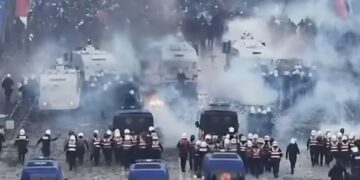
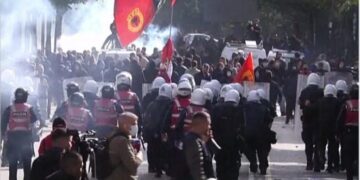
Tellingly, when parliament passed even that watered-down voluntary law, thousands of young people hit the streets in at least ninety German cities to protest against it. France has gone down a similarly cautious path: Macron’s new ten-month voluntary national service will enroll a mere 3,000 young people in its first summer, framed around a warning that in a world where “force prevails over law,” the country can no longer afford unpreparedness or division.
Compare this timidity, hesitation, and lack of resolve to what is actually happening a few hundred kilometers to the east, and the differences are almost unimaginable. Ukraine, now deeply in its fourth year of full-scale war, lowered its minimum conscription age from 27 to 25 back in April 2024, having already reinstated conscription in 2014. Meanwhile, nobody in Kyiv is running opinion polls to find out whether military service feels emotionally comfortable, as the country does not have that luxury, because it is fighting for its physical survival, and this is exactly the gap in mentality that needs to be closed.
It is telling that when the European Council on Foreign Relations polled nine European countries on reintroducing mandatory service, majorities in France, Germany, and Poland supported it in principle — but that support evaporated specifically among the 18-to-29-year-old cohort that would actually have to serve. That contradiction — support in the abstract, refusal in the particular — is the clearest possible symptom of a society that has not yet metabolized the idea that it might again be ought to fight.
Europe is the exception, not the rule
Perhaps the single most disorienting fact for the average European is this: outside the borders of the EU and NATO member states, the “end of history” never actually arrived. Or, to put it precisely, war never went anywhere, but it simply stopped being Europe’s problem, and Europeans mistook their own good fortune for a worldwide trend.
Additionally, the numbers make this unmistakable. The Uppsala Conflict Data Program puts the number of active armed conflicts worldwide in 2026 somewhere between fifty and sixty, with the Russian invasion of Ukraine and the civil war in Sudan among the deadliest — the former having produced well over half a million casualties since February 2022 alone.
Moreover, Myanmar has been consumed by civil war since the 2021 coup, with well over 100,000 people killed and more than five million displaced, its territory now fractured between a junta clinging to roughly a fifth of the country and a patchwork of resistance forces and ethnic armies controlling more.
Taking a glance at the African continent, Somalia has been in a state of civil war since 1991, while its government remains dependent on African Union troops to hold back an al-Shabaab insurgency that has outlasted three decades of foreign interventions.
Apart from Somalia, one can’t avoid the eastern Democratic Republic of Congo, where the Rwandan-backed M23 rebellion has driven more than seven million people from their homes and killed thousands, fighting over mineral wealth that includes a district producing up to a third of the world’s coltan supply.
Nigeria is another country that has grappling with wars and armed conflicts basically since its independence in 1960: the communal and jihadist violence has resulted in tens of thousands of people (the most impacted being majority Christian ethnic groups, such as Igbo, Yoruba, and Tiv) losing their lives annually across Nigeria’s Middle Belt, while Boko Haram and Fulani militants have waged a campaign of terror, murder, and mayhem across the northern part of the country, and the Niger Delta has experienced sporadic violence.
Meanwhile, the Sahel region, consisting of Mali, Burkina Faso, and Niger, has experienced fatalities linked to militant Islamist groups multiply roughly twenty-two-fold over the past decade, with radical Islamist coalitions now capable of storming national capitals and international airports.
Decades of Kremlin-backed conflicts on Europe’s doorstep
It is of utmost importance to point out that wars and armed conflicts have actually not been some far-away phenomenon but have been for decades sitting directly on Europe’s own doorstep. There has been a clear but uncomfortable pattern Europeans somehow managed to file away as a series of unrelated, contained incidents rather than what it actually was: a rehearsal, deliberately engineered and consistently run out of Moscow.
Since the Soviet collapse, the two Chechen wars, the 2008 Russo-Georgian war over South Ossetia and Abkhazia, the still-unresolved Russian military presence in Moldova’s breakaway Transnistria region, Russia’s military intervention in Syria from 2015 onward, and finally the war against Ukraine, beginning with the annexation of Crimea and the seizure of Donbas in 2014 and escalating to full invasion in 2022, are widely treated by historians as a single continuous thread of Russian state behavior rather than a series of disconnected events.
Analysts have repeatedly pointed out that this fits a recurring pattern in Russian military operations aimed at cowing neighbors into submission and halting the westward drift of former Soviet states, with Moscow repeatedly exploiting so-called “frozen conflicts” to extend its reach well beyond its own recognized borders. The parallels between Russia’s 1992 intervention in Transnistria and its 2008 “peacekeeping” operation in Georgia are structural, not coincidental; in both cases, a Russian-initiated and Russian-controlled escalation began through local proxies before culminating in the overt use of conventional force.
Georgia in 2008 was not an isolated flashpoint. Moldova’s frozen conflict was not a diplomatic curiosity to be managed indefinitely. Chechnya was not merely an internal Russian affair with no bearing on the wider continent. Syria was not simply a Middle Eastern tragedy playing out safely offstage. Each of these was a data point in the same pattern, and Europe, wrapped in its bubble, chose each time to read them as exceptions rather than as the rule quietly reasserting itself.
The rule, as the rest of the planet has known continuously since 1945, is that armed conflict is a permanent feature of international life, not a temporary aberration awaiting correction. Europe is not living under normal human conditions. It is living in a brief, historically privileged, and now visibly closing anomaly.
What the shift actually requires
First and foremost, an actual shift in Europe will require honesty. The mental habit that needs to be dismantled is the reflexive assumption that peace is Europe’s default state, interrupted only by rare and shocking exceptions, when the evidence — historical and current alike — points to precisely the opposite conclusion. Peace on this continent since 1945 has been an achievement maintained through deterrence, alliance commitments, and, when necessary, force. It has never once been self-sustaining, and it is not self-sustaining now.
A genuine paradigm shift means several concrete things at once. Most importantly, it means treating military service as a normal expectation of citizenship rather than a fringe lifestyle choice, in the way Denmark has already extended its own conscription term and made service mandatory for women too, or the way Austria and Switzerland have long maintained compulsory service for men lasting six and nine months respectively without treating the practice as remarkable. It also means accepting, soberly and without theatrics, that a functioning deterrent posture requires societies willing to absorb losses if deterrence ever fails — because a continent that cannot even contemplate that possibility will never be taken seriously by an adversary that contemplates it daily. It means directing industrial policy, education, and public discourse toward the recognition that the years ahead may look far more like Ukraine’s last four years than Europe’s last four decades of comfort. And, above all, it means abandoning, once and for all, the comforting illusion that geography, treaties, or moral superiority will do the work that only genuine capability and genuine will can do.
Europe spent eighty years congratulating itself for having escaped history. History did not go anywhere. It simply waited at the border, patiently, for the bubble to run out of air.
© 2026 Argumentum