














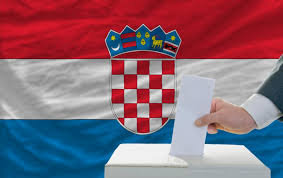
The second round of elections for the President of the Republic of Croatia are due to take place on 5 January 2020. The population of Croatia is in the area of 4.1 million, of which 3,854,747 are eligible voters. Outside the Republic of Croatia, there are 176,843 voters who are diaspora or do not have a residence in Croatia.
The following candidates for the position of the President of the Republic of Croatia qualified for the second round of elections: ● Zoran Milanović 29.55% (Social Democratic Party of Croatia – SDP) ● Kolinda Grabar-Kitarović 26.65% (Croatian Democratic Union – HDZ).
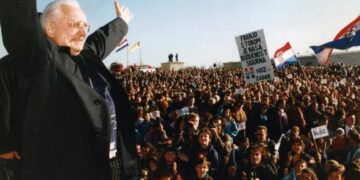
Croatia is in a deep social crisis. The state is characterized by a high level of organized crime and corruption, poor functioning of the judicial system, strong intelligence underground and potent influence of the Roman Catholic Church (RKC). The first President of the Republic of Croatia was Franjo Tuđman (1991-1999), who is (in)disputably credited for the establishment of the independent Croat state. However, this is only party true, because the states on the territory of the former Socialist Federal Republic of Yugoslavia emerged primarily due to a favorable international context, as a result of the fall of the Berlin Wall, the collapse of the Soviet Union and the will of international community. Primarily, the will of superpowers to recognize the newly founded states. Hence, although the states in the region had formally held referendums on independence, they emerged primarily as a result of the will of the international factor. In fact, while there are approximately 900 peoples in the world, there are not as many states. Tuđman’s rule was attributed with numerous insufficiencies. Particularly the autocratic leadership of the state, consequences of which are still present especially in the segment of organized, crime, corruption and the implemented process of “tycoonization” of the Croatian economy.
The second President of the Republic of Croatia Stjepan Mesić (2000-2010) inherited the heavy burden of Tuđman’s political legacy. He had a vision and succeeded in making significant steps forward in affirmation of Croatia in the region and the world and instigating the fight against organized crime and corruption, as well as the intelligence underground. Furthermore, he also managed to end the isolation of Croatia and return it to the path of integration into the European Union and NATO. Mesić also contributed to affirmation of antifascism as one of the fundamental values of modern Croatia. However, he did not manage to completely eliminate the consequences of Tuđman’s rule due to the presence of a significant number of Tuđman’s cadres in Croatian politics, government and the security-intelligence system, who often gave primacy to their parochial or partisan (HDZ) interests over national interest. Ever since Croatia gained its independence, the “criminalization of policy and politicization of crime” has been continuously present.
During his mandate, Ivo Josipović (2010-2015) strived to act in a non-partisan manner. According to analysts, he did not make strategic mistakes but was assessed as indecisive. Just like other Croatian officials, Josipović was criticized for failing to sufficiently capitalize on the opportunities associated with Croatian membership in the EU and NATO, but also neglecting the economic recovery of the state. However, Josipović significantly contributed to regional stability and the international image of Croatia.
During her time in office, President Kolinda Grabar-Kitarović (2015-2020) did not deviate from the HDZ matrix. Although much more was expected from her because she came from the generation of younger Croatian politicians, she often came across as very rigid, unlike any of her predecessors in the position. She attempted to “curry favor” with all segments of the Croatian society and international stakeholders. Specifically, she tried to be “endearing” to both fascists and antifascists. However, in collaboration with Croatian Prime Minister Andrej Plenković (HDZ), she only managed to establish closer relations with Russia, despite the sanctions imposed against it by the EU and USA. Grabar-Kitarović did not contribute to regional stability or image of Croatia in the world. Croatia has very poor political relations with all its neighbors. Particularly Bosnia and Herzegovina and Serbia, but also with Slovenia, which is also an EU and NATO member. This will definitely further complicate the situation and cause problems in the context of Croatian chairmanship of the EU with respect to the region.
Serbia and BiH as new “lurking threats” for the HDZ and Croatia
The political landscape is dominated by two political parties that are the two extremes of the Croatian political landscape. One is the Croatian Democratic Union (HDZ) headed by Prime Minister Andrej Plenković, which bases its ideology as a national(ist) movement on anti-communism, gaining of independence and the so-called “Serb threat” in Croatia. The communism is long gone, the process of gaining independence was finalized in 1991, while the Serbs have been decimated but are a factor of stability and a test for Croatian democracy, because they have significantly contributed to the process of integration into the EU as a constructive factor. The HDZ constantly strives to take exclusive credit for the results of the gained independence, while ignoring the fact that in addition to the desire of the Croat people to gain independence, the independence was primarily a result of historic international circumstances and favorable international context. Specifically, the fall of the Berlin Wall and the collapse of the USSR. The HDZ has not managed to decriminalize itself or divorce itself from idealization of Franjo Tuđman. Although Croatia is a separate and independent state, the HDZ still “seeks” adversaries in Serbs, Serbia, Bosnia and Herzegovina, Yugoslavs, migrants/refugees, Islamic threat, etc. Anto Nobilo, a renown Croatian attorney at law, stated: “the attacks on Serbs in Croatia are a result of the crawling fascization of society and a logical consequence of politicians’ courting of the NDH /Independent State of Croatia/ and relativization of crimes committed by Ustasha.” The projecting of alleged threats and risks has become a model of political survival. Furthermore, the HDZ in Croatia and VMRO-DPMNE in North Macedonia are the only two right-wing political parties in the region, which had been prosecuted in court and whose former presidents, who also served as prime ministers, Ivo Sanader and Nikola Gruevski respectively, were unappealably sentenced.
The party on the other extreme of the Croatian political landscape is the Social Democratic Party of Croatia (SDP), headed by Davor Bernardić. The SDP is the successor of the former Communist Alliance of Croatia. The party is coming out of a crisis and is being transformed into a modern social-democratic party, which is increasingly less burdened with the residues of the past. Croatia and other countries in the region need strong social democratic parties.
The HDZ and SDP are the two parties on the Croatian political landscape that benefit the most from the ideological conflict that devastates Croatia and impedes functioning of the state at its full capacity. The HDZ often fails to understand anti-fascism. If it did understand antifascism, the HDZ would demonstrate ownership over preservation of antifascism and antifascist tradition, and at the same time would not make excesses that can sometimes be assessed as neo-fascist and anti-Semitic.
Analysts believe that, in his/her work, the new President of Croatia will have to pay more attention to the reform of the intelligence-security system, which is systematically working on destabilization of Bosnia and Herzegovina and toppling of Aleksandar Vučić (SNS) in Serbia, and is also connected with some Serbian opposition parties involved in the project.
Good neighborly relations and cooperation key for the future and progress of Croatia
As the Croatian Minister of Foreign Affairs (2005-2008), Kolinda Grabar-Kitarović achieved modest results and launched no distinguishable diplomatic initiative. In fact, at the time the foreign policy was managed by the then Prime Minister Ivo Sanader (HDZ), who in addition to performing the duties of the Prime Minister, de facto also acted as the Minister of Foreign Affairs. Grabar-Kitarović left no hallmark on the Croatian foreign policy, not as the Minister nor as the President of the state.
According to the analysts, the somewhat schizophrenic policy led by Grabar-Kitarović is unvanquished in the EU realms as well. The right-wing circles in the EU welcome such a policy of the Republic of Croatia, which borders with West Balkans. In some imaginary right-wing projections Croatia is actually perceived as a future range from which various activities, not just political, would be executed. A policy of good neighborly relations is the key for the future and progress, because, objectively speaking, Croatia is not endangered by Slovenia, or Serbia, and definitely not BiH and Montenegro. The biggest threats for Croatia are the above mentioned schizophrenic policy, which candidates it as a range for execution of possible activities, and the internal economic and financial situation. Croatia’s internal instability and the financial crisis are the most important factors behind the wrong foreign policy, which relies on the Russian money and influence.
Both candidates are just a possible continuation of a suicidal Croatian policy. Maybe Miroslav Škoro (Independent) was a possible salvation formula for the future of Croatia, because he is not burdened with “big policies” and has no relation with previous animosities towards the neighbors. It is rather unlikely that Croatia can change its foreign policy, because the accumulated internal problems are being addressed through production of external crises, whereas in this schizophrenic policy the first to come “under attack” are the neighbors. Hence, Croatia exports its internal problems to its neighborhood.
Due to such foreign policy, particularly with respect to BiH, and the indolence towards Russian interferences in the region, including Croatia, Croatia has come in the focus of the US and NATO policies. The US expects Croatia’s strong support on the BiH’s path towards NATO and the EU. It is evident that the US focus will maybe be the only corrective factor for the so-far wrong Croatian policy.
There are two common individual characteristics of the presidential candidates. Both Kolinda Grabar-Kitarović and Zoran Milanović are hard-core negators of the recent Croatian history, who deny the crimes committed during the Homeland War by Croatian armed forces, as well as of the aggressive policy of Croatia and their role model Tuđman towards BiH. Both of them are sources of regional instabilities.
The two candidates are in absolute accord that Croatian forces had not committed crimes during the Homeland War. Specifically, in the military-police operations Flash (Bljesak) and Storm (Oluja). It suffices to look at the latest report by the IRMCT/ICTY Chief Prosecutor Serge Brammertza to the UN Security Council, which it detects the Republic of Croatia as a state that obstructs processing or various crimes and prosecution of war criminals in Croatia and the region.
There is no difference in the actions or reasoning of the two presidential candidates, because, as the Croatian Prime Minister in 2015 Milanović adopted, specifically had the Croatian Government adopt, a decision on suspension of cooperation with BiH for the purposes of protection of military and political leadership of Croatia from criminal prosecution. Furthermore, there is also the parliamentary decision, the so called Nullity Act on suspension of cooperation with Serbia in prosecution of war criminals.
Both candidates support the rhetoric that crimes cannot be committed in a homeland war. It is also known that both candidates have publicly expressed their disagreement with the ICTY judgment against Jadranko Prlić (HDZBiH) et al., which established aggression by Republic of Croatia on Bosnia and Herzegovina and joint criminal enterprise headed by Franjo Tuđman (HDZ), Gojko Šušak (HDZ), et al. In such a way they publicly negated the judgment of the UN International Crimes Tribunal for former Yugoslavia, and even the EU responded to the negation. According to the two candidates, Croatia is a victim of great-Serbia policy, the Homeland War was a defensive war and crimes could not have been committed in it, Croatia assisted the Croats in BiH and was not an aggressor, although in five of its judgements the ICTY established that it was an international conflict and identified Croatia as an aggressor in Bosnia and Herzegovina. It is common knowledge that there is an audio recording of the meeting between Zoran Milanović and war veterans at which Milanović said that in the process before the ICTY Tribunal the Republic of Croatia will be acquitted of responsibility, while the indictees will be sentenced.
That is why in numerous reports of the UN and EU, Croatia is unrarely defined as a state which uses, that is abuses, its full-fledged membership in the EU and NATO to violate all UN and EU conventions related to application and protection of international humanitarian law, while in the IRMCT/ICTY reports it is detected as a counterpart to Serbia, which is known to the international public from before for its decision not to recognize the genocide in Srebrenica and the ICTY/IRMCT judgments.
On the regional level, there are also no major differences between the two candidates. Their political engagements include the same stances and actions with respect to Serbia. Serbia is still perceived as a potential threat and is mainly used for internal political showdowns in Croatia. As for the Republic of Croatia, the candidates shared the same adversarial stance in the famous affair of contamination of the international arbitration process regarding the Arbitration Agreement which, inter alia, defines the access of Slovenia to international waters in the Adriatic Sea /Bay of Piran. Zoran Milanović played a key role in this case, because he had publicly admitted that as the Prime Minister he had instructed the then head of the Security Intelligence Agency (SOA) Dragan Lozančić to contaminate the arbitration process. When Lozančić was removed by the HDZ-led Government of the Republic of Croatia, he said that Lozančić should not be removed but awarded for contaminating the arbitration. The stances of Grabar-Kitarović are along the same lines.
There is also no substantial difference between the two candidates when it comes to Bosnia and Herzegovina, because Grabar-Kitarović and, to some extent, Milanović conditionally support establishment of a third (Croat) entity and perceive a part of BiH as a booty of the “great-state” project. It needs to be emphasized that while when it comes to BiH, Grabar-Kitarović is supported by her party (HDZ), within the SDP there is no plebiscitary support for the division of BiH and the policy advocated by Milanović with respect to BiH.
While the candidates emphasize the threat from migrants/refugees and Islamization of BiH, they obviously do not see a threat in “soft” Russian influence and very “hard” billions of Euros pumped into Croatia through Russian/Croatian banks. It is common knowledge that while the Croatian security-intelligence agencies are not sufficiently engaged on monitoring of Russian influence and flows of money in Croatia, during the affair related to insertion/return of migrants/refugees from Croatia to BiH, which was exposed in BiH by the until-recently BiH Minister of Security, Dragan Mektić (SDS), Croatia sent a circular letter to NATO members in which it referred to a darkest-possible scenario and smeared BiH and its security-intelligence agencies, thus covering up its role in generation of intelligence affairs in BiH.
Both candidates build their foreign policy on the threat from the so-called Islamic terrorism, which according to them comes from BiH, and an alleged threat coming from Serbia and Serbian President Aleksandar Vučić. At the same time, even according to the reports of Croatian intelligence agencies other threats do not exist.
The only unknown will be the relation of Zoran Milanović to the Croatian policy in BiH, which currently mainly relies on Milorad Dodik (SNSD). Specifically, would Milanović support continuation of division of BiH which Dragan Čović (HDZBiH) and Milorad Dodik (SNSD) are ardently trying to implement, or would he return to the genuine postulates of the Croatian SDP, which has never supported the division of BiH.
Croatia at a turning point?
The ongoing election campaign is marked by numerous insults, misinformation and plethora of personal attacks. There is a very little clearly articulated political contents. The worst of all is that the entire campaign is primarily focused on who is a bigger Croat and dominated by ideological topics, not program-based debates. Furthermore, the candidates have not at all sufficiently addressed the issues related to foreign policy and national security, although foreign policy and the security-intelligence sector comprise an important part of presidential competences. The presidential elections are taking place during the Christmas and New Year holiday season, which essentially suits the political right-wing and the HDZ more, bearing in mind that Croat diaspora returns to its homeland in massive numbers in that period and is thus able to participate in the elections. Relevant polls show that the Croat diaspora is traditionally inclined to the HDZ, just like the Croats from Bosnia and Herzegovina.
Grabar-Kitarović’s biggest “mortgage” is that she was a part of Sanader’s Government and that she has not used well her mandate as the President of the Republic of Croatia from 2015 to 2020. The government headed by Ivo Sanader (HDZ), in which Kolinda Grabar-Kitarović was the Minister of Foreign Affairs, is probably an example of the most corrupted Government in which no less than seven ministers, including Prime Minister Sanader, were accused of crime. That is a major burden for Grabar-Kitarović in her current election campaign, because the HDZ is the only political party in Croatia that has unappealably been sentenced for corruption, and recently Ivo Sanader was handed down an appealable sentence of six years of imprisonment. The process of decriminalization of the party is still being (un)successfully implemented in the party. The ongoing investigations against the HDZ Croatia will have to be expanded to include HDZ BiH, because of founded suspicions related to embezzlement of millions of Croatian Kunas of tax-payer’s money implemented through the HDZ BiH and its leadership.
Zoran Milanović is criticized that he had poorly managed the Government of the Republic of Croatia in the period from 2011 to 2016. The current Croatian Prime Minister Andrej Plenković is criticized for the same thing. Plenković is additionally criticized for having insufficiently prepared Croatia for chairmanship of the EU by Croatia in the first half of 2020, as well as deterioration of relations with almost all neighboring countries. During his time in office, Milanović displayed his arrogance on several occasions, in the country as well as abroad. Furthermore, his rhetoric with respect to the official Belgrade or events in BiH was not any milder. Nevertheless, as Milanović is now both biologically and politically more mature, if he wins he shall have to fulfill at least some of his “tolerant promises” made to all progressive actors in Croatia, region and Europe. It is necessary to stop the process of massive emigration from Croatia, because so far the “loss” of young people due to the emigration wave is higher than that caused by World War II and the Homeland War together. It is a continuation of the second exodus by the HDZ. The first one was done to the Serbs through war-time measures/actions, and the second one to the Croats as a result of economic reasons/devastation.
Analysts believe that time has come for Croatia to end the period of national romanticism. The Croats have their national state. They now have to ensure its future for the next generations. The newly elected president will have to face many problems. Placing an emphasis on historical divisions and tensions among Croats means returning to the past. Croatia needs a more certain future. Other peoples also have their historical divisions, but not many focus on and idealize the dark past at the cost of their future like the Croats and Croatia do. Such a policy leads the state into a situation of harmful ideological divisions, increase of tensions and even conflicts with minorities and neighbors. That is why the presidential elections could be a turning point for the Republic of Croatia.
Ljubljana/Zagreb, 3 January 2020
- Link (ENG): https://www.ifimes.org/en/9743 (Research – 2020 Presidential Elections in Croatia: Croatia at a turning point?)