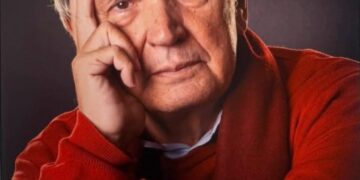
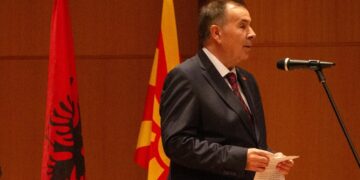
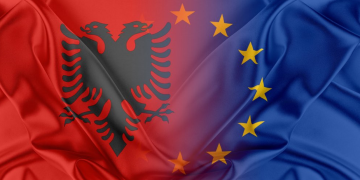
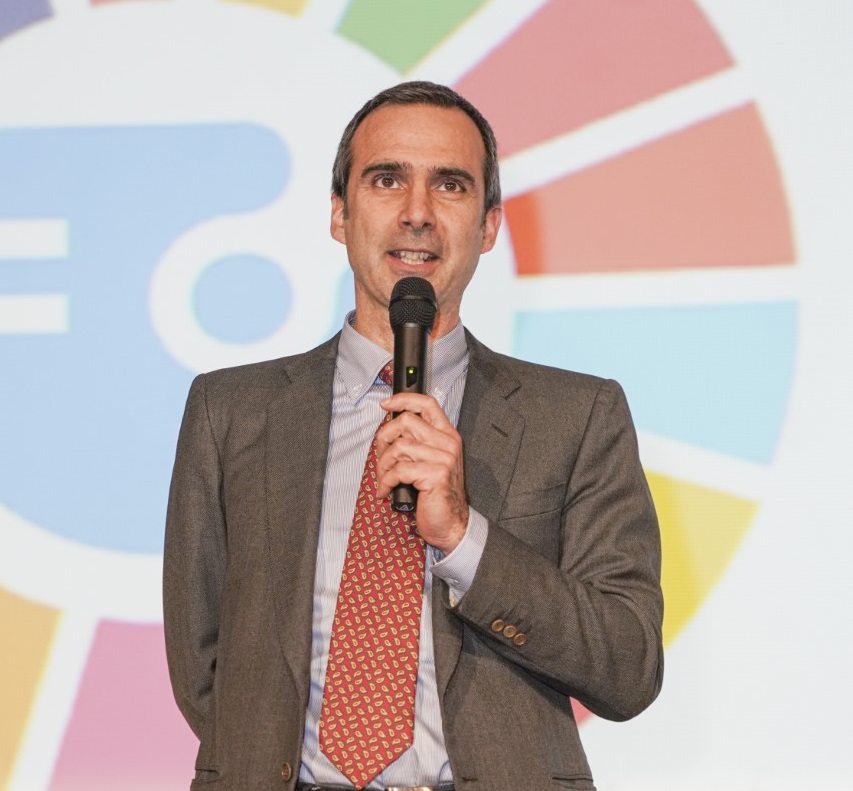
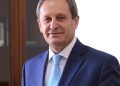
“As a European citizen, I understand and support the aspirations of Albanians to join the EU as soon as it is possible. I believe that implementing the agenda for sustainable development is a good way to make progress toward that goal, both for Albania and of other countries in the region,” said Mr. Michele Ribotta
By Genc Mlloja
Senior Diplomatic Editor
The celebration of the International Women Day has coincided this year with the 25th anniversary of the Declaration and Platform for Action which are the outcome of the 4th World Conference on Women that took place in China in 1995. To learn more on this Platform and particularly on its delivery, what has happened in the past twenty-five years for the implementation of the most visionary agenda for the empowerment of women and girls everywhere in the world, Albanian Daily News invited Mr. Michele Ribotta, the UN Women Representative to Albania, who was kind enough to provide information and his opinion on these issues.
“A lot has happened in the past twenty-five years: women and girls are better protected against gender-based discrimination, participating more in the economy and political institutions. Some 130 countries have removed discriminatory laws, there has been a 38 per cent drop in the maternal death ratio since 2000, and more girls are in school than ever before,” said Mr. Ribota, who joined UN Women in 2012 as adviser to the Director of the UN System Coordination Division in New York. In his capacity, he has driven UN Women’s efforts to mainstream gender in the work of the UN Development System at global, regional and country level, supporting the strategic engagement of the Entity in the broader repositioning of the UN Development System.
“In Albania, the Beijing Platform for Action – together with key international human rights instruments –has provided the framework for legal and policy advances. Through a dedicated National Review process that took place last year, both the Government and civil society have taken stock of progress and identified pending challenges for future action,” he said. However Mr. Ribota confesses that like many other countries, Albanian society is still characterized by entrenched patriarchal values that prevent women from fully realizing their rights. “Especially in rural areas, hard-to-die gender stereotypes limit the space for many women and girls to pursue their dreams and choose for their own lives,” UN Women Representative Michele Ribotta said in the interview which follows:
– 2020 is an important year for gender equality. It marks the 25th anniversary of the Beijing Declaration and Platform for Action. What is this Platform and why is it important for the world today and for Albania?
– First of all, happy women day to all ADN’s readers and you. On your question: the Declaration and Platform for Action are the outcome of the 4th World Conference on Women that took place in China in 1995. The largest-ever gathering of gender equality advocates delivered the most visionary agenda for the empowerment of women and girls everywhere, articulating strategic action in critical areas of people’s life, including jobs, health and education, physical integrity, power and decision-making. Delegates in Beijing had imagined a world where all women and girls fully exercise their human rights and fundamental freedoms, contributing to economic development and social justice on an equal footing with men. Ever since, the agenda that was shaped in Beijing has guided the efforts of governments, civil society and international organizations alike.
A lot has happened in the past twenty-five years: women and girls are better protected against gender-based discrimination, participating more in the economy and political institutions. Some 130 countries have removed discriminatory laws, there has been a 38 per cent drop in the maternal death ratio since 2000, and more girls are in school than ever before. However, progress has been unacceptably slow, with hard-fought gains constantly at risk of reversal. With not a single country in the world having achieved full equality between women and men, the commitment to empower all women and girls by 2030 was reaffirmed as central to the Sustainable Development Goals adopted five years ago.
In Albania, the Beijing Platform for Action – together with key international human rights instruments –has provided the framework for legal and policy advances. Through a dedicated National Review process that took place last year, both the Government and civil society have taken stock of progress and identified pending challenges for future action.

– What has been the biggest change for women in Albania since this visionary Platform was adopted?
-Today, the Albanian legal framework is generally in line with international obligations and EU standards. Many pieces of legislation were enacted or reformed over the years, such as for example the Laws on Gender Equality, on Protection from Discrimination, and the one on Measures Against Violence in Family Relations. In addition, a National Gender Equality Strategy guides national policy action to overcome gender-based discrimination, while several sectorial strategies and action plans address gender perspectives. Women have become more active in the labor market, taking advantage of education opportunities. Also, the number of women in decision-making positions increased considerably since the early 90s, putting Albania today among the top five countries with regards to women in government positions. The introduction of gender quota in the electoral systems brought many more women to Parliament and local councils. When we have more women in decision making positions, institutions are more likely to become responsive to the different needs of half of the population. Similarly, the country’s economy benefits from having more women in employment.
– What are some of the most pressing issues for women’s rights in Albania today and what is UN Women’s contribution?
– Like many other countries, Albanian society is still characterized by entrenched patriarchal values that prevent women from fully realizing their rights. Especially in rural areas, hard-to-die gender stereotypes limit the space for many women and girls to pursue their dreams and choose for their own lives. Focusing on the youth perspective is key. The “Generation Equality” global campaign recently launched by UN Women, is not only a clarion call to demand full equality in our time, but also an attempt to intensify intergenerational dialogue and solidarity for the full empowerment of women and girls.
More investments are certainly needed to empower women economically, both in urban and rural areas. Unequal sharing of family care and household work remains an obstacle, together with limited access to property rights and financing. In addition, violence against women and girls remains alarmingly high. At least 1 in 2 women report to have experienced some form of violence, particularly in their homes. Other forms of violence are also a cause of concern, including sexual violence, harassment, forced marriage, and stalking. Last year, jointly with UNDP, we supported INSTAT in conducting the third national survey on Violence Against Women and Girls in Albania, which allows policy makers to monitor the evolution of different forms of gender-based violence.
In addressing gender equality related challenges, we support enhanced accountability of Albanian institutions by helping them translate commitments into concrete plans and budget allocations at both central and local level. As part of UN Women supported interventions in the Western Balkans, Albania has been pioneering very important work to integrate gender responsive planning and budgeting into public finance management reform. The long-term objective is to enable greater public investments for the promotion of gender equality and the empowerment of women.
– In less than two months, five women were killed by men in Albania. Violence against women continues to be a pandemic. How are you tackling the issue?
– When a woman is harassed, beaten or even killed, speaking about achieving gender equality becomes a chimera. Every day globally, around 130 women are killed by their partners or close family members, while millions continue to suffer in silence, undetected and unsupported. Albania is not immune to this global pandemic. In recent years, the number of reported cases of violence has been on the rise. While this is concerning it also shows that victims may become increasingly unwilling to tolerate abuse and that the existing referral systems are slowly starting to function. That being said our work on the ground suggests that women’s ‘acceptance’ of violence is still widely spread. Victims are often not aware or do not trust the protection system enough, and many are too dependent on their perpetrators to sue them.
Clearly, we need a whole of society movement to say Enough! of gender-based violence and of the deeply rooted beliefs that justify and perpetuate it. On our part, we try to put in place a multipronged approach to ensure prevention, protection of survivors, and provision of services, working with a wide range of actors. Albania is part of the EU funded sub-regional programme ‘Implementing Norms, Changing Minds’ through which UN Women supports the implementation of the Istanbul Convention on Preventing and Combating Violence Against Women and Domestic Violence. So far, the program has engaged 400 women’s rights organizations and 6,000 community members, training 1,000 service providers. In addition, through the Sweden supported intervention on ‘Ending Violence against women in Albania’ that we implement jointly with UNDP and UNFPA, we support state and non-state institutions to ensure coordinated and integrated response to address cases of violence.
– As you were mentioning earlier, Albania is considered a success story in South East Europe regarding Gender Responsive Budgeting. Why is it so important for women’s empowerment and what has been its impact in Albania?
– Simply put, we are speaking about making investments available to overcome gender-based discrimination in key aspects of people lives, such as health, education, social protection, or in productive sectors such as agriculture. Through gender responsive budgeting (GRB), government institutions can assess the impact of public spending, taxation and public service delivery, and address the differential benefits and burdens for women and girls. Albania has a well-established legal and policy framework in this regard. Gender responsive budgeting has been part of the Public Finance Management Strategy since 2014, while gender equality was included as a core principle of budgeting in the 2016 Organic Budget law. Currently, all ministries (and 2 oversight institutions) have included GRB in their budgetary programs, compared to only 2 ministries in 2012. The average amount of funds that address gender equality priorities is around 7.2% of the entire state budget as opposed to 2.3 % in 2012.
This methodology is also used to monitor Albania’s progress on the implementation of the Convention on the Elimination of All Forms of Discrimination against Women (CEDAW). Perhaps most importantly, GRB helps to strengthen accountability on the use of available public resources: through mechanisms such as participatory budgeting, social audits and public hearings, community groups have an opportunity to use budget data and engage institutions in the planning processes, especially at the local level. Some of these practices are being already applied in Albania, and we will continue to support their use in the future, as they contribute to effective domestic resource mobilization and allocation, while building trust between the State and its citizens.
– Can you tell us how do you assess the responsiveness of local authorities on women’s rights issues and how much is civil society – and the media in particular – involved in raising public awareness on gender equality?
– For a country that is expanding decentralization of its governance architecture, the ability of local government units to deliver on citizens’ needs and expectations – especially those left behind – is critical. Earlier this week, jointly with the Ministry of Health and Social Protection, several UN entities have launched a new intervention awarded to Albania through the SDG Global Fund. The program will be carried out in six municipalities (Tirana, Kamza, Rrogozhina, Progradec, Puke and Devoll), focusing on the design and provision of integrated social care services for men and women, boys and girls belonging to marginalized groups. When it comes to implementing the many legislative and policy advances that Albania has made, much of this must translate into action at the local level.
Albania is gifted with a vibrant civil society. Non-governmental organizations in the country have been instrumental for advancing women rights, including through public awareness, advocacy, as well as service delivery. They are key actors for implementing the Sustainable Development Goals. With regards to the media, it plays a huge role in relation to the social norms and beliefs that affect the full realization of women rights. Reports of cases of gender-based violence often feature elements of victim blaming and scrutiny of women behaviors that result in re-victimizing those who were hit in the first place. Understanding the negative impact of stereotypical reporting of women issues is a first fundamental step to ensure that the media community becomes an ally for protecting the vulnerable and accelerating change. Taking the opportunity of International Women Day, we just had a very fruitful session with reporters; we gave them data and trends on key women rights issues and discussed ways to project non-stereotyped, balanced and diverse images of women and girls in Albania.
– Women’s situation is different in different parts of Albania, particularly in rural and urban areas. Are there special programs to overcome the urban rural divide, and to protect vulnerable women like for example those living with disabilities, the elderly, or the Roma?
– Understanding that women from rural areas, those with different psycho-physical abilities, from different ethnic groups, or with different sexual orientations, are more likely to experience multiple forms of discrimination, is crucial if we are to ensure the effectiveness of our efforts. Leaving no one behind is at the core of the 2030 Agenda for Sustainable Development that all member states of the United Nations adopted back in 2015, and central to the work of the entire UN system. For UN Women, this means understanding the multiple and intersecting forms of discrimination that some groups of women face. If we are to promote lasting change, we need to go at the heart of the problem and understand the root causes of exclusion. Last year for example, we supported community-based groups in assessing the actual accessibility of services by different groups of women (e.g. the Roma, persons living with disabilities, LGBTI), to better understand what would it take for them to reach out to local referral mechanisms more systematically, reporting cases of violence and seeking assistance.
The other key approach is to give the most marginalized a space to speak up. Our work with the “Leave no one behind” UN program, supported by the Swiss Government, builds on the idea of providing groups of vulnerable women with a platform from which their voices can be heard, their issues acknowledged and hopefully integrated in local plans and budgets.
– What can you say please on your impressions on Albania and its people, particularly women, and do you think that this Balkan country deserves to be fully integrated into the European family?
– I have only been in the country for a little more than six months. I soon felt moved by the kindness, openness and hospitality of Albanians. As an Italian I see a lot of similarities among our peoples, which is fascinating. It was also exciting – though not surprising! – to see and meet so many Albanian women who excel in different walks of life, whereas it is in the arts, science, business or the digital sector. As a European citizen, I understand and support the aspirations of Albanians to join the EU as soon as it is possible. I believe that implementing the agenda for sustainable development is a good way to make progress toward that goal, both for Albania and of other countries in the region. Together with my team and fellow UN colleagues, I look forward to assisting the country along this journey./ADN
© Argumentum.