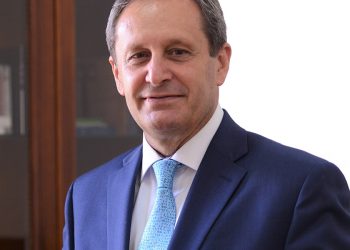






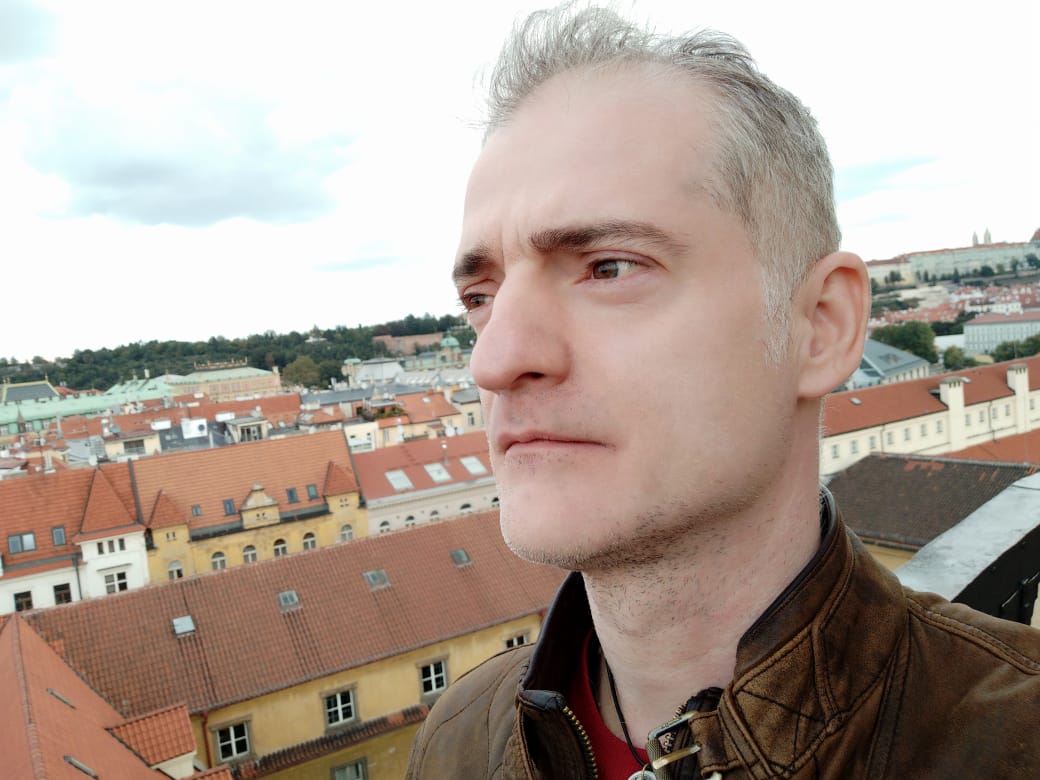
“The important historic ties between the two peoples are well known, although state-to-state relations were problematic for most of the 20th Century. During the last 30 years the two societies have come much closer together by the sheer number of all those thousand Albanians who migrated to Greece, making Greece their second home, and contributing to its economic development and prosperity,” said Dr. Georgios Christidis
By Genc Mlloja
Senior Diplomatic Editor
“Thirty years following the end of Communism, the region – the whole southeastern Europe, not only the Western Balkans – remains the “weakest part” of the Continent, in terms of economic development, institution building and standards of living… The Western Balkans should not remain a geopolitical “black hole”, outside the EU!” has said Dr. Georgios Christidis.
Albanian Daily News had an interview with Dr. Christidis, Associate Professor of Comparative Politics in the Balkans at the University of Macedonia in Thessaloniki, Greece, who participated recently in the webinar organized by the European Movement in Albania, part of a project called “Deliberating socio-economic impact of EU integration – Albania and shared regional activities”. The topic of the 4-day webinar held in July this year concerned “EU policies on the question of Roma integration and the accession process of the Western Balkans”.
“Everywhere, with the exception of Kosovo, demographic prospects are grim, while young people are leaving en masse disillusioned with systemic corruption, low salaries and the lack of prospects,” said the Professor who noted that it is imperative for the Western Balkans countries to push forward, finding a solution to the remaining conflicts and to normalize their bilateral relations. “It can’t be done however without the necessary political will. And in that respect, we have some recent, positive examples, like in the Prespa Agreement. Any such development will obviously facilitate their EU accession.”
Dr. Christidis, who is also a research fellow at the “Hellenic Foundation for European and Security Policy (ELIAMEP)”, visiting professor at the Faculty of History at Sofia University “St. Kliment Ohridski ”and the National Security School of the Greek Police Academy in Athens, pointed out that the sheer size of the Roma population in Europe and the magnitude of their social marginalization, has forced Brussels to develop, during the last twenty years a distinct Roma policy in terms of integrating an unrecognized European minority. The number of the Roma living in the EU member-states approached the 11 million, making them the largest minority inside the Union.
Asked about what other regional countries that entered the EU earlier could provide to Albania in its EU accession process the Professor said Albania should learn from any good practices developed, but also from mistakes that have been made.
Dr. Christidis has published numerous publications in Greece, Bulgaria, Great Britain, Serbia and North Macedonia. His research interests include political history, political parties and minority issues, foreign policy and bilateral relations in Southeast Europe.
Dwelling upon what he called growing speculation about Russian, Chinese, or even Turkish presence in the Western Balkans Dr. Christidis is of the opinion that nowhere their presence whether in investments or volume of trade surpasses that of the EU that remains the most important economic partner. “The EU remains also the most important political partner, in terms of its engagement with the region through the EU accession process. Even in Serbia, where Russia has become popular – mainly as result of the whole Kosovo debacle (the 1999 NATO bombardments, Moscow’s support on the Kosovo issue, etc), the country still pursues EU accession.”
He thought that that relations with Russia, China or Turkey are being pursued to the extent that serve national interests, and almost everywhere in the region, the prevailing consensus is that joining the EU serves better these national interests.
In a comment on the grave situation of the ongoing C19 pandemic the Professor highlighted the ‘sorry state public health care systems’ everywhere in the region, while regarding a regional cooperation unfortunately he does not see much of that cooperation on the issue. “As a matter of fact, there hasn’t been much EU cooperation as well… States seem to adopt policies that think will better serve them containing the virus, without consulting others.”
Asked about a post COVID-19 era, Dr. Christidis had the following answer: “I don’t know, but certainly the pandemic has unsettled us, by introducing changes, sometimes drastic, to our everyday life. In geopolitical terms, it has certainly undermined globalization, while it has intensified the competition between China and the West.”
The Professor said the important historic ties between the Greek and Albanian peoples are well known, although state-to-state relations were problematic for most of the 20th Century. According to him, during the last 30 years the two societies have come much closer together by the sheer number of all those thousand Albanians who migrated to Greece, making Greece their second home, and contributing to its economic development and prosperity.
“Without wishing to underestimate the complexity of some of the issues affecting bilateral relations, I believe that it has been a serious political failure to allow problems, some of them decades old, to remain unsolved, generating such mutual mistrust. Now, Albania’s EU accession process provides a good opportunity to sit down and reach an agreement,” said Dr. Georgios Christidis, Associate Professor of Comparative Politics in the Balkans at the University of Macedonia in Thessaloniki in the following interview:
Albanian Daily News: Professor, it is a pleasure to have this conversation with you especially after your participation at the 4-day webinar held in July this year in the frame of a project on reviewing the influence of European integration in the socio-economic dimension of Albania and you were among the main speakers. Please can you share with ADN’s readers some details of this event?
Dr. Yorgos Christidis: The webinar was organized by the European Movement in Albania, part of a project called “Deliberating socio-economic impact of EU integration – Albania and shared regional activities”. The topic of the webinar concerned “EU policies on the question of Roma integration and the accession process of the Western Balkans”
The sheer size of the Roma population in Europe and the magnitude of their social marginalization, has forced Brussels to develop, during the last twenty years a distinct Roma policy in terms of integrating an unrecognized European minority. In particular, the EU Eastward enlargement of 2003 and 2007 created a major incentive for the further development of an EU-centered policy on the Roma, as the numbers of the Roma living in the EU member-states approached 11 million, making them the largest minority inside the Union. The Framework for National Roma Integration Strategies adopted by the European Commission in 2011, requires all EU Member States to develop National Roma Integration Strategies, with the four priority areas of EU policy been employment, housing, education and healthcare, with the addition of gender issues and the fight against discrimination and what has been called “anti-Gypsyism”
There is little doubt that Roma in the Western Balkans have been suffering from large-scale poverty and social exclusion, as elsewhere in Southeastern or Central Europe. In every major area, from unemployment and housing, to health and education, statistics concerning Roma in the Western Balkans are quite grim. The treatment of the Roma communities in candidates and potential candidates from the Western Balkans is continuously addressed by the European Commission, not only in their annual progress reports on the integration of the Roma community, but also in the Progress Reports for each country. The emphasis put by the European Commission is on the four priority areas of EU policy for Roma inclusion – employment, housing, education and healthcare – plus gender issues and the fight against discrimination and anti-Gypsyism.
The same strategy can be seen in the Berlin Process dealing with the Western Balkans. Under the Berlin Process, a Declaration of Western Balkan Partners on Roma Integration within the EU Enlargement Process, was adopted in Poznan on 5th of July 2019, stating “a commitment to continue and enhance efforts for full equality and integration of Roma”, pledging commitment on a number of objectives concerning employment, housing, education, health, civil registration and non-discrimination.
-How much do such activities like the event in question in the frame of the above project implemented by the European Movement in Albania in cooperation with ELIAMEP and supported by the EU promote Albania’s integration process?
-The European Movement in Albania should be congratulated in undertaking an initiative concerning the EU integration process and its requirements. It is contributing to a public debate that should be taking place in Albania.
-In what ways can the experience of Greece, Croatia, Bulgaria and Romania in their path to full EU membership help Albania’s European integration process especially now when it is on the verge of starting the accession negotiations?
-Albania should learn from the experiences of other regional countries that entered the EU earlier. It should learn from any good practices developed, but also from mistakes that have been made. In relation to Roma policy, it is important for Albania to properly implement any programs adopted –and that means in particular proper financing and management by people who know the complexity of problems the Roma face – and to initiate a public debate on the position of the Roma in Albanian society. A major issue that policies on the Roma face elsewhere in the region is lack of public support, as the Roma have been the victims of massive stereotypes.
-According to you Professor, how much the ongoing conflicts of different kinds between Balkan countries risk regional stability and threaten European aspiration of their people? And in this frame, what do some countries really want when they keep beefing up their military potential as for example Serbia through speedy modernization of the air force, procurement of drone systems, air-defense system FK-3 etc.?
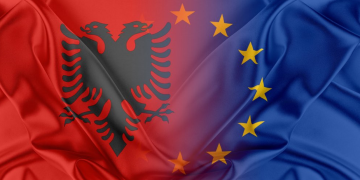
-Thirty years following the end of Communism, the region –the whole southeastern Europe, not only the Western Balkans – remains the “weakest part” of the Continent, in terms of economic development, institution building and standards of living. Everywhere, with the exception of Kosovo, demographic prospects are grim, while young people are leaving en masse disillusioned with systemic corruption, low salaries and the lack of prospects. For the Western Balkans in particular, it is imperative to push forward, finding a solution to the remaining conflicts and to normalize their bilateral relations. It can’t be done however without the necessary political will. And in that respect, we have some recent, positive examples, like in the Prespa Agreement. Any such development will obviously facilitate their EU accession. The Western Balkans should not remain a geopolitical “black hole”, outside the EU!
-Mr. Christidis, it is spoken much on the threat of Russian influence in the Balkans as well as of the Chinese growing economic presence in some of the regional countries. In your view how credible are such suppositions and which might be the prompts of some of these countries to turn their eyes towards Russia, China, Turkey etc?
-Yes, it is true that there is growing speculation about Russian, Chinese, or even Turkish, presence in the region. But it should be put into perspective. Nowhere in the Western Balkans Russian, Turkish or even the growing Chinese economic presence (whether it is investments or volume of trade) surpasses that of the EU that remains the most important economic partner. The EU remains also the most important political partner, in terms of its engagement with the region through the EU accession process. Even in Serbia, where Russia has become popular – mainly as result of the whole Kosovo debacle (the 1999 NATO bombardments, Moscow’s support on the Kosovo issue, etc), the country still pursues EU accession. I think that relations with Russia, China or Turkey are being pursued to the extent serving national interests. And almost everywhere in the region, the prevailing consensus is that joining the EU, serves better these national interests. It is true however, that some governments have attempted to raise the specter of “alternative foreign policy orientations” in order to exercise pressure on Brussels, but I don’t think they have been very successful. In my understanding, more dangerous has been the influence that authoritarian models of government – like those existing in Russia, Turkey and China – have been exercising lately in the Western Balkans, and not only there.
-The fury of the COVID-19 pandemic has hit our region hard, a blow shown by a multifaceted crisis like in many areas worldwide. In your view, Professor, how would you assess the regional cooperation in face of the crisis, and the EU’s ‘solidarity’ with the so-called second ‘lung’ of Europe-the Balkans?
-Well, the pandemic underlined the sorry state public health care systems are everywhere in the region. To be more precise, public health care systems paid a heavy price as part of the drive to cut down public spending and introduce market-oriented reforms, following the collapse of communism. To aggravate even more things, public health care systems suffer from under-staffing as a growing number of nurses and doctors from the region have migrated in Western Europe or elsewhere, during the last thirty years. In Greece, one could say, a similar process took place, following the beginning of the so-called “debt crisis” in 2010. Unfortunately, I don’t see much of a regional cooperation on the issue. As a matter of fact, there hasn’t been much EU cooperation as well… States seem to adopt policies that think will better serve them containing the virus, without consulting others.
– As a follow up will the global order really change after COVID-19 crisis when as UNSG Antonio Gueterres said in a lecture in July this year that the world is at breaking point?
-The pandemic has accentuated a feeling that has been around for some time: that problems have been evolving faster than the human capacity to provide solutions… And that certainly has increased our anxiety. Is the world at a breaking point? I don’t know, but certainly the pandemic has unsettled us, by introducing changes, sometimes drastic, to our everyday life. In geopolitical terms, it has certainly undermined globalization, while is has intensified the competition between China and the West.
-To conclude, Mr. Christidis, which is your assessment of the bilateral relations between Albania and Greece and do you think that the credibility and wish of the people and politics regarding this relationship is not on the same wavelength both in Tirana and Athens?
-The important historic ties between the two peoples are well known, although state-to-state relations were problematic for most of the 20th Century. During the last 30 years the two societies have come much closer together by the sheer number of all those thousand Albanians who migrated to Greece, making Greece their second home, and contributing to its economic development and prosperity. Without wishing to underestimate the complexity of some of the issues affecting bilateral relations, I believe that is has been a serious political failure to allow problems, some of them decades old, to remain unsolved, generating such a mutual mistrust. Now, Albania’s EU accession process provides a good opportunity to sit down and reach an agreement.