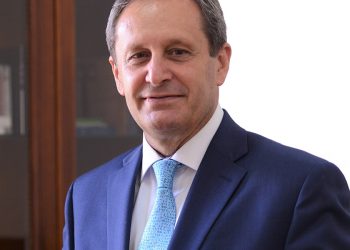






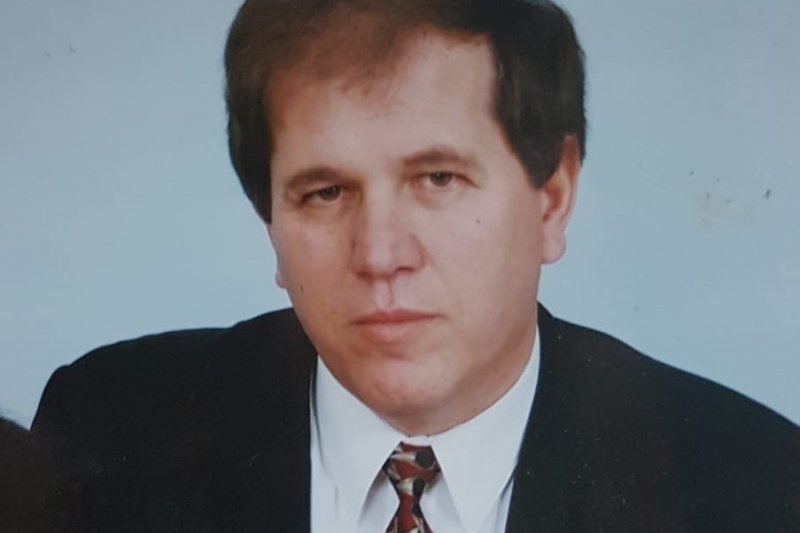
“As a former MP, I have always been a supporter of the unification of the Albanian votes to get the maximum possible parliamentary seats… It is high time that all Albanians must cast their ballots in favor of their parties as this can be one of the most efficient ways for having their say in state and government bodies, including Parliament, in Montenegro,” said former MP Met Gjoni
By Genc Mlloja
Senior Diplomatic Editor
“A few days ahead of the August 30, when the ballots will be cast, the overwhelming expectations in different circles of Montenegro’s society are that these elections should bring a change to the political scene of the country. We are the only state in the region in which full power has not been changed for 30 years.”
This comment opens an exclusive interview that Albanian Daily News had with Albanian Montenegrin politician Met Gjoni, whose career is linked with journalism, politics, diplomacy, local government positions in Ulcinj (Ulqin) from where he is. Among others he was Deputy Ambassador of Montenegro to Tirana.
Montenegrins will go to the polls on Sunday, August 30, to vote for 81 members of Parliament. The elections were initially expected in October but are taking place earlier as a result of the COVID-19 pandemic.
Answering a question on the events of 1990s when the pluralist era started in Montenegro followed by its secession from Serbia declaring its independence, Gjoni revealed that he was an MP at that time. “I was a member of the Parliament of Montenegro at a very delicate moment, at the historical moment of the split of the Democratic Party of Socialists of Montenegro, where our vote was decisive in support of Milo Djukanovic in which case a heavy blow was given to Momir Bulatovic, a supporter of politics of Slobodan Milosevic.”
Gjoni appreciated highly the humanitarian brave gesture of Montenegro which despite being part of the Serb state opened the border for the deportees and sheltered about 100,000 Albanians, who settled in the lands inhabited by Albanians during the Kosovo war of 1999 when the army and paramilitaries of Milosevic brutally massacred and expelled the Albanian population from their lands. “This was the noblest gesture of Montenegro which was highly appreciated, both in Albania and in all democratic countries of the world.”
In a comment on the relations between Albania and Montenegro, Gjoni viewed them in two periods: those until 1997 when Montenegrin policy was more or less the same as that of Milosevic and the relationship from that year until today. He describes them as very friendly so that they have been taken as an example for the whole region. However, Gjoni sees that there is still room to increase cooperation in all areas.
Regarding the fact that the ethnic Albanian parties will not run in a single list in the August elections, the former MP, Met Gjoni launched a ‘last minute’ appeal for the unification of the Albanian votes to get the maximum possible parliamentary seats. “It is the high time that all Albanians must cast their ballots in favor of their parties as this can be one of the most efficient ways for having their say in state and government bodies, including Parliament, in Montenegro,” said former Albanian Montenegrin MP and diplomat Met Gjoni in the following interview:
-Mr. Gjoni Montenegrins are going to polls on August 30, 2020. What can you say about the general atmosphere in the country taking into consideration the fact that the parliamentary elections are being held in the circumstances of the COVID- 19 pandemic?
-In terms of office these are regular parliamentary elections as the most recent ones were held on October 16, 2016. It is true the fear and concern over the threat of the pandemic but the incidence of COVID-19 infection in Montenegro does not constitute any threat but, of course, strict rules, regulations and preventive measures have been set by the National Coordination Body for Infectious Diseases and all citizens are expected to abide to them. Though polling stations are required to implement safety measures, it is normal that there are concerns, especially during the last days, as the country faces a resurgence of COVID-19 cases.
You asked me about the general atmosphere in Montenegro a few days ahead of the August 30, when the ballots will be cast. I can say that the overwhelming expectations in different circles of the country’s society are that these elections should bring a change to the political scene of Montenegro. We are the only state in the region in which full power has not been changed for 30 years. As a matter of fact, this power is maintained by the people of the minorities, who have made a great contribution to the formation of the state of Montenegro. And I have to confess that this contribution has not been rewarded. It is very difficult to replace these structures which, as current reality shows, have eroded, and we have nothing to expect from them as they are currently.
The ruling Democratic Party of Socialists (DPS) authorities had 30 years to show what they could do, but, unfortunately, the situation has not changed over the recent years. The struggle to retain power has intensified. On the other hand, in Montenegro there is a pro-Serbian opposition which does not enjoy a reputation either at the state level or beyond.
Regarding the question of the time when these elections are held, of course, it suits the ruling coalition parties so that they can strengthen the leadership for the next four years as soon as possible.
-How are Albanians being represented in these elections?
– Being straightforward to your right question. Albanians failed to be represented in a common list in these elections at a moment when the possibility of obtaining the possible mandates has been greater. They will compete in two lists of coalitions of their political entities in these parliamentary elections. In this frame it should be mentioned that the current Electoral Law is to the detriment of the autochthonous Albanian population, which differs in its characteristics both from the Montenegrin majority people and all Slavic minorities living in Montenegro.
At the end of 1997, when the ruling party split, we managed to negotiate a new election law. As a member of the commission for drafting this law since I was then a deputy in the Parliament of Montenegro, we managed to obtain a special constituency for Albanians, and after the registration of voters in the areas where Albanians live it turned out that they should have 5 deputies. Unfortunately, this specific right to Albanians was unjustly removed a few years after the independence of Montenegro even though they unanimously supported the independence of this state!
As a result of this, but also because of a special phenomenon according to which a considerable number of Albanians support the Montenegrin parties and the so-called civic parties, the maximum number of deputies that Albanians can get is two or eventually three seats depending on how the votes will be spread as there are currently 9 Albanian political entities in Montenegro. If they all competed in one electoral list, it would have been possible to win three deputies. Given the fact that they will be represented in two lists the expectations are that they can get two deputies.
– You mentioned that in 1997 you were a deputy of Parliament. Which were your expectations in the 1990s when a new era was starting in Montenegro as in the entire region?
-After finishing my postgraduate studies at the Faculty of Technology in Zagreb, I was offered to stay as an assistant and continue my academic life in a center with a hundred-year tradition. However, I decided to stay with my parents in Ulcinj as required by Albanian tradition. No matter how much I sacrificed, the child could never sacrifice what a parent is able to do for his child, but God has rewarded me.
The beginning of the ’90s found me in Zagreb where I studied post-diplomatic studies. A new era started and political pluralism began laying its foundations. Upon my return to Montenegro, I undertook the initiative for the formation of a promotion council that would deal with the analysis of the situation and the possibilities for the formation of the first Albanian party.
I dedicated all my efforts, sparing neither time nor means just to achieve the goal I had set for myself. I was also a member of the Parliament of Montenegro at a very delicate moment, at the historical moment of the split of the Democratic Party of Socialists of Montenegro, where our vote was decisive in support of Milo Djukanovic in which case a heavy blow was given to Momir Bulatovic, a supporter of politics of Slobodan Milosevic. The contribution of the Albanian deputies was very crucial in those dramatic moments for the Albanians in Montenegro and Kosovo.
After my tenure as a diplomatic representative in Tirana, I had the opportunity to continue work at the Ministry of Foreign Affairs in Podgorica but my choice was to be Deputy Mayor of Ulcinj. It was the time when I wanted to share my experience with the new generation that was growing and make my contribution here in my hometown.
-Having been witness to the developments which led to Montenegro’s independence but also to regional developments, especially those in Kosovo, what can you reveal about Montenegrins’ stance towards Albanians?
– As it is known the process of cession of Montenegro from Serbia climaxed on May 21, 2006 when an independence referendum was held and the independence was approved by 55.5 percent of the voters, narrowly passing the 55% threshold due to Albanian voters. The Parliament of the Republic of Montenegro made a formal Declaration of Independence on 3 June of the same year.
In the meantime, at the end of 2010 Montenegro opened the negotiations for EU membership, and it has advanced mostly in the Western Balkans, opening all the accession chapters temporarily closing three of them. There are setbacks in the concluding chapters dealing with the rule of law, corruption, organized crime and freedom of the press.
It is worthy to highlight that Montenegro has maintained good relations with its neighbors distancing itself from Milosevic’s policies since the time when it continued to be in a state with Serbia in 1997, when the ruling Democratic Party of Socialists split into the pro- Montenegrin faction of Djukonovic and the pro-Serbian faction of Momir Bulatovic causing enormous implications.
In the early parliamentary elections of 1998, the winner was Djukanovic’s party together with the pro-Montenegrin parties, which included the parties of the minority peoples among which were the Albanian parties.
The result of this shift was immediately felt in the Kosovo war of 1999 when the army and paramilitaries of Milosevic brutally massacred and expelled the Albanian population from their lands. Even though in a common country with Serbia Montenegro opened the border for the deportees and sheltered about 100,000 Albanians, who settled in the lands inhabited by Albanians.
This was the noblest gesture of Montenegro which was highly appreciated, both in Albania and in all democratic countries of the world.
-Given your experience as a diplomat of the Montenegrin Embassy in Tirana can you be more specific on the course of the relations between Albania and Montenegro?
– Albanian-Montenegrin relations should be viewed in two periods: those until 1997 and from this year until today. That is why Montenegrin policy was more or less the same as that of Milosevic until 1997. As we mentioned above, there was a turning point in Montenegro in that year, where the pro-Montenegrin option prevailed and since that year Montenegro started to harmonize the relations with its neighbors, including Albania.
Thus, the relations between these two countries enter into a very friendly phase, so that they have been taken as an example for the whole region. This has led to intensive cultural, educational and economic cooperation, as well as the presentation of Albanian products in Montenegro and vice versa in the market with a tendency of continuous growth. Without doubt there is still room to increase cooperation in all areas.
-Please let me touch on a delicate topic such as that of the efforts of the Serbian Church, Serbia and Russia to destabilize the Montenegrin state. How do you view this development, and should the Montenegrin majority not ‘lose’ its interest in those minorities, like Albanians, which played a decisive stabilizing role in Montenegro?
-After its act of distancing itself from the criminal regime of Milosevic and the sheltering of the deportees who were victims of that regime, the Montenegrin state won the trust of all minority peoples in Montenegro. This was best expressed by the minority peoples in the referendum of 2006 during which all unanimously supported the independence of Montenegro.
In my opinion Montenegro should have acted immediately after the creation of the state to separate the Montenegrin church from the Serbian one. It should not have taken so long to be identified with the Serbian church. As for the Serbian church’s attempt to destabilize Montenegro, it is a recurring story of 1919 when the Kingdom of Serbia, although an ally of the Montenegrin Kingdom, annexed it making that a province of the Kingdom of Serbia. On that occasion it also annulled the Montenegrin autocephalous church.
In terms of foreign policy, Montenegro follows a pro-Western orientation distancing itself from Russian-Serbian policy so much so that it joined the sanctions against Russia on the occasion of the occupation of Crimea. It should be remembered that in 2008 Montenegro recognized the independence of Kosovo, which was openly opposed by Serbia, Russia, and the Serbian minority, supported by the patriarch of the Serbian Church in Montenegro, which organized violent protests.
The passage of the law on all religions in Montenegro has been welcomed by all religious communities, except the Serbian church, which seeks to preserve its privilege as the only Orthodox Church in the country in an effort to deny the Montenegrin autocephalous church authority. This attempt of the Serbian church is a plan of Russia and Serbia to destabilize Montenegro after the failure of the attempt to prevent its membership in NATO.
-Let me turn to a sensitive question, which is critical even in Albania: the ‘emptying’ of Albanian lands by its citizens, especially the youth, who continue to leave the homeland. How much does it worry the Albanian political elite in Montenegro, and you personally?
-Unfortunately the emptying of Albanian territories is a long-standing phenomenon and it is very sad that there is no stop to it. Given the contribution that Albanians made for the independence of Montenegro, they had quite rightly expected that the government would work on the development of natural resources in the Albanian territories, which could lead to the improvement of their position and the creation of opportunities to stay in their own lands. Unfortunately the Albanian territories are currently areas with less investment and less developed. In the 1990s Albanians constituted 7 percent of the population of Montenegro which meant about 60,000 inhabitants. Now that figure has dropped to approximately 40,000, and if this trend follows, the ‘emptying’ process of Albanian lands will become very grave.
In addition to that the education is at a low level, which as it is shown by the statistics are especially worrying regarding universities in the Albanian language. Let me mention the case of the city of Tivar (Editor’s note- Bar), where a considerable percentage of Albanians live and according to the Congress of Berlin it had the status of an Albanian town like that of Ulcinj. The town of Tivar has undergone an almost complete demographic structure change despite Albanians’ permanent appeals. Maybe few people in Albania know that there is no Albanian elementary school in this town…
Albanians in Montenegro face a lack of textbooks in their mother tongue, especially for professional branches. It is expected that Albania and Kosovo will show more interest in Albanian language education in Montenegro as it is well known that if a nation is not provided with education in its own language, it will assimilate in time.
Let me give you an example of the attention that Croatia pays to the Croatian minority in Montenegro. The Croatian minority in Montenegro is less than 1 percent of the population but Croatia supports it with educational and cultural activities, awards scholarships for Croatian universities. On occasions of cultural manifestations Croatia brings not small cultural groups or associations but the philharmonic troupe and other prestigious musical groups.
– To conclude, Mr. Gjoni, which is your call to the parties and the Albanian electorate in terms of homogenization of their vote for the Albanian candidates in the current elections?
-As a former MP, I have always been a supporter of the unification of the Albanian votes to get the maximum possible parliamentary seats. This can be achieved by voting for the Albanian lists and not to compete among themselves by casting their ballots for the ruling party and the so-called civic parties. It is the high time that all Albanians must cast their ballots in favor of their parties as this can be one of the most efficient ways for having their say in state and government bodies, including Parliament, in Montenegro. (ADN)