





• SHQIPËRI
  • KOSOVË
  • MAQEDONIA E VERIUT
  • MALI I ZI
  • Revista në PDF
16 June, 2026
  • Home
  • OP/ED

    The visit that changed Albania’s strategic future

    Pierre Nora and the institution of memory we lack in Eastern Europe

    The Blueprint of a Diplomatic Debacle: Analyzing Germany’s Historic UNSC Loss

    Between Russia, Iran and Europe: Azerbaijan as a balancing power in the South Caucasus

    The Zero-Tariff Gate: Sovereignty as a Service in the Sino-African Corridor

    Albania vs. the Sea/ Marginal Notes on A. Leka’s Novel The Hidden Side of the Albanian Socialist Garden

    May 9 and the long shadow of a Letter: Is Europe still Schuman’s Project?

    The Arbnesh of Zadar: A living memory of Albanian identity on the Adriatic coast

    Science Diplomacy and Academic Freedom: A strategic nexus for contemporary diplomacy

  • Interview

    Exclusive Interview with Oleksandr Tyshchenko: A 40-Year Legacy of Chernobyl, Nuclear Risks, and Global Responsibility

    INTERVIEW: ZLATKO KRAMARIĆ – THOUGHTS ON THE OLD CONTINENT

    EXCLUSIVE / Ukrainian Ambassador to Albania, Volodymyr Shkurov: “Ukraine wants peace, but not at the expense of its freedom and independence”

    EXCLUSIVE| Ambassador Tayyar Kagan Atay: Türkiye and Albania, a Strategic Partnership Rooted in Shared Heritage and a Common Vision for the Future

    “Diplomacy, Not War”: Palestinian Ambassador to Albania Calls for Justice, Peace, and Global Action for Gaza

    Exclusive: “Even After Tito – Tito”/ Ambassador Zlatko Kramarić on Authoritarian Legacies and Democracy’s Future in the Balkans

    The Conclusion of the Diplomatic Mission / Ambassador Dancho Markovski: Strengthening Albania-North Macedonia Relations for a Shared European Future

    A Century of Diplomatic Relations Between Albania and Russia: Exclusive Interview with the Russian Ambassador to Albania, H.E. Alexey Zaytsev

    Exclusive/ The chairman of the Freedom Party, Ilir Meta: “The will of the citizens will triumph in Albania, as it did in North Macedonia”

  • Realpolitik

    Just kind words  in Tivat! Where is the peace!? A deal yes, peace No!What is happening with USA and  EU?  5 elections but no solution!

    IBAR? ”Sufficiently! Much ado about nothing! Shart contrasts in Beijing! Where is the exit?!

    Neither peace nor war! Peace with bombs?! IBAR in autumn?! Not another Hormuz in Taivan! 

    IBAR – a springing board or an obstacle? Can we catch the EU Negotiation train 2027? When the dress makes the news!  EU electoral April  ends in a draw 1:1!  

    The European Parliament building in Strasbourg, France with flags waving calmly celebrating peace of the Europe. July 12, 2020.

    EU 2027 or 2037! Even half membership failed! No exit strategy!     

    What next?

    “With diplomatic velvet“! Major question marks! In Washington yes, but  in the White House NO! A strange dinner in Brussels!

    From a great ‘apple of disaccord’ to a  point of  cooperation! A bad start! The strange absence in Davos!

    5 lessons from the American 3 January! Don’t count the chicken before they are hatched! Will NATO freeze in Greenland? Wrong diplomatic messages!

  • Current Events

    Council of Albanian Ambassadors Backs Civic Protests, Calls for Transparency and Protection of National Interests

    Russian Ambassador in Tirana: “Without a Strong and Sovereign Russia, the Creation of a Just World Order Is Impossible”

    EU-Western Balkans Summit 2026: New Impetus for the Enlargement Debate?

    “The Flamingo Revolution”: Day 10 of Protests in Albania Draws International Attention

    Rama alleges ‘hybrid war’ behind protests against Kushner-linked coastal development

    BELGRADE, SERBIA - JUNE 18. 2020: Russian and Serbian flags on display during Russian Foreign Minister Sergei Lavrov's visit to the Liberators of Belgrade Memorial. Valery Sharifulin/TASS,Image: 533095429, License: Rights-managed, Restrictions: UWAGA! Zdjęcia zawierają oryginalny opis dostawcy (ITAR-TASS). Szczególnie w związku z agresją Rosji na Ukrainę mogą zawierać przekaz niezgodny z faktami. Zweryfikuj go przed publikacją, Model Release: no, Credit line: Valery Sharifulin / TASS / Forum

    Balkan Maskirovka: Why Moscow’s “Distancing” Is Only an Operation for the Survival of Vučić’s Regime

    Serbia – China 2026: Technological partnership, geopolitical positioning and a new phase of the Chinese presence in the Western Balkans

    The Digital Protectorate: How the EU AI Act Codified Silicon Valley’s Monopoly

    The 28th MFC Annual Conference in Durrës / Sulaj: Microfinance remains a key instrument for financial inclusion

  • Top News
    Friedrich Merz, Keir Starmer, António Costa, Donald Trump, Emmanuel Macron, Mark Carney, Ursula von der Leyen, Giorgia Meloni and Sanae Takaichi

    G7 Leaders Gather in Évian Amid Global Uncertainty, Focus on Security, Economy and International Cooperation

    Russian Ambassador in Tirana: “Without a Strong and Sovereign Russia, the Creation of a Just World Order Is Impossible”

    “The Flamingo Revolution”: Day 10 of Protests in Albania Draws International Attention

    Rama alleges ‘hybrid war’ behind protests against Kushner-linked coastal development

    No End in Sight: Trump, Netanyahu and the Expanding Middle East War

    Tirana – €20 Million EU–Banking Agreement Boosts Albanian SMEs

    “EU4Municipalities II” Project, a Strategic Investment for Strengthening Municipalities and Accelerating Albania’s Path towards the EU

    Albania, Italy deepen defence ties with naval shipbuilding deal

    U.S. Embassy: Iran-Linked Groups May Target Americans and Iranian Opposition in Albania

  • YOUR VOICE
  • Shqip
No Result
View All Result
Argumentum
  • Home
  • OP/ED

    The visit that changed Albania’s strategic future

    Pierre Nora and the institution of memory we lack in Eastern Europe

    The Blueprint of a Diplomatic Debacle: Analyzing Germany’s Historic UNSC Loss

    Between Russia, Iran and Europe: Azerbaijan as a balancing power in the South Caucasus

    The Zero-Tariff Gate: Sovereignty as a Service in the Sino-African Corridor

    Albania vs. the Sea/ Marginal Notes on A. Leka’s Novel The Hidden Side of the Albanian Socialist Garden

    May 9 and the long shadow of a Letter: Is Europe still Schuman’s Project?

    The Arbnesh of Zadar: A living memory of Albanian identity on the Adriatic coast

    Science Diplomacy and Academic Freedom: A strategic nexus for contemporary diplomacy

  • Interview

    Exclusive Interview with Oleksandr Tyshchenko: A 40-Year Legacy of Chernobyl, Nuclear Risks, and Global Responsibility

    INTERVIEW: ZLATKO KRAMARIĆ – THOUGHTS ON THE OLD CONTINENT

    EXCLUSIVE / Ukrainian Ambassador to Albania, Volodymyr Shkurov: “Ukraine wants peace, but not at the expense of its freedom and independence”

    EXCLUSIVE| Ambassador Tayyar Kagan Atay: Türkiye and Albania, a Strategic Partnership Rooted in Shared Heritage and a Common Vision for the Future

    “Diplomacy, Not War”: Palestinian Ambassador to Albania Calls for Justice, Peace, and Global Action for Gaza

    Exclusive: “Even After Tito – Tito”/ Ambassador Zlatko Kramarić on Authoritarian Legacies and Democracy’s Future in the Balkans

    The Conclusion of the Diplomatic Mission / Ambassador Dancho Markovski: Strengthening Albania-North Macedonia Relations for a Shared European Future

    A Century of Diplomatic Relations Between Albania and Russia: Exclusive Interview with the Russian Ambassador to Albania, H.E. Alexey Zaytsev

    Exclusive/ The chairman of the Freedom Party, Ilir Meta: “The will of the citizens will triumph in Albania, as it did in North Macedonia”

  • Realpolitik

    Just kind words  in Tivat! Where is the peace!? A deal yes, peace No!What is happening with USA and  EU?  5 elections but no solution!

    IBAR? ”Sufficiently! Much ado about nothing! Shart contrasts in Beijing! Where is the exit?!

    Neither peace nor war! Peace with bombs?! IBAR in autumn?! Not another Hormuz in Taivan! 

    IBAR – a springing board or an obstacle? Can we catch the EU Negotiation train 2027? When the dress makes the news!  EU electoral April  ends in a draw 1:1!  

    The European Parliament building in Strasbourg, France with flags waving calmly celebrating peace of the Europe. July 12, 2020.

    EU 2027 or 2037! Even half membership failed! No exit strategy!     

    What next?

    “With diplomatic velvet“! Major question marks! In Washington yes, but  in the White House NO! A strange dinner in Brussels!

    From a great ‘apple of disaccord’ to a  point of  cooperation! A bad start! The strange absence in Davos!

    5 lessons from the American 3 January! Don’t count the chicken before they are hatched! Will NATO freeze in Greenland? Wrong diplomatic messages!

  • Current Events

    Council of Albanian Ambassadors Backs Civic Protests, Calls for Transparency and Protection of National Interests

    Russian Ambassador in Tirana: “Without a Strong and Sovereign Russia, the Creation of a Just World Order Is Impossible”

    EU-Western Balkans Summit 2026: New Impetus for the Enlargement Debate?

    “The Flamingo Revolution”: Day 10 of Protests in Albania Draws International Attention

    Rama alleges ‘hybrid war’ behind protests against Kushner-linked coastal development

    BELGRADE, SERBIA - JUNE 18. 2020: Russian and Serbian flags on display during Russian Foreign Minister Sergei Lavrov's visit to the Liberators of Belgrade Memorial. Valery Sharifulin/TASS,Image: 533095429, License: Rights-managed, Restrictions: UWAGA! Zdjęcia zawierają oryginalny opis dostawcy (ITAR-TASS). Szczególnie w związku z agresją Rosji na Ukrainę mogą zawierać przekaz niezgodny z faktami. Zweryfikuj go przed publikacją, Model Release: no, Credit line: Valery Sharifulin / TASS / Forum

    Balkan Maskirovka: Why Moscow’s “Distancing” Is Only an Operation for the Survival of Vučić’s Regime

    Serbia – China 2026: Technological partnership, geopolitical positioning and a new phase of the Chinese presence in the Western Balkans

    The Digital Protectorate: How the EU AI Act Codified Silicon Valley’s Monopoly

    The 28th MFC Annual Conference in Durrës / Sulaj: Microfinance remains a key instrument for financial inclusion

  • Top News
    Friedrich Merz, Keir Starmer, António Costa, Donald Trump, Emmanuel Macron, Mark Carney, Ursula von der Leyen, Giorgia Meloni and Sanae Takaichi

    G7 Leaders Gather in Évian Amid Global Uncertainty, Focus on Security, Economy and International Cooperation

    Russian Ambassador in Tirana: “Without a Strong and Sovereign Russia, the Creation of a Just World Order Is Impossible”

    “The Flamingo Revolution”: Day 10 of Protests in Albania Draws International Attention

    Rama alleges ‘hybrid war’ behind protests against Kushner-linked coastal development

    No End in Sight: Trump, Netanyahu and the Expanding Middle East War

    Tirana – €20 Million EU–Banking Agreement Boosts Albanian SMEs

    “EU4Municipalities II” Project, a Strategic Investment for Strengthening Municipalities and Accelerating Albania’s Path towards the EU

    Albania, Italy deepen defence ties with naval shipbuilding deal

    U.S. Embassy: Iran-Linked Groups May Target Americans and Iranian Opposition in Albania

  • YOUR VOICE
  • Shqip
No Result
View All Result
Argumentum
No Result
View All Result
Home ENGLISH

2020 Eastern Mediterranean: New episode of political tensions

7 September, 2020
in ENGLISH, English OP/ED
A A
Share on FacebookShare on Twitter

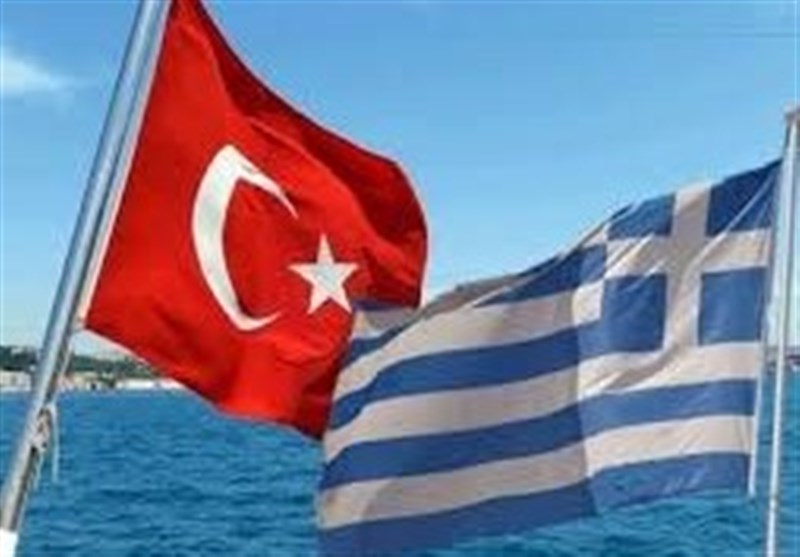
The Eastern Mediterranean region is currently experiencing a new cycle of tensions between Turkey and Greece, which belong to the same system and are members of the North Atlantic Treaty Organization NATO. While the dispute revolves around natural resources, such as natural gas, it essentially boils down to flaring up of old historical enmities rooted in the agreement that established the current borders of the Republic of Turkey after the fall of the Ottoman Empire. Namely, the Turkish government wishes to rectify that historic (in)justice. As historical memory still leaves a trace on the presence, the current tensions in the Eastern Mediterranean, between Turkey and Greece, are not related just to the natural resources discovered over the past few years, but have roots in historical disputes dating back almost an entire century.

Over the past years the Eastern Mediterranean region has turned into a war zone because of the war in Syria and the intervention by international factors, particularly the US and Russia. After the Syrian crisis had, relatively, calmed down and is in a status quo phase, a new/old crisis, that is conflict, emerged over natural gas and maritime border.

Two alliances in the Mediterranean region 

The region is now divided between two alliances. While Greece has the support of France, Egypt and Cyprus, Turkey enjoys relative support from the US, as well as some Arab countries, such as Libya, Algeria and Qatar. The dispute revolves around delineation of territorial waters in the Mediterranean Sea, where the territorial waters overlap and intersect. The UN Convention on Law of the Sea from 1982[2] cannot give a final answer with respect to the existing dispute. The situation suddenly deteriorated after the discovery of natural gas, which is gaining increasing economic and geostrategic relevance.The new escalation in relations between Athens and Ankara came after Turkey announced commencement of exploration of oil and gas resources in the Eastern Mediterranean. Specifically, in an area around 180 kilometers from the Greek island of Kastellorizo/Megisti. Turkey asserts that the exploration efforts are taking place in its continental shelves, while Greece insists that the disputed area is located exclusively within its economic zone.

The dispute could escalate because of the strong stances of both sides, which do not rule out the possibility of a military solution. Precedents harbinger a real threat, because Turkey shot down a Russian Suhoj-24 aircraft, when it came close to the Turkish air space on 24 November 2015. The operation was conducted despite the Russian military presence in Syria and the Mediterranean. Another incident occurred in June 2020, when the Turkish frigate almost targeted a French warship, which was a part of the Operation Irini[3], when it tried to intercept a Turkish ship that was transporting weapons to Libya.

The causes of the current tensions in the Mediterranean can be categorized into four main groups: historical (in)justice (Turkish stance); rich natural resources, (primarily gas); regional leadership and rivalry; and Turkish internal political purposes.

Historical (in)justice

Many countries complain about injustices related to the agreements that they had signed in the past or were forcibly imposed on them. This explains current disagreements among a catalogue of countries, i.e., Morocco and Algeria, Pakistan and India, Iraq and Kuwait, and even countries in Latin America, i.e. Bolivia, which has aspirations related to the part of the Pacific Ocean it lost to Chile at the beginning of the last century.In the case of Turkey, the issue of maritime border of the island of Kastellorizo/Megisti, which lies only 2km off the Turkish coast and 570km from Athens, has now been made topical.

Ankara believes that the Treaty of Lausanne(2) from 1923, which defined the current borders of the Republic of Turkey, according to which many islands in the vicinity of its coast were given to Greece, was unjust.

As the UN Convention on the Law of the Sea from 1982 gave the islands a right to exclusive economic zones, the Greek economic zones of these islands spread out all the way to the Turkish coast.

Although under the leadership of Kemal Ataturk Turkey gained the most from the Treaty of Lausanne(2) from 1923, it also lost dozens of islands and islets (rocks in the sea) to Greece. One should not neglect the fact that the Treaty only partly rectified the injustice made to Turkey by the Treaty of Sèvres from 1920.

The Turkish public now speaks only of the Mediterranean island of Kastellorizo/Megisti and very little of the 18 islands in the Aegean Seam that the Turkish Government was forced to relinquish to Greece, in order to continue the talks on integration into the European Union.

After Turkey yielded the islands, the European Union (EU) renewed the membership talks with Turkey on 17 December 2004, as Greece and Cyprus had refrained from using the right of “veto” on continuation of the process of integration of Turkey into the EU.

Natural resources – gas

In early 21st century, natural gas, as a source of energy, started to become increasingly important, just like oil did in mid last century, and became the main engine of establishment of new geo-political alliances.EU supports Greece in the dispute with Turkey, hoping that Athens would get the natural gas fields, so that it could reduce its dependency on gas, which is mainly supplied from Russia. This strategy is primarily supported by France, and to a lesser extent by Italy and Germany.

Hence, in a way, the EU has sided with Greece and while some EU members are threatening Turkey with sanctions, other, such as Spain, do not support confrontation with Turkey.

The US understanding and support for Turkey are related to the presence of Russia and its ambitions in the region. The US perceives Turkey as an ally that can oppose the plans of Moscow to penetrate the entire Mediterranean from its base in the port of Tartus in Syria. In early June 2020, the US blessed Turkish military assistance to the internationally recognized government in Tripoli, as the renegade General Khalifa Haftar has military and political cooperation with Russia.

In late August 2020, USS Winston S. Churchill destroyer-ship joined the Turkish military exercise in the vicinity of the island of Crete in a mission focused on development of partner capabilities using NATO operational and tactical procedures.

Regional leadership and rivalry

Unlike the Western Mediterranean, where for the time being there is a high level of stability and cooperation among north-coast countries (France, Spain and Italy) and south-coast countries (Morocco and Algeria), the Eastern Mediterranean is going through a kind of groundbreaking changes and establishment of strategic balance as a result of the new Russian concentration of forces in Syria and the Turkish aspiration to be the leader in the region. On the other side, France is trying to prevent that by siding with Greece.The project of Turkish leadership in the Eastern Mediterranean region is Turkish project, supported by both secularists and conservatives. It dates from early eighties of the last century, when the Turkish military and diplomacy envisaged difficulties in the realization of their dream of European integration into and membership in the EU. Turkey has been pursuing this project for quite some time already and President Recep Tayyip Erdogan has only accelerated it by capitalizing on the progress achieved in all the areas, starting from economic to military, and seizing the geopolitical contradiction in the region. This project will continue and will not be halted with the departure of the current President of Turkey because it is deeply rooted in the Turkish national consciousness.

Turkish internal-political purposes 

For five consecutive months already, the public opinion polls have shown a drop in the popularity of the ruling Justice and Development Party (AKP), headed by President Recep Tayyip Erdogan and an increase in the popularity of traditional opposition parties and two new parties, which were established by former AKP senior officials, Ali Babacan and Ahmet Davutoğlu.The ruling AKP party uses the current tensions in the Mediterranean to consolidate its ranks, particularly in Istanbul and Ankara, where the mayors, members of the opposition, have leverage because of the crisis in the Turkish economy caused by the Covid-19 pandemic.

Germany, which chairs the EU in the second half of 2020, took a mediator role so that the crisis in the Mediterranean does not get out of control.  In August 2020, German Minister of Foreign Affair Heiko Maas visited both Ankara and Athens to try to overcome the tensions in the Eastern Mediterranean region in relation to the maritime delineations and exploration of sources of energy.

The strategic options that the EU has at its disposal in dealing with Erdogan are very limited, because the membership talks with Turkey had been frozen for an indefinite period. The option of threats with economic sanctions would definitely not be effective because the sanctions would harm the European companies, primarily those from Germany. Namely, half of Turkish foreign trade exchange is with EU countries.

Analysts of the IFIMES international institute believe that devising of a solution for mitigation of the escalating tensions in the Eastern Mediterranean will not be a simple or easy task. It is believed that according to international treaties there are dozens of islands in the Aegean Sea under Greek sovereignty that are close to the Turkish coast (Greece has 1,200-6,000 islands), and according to the relevant laws each of these islands has its territorial waters and an exclusive economic zone. The existing legal dilemma can be solved exclusively through negotiations of the two parties on resolution of historical facts, which have also become geopolitical.

In the process of delineation of epicontinental shelves of these islands and the exclusive economic zones between Greece and Turkey within the framework of decisions of the international court and UN Convention and in keeping with the international law, it is necessary to also take into account justice and fairness .

Link (ENG): https://www.ifimes.org/en/9895  (Research – 2020 Eastern Mediterranean: New episode of political tensions)


Related Posts

Friedrich Merz, Keir Starmer, António Costa, Donald Trump, Emmanuel Macron, Mark Carney, Ursula von der Leyen, Giorgia Meloni and Sanae Takaichi
ENGLISH

G7 Leaders Gather in Évian Amid Global Uncertainty, Focus on Security, Economy and International Cooperation

16 June, 2026
ENGLISH

Just kind words  in Tivat! Where is the peace!? A deal yes, peace No!What is happening with USA and  EU?  5 elections but no solution!

15 June, 2026
Current Events

Council of Albanian Ambassadors Backs Civic Protests, Calls for Transparency and Protection of National Interests

12 June, 2026

Follow US

Subscribe

Receive Argumentum Magazine by Email

Last Posts

Friedrich Merz, Keir Starmer, António Costa, Donald Trump, Emmanuel Macron, Mark Carney, Ursula von der Leyen, Giorgia Meloni and Sanae Takaichi

G7 Leaders Gather in Évian Amid Global Uncertainty, Focus on Security, Economy and International Cooperation

16 June, 2026

Just kind words  in Tivat! Where is the peace!? A deal yes, peace No!What is happening with USA and  EU?  5 elections but no solution!

15 June, 2026

Council of Albanian Ambassadors Backs Civic Protests, Calls for Transparency and Protection of National Interests

12 June, 2026

Russian Ambassador in Tirana: “Without a Strong and Sovereign Russia, the Creation of a Just World Order Is Impossible”

11 June, 2026

EU-Western Balkans Summit 2026: New Impetus for the Enlargement Debate?

10 June, 2026
Argumentum

“Argumentum”, një proces intelektual …

Contact Us

[email protected]
[email protected]
[email protected]

Follow Us

Media Partner

Register

Receive Argumentum Magazine by Email
  • Home
  • Privacy Policy
  • About Us
  • Contact

© 2022 Argumentum. All Rights Reserved. | NUIS: L91415033Q

Welcome Back!

Login to your account below

Forgotten Password? Sign Up

Create New Account!

Fill the forms bellow to register

*By registering into our website, you agree to the Terms & Conditions and Privacy Policy.
All fields are required. Log In

Retrieve your password

Please enter your username or email address to reset your password.

Log In

Add New Playlist

No Result
View All Result
  • Home
  • OP/ED
  • Interview
  • Realpolitik
  • Current Events
  • Top News
  • YOUR VOICE
  • Shqip

© 2022 Argumentum. All Rights Reserved. | NUIS: L91415033Q

This website uses cookies. By continuing to use this website you are giving consent to cookies being used. Visit our Privacy and Cookie Policy.