





















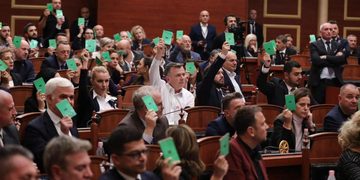

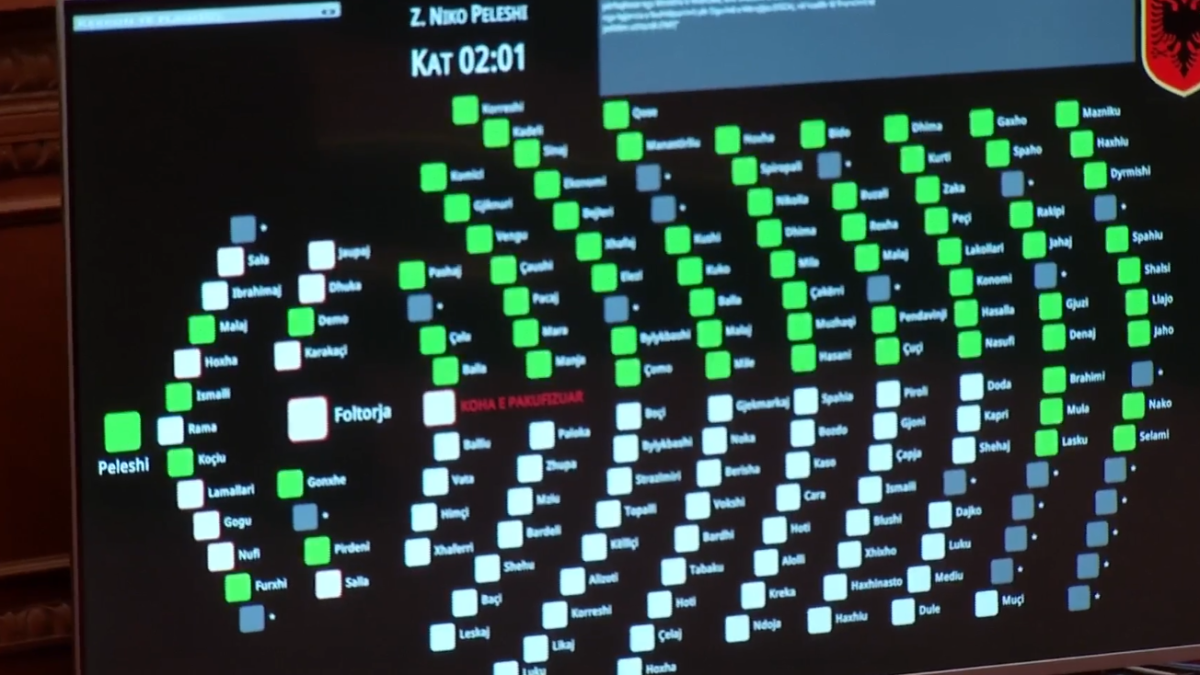
The Albanian Parliament on Monday approved, with 74 votes in favor, no votes against and no abstentions, the loan agreement between the Republic of Albania and the United States of America under the Foreign Military Financing (FMF) program. Only lawmakers from the ruling Socialist Party participated in the vote, while the opposition boycotted the parliamentary session.
The agreement was reviewed during a closed-door session, after the parliamentary majority argued that the documentation contains classified information. The final vote, however, was conducted in an open session.
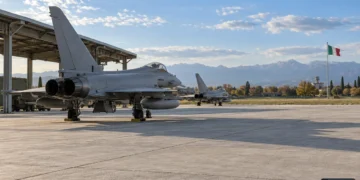
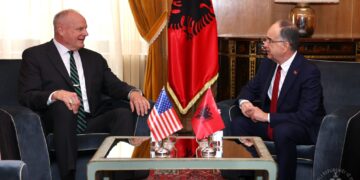
The agreement provides for a $302 million loan that will be used to modernize Albania’s Armed Forces through the procurement of defense equipment, systems, and services in line with NATO standards. Albania will have 48 months to commit the funds and up to 12 years to repay the loan.
Presenting the draft law to Parliament, Minister for Parliamentary Relations Taulant Balla described the agreement as a historic milestone for the country.
“This is a historic agreement for Albania, of particular importance to the country’s national security, which strongly confirms the excellent relations between Albania and the United States. This financing will be used exclusively for the modernization of the Armed Forces, defense equipment, and services in accordance with the highest NATO standards,” Balla said.
What does the agreement include?
The agreement will be concluded between the Ministry of Finance of the Republic of Albania and the U.S. Defense Security Cooperation Agency (DSCA), the agency within the U.S. Department of Defense responsible for administering international security cooperation and defense assistance programs.
The financing is provided under the Foreign Military Financing (FMF) program, a U.S. government instrument that enables allied and partner countries to purchase American defense equipment, systems, and military services. The program is designed to strengthen military capabilities, improve interoperability with NATO allies, and enhance the defense readiness of partner nations.
The $302 million loan is considered one of the largest U.S. military financing packages ever extended to Albania. It comes at a time when NATO is encouraging member states to increase defense spending and accelerate military modernization in response to the evolving security environment in Europe and the broader Euro-Atlantic region.
Opposition: We support the agreement, but not the procedure
As previously announced, the Democratic Party and its allies did not participate in the parliamentary session. While supporting the agreement in principle, the opposition objected to the way it was brought to Parliament, arguing that the procedure violated constitutional requirements.
The chairman of the Democratic Party’s parliamentary group, Gazment Bardhi, proposed that the agreement be ratified during the plenary session scheduled for July 31, allowing sufficient time to comply with constitutional deadlines.
In a statement published on social media, Bardhi said that members of Parliament had not been provided with the full text of the agreement or the accompanying explanatory report, stressing that every lawmaker has the constitutional right to cast an informed vote.
“Today’s plenary session was convened in violation of the Constitution, which clearly stipulates that Parliament cannot vote on a law earlier than one week after its consideration has begun,” Bardhi said.
According to him, the practice requiring MPs to review the agreement only in designated parliamentary premises undermines their constitutional role and prevents a proper legislative review.
Nevertheless, Bardhi emphasized that the opposition does not oppose the substance of the agreement.
“As soon as we are fully informed about its contents, the opposition guarantees its vote in favor. The ratification should take place in full compliance with the Constitution and Parliament’s Rules of Procedure,” he stated.
Bardhi argued that the parliamentary majority rejected the opposition’s proposal to postpone the vote until July 31 and instead proceeded with an accelerated approval process.
The government described the agreement as a strategic step in strengthening Albania’s partnership with the United States and enhancing the country’s defense capabilities. The opposition, meanwhile, maintained that its objections concern only the parliamentary procedure and not the agreement itself or Albania’s strategic cooperation with the United States.
The agreement provides $302 million in financing for the modernization of Albania’s Armed Forces, enabling the acquisition of defense equipment, military systems, and related services that meet NATO standards. It is widely viewed as a strategic investment in Albania’s defense capabilities and its commitments as a NATO member.
© 2026 Argumentum