





By Zlatko Kramarić*|ARGUMENTUM
Abstract
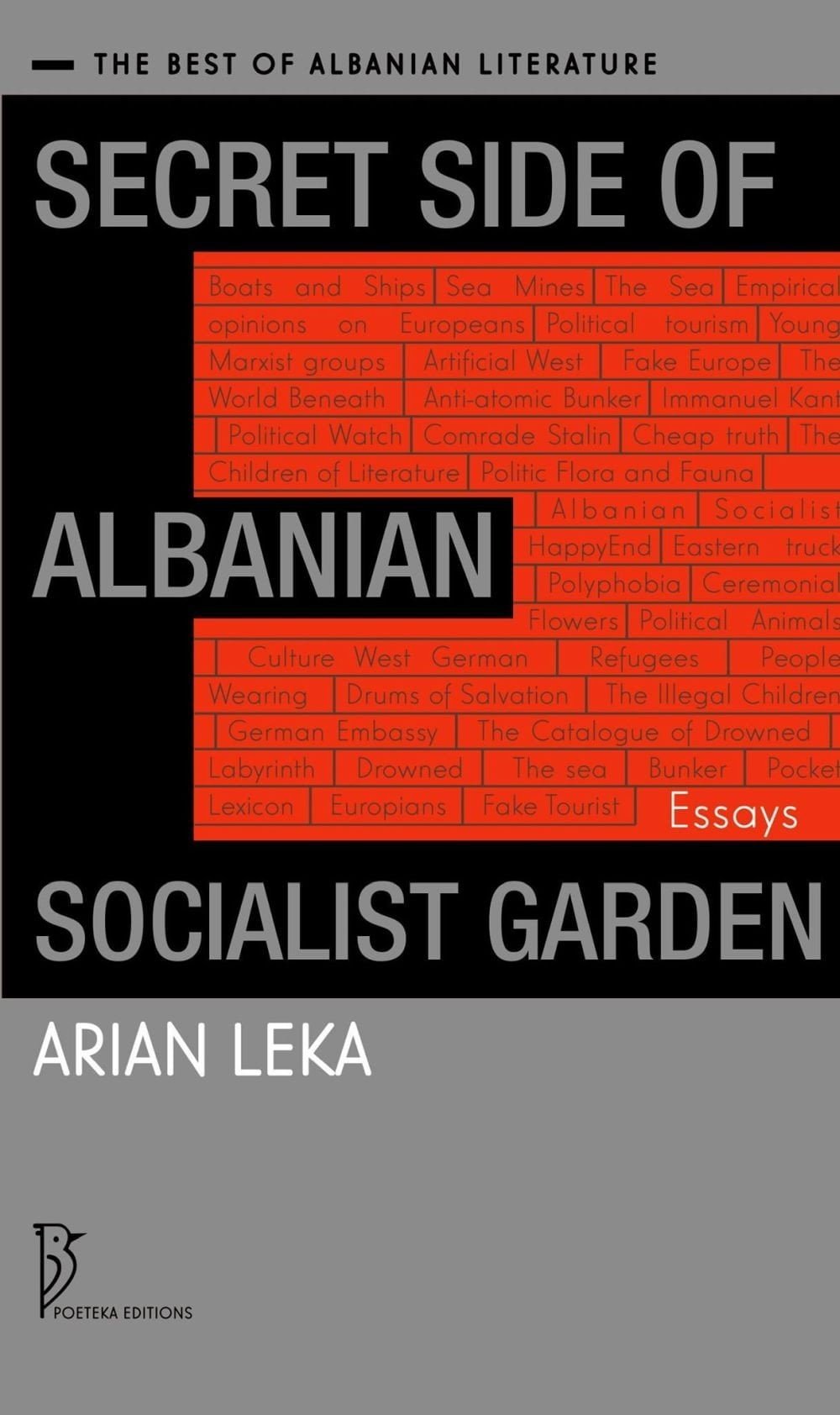
This study examines how Albanian essayist Arian Leka (The Secret Side of the Albanian Socialist Garden, Fraktura, 2025) conceptualizes the European spirit within the context of long-term Albanian nationalism, geographic and cultural isolation, and the fear-shaped mentality that informs Albanian identity. Particular attention is given to the motifs of the sea, cultural seclusion, censorship, the predominance of Russian literature, and Leka’s engagement with Croatian literature, especially Miroslav Krleža. The essay incorporates a comparative framework with Ismail Kadare and Fatos Kongoli, highlighting divergent Albanian literary interpretations of Europe and the European spirit
1. Introduction: Europe as a Mental Horizon
Leka emphasizes that Europe existed in the Albanian imagination as a concept but was largely absent as lived experience:
> “Europe was not absent from the Albanian imagination — it was the experience of Europe that was missing.”^[1] (Leka 2025: 12)
This distinction is crucial for understanding Albanian nationalism: while other European nations developed identity through cultural contact and exchange, Albania developed modernity through isolation, producing a “mental island” effect.^[2]
Leka conceives the European spirit as a space for self-reflection, ethical and cultural confrontation with historical traumas, where knowledge of Europe was accessible primarily through subversive and selective reading.
2. The Sea and Isolation: Geographic and Mental Horizons
In Leka’s essays, the sea symbolizes the contrast between geographic openness and mental confinement:
> “Albanians lived by the sea, but not with the sea.”^[3] (Leka 2025: 61)
Despite possessing two coasts (Adriatic and Ionian), the Hoxha regime transformed the sea into a zone of control rather than freedom. Sloterdijk and Bauman stress that spatial openness is essential for modernity; Leka’s paradox illustrates how political isolation shapes cultural and mental consciousness.^[4]
The sea also represents the mental horizon of Europe—imagined, but practically unexperienced. It is a metaphor for intellectual freedom, critical reflection, and the limits of cultural openness in post-totalitarian Albania.
3. Long-Term Nationalism and Mental Confinement
Leka analyzes Albanian nationalism as having a dual function:
a. Emancipatory and identity-affirming – anti-Ottoman and nation-building.
b. Enclosure and isolationist – under socialism, nationalism became a “self-destructive variant of patriotism”^[5] (Leka 2025: 103).
Without integration into European currents, nationalism remained culturally impoverished, while the European spirit developed through subversive engagement with literary and philosophical works. Leka frames this as a mental labor of self-emancipation.
4. Cultural Isolation: Russian Literature and Western Prohibition
Until 1990, Western literature was largely inaccessible, while Russian classics constituted the primary “window” to Europe:
> “Our Europe was not real; it was a Russian interpretation of Europe.”^[6] (Leka 2025: 84)
This selective reading shaped national memory: deep morally and psychologically, but modernistically impoverished. Only later did Albanians gain partial access to Camus, Kafka, Musil, and Krleža.
5. Leka’s Reception of Croatian Literature
Krleža serves in Leka’s essays as a rare conduit to Europe. Through Kosovar translations, Albanian intellectuals gained:
access to modernist narrative techniques,
insights into social critique and reflection,
a framework for critical comparison with Albanian national experience^[7].
Leka’s reception of Croatian literature illustrates the transnational dynamics of cultural modernization within an isolated society.
6. Comparative Analysis: Kadare and Kongoli
Ismail Kadare interprets Europe as a civilizational horizon, employing allegorical narratives and universalizing Albanian history.
Fatos Kongoli portrays Europe as traumatic and largely inaccessible, focusing on the post-totalitarian individual.
Ardian Leka synthesizes both perspectives, adding a philosophical-essayistic layer: he explores mental and cultural barriers imposed by isolation and dictatorship, and their effect on the perception of Europe and the European spirit.
7. Philosophical-Theoretical Framework
Leka implicitly engages concepts from:
Husserl – phenomenological approach to European experience.
Derrida – language and text as instruments for uncovering hidden cultural layers.
Arendt and Agamben – political and ethical dimensions of isolation and totalitarianism.
Sloterdijk and Bauman – spatial openness, mobility, and cultural modernity^[8].
This theoretical lens enables Leka to conceptualize Europe as a process of self-discovery, not merely as an idealized horizon.
Conclusion: The European Spirit as a Process of Self-Discovery
For Leka, the European spirit is:
a reflective horizon of self-recognition,
a space for confronting myths and historical traumas,
a moral and cultural framework for national renewal.
Leka emphasizes that Europe is experience and process, not a rhetorical label; it requires critical reflection, mental labor, and active engagement with history and internalized mental boundaries^[9].
Notes on the Authors
1. Leka, A. (2025). The Hidden Side of the Albanian Socialist Garden. Zagreb: Fraktura, 12.
2. Ibid., 15.
3. Ibid., 61.
4. Sloterdijk, P. (1998). Spheres I. Frankfurt: Suhrkamp; Bauman, Z. (2000). Liquid Modernity. Cambridge: Polity.
5. Leka, 2025: 103.
6. Ibid., 84.
7. Ibid., 92–97.
8. Husserl, E. (1970). The Crisis of European Sciences. Evanston: Northwestern University Press; Derrida, J. (1978). Writing and Difference. Chicago: University of Chicago Press; Arendt, H. (1951). The Origins of Totalitarianism. New York: Harcourt; Agamben, G. (1998). Homo Sacer. Stanford: Stanford University Press.
9. Leka, 2025: 110–112.
*Zlatko Kramarić is a Croatian publicist, author, and diplomat, currently serving as Ambassador to Albania. Formerly a university professor and politician, he is known for his work in literature, cultural studies, and regional history.
© 2025 Argumentum