
































Dr. Ermir I. Hajdini
Legal Advisor & University Lecturer
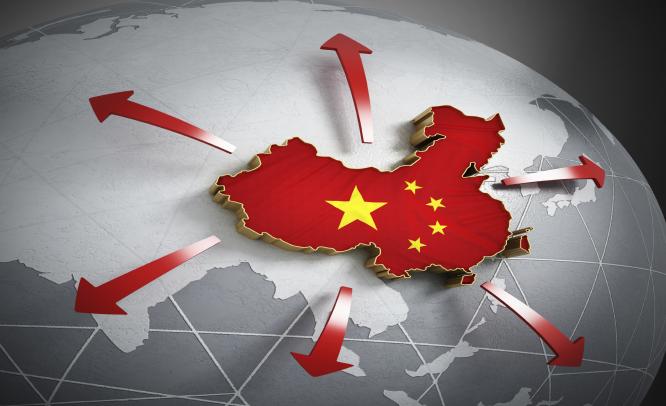
While the academic world and Western diplomatic offices continue to warn of “Debt-Trap Diplomacy,” the reality on the ground is witnessing a far more complex phenomenon. China is not conquering its partners through bankruptcy, but rather integrating them through a new model: Business Efficiency as a Service.
Lessons from Mozambique: Speed as Currency
The case of Mozambique serves as the first “laboratory” of this success. Where Bretton Woods institutions offer loans accompanied by decades of bureaucracy, Beijing offers “turnkey” projects.
- The Maputo-Katembe Bridge: Its completion in record time (less than 4 years) demonstrated that for governments in the Global South, time is the most precious asset [1].
- Efficiency vs. Bureaucracy: Statistics show that Chinese projects in Sub-Saharan Africa have an implementation cycle 40% faster than those funded by the West [2].
United Arab Emirates: “Acquisition” through AI and EV
In the United Arab Emirates (UAE), China is acquiring the “brain” of the state through technological adaptability.
- Artificial Intelligence (AI): Through collaboration with the company G42, the UAE is adopting a Chinese “operating system” that guarantees efficiency without the moral constraints of Silicon Valley [3].
- The EV Revolution: By controlling over 65% of the electric vehicle market in the Emirates (as of April 2026), Beijing has created a structural dependency where both software and energy are in its hands [4].
From Panama to Piraeus: Controlling Global “Choke Points”
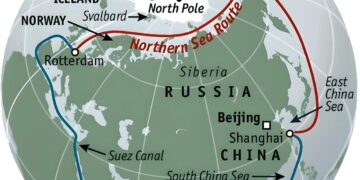
The true power of this model is revealed in the control of the world trade’s vital nodes, where no one can do the job “better or cheaper” than the Chinese.
- The Panama Canal: Despite extraordinary diplomatic pressure from the U.S. (Monroe Doctrine), the Chinese giant Hutchison Ports manages key ports such as Balboa and Cristobal. Why? Because no Western alternative offers the same level of automation and logistical integration required to keep the Canal competitive [5].
- The Port of Piraeus (Greece): Once a declining port, under the management of COSCO, it transformed into the largest port in the Mediterranean. This is not a debt trap, but an “invasion” through Chinese efficiency in the heart of the EU [6].
Conclusion: Paradigm Shift
In this new “Realpolitik,” sovereignty is no longer threatened by tanks, but by dependency on software updates and the management of logistical nodes. Whoever controls the efficiency of the system controls the future of the partner.
Strategic References (Footnotes):
[1] World Bank Data (2025): “Infrastructure Lead Times: A Comparative Study of Maputo-Katembe Bridge.” [2] China-Africa Research Initiative (CARI): “Efficiency and Debt: The Pragmatic Turn in Mozambican Infrastructure.” [3] South China Morning Post (April 15, 2026): “Chinese AI frameworks as the backbone of UAE’s Smart City initiatives.” [4] Gulf Business Review (April 28, 2026): “The EV Dominance: China’s 65% market share in the UAE.” [5] Panama Canal Authority (2026 Reports): “Operational Efficiency and Global Logistical Integration: The role of Hutchison Ports.” [6] Lloyd’s List (2025): “Piraeus Port: From decline to Mediterranean leadership under COSCO management.” [7] Argumentum (April 20, 2026): Hajdini, E. I., “Realpolitik vs. the shadows of Geopolitical taboos.”
© 2026 Argumentum