

• SHQIPËRI
  • KOSOVË
  • MAQEDONIA E VERIUT
  • MALI I ZI
  • Revista në PDF
6 June, 2026
  • Home
  • OP/ED

    Pierre Nora and the institution of memory we lack in Eastern Europe

    The Blueprint of a Diplomatic Debacle: Analyzing Germany’s Historic UNSC Loss

    Cyber Attribution, Corruption, and the False-Flag Question in Albania’s 2022 Alleged Iranian Cyberattack

    Between Russia, Iran and Europe: Azerbaijan as a balancing power in the South Caucasus

    The Zero-Tariff Gate: Sovereignty as a Service in the Sino-African Corridor

    Albania vs. the Sea/ Marginal Notes on A. Leka’s Novel The Hidden Side of the Albanian Socialist Garden

    May 9 and the long shadow of a Letter: Is Europe still Schuman’s Project?

    The Arbnesh of Zadar: A living memory of Albanian identity on the Adriatic coast

    Science Diplomacy and Academic Freedom: A strategic nexus for contemporary diplomacy

  • Interview

    Exclusive Interview with Oleksandr Tyshchenko: A 40-Year Legacy of Chernobyl, Nuclear Risks, and Global Responsibility

    INTERVIEW: ZLATKO KRAMARIĆ – THOUGHTS ON THE OLD CONTINENT

    EXCLUSIVE / Ukrainian Ambassador to Albania, Volodymyr Shkurov: “Ukraine wants peace, but not at the expense of its freedom and independence”

    EXCLUSIVE| Ambassador Tayyar Kagan Atay: Türkiye and Albania, a Strategic Partnership Rooted in Shared Heritage and a Common Vision for the Future

    “Diplomacy, Not War”: Palestinian Ambassador to Albania Calls for Justice, Peace, and Global Action for Gaza

    Exclusive: “Even After Tito – Tito”/ Ambassador Zlatko Kramarić on Authoritarian Legacies and Democracy’s Future in the Balkans

    The Conclusion of the Diplomatic Mission / Ambassador Dancho Markovski: Strengthening Albania-North Macedonia Relations for a Shared European Future

    A Century of Diplomatic Relations Between Albania and Russia: Exclusive Interview with the Russian Ambassador to Albania, H.E. Alexey Zaytsev

    Exclusive/ The chairman of the Freedom Party, Ilir Meta: “The will of the citizens will triumph in Albania, as it did in North Macedonia”

  • Realpolitik

    IBAR? ”Sufficiently! Much ado about nothing! Shart contrasts in Beijing! Where is the exit?!

    Neither peace nor war! Peace with bombs?! IBAR in autumn?! Not another Hormuz in Taivan! 

    IBAR – a springing board or an obstacle? Can we catch the EU Negotiation train 2027? When the dress makes the news!  EU electoral April  ends in a draw 1:1!  

    The European Parliament building in Strasbourg, France with flags waving calmly celebrating peace of the Europe. July 12, 2020.

    EU 2027 or 2037! Even half membership failed! No exit strategy!     

    What next?

    “With diplomatic velvet“! Major question marks! In Washington yes, but  in the White House NO! A strange dinner in Brussels!

    From a great ‘apple of disaccord’ to a  point of  cooperation! A bad start! The strange absence in Davos!

    5 lessons from the American 3 January! Don’t count the chicken before they are hatched! Will NATO freeze in Greenland? Wrong diplomatic messages!

    German Chancellor Friedrich Merz, European Commission President Ursula von der Leyen, Ukraine's President Volodymyr Zelenskiy, U.S. Special Envoy Steve Witkoff and Jared Kushner, son-in-law of U.S. President Donald Trump line up for a family photo opportunity at the Chancellery in Berlin, Germany, December 15, 2025.    REUTERS/Lisi Niesner/Pool

    A Strategy that could change the world! Europe in Berlin! Why an historic compromise? Only charm diplomacy in Athens!

  • Current Events

    Rama alleges ‘hybrid war’ behind protests against Kushner-linked coastal development

    BELGRADE, SERBIA - JUNE 18. 2020: Russian and Serbian flags on display during Russian Foreign Minister Sergei Lavrov's visit to the Liberators of Belgrade Memorial. Valery Sharifulin/TASS,Image: 533095429, License: Rights-managed, Restrictions: UWAGA! Zdjęcia zawierają oryginalny opis dostawcy (ITAR-TASS). Szczególnie w związku z agresją Rosji na Ukrainę mogą zawierać przekaz niezgodny z faktami. Zweryfikuj go przed publikacją, Model Release: no, Credit line: Valery Sharifulin / TASS / Forum

    Balkan Maskirovka: Why Moscow’s “Distancing” Is Only an Operation for the Survival of Vučić’s Regime

    Serbia – China 2026: Technological partnership, geopolitical positioning and a new phase of the Chinese presence in the Western Balkans

    The Digital Protectorate: How the EU AI Act Codified Silicon Valley’s Monopoly

    The 28th MFC Annual Conference in Durrës / Sulaj: Microfinance remains a key instrument for financial inclusion

    Serbia at the Crossroads of EU Integration and Geopolitical Balancing: IFIMES Analysis

    Tirana – €20 Million EU–Banking Agreement Boosts Albanian SMEs

    The Myth of Independence: How Chinese Efficiency is Rewriting the Constitution of Modern Geopolitics!

    Europe Yesterday and Today: Why 9 May Still Matters

  • Top News

    Rama alleges ‘hybrid war’ behind protests against Kushner-linked coastal development

    No End in Sight: Trump, Netanyahu and the Expanding Middle East War

    Tirana – €20 Million EU–Banking Agreement Boosts Albanian SMEs

    “EU4Municipalities II” Project, a Strategic Investment for Strengthening Municipalities and Accelerating Albania’s Path towards the EU

    Albania, Italy deepen defence ties with naval shipbuilding deal

    U.S. Embassy: Iran-Linked Groups May Target Americans and Iranian Opposition in Albania

    The Council of Albanian Ambassadors disappointed with the voting of the draft law on the foreign service in the parliamentary committees.

    Prime Minister Edi Rama Addresses Israel’s Knesset in Historic Special Session

    Kazakhstan’s Strategic Reform Agenda: Stability, Modern Governance, and Responsible Diplomacy

  • YOUR VOICE
  • Shqip
No Result
View All Result
Argumentum
  • Home
  • OP/ED

    Pierre Nora and the institution of memory we lack in Eastern Europe

    The Blueprint of a Diplomatic Debacle: Analyzing Germany’s Historic UNSC Loss

    Cyber Attribution, Corruption, and the False-Flag Question in Albania’s 2022 Alleged Iranian Cyberattack

    Between Russia, Iran and Europe: Azerbaijan as a balancing power in the South Caucasus

    The Zero-Tariff Gate: Sovereignty as a Service in the Sino-African Corridor

    Albania vs. the Sea/ Marginal Notes on A. Leka’s Novel The Hidden Side of the Albanian Socialist Garden

    May 9 and the long shadow of a Letter: Is Europe still Schuman’s Project?

    The Arbnesh of Zadar: A living memory of Albanian identity on the Adriatic coast

    Science Diplomacy and Academic Freedom: A strategic nexus for contemporary diplomacy

  • Interview

    Exclusive Interview with Oleksandr Tyshchenko: A 40-Year Legacy of Chernobyl, Nuclear Risks, and Global Responsibility

    INTERVIEW: ZLATKO KRAMARIĆ – THOUGHTS ON THE OLD CONTINENT

    EXCLUSIVE / Ukrainian Ambassador to Albania, Volodymyr Shkurov: “Ukraine wants peace, but not at the expense of its freedom and independence”

    EXCLUSIVE| Ambassador Tayyar Kagan Atay: Türkiye and Albania, a Strategic Partnership Rooted in Shared Heritage and a Common Vision for the Future

    “Diplomacy, Not War”: Palestinian Ambassador to Albania Calls for Justice, Peace, and Global Action for Gaza

    Exclusive: “Even After Tito – Tito”/ Ambassador Zlatko Kramarić on Authoritarian Legacies and Democracy’s Future in the Balkans

    The Conclusion of the Diplomatic Mission / Ambassador Dancho Markovski: Strengthening Albania-North Macedonia Relations for a Shared European Future

    A Century of Diplomatic Relations Between Albania and Russia: Exclusive Interview with the Russian Ambassador to Albania, H.E. Alexey Zaytsev

    Exclusive/ The chairman of the Freedom Party, Ilir Meta: “The will of the citizens will triumph in Albania, as it did in North Macedonia”

  • Realpolitik

    IBAR? ”Sufficiently! Much ado about nothing! Shart contrasts in Beijing! Where is the exit?!

    Neither peace nor war! Peace with bombs?! IBAR in autumn?! Not another Hormuz in Taivan! 

    IBAR – a springing board or an obstacle? Can we catch the EU Negotiation train 2027? When the dress makes the news!  EU electoral April  ends in a draw 1:1!  

    The European Parliament building in Strasbourg, France with flags waving calmly celebrating peace of the Europe. July 12, 2020.

    EU 2027 or 2037! Even half membership failed! No exit strategy!     

    What next?

    “With diplomatic velvet“! Major question marks! In Washington yes, but  in the White House NO! A strange dinner in Brussels!

    From a great ‘apple of disaccord’ to a  point of  cooperation! A bad start! The strange absence in Davos!

    5 lessons from the American 3 January! Don’t count the chicken before they are hatched! Will NATO freeze in Greenland? Wrong diplomatic messages!

    German Chancellor Friedrich Merz, European Commission President Ursula von der Leyen, Ukraine's President Volodymyr Zelenskiy, U.S. Special Envoy Steve Witkoff and Jared Kushner, son-in-law of U.S. President Donald Trump line up for a family photo opportunity at the Chancellery in Berlin, Germany, December 15, 2025.    REUTERS/Lisi Niesner/Pool

    A Strategy that could change the world! Europe in Berlin! Why an historic compromise? Only charm diplomacy in Athens!

  • Current Events

    Rama alleges ‘hybrid war’ behind protests against Kushner-linked coastal development

    BELGRADE, SERBIA - JUNE 18. 2020: Russian and Serbian flags on display during Russian Foreign Minister Sergei Lavrov's visit to the Liberators of Belgrade Memorial. Valery Sharifulin/TASS,Image: 533095429, License: Rights-managed, Restrictions: UWAGA! Zdjęcia zawierają oryginalny opis dostawcy (ITAR-TASS). Szczególnie w związku z agresją Rosji na Ukrainę mogą zawierać przekaz niezgodny z faktami. Zweryfikuj go przed publikacją, Model Release: no, Credit line: Valery Sharifulin / TASS / Forum

    Balkan Maskirovka: Why Moscow’s “Distancing” Is Only an Operation for the Survival of Vučić’s Regime

    Serbia – China 2026: Technological partnership, geopolitical positioning and a new phase of the Chinese presence in the Western Balkans

    The Digital Protectorate: How the EU AI Act Codified Silicon Valley’s Monopoly

    The 28th MFC Annual Conference in Durrës / Sulaj: Microfinance remains a key instrument for financial inclusion

    Serbia at the Crossroads of EU Integration and Geopolitical Balancing: IFIMES Analysis

    Tirana – €20 Million EU–Banking Agreement Boosts Albanian SMEs

    The Myth of Independence: How Chinese Efficiency is Rewriting the Constitution of Modern Geopolitics!

    Europe Yesterday and Today: Why 9 May Still Matters

  • Top News

    Rama alleges ‘hybrid war’ behind protests against Kushner-linked coastal development

    No End in Sight: Trump, Netanyahu and the Expanding Middle East War

    Tirana – €20 Million EU–Banking Agreement Boosts Albanian SMEs

    “EU4Municipalities II” Project, a Strategic Investment for Strengthening Municipalities and Accelerating Albania’s Path towards the EU

    Albania, Italy deepen defence ties with naval shipbuilding deal

    U.S. Embassy: Iran-Linked Groups May Target Americans and Iranian Opposition in Albania

    The Council of Albanian Ambassadors disappointed with the voting of the draft law on the foreign service in the parliamentary committees.

    Prime Minister Edi Rama Addresses Israel’s Knesset in Historic Special Session

    Kazakhstan’s Strategic Reform Agenda: Stability, Modern Governance, and Responsible Diplomacy

  • YOUR VOICE
  • Shqip
No Result
View All Result
Argumentum
No Result
View All Result
Home ENGLISH

Bishops of Europe on Auschwitz-Birkenau liberation anniversary: No to anti-Semitism and political manipulation of the truth

25 January, 2020
in ENGLISH, English Top News
A A
Share on FacebookShare on Twitter

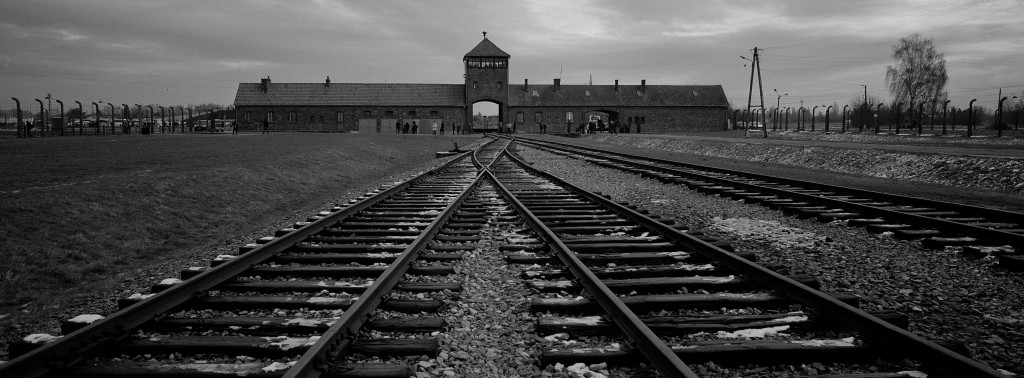
The 75th anniversary of the liberation of the Auschwitz-Birkenau concentration camp, in the spirit of Pope Francis’ words, obliges us to expressly fight against all acts that trample on human dignity: racism, xenophobia and anti-Semitism. We cannot allow the truth to be ignored or manipulated for immediate political needs – we read in the Statement issued by the Presidency of the Council of European Bishops’ Conferences (CCEE) and the President of the Commission of the Bishops’ Conferences of the European Union (COMECE) on behalf of the bishops of Europe.

The bishops of Europe indicate that although 75 years have already passed since the liberation of the German concentration camp Auschwitz-Birkenau, this place still inspires terror. They remember that it was the largest Nazi concentration camp, opened in 1940 in the occupied Polish territories.

“On this anniversary, we appeal to the modern world for reconciliation and peace, for respect for each nation’s right to exist and to freedom, to independence, to maintain its own culture. We cannot allow the truth to be ignored or manipulated for immediate political needs. This appeal is extremely important now, for – despite the dramatic experience of the past – the world in which we live is still exposed to new threats and new manifestations of violence. Cruel wars, genocide, persecution, and different forms of fanaticism are still taking place, although history teaches us that violence never leads to peace but, on the contrary, breeds more violence and death” – we read in the Statement issued by the Bishops of Europe.

The bishops underline that Auschwitz has become a symbol of all German concentration camps, and even of all such extermination sites. “It is like a climax of hatred against man which took its death toll in the 20th century. It is here that the thesis on the fundamental inequality of people was brought to its final limits. Here, the Nazis took the power to decide who is human and who is not. Here, euthanasia met with eugenics. Auschwitz-Birkenau is a result of the system based on the ideology of national socialism, which meant trampling the dignity of man who is made in the image of God. Another totalitarianism, namely communism, acted quite similarly, also reaching a death toll of millions” – the Bishops of Europe write.

They add that, every year hundreds of thousands of people visit this camp. The last three Popes – St. John Paul II, Benedict XVI and Francis – were also among the visitors. The Bishops recall, among other things, the words that Pope Francis addressed a few days ago to a delegation of the “Simon Wiesenthal Center”: “May the anniversary of the unspeakable cruelty that humanity learned of seventy-five years ago serve as a summons to pause, to be still and to remember. We need to do this, lest we become indifferent”.

The Bishops also appeal to light candles and say a prayer for people murdered in death camps of all nationalities and religions and for their relatives on 27 January at 15:00, that is, at the hour of the liberation of Auschwitz-Birkenau concentration camp. “Let our prayer broaden the reconciliation and brotherhood, of which the opposite is hostility, destructive conflicts and fueled misunderstandings” – we read in the Statement.

On behalf of the Bishops of Europe, the Statement was signed by the Presidency of the Council of European Bishops’ Conferences (CCEE) consisting of: President Cardinal Angelo Bagnasco, Vice-President Cardinal Vincent Nichols, Vice-President Archbishop Stanisław Gądecki and by the President of the Bishops’ Conferences of the European Union (COMECE) Cardinal Jean-Claude Hollerich./argumentum.al

Full text of the Statement:

STATEMENT

FROM THE PRESIDENCY OF THE COUNCIL

OF EUROPEAN BISHOPS’ CONFERENCES (CCEE)

AND FROM THE PRESIDENT

OF THE COMMISSION OF THE BISHOPS’ CONFERENCES OF THE

EUROPEAN UNION (COMECE)

ON THE 75th ANNIVERSARY OF THE LIBERATION

OF THE GERMAN NAZI EXTERMINATION CAMP

AUSCHWITZ-BIRKENAU

75 years have already passed since the liberation of the German concentration camp Auschwitz-Birkenau (27/01/1945), and this place still inspires terror.

1. It was the largest Nazi concentration camp, opened in 1940 in the occupied Polish territories. Initially intended for Poles (Auschwitz), it was significantly expanded in the area of the neighboring Brzezinka (Auschwitz-Birkenau) and in the years between 1942-1945 – as part of “the Final Solution” (Endlösung) – it became a place of mass extermination of the Jewish people. In the concentration camp Auschwitz-Birkenau, the German National Socialists murdered over a million Jews, tens of thousands of Poles (70-75,000), Roma (21,000), Russians (15,000) and several thousand prisoners of other nationalities. Due to the enormity of the Jewish victims, it is the largest site of mass genocide in the world.

Auschwitz has become a symbol of all German concentration camps, and even of all such extermination sites. It is like a climax of hatred against man which took its death toll in the 20th century. It is here that the thesis on the fundamental inequality of people was brought to its final limits. Here, the Nazis took the power to decide who is human and who is not. Here, euthanasia met with eugenics. Auschwitz-Birkenau is a result of the system based on the ideology of national socialism, which meant trampling the dignity of man who is made in the image of God. Another totalitarianism, namely communism, acted quite similarly, also reaching a death toll of millions.

2. Today, hundreds of thousands of people visit this camp every year. The last three Popes were also among the visitors.

St. John Paul II visited Auschwitz-Birkenau during his first pilgrimage to Poland (7 June 1979). He went through the camp gate that bears the inscription “Arbeit macht frei,” spent a moment in Saint Maximilian Maria Kolbe’s death cell and prayed in the courtyard of block No.11 where prisoners were shot. Then he went to Brzezinka, and there he celebrated Holy Mass. During his homily, he said: “I pause with you, dear participants in this encounter, before the inscription in Hebrew. This inscription awakens the memory of the People whose sons and daughters were intended for total extermination. This People draws its origin from Abraham, our father in faith (cf. Rom 4:12), as was expressed by Paul of Tarsus. The very people that received from God the commandment ‘Thou shalt not kill’, itself experienced in a special measure what is meant by killing. […] A nation can never grow at another’s expense; at the cost of the enslavement of the other; at the cost of conquest, outrage, exploitation and death.”

Pope Benedict XVI passed through the camp gate alone (28 May 2006) and during the prayer service at the International Monument to the Martyrdom of Nations, he gave a speech in which he said, among other things: “Like John Paul II, I have walked alongside the inscriptions in various languages erected

in memory of those who died here. There is one in Hebrew. The rulers of the Third Reich wanted to crush the entire Jewish people, to cancel it from the register of the peoples of the earth. […] Deep down those vicious criminals, by wiping out this people, wanted to kill the God who called Abraham, who spoke on Sinai and laid down principles to serve as a guide for mankind: principles that are eternally valid. […] By destroying Israel, by the Shoah, they ultimately wanted to tear up the taproot of the Christian faith and to replace it with a faith of their own invention: faith in the rule of man, the rule of the powerful. […] behind these inscriptions is hidden the fate of countless human beings. They jar our memory; they touch our hearts. They have no desire to instill hatred in us: instead, they show us the terrifying effect of hatred.”

Pope Francis during his visit to the former Auschwitz-Birkenau concentration camp (29/07/2016) followed in the footsteps of both his predecessors. He made no speech, but his silent presence was very eloquent. In the memorial book he wrote: “Lord, have mercy on your people. Lord, we ask pardon for such cruelty.” He concluded his visit with a prayer at the Monument to the Martyrdom of Nations.

3. A few days ago, Pope Francis made an appeal: “May the anniversary of the unspeakable cruelty that humanity learned of seventy-five years ago serve as a summons to pause, to be still and to remember. We need to do this, lest we become indifferent” (Address to a delegation of the “Simon Wiesenthal Center”, 20 January 2020).

The 75th anniversary of the liberation of the Auschwitz-Birkenau concentration camp, in the spirit of Pope Francis’ words, obliges us to expressly fight against all acts that trample on human dignity: racism, xenophobia and anti-Semitism. On this anniversary, we appeal to the modern world for reconciliation and peace, for respect for each nation’s right to exist and to freedom, to independence, to maintain its own culture. We cannot allow the truth to be ignored or manipulated for immediate political needs. This appeal is extremely important now, for – despite the dramatic experience of the past – the world in which we live is still exposed to new threats and new manifestations of violence. Cruel wars, genocide, persecution, and different forms of fanaticism are still taking place, although history teaches us that violence never leads to peace but, on the contrary, breeds more violence and death.

4. It should be recalled that although after World War II reconciliation between nations seemed humanly impossible, yet, united in the love for Christ, we were able to forgive and ask for forgiveness. The testimony of this was the Letter addressed by the Polish Bishops to the German Bishops in 1965. The experiences from the past teach us how important and fruitful it is to build a Europe of reconciled and forgiving nations.

On 27 January at 15:00, that is, at the hour of the liberation of Auschwitz-Birkenau concentration camp, let us light candles and say a prayer for people murdered in death camps of all nationalities and religions and for their relatives. Let our prayers broaden the reconciliation and brotherhood, of which the opposite is hostility, destructive conflicts and fueled misunderstandings. May the power of Christ’s love prevail in us.

Cardinal Angelo BAGNASCO President of the Council of European Bishops’ Conferences (CCEE)

Cardinal Jean-Claude HOLLERICH

President of the Commission of the Bishops’ Conferences of the European Union (COMECE)

Cardinal Vincent NICHOLS Vice-President of the Council of European Bishops’ Conferences (CCEE)

Archbishop Stanisław GĄDECKI Vice-President of the Council of European Bishops’ Conferences (CCEE)

Genoa, Brussels, London, Warsaw – January 25, 2020

© Argumentum. 
Related Posts

Current Events

Rama alleges ‘hybrid war’ behind protests against Kushner-linked coastal development

5 June, 2026
ENGLISH

Pierre Nora and the institution of memory we lack in Eastern Europe

5 June, 2026
BELGRADE, SERBIA - JUNE 18. 2020: Russian and Serbian flags on display during Russian Foreign Minister Sergei Lavrov's visit to the Liberators of Belgrade Memorial. Valery Sharifulin/TASS,Image: 533095429, License: Rights-managed, Restrictions: UWAGA! Zdjęcia zawierają oryginalny opis dostawcy (ITAR-TASS). Szczególnie w związku z agresją Rosji na Ukrainę mogą zawierać przekaz niezgodny z faktami. Zweryfikuj go przed publikacją, Model Release: no, Credit line: Valery Sharifulin / TASS / Forum
Current Events

Balkan Maskirovka: Why Moscow’s “Distancing” Is Only an Operation for the Survival of Vučić’s Regime

5 June, 2026

Follow US

Subscribe

Receive Argumentum Magazine by Email

Last Posts

Rama alleges ‘hybrid war’ behind protests against Kushner-linked coastal development

5 June, 2026

Pierre Nora and the institution of memory we lack in Eastern Europe

5 June, 2026
BELGRADE, SERBIA - JUNE 18. 2020: Russian and Serbian flags on display during Russian Foreign Minister Sergei Lavrov's visit to the Liberators of Belgrade Memorial. Valery Sharifulin/TASS,Image: 533095429, License: Rights-managed, Restrictions: UWAGA! Zdjęcia zawierają oryginalny opis dostawcy (ITAR-TASS). Szczególnie w związku z agresją Rosji na Ukrainę mogą zawierać przekaz niezgodny z faktami. Zweryfikuj go przed publikacją, Model Release: no, Credit line: Valery Sharifulin / TASS / Forum

Balkan Maskirovka: Why Moscow’s “Distancing” Is Only an Operation for the Survival of Vučić’s Regime

5 June, 2026

The Blueprint of a Diplomatic Debacle: Analyzing Germany’s Historic UNSC Loss

4 June, 2026

Serbia – China 2026: Technological partnership, geopolitical positioning and a new phase of the Chinese presence in the Western Balkans

1 June, 2026
Argumentum

“Argumentum”, një proces intelektual …

Contact Us

[email protected]
[email protected]
[email protected]

Follow Us

Media Partner

Register

Receive Argumentum Magazine by Email
  • Home
  • Privacy Policy
  • About Us
  • Contact

© 2022 Argumentum. All Rights Reserved. | NUIS: L91415033Q

Welcome Back!

Login to your account below

Forgotten Password? Sign Up

Create New Account!

Fill the forms bellow to register

*By registering into our website, you agree to the Terms & Conditions and Privacy Policy.
All fields are required. Log In

Retrieve your password

Please enter your username or email address to reset your password.

Log In

Add New Playlist

No Result
View All Result
  • Home
  • OP/ED
  • Interview
  • Realpolitik
  • Current Events
  • Top News
  • YOUR VOICE
  • Shqip

© 2022 Argumentum. All Rights Reserved. | NUIS: L91415033Q

This website uses cookies. By continuing to use this website you are giving consent to cookies being used. Visit our Privacy and Cookie Policy.