






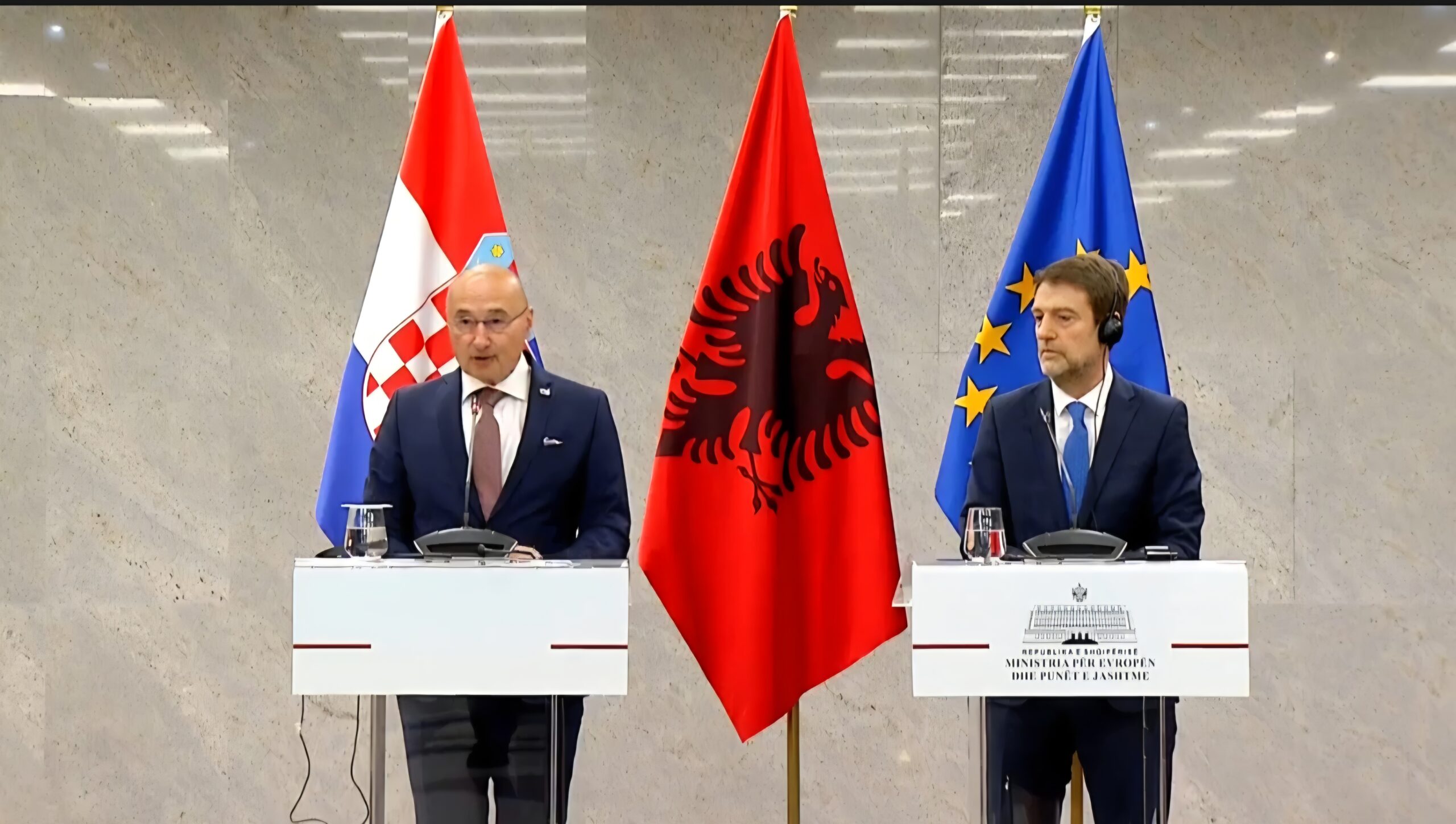
The official visit to Tirana by Croatia’s Minister of Foreign and European Affairs, Gordan Grlić Radman, reaffirmed the high level of relations between Albania and Croatia while outlining new directions for strengthening the strategic partnership between the two countries. During talks with Albania’s Minister for Europe and Foreign Affairs, Ferit Hoxha, the discussions focused on Albania’s European integration process, economic cooperation, infrastructure and energy development, as well as coordination in the fields of security and defense within the framework of NATO.
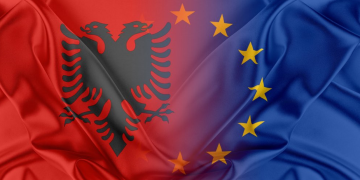
In their joint press conference, the two ministers emphasized that the strategic partnership established in 2018 provides a solid foundation for expanding cooperation in areas of mutual interest, while Croatia reiterated its unwavering support for Albania’s path toward membership in the European Union.
Ferit Hoxha: The Strategic Partnership Is Entering a New Phase
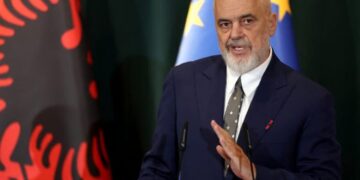
Minister Ferit Hoxha stated that his meeting with his Croatian counterpart focused on strengthening bilateral relations and implementing the Strategic Partnership Action Plan, stressing that relations between Albania and Croatia are built upon shared Euro-Atlantic values and a common vision of a stable, integrated Balkan region firmly anchored in the European Union.
He recalled that since 2018 the two countries have developed a strategic partnership that extends beyond traditional diplomatic relations, encompassing political coordination, economic cooperation, and security collaboration. According to Hoxha, one of the next major objectives is the organization of the first joint meeting of the Albanian and Croatian governments, an initiative expected to establish a new institutional framework for bilateral cooperation.
A significant portion of the discussions was devoted to Albania’s European Union accession process. Hoxha thanked Croatia for its continued political backing and technical assistance throughout the negotiation process, describing Croatia’s accession experience as an inspiring model for Albania and other aspiring EU members.
The Albanian minister also highlighted the recent progress in accession negotiations, referring to the provisional closure of Chapters 25, 26, and 30. He reaffirmed the Albanian government’s objective of completing the technical phase of negotiations by the end of 2027, with the ambition of securing EU membership before the end of this decade. Hoxha underlined that the reform process would continue without interruption, emphasizing that these reforms are not solely aimed at EU accession but also at modernizing the Albanian state and improving the quality of life for its citizens.
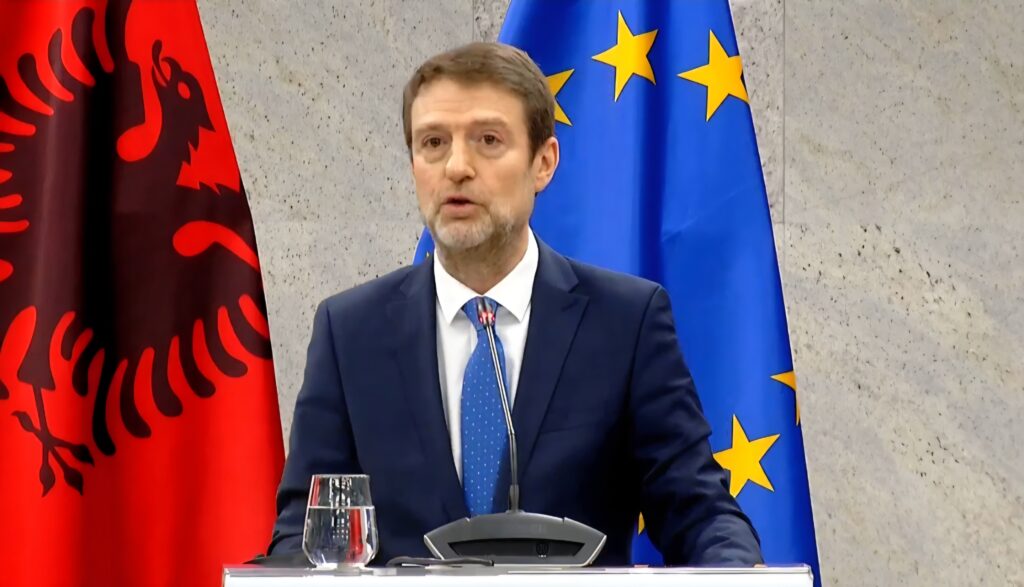
On the economic front, Hoxha announced that Albania and Croatia intend to deepen cooperation in investment, energy, tourism, and infrastructure. He confirmed that Tirana will host the sixth session of the Joint Economic Cooperation Commission in October, where both sides are expected to identify concrete projects and expand bilateral investment opportunities.
The minister also stressed the importance of improving transport connectivity between the two countries through direct air links and, where feasible, maritime connections. He highlighted strategic regional projects such as the Blue Corridor, Corridor VIII, and the Ionian-Adriatic Pipeline (IAP), noting that these initiatives will contribute not only to economic development and regional connectivity but also to enhanced energy security and NATO’s military mobility.
Concluding his remarks, Hoxha praised the Albanian community in Croatia as an important bridge of friendship between the two nations. He also announced that beginning with the 2026–2027 academic year, the Croatian language will be introduced for the first time as an elective foreign language at the Faculty of Foreign Languages in Albania, marking another step toward strengthening cultural and academic cooperation.
Gordan Grlić Radman: Albania Has Earned Its Place in the European Union
Croatian Minister of Foreign and European Affairs Gordan Grlić Radman described Albania as a strategic partner, a trusted NATO ally, and a country that has demonstrated consistent progress on its path toward European Union membership. He stated that Croatia fully supports Albania’s accession, adding that the country “has waited long enough” to become part of the European family.
Radman congratulated the Albanian authorities on the provisional closure of Chapters 25, 26, and 30, describing the achievement as clear evidence of Albania’s commitment to reforms and alignment with European standards. He also praised Albania’s full alignment with the European Union’s Common Foreign and Security Policy, considering it an important indicator of the country’s credibility as an EU candidate.
According to the Croatian minister, the EU enlargement process remains merit-based and depends on each candidate country’s tangible results. In this context, he noted that Albania is progressing at an impressive pace, surpassing several other candidate countries through the implementation of reforms and concrete achievements.
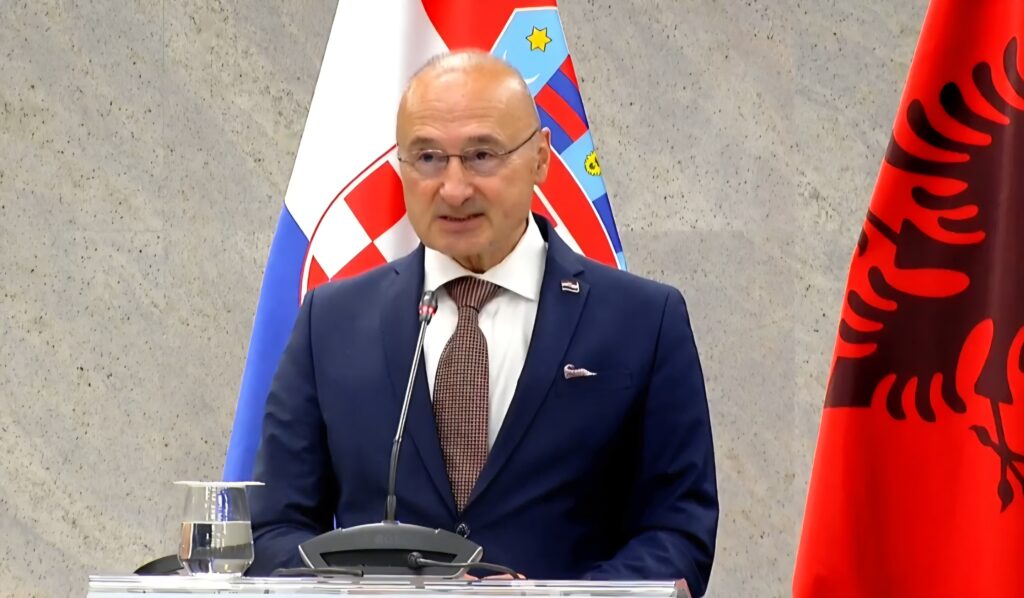
Radman assured Albania that Croatia will continue to provide technical expertise, institutional support, and practical experience throughout every stage of the accession negotiations.
Regarding economic relations, he described Albania as a reliable economic partner and emphasized the considerable potential for expanding cooperation in transport, energy, infrastructure, defense, and tourism. He pointed to the lack of direct air connections between the two countries, noting that although Dubrovnik lies only about 270 kilometers from Tirana, travel often takes several hours because there are no direct flights.
The Croatian minister also underlined the strategic importance of regional initiatives such as the Adriatic-Ionian Corridor and the Ionian-Adriatic Pipeline, which he said will strengthen regional connectivity, energy security, and economic development across Southeast Europe.
On security issues, Radman highlighted cooperation in protecting the Adriatic Sea, the trilateral partnership among Croatia, Albania, and Kosovo, as well as close coordination in combating irregular migration and strengthening border security. He also praised Albania’s active participation in the Three Seas Initiative, describing it as evidence of the country’s growing commitment to regional connectivity, investment, and economic cooperation.
In his concluding remarks, the Croatian foreign minister reaffirmed Croatia’s strong support for the European perspective of the Western Balkans and expressed confidence that cooperation between Zagreb and Tirana will continue to deepen across all areas of shared interest.
The visit of Gordan Grlić Radman to Albania demonstrated that the strategic partnership between the two countries is entering a new phase. Beyond Croatia’s firm political support for Albania’s EU aspirations, both governments are seeking to translate their partnership into tangible cooperation through joint infrastructure, energy, and economic projects while strengthening coordination on regional security. As a result, Albanian-Croatian relations are increasingly emerging as one of the most dynamic strategic partnerships in the Adriatic and Western Balkans.
© 2026 Argumentum