






































By Prof. Assoc. Dr. Bledar Kurti
Europe has long recognized that its greatest strength does not lie solely in economic power, military capability, or political institutions, but in its capacity to generate knowledge, foster innovation, and educate future generations.
Since the establishment of the first medieval universities, European higher education has served as the intellectual backbone of the continent, shaping scientific discoveries, democratic values, and cultural development. Today, as Europe faces unprecedented geopolitical, technological, demographic, and environmental challenges, universities are once again assuming a transformative role. Through the European Universities Initiative, launched by the European Commission in 2019, higher education institutions are evolving from independent actors into interconnected academic ecosystems that transcend national borders and redefine what European cooperation can achieve.
The European University Alliances represent far more than partnerships between institutions. They embody a new vision of Europe itself, a continent where knowledge circulates freely, research is conducted collaboratively, innovation knows no borders, and students develop not only professional competencies but also a genuine European identity.
These alliances are gradually creating a common academic space in which universities share educational resources, jointly develop curricula, establish integrated research platforms, and cooperate in addressing society’s most pressing challenges. In doing so, they are becoming one of the European Union’s most successful instruments for integration, competitiveness, and long-term strategic resilience.
Unlike traditional cooperation agreements or student exchange programs, European University Alliances are designed to fundamentally transform the way universities operate. For decades, the Erasmus Programme has rightly been celebrated as one of the European Union’s greatest achievements, enabling millions of students to study abroad and experience different cultures. Yet the new alliances move significantly beyond mobility alone. Their ambition is to create genuine European campuses where teaching, research, administration, innovation, and community engagement become shared responsibilities among partner institutions.
This new model allows students to attend courses offered by multiple universities, participate in joint degree programs, collaborate on international research projects, and interact daily with peers from different countries through both physical and virtual mobility. Faculty members benefit from integrated research networks, shared laboratories, and collaborative teaching environments, while university administrations exchange best practices in governance, digitalization, quality assurance, and institutional management. Rather than functioning as separate institutions connected through occasional projects, alliance members increasingly operate as components of a larger European academic community.
The significance of these alliances extends well beyond higher education itself. Research has become one of the defining pillars of Europe’s competitiveness in the global economy, and modern scientific discovery increasingly depends on international collaboration. Environment, artificial intelligence, cybersecurity, public health, energy security, demographic shifts, and sustainable development are challenges that no university or even no single country can solve independently. European University Alliances provide researchers with access to broader expertise, multidisciplinary teams, advanced infrastructure, and larger funding opportunities, particularly through Horizon Europe and other collaborative research programs.
The resulting synergy significantly enhances scientific productivity. Researchers who previously worked within national academic systems now engage with colleagues across Europe, combining different methodological traditions, disciplinary perspectives, and technological capabilities. Young scientists benefit from joint doctoral supervision, international research mobility, and access to wider scholarly communities. This interconnected environment accelerates innovation while reducing duplication of effort, allowing universities to specialize according to their strengths while contributing to a collective European research agenda.
Equally important is the growing contribution of university alliances to regional development. Modern universities are no longer viewed solely as educational institutions but increasingly as engines of economic growth, technological innovation, and social transformation. Across Europe, alliance universities are strengthening partnerships with local governments, industries, research centers, and civil society organizations to stimulate entrepreneurship, support digital and green transitions, and improve regional competitiveness.
Innovation hubs, startup incubators, technology transfer offices, and collaborative research centers are becoming central components of regional development strategies. Universities create highly qualified human capital while simultaneously attracting investment, supporting local businesses, and fostering innovation ecosystems capable of competing internationally. For many regions, particularly those located outside major metropolitan centers, universities represent the primary source of knowledge-based economic development. Their integration into European alliances therefore generates benefits that extend well beyond campus boundaries, strengthening entire communities and regional economies.
Importantly, European University Alliances promote what scholars increasingly describe as “brain circulation” rather than “brain drain.” Instead of permanently losing talented graduates, countries benefit from professionals who acquire international expertise before returning home with enhanced knowledge, research experience, and broader professional networks. Others remain connected through collaborative research, entrepreneurship, or joint academic initiatives, creating lasting transnational connections that strengthen both their countries of origin and their host institutions. This circulation of talent represents one of the most sustainable forms of international cooperation in an increasingly knowledge-driven global economy.
Perhaps the most profound contribution of European University Alliances lies in their capacity to foster Europeanization through education. Europeanization should not be understood as the erosion of national identities or cultural traditions. Rather, it represents the gradual development of a shared academic culture based upon common values, including academic freedom, institutional autonomy, scientific integrity, democratic governance, diversity, inclusion, and excellence. Students participating in alliance activities naturally develop a broader understanding of Europe’s political, legal, economic, and cultural diversity while simultaneously strengthening their appreciation of their own national identities.
Through shared educational experiences, collaborative research, and intercultural dialogue, universities cultivate citizens capable of thinking beyond national borders without abandoning their local roots. This educational dimension may ultimately prove more durable than many political initiatives because it shapes the attitudes and perspectives of future generations rather than merely institutional structures.
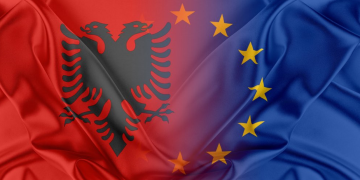
For the Western Balkans, European University Alliances carry particular strategic importance. The region’s path toward European Union membership has often been marked by political complexities and lengthy negotiations. Academic integration, however, has advanced more rapidly, allowing universities to become important ambassadors of European values and standards. Through participation in alliances, Albania and the broader Western Balkans are strengthening research capacity, modernizing curricula, improving quality assurance systems, expanding international partnerships, and increasing their participation in European funding programs.
These developments contribute not only to institutional modernization but also to broader societal transformation. Universities educate future policymakers, entrepreneurs, researchers, educators, and civic leaders whose professional networks increasingly extend across Europe. Their collaborative experiences foster trust, mutual understanding, and regional stability, essential foundations for successful European integration.
In many respects, higher education has become one of the most effective instruments through which the Western Balkans are gradually integrating into the European academic and political space.
Albania has demonstrated encouraging progress in this regard. Its universities have significantly expanded their participation in Erasmus+, Horizon Europe, and numerous international research initiatives. Increasingly, Albanian institutions are not merely beneficiaries of European cooperation but active contributors to the continent’s knowledge economy. This evolution reflects growing institutional confidence, improved academic quality, and an expanding commitment to international engagement.
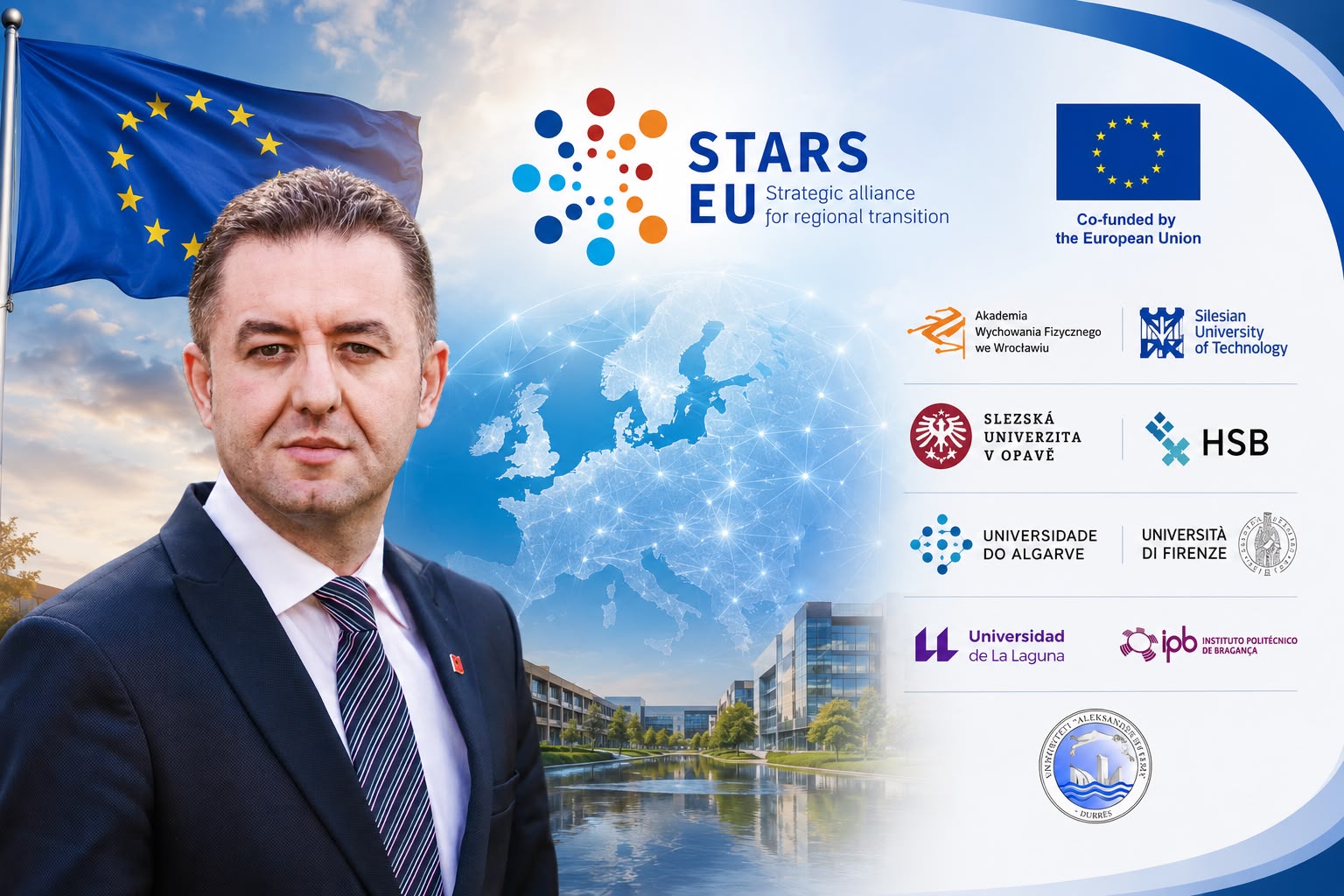
A particularly noteworthy example is the University “Aleksandër Moisiu” of Durrës (UAMD) and its successful participation in the STARS EU Alliance. Membership in this dynamic European network has accelerated the university’s internationalization strategy by embedding European cooperation into every aspect of institutional life. UAMD has created joint and dual degrees with its partners, students have gained access to expanded mobility opportunities, innovative learning experiences, and multicultural academic environments. Academic staff have strengthened research collaboration through joint projects, interdisciplinary partnerships, and international scientific networks. Administrative personnel have enhanced institutional capacity by participating in professional exchanges and adopting best practices from partner universities across Europe.
Beyond these direct benefits, the STARS EU Alliance has reinforced UAMD’s role as an important contributor to regional development and European academic cooperation. It has strengthened partnerships between the university, local authorities, industry, and civil society while positioning Durrës as an increasingly visible participant within the European Higher Education Area. The alliance demonstrates that universities from countries aspiring to European Union membership can contribute meaningfully to Europe’s shared academic future while simultaneously accelerating their own institutional development.
The broader significance of European University Alliances therefore extends beyond education alone. They are preparing Europe for a future in which competitiveness will increasingly depend upon knowledge, innovation, and international collaboration rather than traditional economic advantages. As artificial intelligence reshapes labor markets, the environment demands new scientific solutions, demographic transitions alter societies, and geopolitical competition intensifies, universities will become indispensable actors in ensuring Europe’s resilience.
The European Universities Initiative provides the institutional framework through which higher education can respond collectively to these transformations. By connecting institutions, researchers, students, industries, and regions, the alliances are creating a more integrated, innovative, and globally competitive Europe. Their success should be measured not only by the number of exchanged students or jointly published research articles but by their contribution to Europe’s strategic autonomy, democratic resilience, social cohesion, and long-term prosperity.
Ultimately, European University Alliances represent one of the European Union’s most visionary investments in its future. They demonstrate that integration is strongest when it begins not with bureaucracy but with people, students learning together, researchers solving common problems, educators sharing knowledge, and universities building bridges across borders.
For Albania and the Western Balkans, these alliances provide an invaluable pathway toward deeper European integration through education, research, and innovation. The experience of the University “Aleksandër Moisiu” of Durrës within the STARS EU Alliance stands as compelling evidence that academic cooperation can become a powerful catalyst for institutional excellence, regional development, and European unity. In an increasingly interconnected world, Europe’s universities are not simply educating future generations; they are shaping the future of Europe itself.
© 2026 Argumentum