











































By Dr. Zlatko Kramarić| ARGUMENTUM
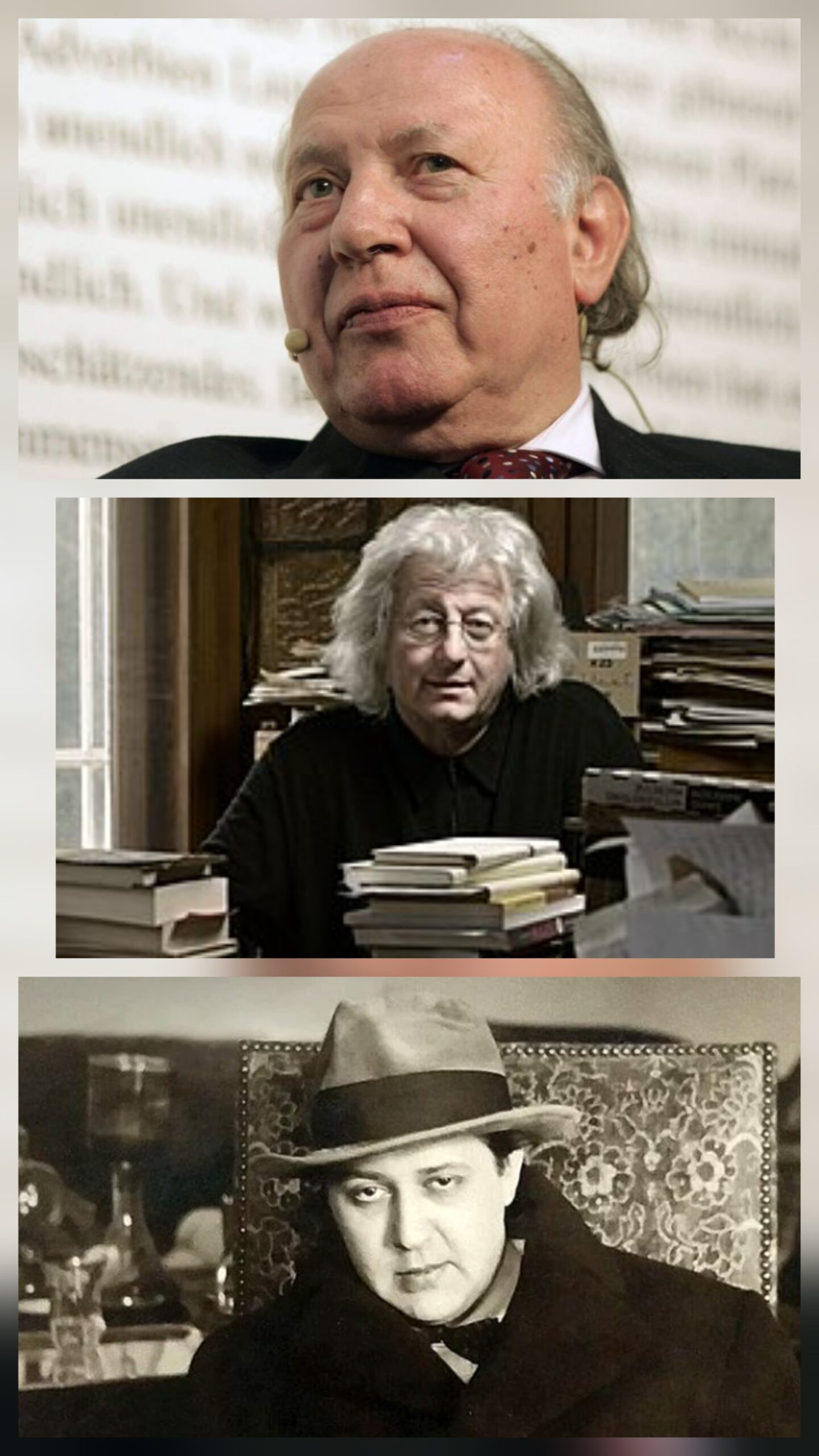
In twentieth-century Hungarian literature, the European spirit is neither an abstract idea nor a political project, but an existential experience. It is not articulated through institutions, but through fractured biographies, moral dilemmas, and a constant re-examination of what it means to belong to a Europe that is at once the source of humanistic ideals and the site of mass crime. In this sense, the works of Sándor Márai, Imre Kertész, and Péter Esterházy form an inner dialogue about Europe as a cultural destiny—a destiny that is continually betrayed, yet never entirely abandoned.
For Marai, Europe is, first of all, Central Europe: a cultural space shaped by a bourgeois ethos, German-Hungarian-Jewish symbioses, classical education, and the conviction that style, measure, and responsibility form the foundation of public life. His European spirit is not revolutionary, but conservatively humanistic: it rests on faith in the autonomy of the individual, on language as a form of moral discipline, and on a binding tradition. Precisely for this reason, Márai experiences the twentieth century as an unprecedented catastrophe. Fascism and communism are not opposing ideologies for him, but two forms of the same barbarism—the denial of individual conscience. His long exile is not a political gesture, but an ethical choice: a withdrawal from a Europe that, as he sees it, has betrayed itself.
Imre Kertész radically shifts the perspective. If for Márai Europe is lost through moral failure, for Kertész it is ontologically compromised by the experience of Auschwitz. Auschwitz is not merely one historical event among others, but a fundamental rupture in European civilization—the point at which Enlightenment rationalism turns into an industry of death. In Fatelessness, Kertész exposes the false comfort of narratives of innocence: evil does not come from outside, but is born within normality, bureaucracy, order. His European spirit is not reconciliation, but a permanent unease. Europe is a space in which it is possible to live after Auschwitz, but not outside its shadow.
The communist experience further deepens this rupture. For Kertész, communism is not the opposite of Nazism, but its continuation by other means: a system that also produces dehumanization, falsehood, and enforced collective identification. His relationship to Europe therefore remains ambivalent—he is at once its most radical critic and its most consistent witness. The European spirit, if it still exists, survives only in an individual consciousness that refuses to participate in collective illusions.
Péter Esterházy introduces a third, postmodern dimension to this relationship. His writing begins with the collapse of grand narratives—both European and national—but does not sink into cynicism. On the contrary, through irony, intertextuality, and family genealogy, Esterházy reconstructs Europe as a textual and cultural space rather than a stable identity. In Harmonia Caelestis and Revised Edition, family history becomes a metaphor for European history: aristocratic tradition, compromises with regimes, betrayals, silences, and subsequent confessions. In his texts, Europe does not appear as a moral vertical, but as a network of contradictions that the writer attempts to unravel.
For Esterházy, the European spirit survives precisely in the capacity for self-parody and self-criticism. He accepts that parts of European traditions are irreversibly contaminated by erroneous ideologies, yet refuses to conclude that they are therefore worthless. His Europe is not innocent, but it is aware of its guilt—and it is precisely in this (unhappy, tragic) awareness that its last legitimacy resides.
What these authors share is a profound distrust of any notion of Europe reduced to a cheap political slogan or a trivial administrative project. Their Europe is not Brussels, but Budapest, Vienna, Auschwitz, the archives of secret police, and family albums. The European spirit, as they understand it, is not a guarantee of progress, but a constant demand for moral vigilance. It does not promise redemption, but an obligation of remembrance—and the courage to acknowledge that Europe itself has produced both humanism and its negation.
In this sense, twentieth-century Hungarian writers do not offer a comforting vision of Europe, but something far more important: intellectual honesty. Their writing reminds us that the European spirit cannot survive without confronting its own traumas—and that any Europe that forgets Auschwitz, communism, or family betrayals is condemned to repeat them, in some new, “more civilized” form.
© 2026 Argumentum