



















• SHQIPËRI
  • KOSOVË
  • MAQEDONIA E VERIUT
  • MALI I ZI
  • Revista në PDF
4 June, 2026
  • Home
  • OP/ED

    Cyber Attribution, Corruption, and the False-Flag Question in Albania’s 2022 Alleged Iranian Cyberattack

    Between Russia, Iran and Europe: Azerbaijan as a balancing power in the South Caucasus

    The Zero-Tariff Gate: Sovereignty as a Service in the Sino-African Corridor

    Albania vs. the Sea/ Marginal Notes on A. Leka’s Novel The Hidden Side of the Albanian Socialist Garden

    May 9 and the long shadow of a Letter: Is Europe still Schuman’s Project?

    The Arbnesh of Zadar: A living memory of Albanian identity on the Adriatic coast

    Science Diplomacy and Academic Freedom: A strategic nexus for contemporary diplomacy

    Serbia and Kosovo between new regional alliances and old geopolitical patterns

    Hungarian Writers and the European Spirit: Between Central Europe, Auschwitz, and Inner Exile

  • Interview

    Exclusive Interview with Oleksandr Tyshchenko: A 40-Year Legacy of Chernobyl, Nuclear Risks, and Global Responsibility

    INTERVIEW: ZLATKO KRAMARIĆ – THOUGHTS ON THE OLD CONTINENT

    EXCLUSIVE / Ukrainian Ambassador to Albania, Volodymyr Shkurov: “Ukraine wants peace, but not at the expense of its freedom and independence”

    EXCLUSIVE| Ambassador Tayyar Kagan Atay: Türkiye and Albania, a Strategic Partnership Rooted in Shared Heritage and a Common Vision for the Future

    “Diplomacy, Not War”: Palestinian Ambassador to Albania Calls for Justice, Peace, and Global Action for Gaza

    Exclusive: “Even After Tito – Tito”/ Ambassador Zlatko Kramarić on Authoritarian Legacies and Democracy’s Future in the Balkans

    The Conclusion of the Diplomatic Mission / Ambassador Dancho Markovski: Strengthening Albania-North Macedonia Relations for a Shared European Future

    A Century of Diplomatic Relations Between Albania and Russia: Exclusive Interview with the Russian Ambassador to Albania, H.E. Alexey Zaytsev

    Exclusive/ The chairman of the Freedom Party, Ilir Meta: “The will of the citizens will triumph in Albania, as it did in North Macedonia”

  • Realpolitik

    IBAR? ”Sufficiently! Much ado about nothing! Shart contrasts in Beijing! Where is the exit?!

    Neither peace nor war! Peace with bombs?! IBAR in autumn?! Not another Hormuz in Taivan! 

    IBAR – a springing board or an obstacle? Can we catch the EU Negotiation train 2027? When the dress makes the news!  EU electoral April  ends in a draw 1:1!  

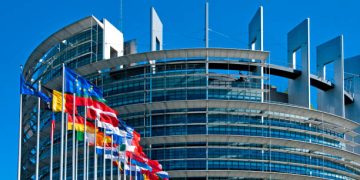
    The European Parliament building in Strasbourg, France with flags waving calmly celebrating peace of the Europe. July 12, 2020.

    EU 2027 or 2037! Even half membership failed! No exit strategy!     

    What next?

    “With diplomatic velvet“! Major question marks! In Washington yes, but  in the White House NO! A strange dinner in Brussels!

    From a great ‘apple of disaccord’ to a  point of  cooperation! A bad start! The strange absence in Davos!

    5 lessons from the American 3 January! Don’t count the chicken before they are hatched! Will NATO freeze in Greenland? Wrong diplomatic messages!

    German Chancellor Friedrich Merz, European Commission President Ursula von der Leyen, Ukraine's President Volodymyr Zelenskiy, U.S. Special Envoy Steve Witkoff and Jared Kushner, son-in-law of U.S. President Donald Trump line up for a family photo opportunity at the Chancellery in Berlin, Germany, December 15, 2025.    REUTERS/Lisi Niesner/Pool

    A Strategy that could change the world! Europe in Berlin! Why an historic compromise? Only charm diplomacy in Athens!

  • Current Events

    Serbia – China 2026: Technological partnership, geopolitical positioning and a new phase of the Chinese presence in the Western Balkans

    The Digital Protectorate: How the EU AI Act Codified Silicon Valley’s Monopoly

    The 28th MFC Annual Conference in Durrës / Sulaj: Microfinance remains a key instrument for financial inclusion

    Serbia at the Crossroads of EU Integration and Geopolitical Balancing: IFIMES Analysis

    Tirana – €20 Million EU–Banking Agreement Boosts Albanian SMEs

    The Myth of Independence: How Chinese Efficiency is Rewriting the Constitution of Modern Geopolitics!

    Europe Yesterday and Today: Why 9 May Still Matters

    “EU4Municipalities II” Project, a Strategic Investment for Strengthening Municipalities and Accelerating Albania’s Path towards the EU

    Eight Years in the Service of Identity: The Journey of the Montenegrin Community in Albania

  • Top News

    No End in Sight: Trump, Netanyahu and the Expanding Middle East War

    Tirana – €20 Million EU–Banking Agreement Boosts Albanian SMEs

    “EU4Municipalities II” Project, a Strategic Investment for Strengthening Municipalities and Accelerating Albania’s Path towards the EU

    Albania, Italy deepen defence ties with naval shipbuilding deal

    U.S. Embassy: Iran-Linked Groups May Target Americans and Iranian Opposition in Albania

    The Council of Albanian Ambassadors disappointed with the voting of the draft law on the foreign service in the parliamentary committees.

    Prime Minister Edi Rama Addresses Israel’s Knesset in Historic Special Session

    Kazakhstan’s Strategic Reform Agenda: Stability, Modern Governance, and Responsible Diplomacy

    Trump Invites Rama to Peace Board, Prime Minister: Proud of Albania

  • YOUR VOICE
  • Shqip
No Result
View All Result
Argumentum
  • Home
  • OP/ED

    Cyber Attribution, Corruption, and the False-Flag Question in Albania’s 2022 Alleged Iranian Cyberattack

    Between Russia, Iran and Europe: Azerbaijan as a balancing power in the South Caucasus

    The Zero-Tariff Gate: Sovereignty as a Service in the Sino-African Corridor

    Albania vs. the Sea/ Marginal Notes on A. Leka’s Novel The Hidden Side of the Albanian Socialist Garden

    May 9 and the long shadow of a Letter: Is Europe still Schuman’s Project?

    The Arbnesh of Zadar: A living memory of Albanian identity on the Adriatic coast

    Science Diplomacy and Academic Freedom: A strategic nexus for contemporary diplomacy

    Serbia and Kosovo between new regional alliances and old geopolitical patterns

    Hungarian Writers and the European Spirit: Between Central Europe, Auschwitz, and Inner Exile

  • Interview

    Exclusive Interview with Oleksandr Tyshchenko: A 40-Year Legacy of Chernobyl, Nuclear Risks, and Global Responsibility

    INTERVIEW: ZLATKO KRAMARIĆ – THOUGHTS ON THE OLD CONTINENT

    EXCLUSIVE / Ukrainian Ambassador to Albania, Volodymyr Shkurov: “Ukraine wants peace, but not at the expense of its freedom and independence”

    EXCLUSIVE| Ambassador Tayyar Kagan Atay: Türkiye and Albania, a Strategic Partnership Rooted in Shared Heritage and a Common Vision for the Future

    “Diplomacy, Not War”: Palestinian Ambassador to Albania Calls for Justice, Peace, and Global Action for Gaza

    Exclusive: “Even After Tito – Tito”/ Ambassador Zlatko Kramarić on Authoritarian Legacies and Democracy’s Future in the Balkans

    The Conclusion of the Diplomatic Mission / Ambassador Dancho Markovski: Strengthening Albania-North Macedonia Relations for a Shared European Future

    A Century of Diplomatic Relations Between Albania and Russia: Exclusive Interview with the Russian Ambassador to Albania, H.E. Alexey Zaytsev

    Exclusive/ The chairman of the Freedom Party, Ilir Meta: “The will of the citizens will triumph in Albania, as it did in North Macedonia”

  • Realpolitik

    IBAR? ”Sufficiently! Much ado about nothing! Shart contrasts in Beijing! Where is the exit?!

    Neither peace nor war! Peace with bombs?! IBAR in autumn?! Not another Hormuz in Taivan! 

    IBAR – a springing board or an obstacle? Can we catch the EU Negotiation train 2027? When the dress makes the news!  EU electoral April  ends in a draw 1:1!  

    The European Parliament building in Strasbourg, France with flags waving calmly celebrating peace of the Europe. July 12, 2020.

    EU 2027 or 2037! Even half membership failed! No exit strategy!     

    What next?

    “With diplomatic velvet“! Major question marks! In Washington yes, but  in the White House NO! A strange dinner in Brussels!

    From a great ‘apple of disaccord’ to a  point of  cooperation! A bad start! The strange absence in Davos!

    5 lessons from the American 3 January! Don’t count the chicken before they are hatched! Will NATO freeze in Greenland? Wrong diplomatic messages!

    German Chancellor Friedrich Merz, European Commission President Ursula von der Leyen, Ukraine's President Volodymyr Zelenskiy, U.S. Special Envoy Steve Witkoff and Jared Kushner, son-in-law of U.S. President Donald Trump line up for a family photo opportunity at the Chancellery in Berlin, Germany, December 15, 2025.    REUTERS/Lisi Niesner/Pool

    A Strategy that could change the world! Europe in Berlin! Why an historic compromise? Only charm diplomacy in Athens!

  • Current Events

    Serbia – China 2026: Technological partnership, geopolitical positioning and a new phase of the Chinese presence in the Western Balkans

    The Digital Protectorate: How the EU AI Act Codified Silicon Valley’s Monopoly

    The 28th MFC Annual Conference in Durrës / Sulaj: Microfinance remains a key instrument for financial inclusion

    Serbia at the Crossroads of EU Integration and Geopolitical Balancing: IFIMES Analysis

    Tirana – €20 Million EU–Banking Agreement Boosts Albanian SMEs

    The Myth of Independence: How Chinese Efficiency is Rewriting the Constitution of Modern Geopolitics!

    Europe Yesterday and Today: Why 9 May Still Matters

    “EU4Municipalities II” Project, a Strategic Investment for Strengthening Municipalities and Accelerating Albania’s Path towards the EU

    Eight Years in the Service of Identity: The Journey of the Montenegrin Community in Albania

  • Top News

    No End in Sight: Trump, Netanyahu and the Expanding Middle East War

    Tirana – €20 Million EU–Banking Agreement Boosts Albanian SMEs

    “EU4Municipalities II” Project, a Strategic Investment for Strengthening Municipalities and Accelerating Albania’s Path towards the EU

    Albania, Italy deepen defence ties with naval shipbuilding deal

    U.S. Embassy: Iran-Linked Groups May Target Americans and Iranian Opposition in Albania

    The Council of Albanian Ambassadors disappointed with the voting of the draft law on the foreign service in the parliamentary committees.

    Prime Minister Edi Rama Addresses Israel’s Knesset in Historic Special Session

    Kazakhstan’s Strategic Reform Agenda: Stability, Modern Governance, and Responsible Diplomacy

    Trump Invites Rama to Peace Board, Prime Minister: Proud of Albania

  • YOUR VOICE
  • Shqip
No Result
View All Result
Argumentum
No Result
View All Result
Home ENGLISH

Nikos Dendias Visits Tirana To Solve Maritime Dispute With Albania

21 October, 2020
in ENGLISH, English OP/ED
A A
Share on FacebookShare on Twitter

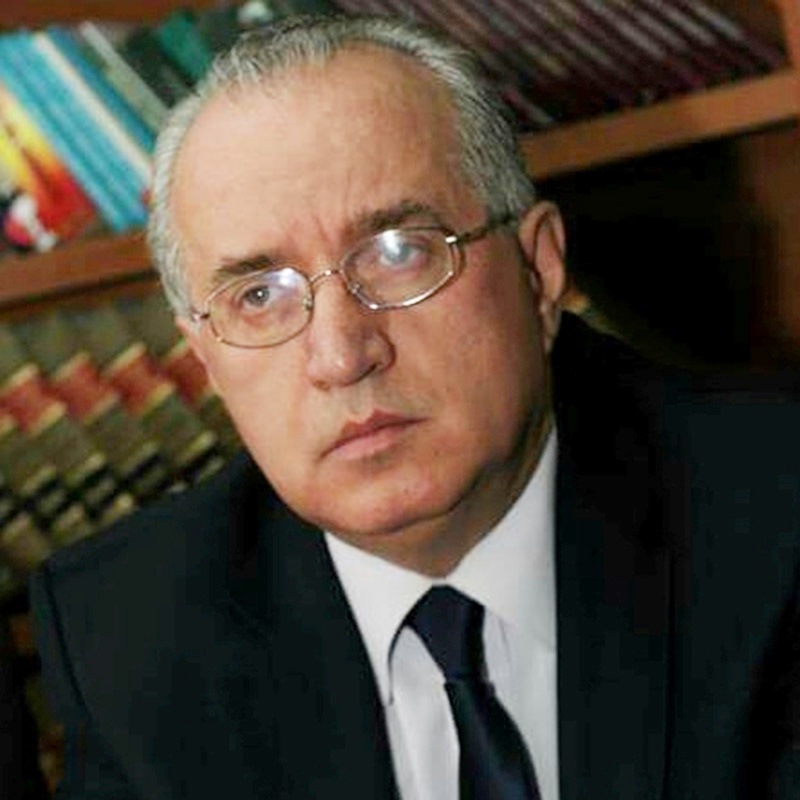
By Dr. Lisen Bashkurti

Today the division of the sea border between Albania and Greece is reemerging once again in regional geopolitics. This is the reason why the Greek Minister of Foreign Affairs, Nikos Dendias arrived in Tirana on October 20.  In principle and practice the two coastal nations, while sharing a maritime space and borderline, are obliged to enter in negotiations. When matters are not settled by a negotiated agreement, the parties turn to other peaceful institutions for the solution of international disputes, such as the International Arbitration or the International Court of Justice.

Some time ago, the Greek Prime Minister, Kyriakos Mitsotakis, declared before the Hellenic Parliament the extension of the sea border with 12 miles in the areas between Greece and Albania. In this case, we are facing a desire of Greece to expand the maritime space by 12 miles, without considering the specific geographic conditions, the Law of the Seas and without agreeing with Albanian Government, as they both share a maritime space. If such a behavior were to be observed by any of the states, that is, to declare borders unilaterally, without having any agreement signed with other affected states, that share a maritime space, this would plunge the world into chaos and conflict.

From a diplomatic point of view, the initiative of the Greek side is to be welcomed, because it aims for Greece to define the Exclusive Economic Zone, which includes the maritime space, along with the continental shelf and territorial waters. Greece has concluded agreements with Libya, Egypt, Italy and, of course, intends to achieve such a matter with Albania and then with Turkey, with the latter it has bigger problems in the Eastern Mediterranean and the Aegean. Such solutions with strategic state interests cannot be made unilaterally, but through dialogue, negotiations or through institutions for the peaceful settlement of conflicts, such as international commissions, arbitration, or the international court of the law of the sea.

Historically, Albania has designated 15 nautical miles from inland waters, but then it was corrected because was asked internationally to limit them to 12 miles. Therefore, Albania extended them as much as there were tangible opportunities. Even under international law, in cases where there is no state on the other side or attached to the ocean, the continental shelf including the exclusive economic zones can go up to 350 miles. In the case of Albania, the Greek side has proposed to hold bilateral talks and if it is not resolved through talks, both parties must tackle this matter through an international mechanism. So far, despite of political rhetoric for various reasons, or due to media pressure, there is, specifically no Greek decision. But there is a desire of Greece to give the two islands a full legal effect in the division of maritime space with Albania and to use the middle equidistance line in their division. This Greek aspiration is in fact the core of the problem with Albania.

The division of maritime space between neighboring states should be supported in principle and practically because the division of maritime space creates real opportunities for states to use effectively and economically their territories, according to the norms of international law, while it is said that the Mediterranean or the Adriatic Sea, the spaces we share between states, have a wealth of hydrocarbons, gas, oil, not to mention the rich Mediterranean flora and fauna. As a result this is an important and fruitful initiative to everyone, as it would politically relieve tensions and make these areas exploitable economically. The concluded agreements or relevant court decisions are guaranteed by the UN, once registered with the UN, Department of Oceanic Affairs and the Law of the Sea, and then each state respects, protects and exploits its maritime space.

Albania has regulated its territorial waters. Albania has territorial waters defined and state borders are sanctioned, even though with the expected agreements there may be room for minor corrections. Meanwhile, the continental shelf and Exclusive Economic Zones do not exist between the two countries, Albania and Greece. This is a pending matter of negotiation.

In the northern part of Greece, or southern Albania, the basic problem lies with the continental shelf and Exclusive Economic Zones in the maritime space, that are of universal importance to both nations. Greece seems to have a project of its own in this regard. The Albanian side does not seem to have a project of its maritime space, based on geographical circumstances, geomorphological position, the law of the sea, due to court decisions on special cases. Obviously, Albania is not prepared, seen in this perspective, the diplomatic initiative of Greece is positive because with the solution of this major problem, conditions are created to alleviate tensions and encourage economic growth in the region.  However, Greece’s maximalist nature of negotiations, giving a full territorial space around all islands shared with Albania, is in complete violation of the norms of International Maritime Law.

Two important principles must guide the Albanian-Greek negotiations: 1. the principle of equidistance, distance equality in every aspect and, 2. the principle of equity, including equality and honesty in terms of geographical and geomorphological circumstances of the maritime spaces dividing the states. These two principles complement each other in addition to equality and honesty between the parties.

The principle of equidistance must be respected and geographical and geomorphological conditions, should be considered.  The International law enshrines these matters in Article 74 of the Convention on the Law of the Sea when it comes to exclusive economic zones; in Article 83 pertaining to the continental shelf; in Article 15 when addressing the territorial waters. Moreover, the ‘principle of special circumstances’ is emphasized, and it is precisely the principle of equity.

Both islands, Othonoi and Ericusa are considered under the principle of equity, meaning a partial effect. The Italian-Greek agreement is a model that expresses the political will of the parties to cooperate and jointly use the Exclusive Economic Zone. Certainly, this was influenced by the large Mediterranean gas supply project stretching from Israel to Italy. A project that imposes a closer multilateral cooperation in the Mediterranean.

As it is observed on previous international agreements signed by Greece, Egypt, Italy, the principle of equity is not ignored, and through the principle of equidistance, the principle of equity is also guaranteed, which ensures the right proportion between the parties. The principle of equality applies where there are conflicts. The principle of equity has the greatest effects on islands. About the islands their size matters a lot and whether they are inhabited, uninhabited or simply a rock. In principle and in practice, small, uninhabited rock masses cannot be affected by the division of maritime space, as it has happened in the case of the extremely small and uninhabited rock mass of Barketa in the case between Albania and Greece.

In the preparation of Albania’s project for negotiations with Greece, it is necessary to consider the Decision of the Constitutional Court of the Republic of Albania, of 2009. This Christal Clear decision provides the principles, but also the methodology that needs to be followed by the Albanian side in the negotiation process.

Both theory and practice of international law, the decisions of various international court cases and the models of previous similar solutions in the Mediterranean make it clear that the principle of equity serves as a helpful justice in specific conditions and in these cases, the basic element of islands derives from the status given to them in these solutions. Islands may not have the same and complete effects in every case. Islands take full effect when they are located in spaces that do not affect the interests of others and ensure equality and fairness in solving pending challenges.

Finally, the Albania-Greece negotiations are not held on the right time for three reasons. First, Albania is preparing for parliamentarian elections of April 25, 2021, circumstances that do not favor an international agreement of any kind. Secondly, President Ilir Meta has expressed his serious and repeated concerns regarding his lack of information by the Executive Government on the progress of the Albania-Greece negotiations’ process and has legitimately hesitated, and is reluctant in relation to what Albanian Government aspires in these negotiations.

Third, Albania currently has no Constitutional Court, an institution that is constitutionally involved in this process. In these circumstances, the visit of the Greek Diplomatic Chief, Minister Dendias in Albania is welcomed, however its concrete effects, at least regarding the Albania-Greece agreement on determining the respective maritime space does not seem to deliver the appropriate message./eurasiareview

© Argumentum
Tags: ALbaniagreecehagueLisen Bashkurtimaritime

Related Posts

Current Events

Serbia – China 2026: Technological partnership, geopolitical positioning and a new phase of the Chinese presence in the Western Balkans

1 June, 2026
ENGLISH

IBAR? ”Sufficiently! Much ado about nothing! Shart contrasts in Beijing! Where is the exit?!

1 June, 2026
ENGLISH

How Alkida Lushaj is redefining democratic inclusion globally

31 May, 2026

Follow US

Subscribe

Receive Argumentum Magazine by Email

Last Posts

Serbia – China 2026: Technological partnership, geopolitical positioning and a new phase of the Chinese presence in the Western Balkans

1 June, 2026

IBAR? ”Sufficiently! Much ado about nothing! Shart contrasts in Beijing! Where is the exit?!

1 June, 2026

How Alkida Lushaj is redefining democratic inclusion globally

31 May, 2026

Cyber Attribution, Corruption, and the False-Flag Question in Albania’s 2022 Alleged Iranian Cyberattack

30 May, 2026

The Digital Protectorate: How the EU AI Act Codified Silicon Valley’s Monopoly

30 May, 2026
Argumentum

“Argumentum”, një proces intelektual …

Contact Us

[email protected]
[email protected]
[email protected]

Follow Us

Media Partner

Register

Receive Argumentum Magazine by Email
  • Home
  • Privacy Policy
  • About Us
  • Contact

© 2022 Argumentum. All Rights Reserved. | NUIS: L91415033Q

Welcome Back!

Login to your account below

Forgotten Password? Sign Up

Create New Account!

Fill the forms bellow to register

*By registering into our website, you agree to the Terms & Conditions and Privacy Policy.
All fields are required. Log In

Retrieve your password

Please enter your username or email address to reset your password.

Log In

Add New Playlist

No Result
View All Result
  • Home
  • OP/ED
  • Interview
  • Realpolitik
  • Current Events
  • Top News
  • YOUR VOICE
  • Shqip

© 2022 Argumentum. All Rights Reserved. | NUIS: L91415033Q

This website uses cookies. By continuing to use this website you are giving consent to cookies being used. Visit our Privacy and Cookie Policy.