










• SHQIPËRI
  • KOSOVË
  • MAQEDONIA E VERIUT
  • MALI I ZI
  • Revista në PDF
19 August, 2026
  • Home
  • OP/ED

    Between Political Calculation and Retreat: Croatian Communists at the End of an Era

    The West is buying time, but to whom is it giving it?

    27 July 1941 – A Site of Memory Between War, Revolution and Europe

    The cult of Saint Veneranda / Saint Pren(d)a / Saint Premte / Saint Paraskeva among Albanians

    The Self-Inflicted Decoupling: How U.S. Immigration Policy Is Ceding the Tech Edge to China

    The Blueprint Does Not Stop at the Drina

    The Underlying Logic behind China’s Economic Success

    Do Not Misuse the U.S. Declaration of Independence to Justify the Narrative of Insurrection in Albania

    The visit that changed Albania’s strategic future

  • Interview

    Exclusive Interview with Oleksandr Tyshchenko: A 40-Year Legacy of Chernobyl, Nuclear Risks, and Global Responsibility

    INTERVIEW: ZLATKO KRAMARIĆ – THOUGHTS ON THE OLD CONTINENT

    EXCLUSIVE / Ukrainian Ambassador to Albania, Volodymyr Shkurov: “Ukraine wants peace, but not at the expense of its freedom and independence”

    EXCLUSIVE| Ambassador Tayyar Kagan Atay: Türkiye and Albania, a Strategic Partnership Rooted in Shared Heritage and a Common Vision for the Future

    “Diplomacy, Not War”: Palestinian Ambassador to Albania Calls for Justice, Peace, and Global Action for Gaza

    Exclusive: “Even After Tito – Tito”/ Ambassador Zlatko Kramarić on Authoritarian Legacies and Democracy’s Future in the Balkans

    The Conclusion of the Diplomatic Mission / Ambassador Dancho Markovski: Strengthening Albania-North Macedonia Relations for a Shared European Future

    A Century of Diplomatic Relations Between Albania and Russia: Exclusive Interview with the Russian Ambassador to Albania, H.E. Alexey Zaytsev

    Exclusive/ The chairman of the Freedom Party, Ilir Meta: “The will of the citizens will triumph in Albania, as it did in North Macedonia”

  • Realpolitik

    The Summit of Unity! Think of peace and prepare for war! It’s only the start to the end! Just a pause between two wars!

    Peace with war diplomacy! The protest,  image and tourism! Why this silence from the EU Commission and Council? A deal or a pause?

    Just kind words  in Tivat! Where is the peace!? A deal yes, peace No!What is happening with USA and  EU?  5 elections but no solution!

    IBAR? ”Sufficiently! Much ado about nothing! Shart contrasts in Beijing! Where is the exit?!

    Neither peace nor war! Peace with bombs?! IBAR in autumn?! Not another Hormuz in Taivan! 

    IBAR – a springing board or an obstacle? Can we catch the EU Negotiation train 2027? When the dress makes the news!  EU electoral April  ends in a draw 1:1!  

    The European Parliament building in Strasbourg, France with flags waving calmly celebrating peace of the Europe. July 12, 2020.

    EU 2027 or 2037! Even half membership failed! No exit strategy!     

    What next?

    “With diplomatic velvet“! Major question marks! In Washington yes, but  in the White House NO! A strange dinner in Brussels!

  • Current Events

    Council of Albanian Ambassadors Raises Concern Over Serbian Plan to Alter the Ibër River

    Digitalisation in the modern era as a “Trojan horse” for hybrid warfare

    The four days that changed history

    Bury Those You Killed

    The Serbian Consulate in Shkodra: A Diplomatic Step or a Project with Political Implications?

    Chinese Embassy in Albania Marks PLA’s 99th Anniversary, Reaffirms Commitment to Peace and Bilateral Cooperation

    Croatian Foreign Minister’s Visit to Tirana/Albania and Croatia Strengthen Their Strategic Partnership as Zagreb Reaffirms Support for Albania’s European Union Membership

    Albanian Parliament Approves $302 Million U.S. Military Financing Loan, Opposition Boycotts Session

    The cult of Saint Veneranda / Saint Pren(d)a / Saint Premte / Saint Paraskeva among Albanians

  • Top News

    Council of Albanian Ambassadors Raises Concern Over Serbian Plan to Alter the Ibër River

    Rama: Foreign Information Manipulation Has Become One of the Greatest Threats to Democracy and European Security

    The Council of Albanian Ambassadors condemns chauvinistic rhetoric by Serbian officials and calls for diplomatic action

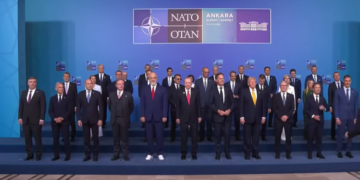
    NATO at Ankara 2026: Strategic Rebalancing Between Russia Deterrence, Turkey’s Rise, and National Interests

    Daniel Serwer: A Bad War Ending Badly May Still Be Good News

    Friedrich Merz, Keir Starmer, António Costa, Donald Trump, Emmanuel Macron, Mark Carney, Ursula von der Leyen, Giorgia Meloni and Sanae Takaichi

    G7 Leaders Gather in Évian Amid Global Uncertainty, Focus on Security, Economy and International Cooperation

    Russian Ambassador in Tirana: “Without a Strong and Sovereign Russia, the Creation of a Just World Order Is Impossible”

    “The Flamingo Revolution”: Day 10 of Protests in Albania Draws International Attention

    Rama alleges ‘hybrid war’ behind protests against Kushner-linked coastal development

  • YOUR VOICE
  • Shqip
No Result
View All Result
Argumentum
  • Home
  • OP/ED

    Between Political Calculation and Retreat: Croatian Communists at the End of an Era

    The West is buying time, but to whom is it giving it?

    27 July 1941 – A Site of Memory Between War, Revolution and Europe

    The cult of Saint Veneranda / Saint Pren(d)a / Saint Premte / Saint Paraskeva among Albanians

    The Self-Inflicted Decoupling: How U.S. Immigration Policy Is Ceding the Tech Edge to China

    The Blueprint Does Not Stop at the Drina

    The Underlying Logic behind China’s Economic Success

    Do Not Misuse the U.S. Declaration of Independence to Justify the Narrative of Insurrection in Albania

    The visit that changed Albania’s strategic future

  • Interview

    Exclusive Interview with Oleksandr Tyshchenko: A 40-Year Legacy of Chernobyl, Nuclear Risks, and Global Responsibility

    INTERVIEW: ZLATKO KRAMARIĆ – THOUGHTS ON THE OLD CONTINENT

    EXCLUSIVE / Ukrainian Ambassador to Albania, Volodymyr Shkurov: “Ukraine wants peace, but not at the expense of its freedom and independence”

    EXCLUSIVE| Ambassador Tayyar Kagan Atay: Türkiye and Albania, a Strategic Partnership Rooted in Shared Heritage and a Common Vision for the Future

    “Diplomacy, Not War”: Palestinian Ambassador to Albania Calls for Justice, Peace, and Global Action for Gaza

    Exclusive: “Even After Tito – Tito”/ Ambassador Zlatko Kramarić on Authoritarian Legacies and Democracy’s Future in the Balkans

    The Conclusion of the Diplomatic Mission / Ambassador Dancho Markovski: Strengthening Albania-North Macedonia Relations for a Shared European Future

    A Century of Diplomatic Relations Between Albania and Russia: Exclusive Interview with the Russian Ambassador to Albania, H.E. Alexey Zaytsev

    Exclusive/ The chairman of the Freedom Party, Ilir Meta: “The will of the citizens will triumph in Albania, as it did in North Macedonia”

  • Realpolitik

    The Summit of Unity! Think of peace and prepare for war! It’s only the start to the end! Just a pause between two wars!

    Peace with war diplomacy! The protest,  image and tourism! Why this silence from the EU Commission and Council? A deal or a pause?

    Just kind words  in Tivat! Where is the peace!? A deal yes, peace No!What is happening with USA and  EU?  5 elections but no solution!

    IBAR? ”Sufficiently! Much ado about nothing! Shart contrasts in Beijing! Where is the exit?!

    Neither peace nor war! Peace with bombs?! IBAR in autumn?! Not another Hormuz in Taivan! 

    IBAR – a springing board or an obstacle? Can we catch the EU Negotiation train 2027? When the dress makes the news!  EU electoral April  ends in a draw 1:1!  

    The European Parliament building in Strasbourg, France with flags waving calmly celebrating peace of the Europe. July 12, 2020.

    EU 2027 or 2037! Even half membership failed! No exit strategy!     

    What next?

    “With diplomatic velvet“! Major question marks! In Washington yes, but  in the White House NO! A strange dinner in Brussels!

  • Current Events

    Council of Albanian Ambassadors Raises Concern Over Serbian Plan to Alter the Ibër River

    Digitalisation in the modern era as a “Trojan horse” for hybrid warfare

    The four days that changed history

    Bury Those You Killed

    The Serbian Consulate in Shkodra: A Diplomatic Step or a Project with Political Implications?

    Chinese Embassy in Albania Marks PLA’s 99th Anniversary, Reaffirms Commitment to Peace and Bilateral Cooperation

    Croatian Foreign Minister’s Visit to Tirana/Albania and Croatia Strengthen Their Strategic Partnership as Zagreb Reaffirms Support for Albania’s European Union Membership

    Albanian Parliament Approves $302 Million U.S. Military Financing Loan, Opposition Boycotts Session

    The cult of Saint Veneranda / Saint Pren(d)a / Saint Premte / Saint Paraskeva among Albanians

  • Top News

    Council of Albanian Ambassadors Raises Concern Over Serbian Plan to Alter the Ibër River

    Rama: Foreign Information Manipulation Has Become One of the Greatest Threats to Democracy and European Security

    The Council of Albanian Ambassadors condemns chauvinistic rhetoric by Serbian officials and calls for diplomatic action

    NATO at Ankara 2026: Strategic Rebalancing Between Russia Deterrence, Turkey’s Rise, and National Interests

    Daniel Serwer: A Bad War Ending Badly May Still Be Good News

    Friedrich Merz, Keir Starmer, António Costa, Donald Trump, Emmanuel Macron, Mark Carney, Ursula von der Leyen, Giorgia Meloni and Sanae Takaichi

    G7 Leaders Gather in Évian Amid Global Uncertainty, Focus on Security, Economy and International Cooperation

    Russian Ambassador in Tirana: “Without a Strong and Sovereign Russia, the Creation of a Just World Order Is Impossible”

    “The Flamingo Revolution”: Day 10 of Protests in Albania Draws International Attention

    Rama alleges ‘hybrid war’ behind protests against Kushner-linked coastal development

  • YOUR VOICE
  • Shqip
No Result
View All Result
Argumentum
No Result
View All Result
Home Current Events

The Dayton Peace Agreement: successes and challenges in its implementation

20 November, 2025
in Current Events, ENGLISH, In Focus
A A
2.12.2015, Daytonski mirovni sporazum - 20 let pozneje v sredo, 2. decembra 2015, ob 14.00 uri,v hotelu »Lev«, 13. nadstropje, dvorana »Grad«, Vošnjakova 1, Ljubljana. Konec leta 1995 je bila s podpisom Daytonskega mirovnega sporazuma končana vojna v Bosni in Hercegovini. Dogajanja v Bosni in Hercegovini 20 let pozneje niso izpolnila pričakovanj državljanov te države pa tudi mednarodne skupnosti, ki je pomagala pri sklenitvi Daytonskega mirovnega sporazuma in končanju vojne. Situacijo v Bosni in Hercegovini je odlično opisal prof. dr. Mirko Pejanović v svoji nedavno izdani  knjigi »Država Bosna in Hercegovina in demokracija«, ki je tudi izhodišče za razpravo na konferenci.

2.12.2015, Daytonski mirovni sporazum - 20 let pozneje v sredo, 2. decembra 2015, ob 14.00 uri,v hotelu »Lev«, 13. nadstropje, dvorana »Grad«, Vošnjakova 1, Ljubljana. Konec leta 1995 je bila s podpisom Daytonskega mirovnega sporazuma končana vojna v Bosni in Hercegovini. Dogajanja v Bosni in Hercegovini 20 let pozneje niso izpolnila pričakovanj državljanov te države pa tudi mednarodne skupnosti, ki je pomagala pri sklenitvi Daytonskega mirovnega sporazuma in končanju vojne. Situacijo v Bosni in Hercegovini je odlično opisal prof. dr. Mirko Pejanović v svoji nedavno izdani knjigi »Država Bosna in Hercegovina in demokracija«, ki je tudi izhodišče za razpravo na konferenci.

Share on FacebookShare on Twitter

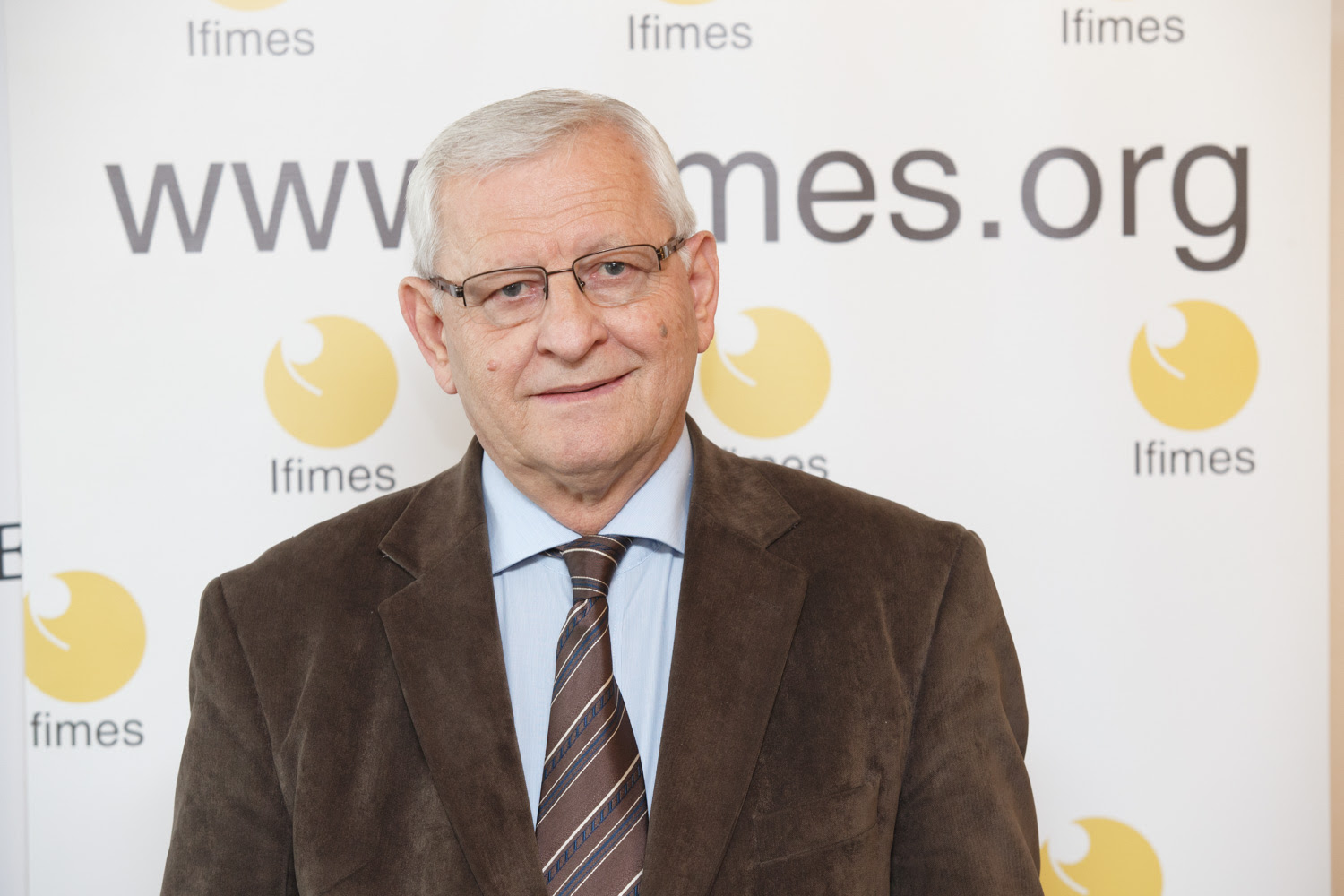
The International Institute for Middle East and Balkan Studies (IFIMES)[1], based in Ljubljana, Slovenia, has for decades been monitoring and analysing key developments in the Middle East, the Balkans and worldwide. In his article “The Dayton Peace Agreement: successes and challenges in its implementation“, academician Mirko Pejanović, PhD, Vice-President of the Academy of Sciences and Arts of Bosnia and Herzegovina (ANUBiH), professor emeritus at the University of Sarajevo, and former member of the Presidency of the Republic of Bosnia and Herzegovina (1992–1996), examines the historical significance and contemporary challenges of this important peace agreement on the occasion of its 30th anniversary.

The Dayton Peace Agreement[2], signed in 1995, marked a historic turning point in preserving the state of Bosnia and Herzegovina at the close of the twentieth century. The consensus reached among the world’s major powers, aimed at ending the three-and-a-half-year war, led to the adoption of an international agreement that safeguarded Bosnia and Herzegovina’s state sovereignty, territorial integrity and international legal personality. Acting through the Contact Group, the UN Security Council members – the United States, the United Kingdom, France, the Russian Federation and the Federal Republic of Germany – created the framework for lasting peace in the country.

Stopping the war and the constraints on developing a functional state

Most authors agree that the Dayton Peace Agreement played a crucial role in bringing the war in Bosnia and Herzegovina to an end. At the same time, critics – especially in relation to Annex IV[3] – argue that the constitutional and territorial arrangements, based on ethnicity, have constrained the development of a functional state.

Unlike many other international peace accords, the Dayton Agreement grants international institutions clear powers for its implementation.

The key actors in this process are:

  • Peacekeeping forces, led by NATO under the UN Security Council’s decision of December 1995;
  • The OHR – the High Representative of the international community, acting as the supreme authority for implementing the civilian provisions of the agreement and for peacebuilding;
  • The European Union Special Representative, responsible for supporting reforms within Bosnia and Herzegovina’s EU integration process;
  • The Peace Implementation Council (PIC).

During the first decade of the post-war period (1995–2005), significant progress was made in establishing security and ensuring freedom of movement for citizens throughout Bosnia and Herzegovina, supported by the active involvement of international institutions. In the early post-war years, the Presidency of Bosnia and Herzegovina operated in the National Museum due to the refusal of the then Serb member of the Presidency to use the Presidency building in Sarajevo as the official seat of state institutions.

In the first five years, the High Representative, in cooperation with civil society organisations, designed and imposed solutions for the coat of arms, the flag and the anthem, as the ruling parliamentary parties were unable to reach a consensus.

The parliamentary elections held in 1996, 1998 and 2000, which gave state-level and entity-level parliaments two-year mandates, were intended to accelerate democratic consolidation and strengthen multi-ethnic civic parties, even though ethnic parties continued to dominate the electoral results.

Owing to the lack of consensus among ethnic parties on peacebuilding and the development of state institutions, the Peace Implementation Council (PIC) granted the High Representative the so-called Bonn Powers[4] in 1998, under which he enacted 145 laws falling within the competences of the Parliamentary Assembly of Bosnia and Herzegovina.

These laws enabled the implementation of reforms aimed at consolidating peace and establishing key state institutions. Through these reforms, the State Border Service (later the Border Police) and the Indirect Taxation Authority were established, and the Council of Ministers of Bosnia and Herzegovina was expanded from three to nine ministries, including security, justice, human rights and refugees, transport and communications, the treasury and finance, and defence. This strengthened the executive capacity needed for advancing reforms and supporting Bosnia and Herzegovina’s European Union integration process.

Joint Armed Forces of Bosnia and Herzegovina – a key reform of the post-Dayton period

The merger of the entity armies into the joint Armed Forces of Bosnia and Herzegovina stands as one of the most important reforms of the post-Dayton period, enabling the full integration of entity forces and institutions in the defence sector. The development of the Armed Forces of Bosnia and Herzegovina in line with NATO standards paved the way for the country’s gradual integration into the NATO alliance, as set out in the Law on Defence of Bosnia and Herzegovina.

Major reforms were also carried out in the sphere of justice and security: the Court and the Prosecutor’s Office of BiH were established, as well as the High Judicial and Prosecutorial Council (HJPC), while the Intelligence-Security Agency (OSA) and the State Investigation and Protection Agency (SIPA) laid the foundations for a functional state security system.

The full implementation of the Dayton Peace Agreement is taking place through the process of Bosnia and Herzegovina’s integration into the European Union and NATO, which has progressed at a slower pace due to the lack of consensus among the ruling parties in the BiH Parliamentary Assembly. Since 2015, the use of the Bonn Powers by the High Representative of the international community (OHR) has been gradually scaled back.

Geopolitical shifts towards the end of the third decade of the Dayton Agreement’s implementation — particularly the Russian Federation’s aggression against Ukraine in 2022 — threatened peace in Europe but at the same time accelerated the processes of European integration. In this context, the Council of the European Union granted Bosnia and Herzegovina candidate status for EU membership, with negotiations expected to open at the end of 2025.

The blockades of BiH’s institutions and the destructive actions of the National Assembly of the Republika Srpska hampered legislative work and reform efforts; however, during 2025, the rulings of the Court of Bosnia and Herzegovina overcame these obstacles. The dismissal of Milorad Dodik (SNSD) from the position of President of the Republika Srpska marked a turning point in strengthening state institutions and advancing the country’s European integration process.

Political instability and the continued necessity of the OHR

As long as the political situation in Bosnia and Herzegovina remains unstable, characterised by recurring crises, both minor and major, the presence and engagement of the Office of the High Representative of the international community (OHR) will remain necessary. 

Its role is particularly significant in:

  • Eliminating destructive practices that undermine the implementation of the Dayton Peace Agreement;
  • Creating the consensus required for the adoption of legislation in the BiH Parliamentary Assembly, which is crucial for the country’s European Union integration process.

Throughout the past three decades, the OHR has intervened through the application of the Bonn Powers whenever the ruling parties failed to reach consensus in the Parliamentary Assembly. This role will remain indispensable until Bosnia and Herzegovina attains full membership in the European Union, while the continuation of the OHR’s mandate in the coming years is directly linked to advancing the country’s integration into the EU and NATO, as well as to preventing new security challenges and threats.

Recommendations for accelerating BiH’s European integration:

  • Joint action by the OHR and the European Union Special Representative in implementing the reform agenda;
  • The reform agenda should become a joint document of the OHR and the EU Special Representative, prepared in cooperation with the BiH Parliamentary Assembly. 

A key priority for the OHR is to support the adoption of the European clause in the Constitution of Bosnia and Herzegovina, which would speed up the implementation of the acquis communautaire. The OHR should further apply pressure on parliamentary parties to form a broad coalition for a European, democratic and law-governed Bosnia and Herzegovina following the 2026 elections, enabling the winning parties to demonstrate responsibility for driving forward the EU integration agenda.

The OHR also plays an important role in creating the geopolitical conditions for implementing constitutional reforms essential to speeding up BiH’s European Union integration. Strengthening the democratic capacity of state institutions is envisaged through changes to the structure of the BiH Parliamentary Assembly: the House of Representatives would have 97 members instead of the current 42, while the territorial units for electing representatives would be drawn across entity boundaries. Increasing the number of representatives would allow for more substantive preparation of legislation through committees and commissions, with professional associations and civil society organisations taking on a more active role. At the same time, both the structure and competences of the House of Peoples of the Parliamentary Assembly of Bosnia and Herzegovina would also be reformed.

With regard to the Council of Ministers of BiH, it is proposed that two new ministries be added: the Ministry of Science and Technological Development and the Ministry of Agriculture and Ecology.

https://www.ifimes.org/en/researches/the-dayton-peace-agreement-successes-and-challenges-in-its-implementation/5678?

/Argumentum.al

Related Posts

ENGLISH

In Search of Lost Childhood and Land [1]

17 August, 2026
ENGLISH

The Ibar River Should Carry Water, Not Nationalist Politics

12 August, 2026
ENGLISH

Between Political Calculation and Retreat: Croatian Communists at the End of an Era

10 August, 2026

Follow US

Subscribe

Receive Argumentum Magazine by Email

Last Posts

In Search of Lost Childhood and Land [1]

17 August, 2026

The Ibar River Should Carry Water, Not Nationalist Politics

12 August, 2026

Between Political Calculation and Retreat: Croatian Communists at the End of an Era

10 August, 2026

The West is buying time, but to whom is it giving it?

10 August, 2026

Council of Albanian Ambassadors Raises Concern Over Serbian Plan to Alter the Ibër River

10 August, 2026
Argumentum

“Argumentum”, një proces intelektual …

Contact Us

[email protected]
[email protected]
[email protected]

Follow Us

Media Partner

Register

Receive Argumentum Magazine by Email
  • Home
  • Privacy Policy
  • About Us
  • Contact

© 2022 Argumentum. All Rights Reserved. | NUIS: L91415033Q

Welcome Back!

Login to your account below

Forgotten Password? Sign Up

Create New Account!

Fill the forms bellow to register

*By registering into our website, you agree to the Terms & Conditions and Privacy Policy.
All fields are required. Log In

Retrieve your password

Please enter your username or email address to reset your password.

Log In

Add New Playlist

No Result
View All Result
  • Home
  • OP/ED
  • Interview
  • Realpolitik
  • Current Events
  • Top News
  • YOUR VOICE
  • Shqip

© 2022 Argumentum. All Rights Reserved. | NUIS: L91415033Q

This website uses cookies. By continuing to use this website you are giving consent to cookies being used. Visit our Privacy and Cookie Policy.