

















The riots of 17–18 March 2004 were initiated by Serbia and manipulated the anger of the masses to create a new situation in Kosovo, one that had to do with its cantonization. 16 September 2026 may have been the second occasion for creating a “March 2”, with the aim of weakening, dividing and dismantling the state of Kosovo, by tarnishing the KLA war, the state of Kosovo and Albanians, as actors with intentions against the Serb community.
Written by: Dr. Gurakuç Kuçi – professor and researcher
Plans for the division and dismantling of the state of Kosovo appear to have also factored in the expected revolt of citizens after the announcement of the sentences for the KLA leaders in The Hague. A reaction made in a highly emotional state, orchestrated incitement and emotional manipulation following the model of the March 2004 riots would be the most fatal scenario against Kosovo.
You can read more here about what Serbia’s aims were in relation to the March 2004 riots.
Serbia has long been pursuing, with increased intensity, the weakening of Kosovo’s sovereignty and the portrayal of Serbs in Kosovo as victims of “ethnic cleansing”.
When we bear in mind that BIA spies who had plans to incite interethnic unrest by provoking the situation, after which the other side would “pour gasoline on it”, have been caught in Kosovo, then 16 September, the day on which the judgment concerning the former KLA leaders would result in convictions, may have been the day for carrying out a “March 2”.
The risk was that the anger created in Kosovo would be exploited to provoke an interethnic incident: protests diverted toward Serb-majority areas or Orthodox Church sites, clashes, victims, and then the immediate internationalization of the crisis. Such a scenario would, within a few hours, shift the debate from the injustice of The Hague to the question of whether Kosovo is capable of protecting Serbs and Orthodox heritage. This is precisely the type of political consequence that, after March 2004, fueled plans for ethnic decentralization, autonomy, division, and then the dismantling of the state of Kosovo.
Vucic and the information before the judgment
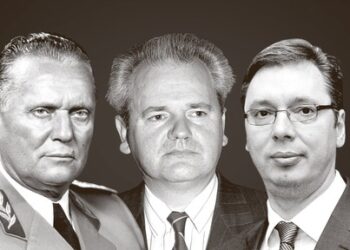
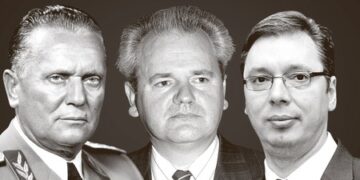
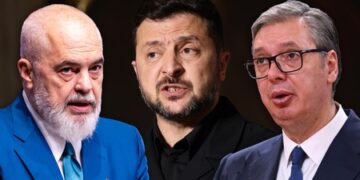
As early as 3 September, thirteen days before the judgment, Aleksander Vucic stated that he was concerned about protests in Kosovo and claimed that there were warnings of violence if Hashim Thaci was not released.
Nine days later, something even more unusual happened. On 12 September, Vucic said that the Serbian services had initially given him information that Thaci would receive a sentence that would roughly correspond only to the time he had spent in detention. But then, referring to contacts in Paris with European and world leaders, he said that he had received “other indications” that a severe sentence could be handed down. Vucic’s visit to Paris and his meeting with Emmanuel Macron on 9 September are also documented by the Presidency of Serbia.
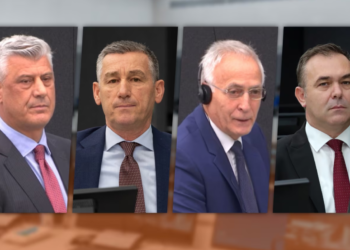
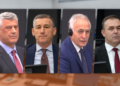
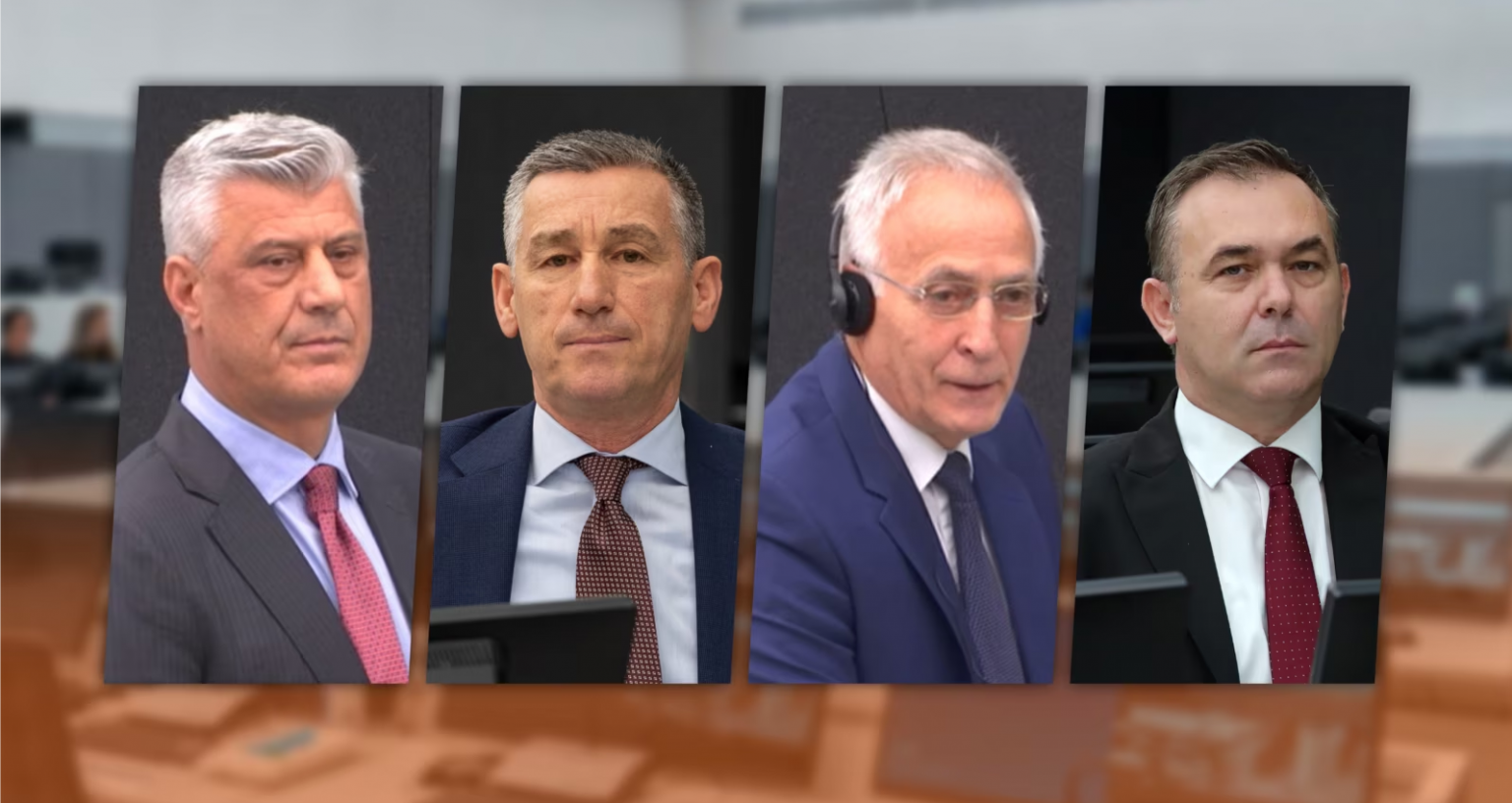
Four days later, Thaci and Jakup Krasniqi were each sentenced to 25 years’ imprisonment, Kadri Veseli to 18 and Rexhep Selimi to 13 years’ imprisonment.
This raises a question that should not be overlooked: what information about a decision that had not yet been announced was circulating at political and diplomatic levels?
From the Marty report to the history of EULEX
The origin of the process also needs to be recalled. The motion of 15 April 2008, which later led to Dick Marty’s report, was initiated by Konstantin Kosachev of Russia; among the signatories were Milosh Aligrudiq from Serbia and Mikhail Margelov from Russia, alongside parliamentarians from other countries.
Serbia and Russia then continued to push the issue internationally. In April 2011, Serbia requested the creation of an investigative mechanism under the authority of the Security Council, while on 23 June Russia circulated, on behalf of Serbia, a draft resolution for the creation of this mechanism. Russia continued to support the Serbian request in later discussions in the Security Council.
Meanwhile, presiding judge Charles Smith had previously been part of EULEX’s senior judicial structure. According to the official biography of the Specialist Chambers, he was a EULEX judge from 2010 to 2013, a member of the Supreme Court of Kosovo, and later vice-president and president of the Assembly of EULEX Judges.
In 2021, the defence of the former KLA leaders, in another case before the Specialist Chambers, requested his recusal, referring to the allegations of former EULEX judge Malcolm Simmons and electronic correspondence concerning Smith’s conduct during his time at EULEX. The official decision rejected the request for Smith’s recusal, but confirms that the materials and allegations had been submitted in the proceedings.
These elements create a convergence that merits investigation: the political origin of the case, the long-term interest of Serbia and Russia, the Serbian president’s advance information, the institutional history of the presiding judge, and a context in which the West simultaneously seeks to keep Serbia as far as possible from the Russian orbit. In 2026, Serbia has “continued” its path toward the EU and at the same time has begun steps to “reduce” its energy dependence on Russia and secure supplies through European mechanisms.
A new “March 2004” and the interest behind the decision
The most serious question, however, is the one that comes after the first-instance judgment.
If the anger in Kosovo remains a political protest, we have a crisis of justice and trust. But if the anger turns into violence against Serbs or Orthodox churches, then we have something else: a security crisis that can be used to revive the argument that Kosovo cannot function as a multiethnic society and that a different solution is needed.
Kosovo has seen this model once before, in March 2004. Therefore, the question today is not only what The Hague decided.
The question is what scenarios may have been factored into the decision of the Specialist Chambers. If the plans have already failed – and apparently they have – then the appeal decision may result in an acquittal for the former KLA leaders. However, it remains our duty as a state and society to ensure that these plans remain unsuccessful. In this regard, consideration should be given to the possibility of the Kosovo Bar Association supporting the defence in The Hague through a specialized team for the analysis of the judgment, identification of legal and factual errors, case-law research, examination of new evidence, and simulation of appeal hearings. It could also seek amicus curiae status, since Rule 67 of the Rules of Procedure and Evidence allows an organization or person to seek leave or be invited by the panel to present submissions as amicus curiae, while procedural direction remains with the defence team in The Hague.
© 2026 Argumentum