

• SHQIPËRI
  • KOSOVË
  • MAQEDONIA E VERIUT
  • MALI I ZI
  • Revista në PDF
19 June, 2026
  • Home
  • OP/ED

    The visit that changed Albania’s strategic future

    Pierre Nora and the institution of memory we lack in Eastern Europe

    The Blueprint of a Diplomatic Debacle: Analyzing Germany’s Historic UNSC Loss

    Between Russia, Iran and Europe: Azerbaijan as a balancing power in the South Caucasus

    The Zero-Tariff Gate: Sovereignty as a Service in the Sino-African Corridor

    Albania vs. the Sea/ Marginal Notes on A. Leka’s Novel The Hidden Side of the Albanian Socialist Garden

    May 9 and the long shadow of a Letter: Is Europe still Schuman’s Project?

    The Arbnesh of Zadar: A living memory of Albanian identity on the Adriatic coast

    Science Diplomacy and Academic Freedom: A strategic nexus for contemporary diplomacy

  • Interview

    Exclusive Interview with Oleksandr Tyshchenko: A 40-Year Legacy of Chernobyl, Nuclear Risks, and Global Responsibility

    INTERVIEW: ZLATKO KRAMARIĆ – THOUGHTS ON THE OLD CONTINENT

    EXCLUSIVE / Ukrainian Ambassador to Albania, Volodymyr Shkurov: “Ukraine wants peace, but not at the expense of its freedom and independence”

    EXCLUSIVE| Ambassador Tayyar Kagan Atay: Türkiye and Albania, a Strategic Partnership Rooted in Shared Heritage and a Common Vision for the Future

    “Diplomacy, Not War”: Palestinian Ambassador to Albania Calls for Justice, Peace, and Global Action for Gaza

    Exclusive: “Even After Tito – Tito”/ Ambassador Zlatko Kramarić on Authoritarian Legacies and Democracy’s Future in the Balkans

    The Conclusion of the Diplomatic Mission / Ambassador Dancho Markovski: Strengthening Albania-North Macedonia Relations for a Shared European Future

    A Century of Diplomatic Relations Between Albania and Russia: Exclusive Interview with the Russian Ambassador to Albania, H.E. Alexey Zaytsev

    Exclusive/ The chairman of the Freedom Party, Ilir Meta: “The will of the citizens will triumph in Albania, as it did in North Macedonia”

  • Realpolitik

    Just kind words  in Tivat! Where is the peace!? A deal yes, peace No!What is happening with USA and  EU?  5 elections but no solution!

    IBAR? ”Sufficiently! Much ado about nothing! Shart contrasts in Beijing! Where is the exit?!

    Neither peace nor war! Peace with bombs?! IBAR in autumn?! Not another Hormuz in Taivan! 

    IBAR – a springing board or an obstacle? Can we catch the EU Negotiation train 2027? When the dress makes the news!  EU electoral April  ends in a draw 1:1!  

    The European Parliament building in Strasbourg, France with flags waving calmly celebrating peace of the Europe. July 12, 2020.

    EU 2027 or 2037! Even half membership failed! No exit strategy!     

    What next?

    “With diplomatic velvet“! Major question marks! In Washington yes, but  in the White House NO! A strange dinner in Brussels!

    From a great ‘apple of disaccord’ to a  point of  cooperation! A bad start! The strange absence in Davos!

    5 lessons from the American 3 January! Don’t count the chicken before they are hatched! Will NATO freeze in Greenland? Wrong diplomatic messages!

  • Current Events

    The Diplomacy of Gas and Algorithms: The Nuances of Official Tirana—Is It Breaking the European Taboo with Azerbaijan?

    Council of Albanian Ambassadors Backs Civic Protests, Calls for Transparency and Protection of National Interests

    Russian Ambassador in Tirana: “Without a Strong and Sovereign Russia, the Creation of a Just World Order Is Impossible”

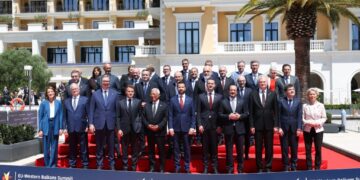
    EU-Western Balkans Summit 2026: New Impetus for the Enlargement Debate?

    “The Flamingo Revolution”: Day 10 of Protests in Albania Draws International Attention

    Rama alleges ‘hybrid war’ behind protests against Kushner-linked coastal development

    BELGRADE, SERBIA - JUNE 18. 2020: Russian and Serbian flags on display during Russian Foreign Minister Sergei Lavrov's visit to the Liberators of Belgrade Memorial. Valery Sharifulin/TASS,Image: 533095429, License: Rights-managed, Restrictions: UWAGA! Zdjęcia zawierają oryginalny opis dostawcy (ITAR-TASS). Szczególnie w związku z agresją Rosji na Ukrainę mogą zawierać przekaz niezgodny z faktami. Zweryfikuj go przed publikacją, Model Release: no, Credit line: Valery Sharifulin / TASS / Forum

    Balkan Maskirovka: Why Moscow’s “Distancing” Is Only an Operation for the Survival of Vučić’s Regime

    Serbia – China 2026: Technological partnership, geopolitical positioning and a new phase of the Chinese presence in the Western Balkans

    The Digital Protectorate: How the EU AI Act Codified Silicon Valley’s Monopoly

  • Top News

    Daniel Serwer: A Bad War Ending Badly May Still Be Good News

    Friedrich Merz, Keir Starmer, António Costa, Donald Trump, Emmanuel Macron, Mark Carney, Ursula von der Leyen, Giorgia Meloni and Sanae Takaichi

    G7 Leaders Gather in Évian Amid Global Uncertainty, Focus on Security, Economy and International Cooperation

    Russian Ambassador in Tirana: “Without a Strong and Sovereign Russia, the Creation of a Just World Order Is Impossible”

    “The Flamingo Revolution”: Day 10 of Protests in Albania Draws International Attention

    Rama alleges ‘hybrid war’ behind protests against Kushner-linked coastal development

    No End in Sight: Trump, Netanyahu and the Expanding Middle East War

    Tirana – €20 Million EU–Banking Agreement Boosts Albanian SMEs

    “EU4Municipalities II” Project, a Strategic Investment for Strengthening Municipalities and Accelerating Albania’s Path towards the EU

    Albania, Italy deepen defence ties with naval shipbuilding deal

  • YOUR VOICE
  • Shqip
No Result
View All Result
Argumentum
  • Home
  • OP/ED

    The visit that changed Albania’s strategic future

    Pierre Nora and the institution of memory we lack in Eastern Europe

    The Blueprint of a Diplomatic Debacle: Analyzing Germany’s Historic UNSC Loss

    Between Russia, Iran and Europe: Azerbaijan as a balancing power in the South Caucasus

    The Zero-Tariff Gate: Sovereignty as a Service in the Sino-African Corridor

    Albania vs. the Sea/ Marginal Notes on A. Leka’s Novel The Hidden Side of the Albanian Socialist Garden

    May 9 and the long shadow of a Letter: Is Europe still Schuman’s Project?

    The Arbnesh of Zadar: A living memory of Albanian identity on the Adriatic coast

    Science Diplomacy and Academic Freedom: A strategic nexus for contemporary diplomacy

  • Interview

    Exclusive Interview with Oleksandr Tyshchenko: A 40-Year Legacy of Chernobyl, Nuclear Risks, and Global Responsibility

    INTERVIEW: ZLATKO KRAMARIĆ – THOUGHTS ON THE OLD CONTINENT

    EXCLUSIVE / Ukrainian Ambassador to Albania, Volodymyr Shkurov: “Ukraine wants peace, but not at the expense of its freedom and independence”

    EXCLUSIVE| Ambassador Tayyar Kagan Atay: Türkiye and Albania, a Strategic Partnership Rooted in Shared Heritage and a Common Vision for the Future

    “Diplomacy, Not War”: Palestinian Ambassador to Albania Calls for Justice, Peace, and Global Action for Gaza

    Exclusive: “Even After Tito – Tito”/ Ambassador Zlatko Kramarić on Authoritarian Legacies and Democracy’s Future in the Balkans

    The Conclusion of the Diplomatic Mission / Ambassador Dancho Markovski: Strengthening Albania-North Macedonia Relations for a Shared European Future

    A Century of Diplomatic Relations Between Albania and Russia: Exclusive Interview with the Russian Ambassador to Albania, H.E. Alexey Zaytsev

    Exclusive/ The chairman of the Freedom Party, Ilir Meta: “The will of the citizens will triumph in Albania, as it did in North Macedonia”

  • Realpolitik

    Just kind words  in Tivat! Where is the peace!? A deal yes, peace No!What is happening with USA and  EU?  5 elections but no solution!

    IBAR? ”Sufficiently! Much ado about nothing! Shart contrasts in Beijing! Where is the exit?!

    Neither peace nor war! Peace with bombs?! IBAR in autumn?! Not another Hormuz in Taivan! 

    IBAR – a springing board or an obstacle? Can we catch the EU Negotiation train 2027? When the dress makes the news!  EU electoral April  ends in a draw 1:1!  

    The European Parliament building in Strasbourg, France with flags waving calmly celebrating peace of the Europe. July 12, 2020.

    EU 2027 or 2037! Even half membership failed! No exit strategy!     

    What next?

    “With diplomatic velvet“! Major question marks! In Washington yes, but  in the White House NO! A strange dinner in Brussels!

    From a great ‘apple of disaccord’ to a  point of  cooperation! A bad start! The strange absence in Davos!

    5 lessons from the American 3 January! Don’t count the chicken before they are hatched! Will NATO freeze in Greenland? Wrong diplomatic messages!

  • Current Events

    The Diplomacy of Gas and Algorithms: The Nuances of Official Tirana—Is It Breaking the European Taboo with Azerbaijan?

    Council of Albanian Ambassadors Backs Civic Protests, Calls for Transparency and Protection of National Interests

    Russian Ambassador in Tirana: “Without a Strong and Sovereign Russia, the Creation of a Just World Order Is Impossible”

    EU-Western Balkans Summit 2026: New Impetus for the Enlargement Debate?

    “The Flamingo Revolution”: Day 10 of Protests in Albania Draws International Attention

    Rama alleges ‘hybrid war’ behind protests against Kushner-linked coastal development

    BELGRADE, SERBIA - JUNE 18. 2020: Russian and Serbian flags on display during Russian Foreign Minister Sergei Lavrov's visit to the Liberators of Belgrade Memorial. Valery Sharifulin/TASS,Image: 533095429, License: Rights-managed, Restrictions: UWAGA! Zdjęcia zawierają oryginalny opis dostawcy (ITAR-TASS). Szczególnie w związku z agresją Rosji na Ukrainę mogą zawierać przekaz niezgodny z faktami. Zweryfikuj go przed publikacją, Model Release: no, Credit line: Valery Sharifulin / TASS / Forum

    Balkan Maskirovka: Why Moscow’s “Distancing” Is Only an Operation for the Survival of Vučić’s Regime

    Serbia – China 2026: Technological partnership, geopolitical positioning and a new phase of the Chinese presence in the Western Balkans

    The Digital Protectorate: How the EU AI Act Codified Silicon Valley’s Monopoly

  • Top News

    Daniel Serwer: A Bad War Ending Badly May Still Be Good News

    Friedrich Merz, Keir Starmer, António Costa, Donald Trump, Emmanuel Macron, Mark Carney, Ursula von der Leyen, Giorgia Meloni and Sanae Takaichi

    G7 Leaders Gather in Évian Amid Global Uncertainty, Focus on Security, Economy and International Cooperation

    Russian Ambassador in Tirana: “Without a Strong and Sovereign Russia, the Creation of a Just World Order Is Impossible”

    “The Flamingo Revolution”: Day 10 of Protests in Albania Draws International Attention

    Rama alleges ‘hybrid war’ behind protests against Kushner-linked coastal development

    No End in Sight: Trump, Netanyahu and the Expanding Middle East War

    Tirana – €20 Million EU–Banking Agreement Boosts Albanian SMEs

    “EU4Municipalities II” Project, a Strategic Investment for Strengthening Municipalities and Accelerating Albania’s Path towards the EU

    Albania, Italy deepen defence ties with naval shipbuilding deal

  • YOUR VOICE
  • Shqip
No Result
View All Result
Argumentum
No Result
View All Result
Home ENGLISH

Would the Prophet Muhammad Convert Hagia Sophia?

20 July, 2020
in ENGLISH, English OP/ED
A A
Share on FacebookShare on Twitter

Turkey’s decision to change the former cathedral into a mosque flies against the pluralist instincts of Islam’s founders.

 By Mustafa Akyol*

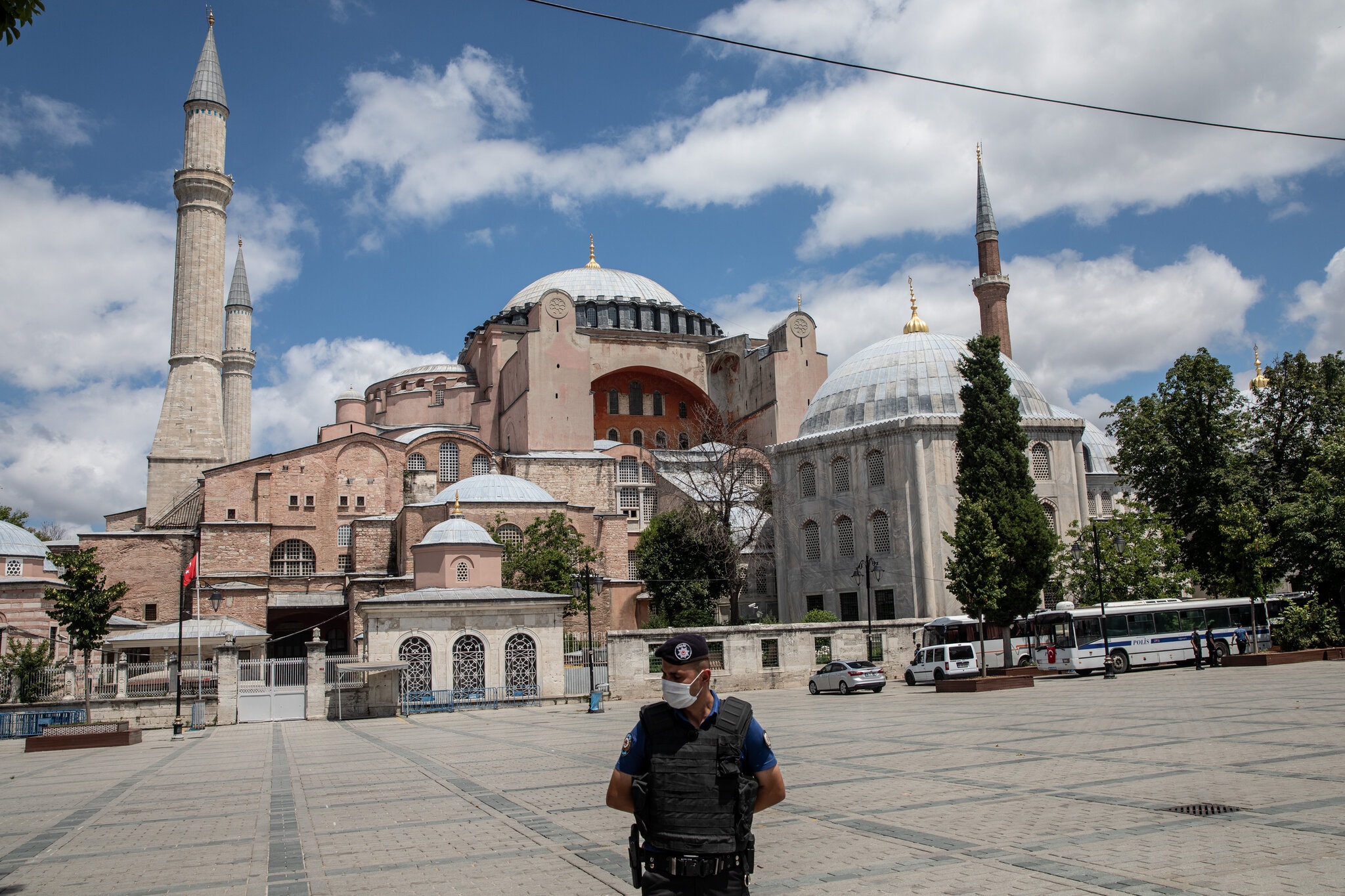
The recent decision by the Turkish government to reconvert the majestic Hagia Sophia, which was once the world’s greatest cathedral, from a museum back to a mosque has been bad news for Christians around the world. They include Pope Francis, who said he was “pained” by the move, and the spiritual leader of Eastern Christianity, Ecumenical Patriarch Bartholomew, who said he was “saddened and shaken.” When contrasted with the joy of Turkey’s conservative Muslims, all this may seem like a new episode in an old story: Islam vs. Christianity.

But some Muslims, including myself, are not fully comfortable with this historic step, and for a good reason: forced conversion of shrines, which has occurred too many times in human history in all directions, can be questioned even from a purely Islamic point of view.

To see why, look closely into early Islam, which was born in seventh century Arabia as a monotheist campaign against polytheism. The Prophet Muhammad and his small group of believers saw the earlier monotheists — Jews and Christians — as allies. So when those first Muslims were persecuted in pagan Mecca, some found asylum in the Christian kingdom in Ethiopia. Years later, when the Prophet ruled Medina, he welcomed a group of Christians from the city of Najran to worship in his own mosque. He also signed a treaty with them, which read:

“There shall be no interference with the practice of their faith. … No bishop will be removed from his bishopric, no monk from his monastery, no priest from his parish.”

This religious pluralism was also reflected in the Quran, when it said God protects “monasteries, churches, synagogues, and mosques in which the name of God is much mentioned.” (22:40) It is the only verse in the Quran that mentions churches — and only in a reverential tone.

To be sure, these theological affinities did not prevent political conflicts. Nor did they prevent Muslims, right after the Prophet’s passing, from conquering Christian lands, from Syria to Spain. Yet still, the early Muslim conquerors did something uncommon at the time: They did not touch the shrines of the subjugated peoples.

The Prophet’s spirit was best exemplified by his second successor, or caliph, Umar ibn Al-Khattab, soon after his conquest of Jerusalem in the year 637. The city, which had been ruled by Roman Christians for centuries, had been taken by Muslims after a long and bloody siege. Christians feared a massacre, but instead found aman, or safety. Caliph Umar, “the servant of God” and “the commander of the faithful,” gave them security “for their possessions, their churches and crosses.” He further assured:

“Their churches shall not be taken for residence and shall not be demolished … nor shall their crosses be removed.”

The Christian historian Eutychius even tells us that when Caliph Umar entered the city, the patriarch of Jerusalem, Sophronius, invited him to pray at the holiest of all Christian shrines: the Church of the Holy Sepulcher. Umar politely declined, saying that Muslims might later take this as a reason to convert the church into a mosque. He instead prayed at an empty area that Christians ignored but Jews honored, then as now, as their holiest site, the Temple Mount, where today the Western Wall, the last remnant of that ancient Jewish temple, rises to the top of the Mount, on which the Mosque of Umar and the Dome of the Rock were built.

In other words, Islam entered Jerusalem without really converting it. Even “four centuries after the Muslim conquest,” as the Israeli historian Oded Peri observes, “the urban landscape of Jerusalem was still dominated by Christian public and religious buildings.”

Yet Islam was becoming the religion of an empire, which, like all empires, had to justify its appetite for hegemony. Soon, some jurists found an excuse to overcome the Jerusalem model: There, Christians were given full security, because they had ultimately agreed on a peaceful surrender. The cities that resisted Muslim conquerors, however, were fair game for plunder, enslavement, and conversion of their churches.

In the words of the Turkish scholar Necmeddin Guney, this legitimatization of conversion of churches came from not the Quran nor the Prophetic example, but rather “administrative regulation.” The jurists who made this case, he adds, “were probably trying to create a society that makes manifest the supremacy of Islam in an age of religion wars.”

Another scholar, Fred Donner, an expert on early Islam, argues that this political drive even distorted records of the earlier state of affairs. For example, later versions of the aman given to the Christians of Damascus allotted Muslims “half of their homes and churches.” In the earlier version of the document, there was no such clause.

When the Ottomans reached the gates of Constantinople in 1453, Islamic attitudes had long been imperialized, and also toughened in the face of endless conflicts with the Crusaders. Using a disputed license of the Hanafi school of jurisprudence they followed, they converted Hagia Sophia and a few other major churches. But they also did other things that represent the better values of Islam: They gave full protection to not only Greek but also Armenian Christians, rebuilt Istanbul as a cosmopolitan city, and soon also welcomed the Spanish Jews who were fleeing the Catholic Inquisition.

Today, centuries later, the question for Turkey is what aspect of this complex Ottoman heritage is really more valuable.

For the religious conservatives who have rallied behind President Recep Tayyip Erdogan in the past two decades, the main answer seems to be imperial glory embodied in an absolute ruler.

For other Turks, however, the greatness of the Ottomans lies in their pluralism, rooted at the very heart of Islam, and it would inspire different moves today — perhaps opening Hagia Sophia to both Muslim and Christian worship, as I have advised for years. Another would be reopening the Halki Seminary, a Christian school of theology that opened in 1844 under Ottoman auspices, went victim to secular nationalism in 1971, but is still closed despite all the calls from advocates for religious freedom.

For the broader Muslim world, Hagia Sophia is a reminder that our tradition includes both our everlasting faith and values, as well as a legacy of imperialism. The latter is a bitter fact of history, like Christian imperialism or nationalism, which have targeted our mosques and even lives as well — from Cordoba to Srebrenica. But today, we should try to heal such wounds of the past, not open new ones.

So, if we Muslims really want to revive something from the past, let’s focus on the model initiated by the Prophet and implemented by Caliph Umar. That means no shrines should be converted — or reconverted. All religious traditions should be respected. And the magnanimity of tolerance should overcome the pettiness of supremacism.

*Mustafa Akyol, a contributing Opinion writer, is a senior fellow on Islam and modernity at the Cato Institute and the author of the forthcoming book “Reopening Muslim Minds: A Return to Reason, Freedom, and Tolerance.”
Related Posts

ENGLISH

G7 Leaders Present Unified Geopolitical Agenda at Évian Summit

17 June, 2026
ENGLISH

Daniel Serwer: A Bad War Ending Badly May Still Be Good News

17 June, 2026
Current Events

The Diplomacy of Gas and Algorithms: The Nuances of Official Tirana—Is It Breaking the European Taboo with Azerbaijan?

17 June, 2026

Follow US

Subscribe

Receive Argumentum Magazine by Email

Last Posts

G7 Leaders Present Unified Geopolitical Agenda at Évian Summit

17 June, 2026

Daniel Serwer: A Bad War Ending Badly May Still Be Good News

17 June, 2026

The Diplomacy of Gas and Algorithms: The Nuances of Official Tirana—Is It Breaking the European Taboo with Azerbaijan?

17 June, 2026
Friedrich Merz, Keir Starmer, António Costa, Donald Trump, Emmanuel Macron, Mark Carney, Ursula von der Leyen, Giorgia Meloni and Sanae Takaichi

G7 Leaders Gather in Évian Amid Global Uncertainty, Focus on Security, Economy and International Cooperation

16 June, 2026

Just kind words  in Tivat! Where is the peace!? A deal yes, peace No!What is happening with USA and  EU?  5 elections but no solution!

15 June, 2026
Argumentum

“Argumentum”, një proces intelektual …

Contact Us

[email protected]
[email protected]
[email protected]

Follow Us

Media Partner

Register

Receive Argumentum Magazine by Email
  • Home
  • Privacy Policy
  • About Us
  • Contact

© 2022 Argumentum. All Rights Reserved. | NUIS: L91415033Q

Welcome Back!

Login to your account below

Forgotten Password? Sign Up

Create New Account!

Fill the forms bellow to register

*By registering into our website, you agree to the Terms & Conditions and Privacy Policy.
All fields are required. Log In

Retrieve your password

Please enter your username or email address to reset your password.

Log In

Add New Playlist

No Result
View All Result
  • Home
  • OP/ED
  • Interview
  • Realpolitik
  • Current Events
  • Top News
  • YOUR VOICE
  • Shqip

© 2022 Argumentum. All Rights Reserved. | NUIS: L91415033Q

This website uses cookies. By continuing to use this website you are giving consent to cookies being used. Visit our Privacy and Cookie Policy.