


























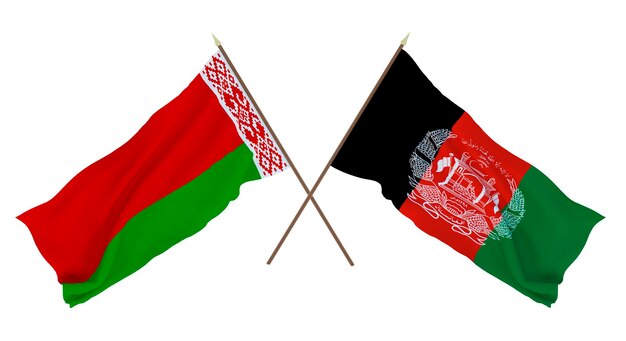
By Philip Acey| ARGUMENTUM
Afghanistan and Belarus find themselves at similar political junctures. Each faces relative isolation under international sanctions yet seeks to expand partnerships and redefine their roles in a shifting Eurasian landscape. Their circumstances differ, but their defined challenges and opportunities overlap: how to turn political will into practical cooperation.
For Afghanistan, engagement with industrialized countries like Belarus offer a path to economic prosperity and stability. For Belarus, partnering with Afghanistan fits its drive to diversify economic ties and contribute to regional security interests and obligations as a member of the Collective Security Treaty Organization (CSTO), Shanghai Cooperation Organization (SCO), and Commonwealth of Independent States (CIS).
While both governments discuss deepening pragmatic relations, what remains missing is a concrete, results-oriented roadmap.
A Changing Diplomatic Landscape
Belarus has a history of engaging with countries facing international sanctions, including North Korea, Libya, Zimbabwe, and Myanmar, guided by necessity and strategic calculation. Unlike these sanctioned partners, however, Afghanistan offers Belarus a more strategic opportunity – a role to contribute to regional prosperity, security, and stability, which aligns with the national interest of Belarus.
This pragmatic approach makes Afghanistan a natural partner in Belarus’ efforts to diversify its trade and diplomatic relations. President Lukashenko has repeatedly emphasized that the country’s foreign relations must yield near-term results. In July 2025, he stated, “We have not even begun to get traction here [in the Gulf and Afghanistan]. No hubs have been established yet. We are just dreaming about them. It’s time for action.”
That call to action resonates with Afghanistan’s current reality. Following decades of war and recent international disengagement, Kabul is seeking partners ready to engage on practical terms – partners who do not “lecture” the country on human rights or disregard its Islamic and cultural traditions.
When Belarus’ Deputy Foreign Minister Lukashevich visited Kabul in January 2025, it marked a significant step toward cooperation with the new government. Later, in October 2025, Belarus joined the 7th Moscow Format Consultations on Afghanistan as a guest, alongside Central Asian states and major regional actors – Russia, China, Iran, Pakistan, and India. Among all attendees, Belarus arguably has the least developed relationship with Afghanistan, yet the political willingness on both sides is evident.
Strategic Rationale for Deepening Engagement
In July 2025, President Lukashenko reaffirmed that the national interests and priorities of Belarus should be the cornerstone of its foreign relations. Within that framework, partnership with Afghanistan offers both strategic and security benefits.
A stable Afghanistan contributes to the security of Central Asia – a region vital to the CSTO, SCO, and CIS, where Belarus plays an active role. Factors such as economic stagnation, narcotics trafficking, or renewed conflict in Afghanistan pose significant regional implications, including migration pressures and transnational security threats for Belarus. Belarus currently detains several Afghans for illegal entry or other offences – many after attempting to illegally cross into the EU – and seeks their repatriation.
Supporting Afghanistan’s economic stabilization through trade and investment could yield long-term security and economic benefit for Belarus and its regional allies. It could help reduce migration pressures and enhance regional security cooperation within the frameworks of the CSTO, SCO, and CIS.
Compared to distant outreach towards the so-called “far arc” countries in sub-Saharan Africa or Latin America, engagement with Afghanistan offers Belarus more strategically beneficial security and economic returns. Relative
proximity, newly-developed transport corridors, and complementary needs make this relationship realistic and mutually beneficial.
Trade, Agriculture, and Logistics
Economic cooperation provides the clearest opportunity for near-term progress.
Afghanistan’s agricultural transformation is a logical starting point. Since banning opium poppy cultivation in 2022 – a policy that, according to the UN Office on Drugs and Crime (UNODC), has reduced the cultivated area by more than 95 percent – Afghan farmers have struggled to grow profitable alternative crops. Belarus, a global player in agricultural machinery and fertilizers, is well-positioned to assist.
In November 2025, Afghanistan’s National Statistics and Information Authority warned that Afghanistan faces a 2.3 million-ton wheat shortfall this year. Belarusian food exports – especially wheat – could help address short-term shortages as Afghanistan faces pressures from the return of nearly two million Afghan refugees from Iran and Pakistan this year.
Belaruskali, the state-owned potash producer that accounts for roughly 20 percent of global potash fertilizer supply, could help Afghan farmers boost yields of wheat, corn, and other crops. Belarusian fertilizer can reach Afghanistan via the Russian port of Makhachkala – already used to ship tens of thousands of tons of Belarusian fertilizer to India via the developing International North-South Transport Corridor (INSTC) – then through the Caspian Sea and Turkmenistan to Herat.
Belarus-made tractors and agricultural equipment – particularly those from Minsk Tractor Works (MTZ) – are durable, affordable, and well-suited to Afghanistan’s terrain. Belarus-brand tractors already operate in Afghanistan, particularly in its northern provinces, but can be expanded nationwide.
The combination of machinery, fertilizer, and technical expertise could improve Afghan food production while opening a modest export market for Belarusian industry.
In the medium- to long-term, Afghanistan’s mineral sector presents another pillar for cooperation. Belarus’ BelAZ mining trucks could support extraction projects in a sector estimated to be worth over $1 trillion.
Importantly, this trade should be framed as commerce, not aid, in order to reinforce Afghanistan’s sovereignty and self-reliance. Financial constraints for Afghanistan remain an obstacle. With over $9 billion in Afghan reserves frozen in U.S. banks, the country faces a liquidity crisis, making cash-based imports difficult. A feasible solution would be to adopt a countertrade arrangement – a form of barter agreement where Afghanistan repays Belarus with agricultural or mineral exports or provides Belarusian companies with stakes in Afghan mining enterprises. Such mechanisms – common in Soviet-era trade – are practical under current financial constraints.
Mutual Benefit for Belarus
While Belarus can help Afghanistan mechanize agriculture and improve food security, the partnership should not be one-sided. Belarus itself stands to benefit from Afghan exports, which can fill specific gaps or diversify suppliers, making the partnership more balanced and sustainable.
The northern climate of Belarus limits its production of grapes, citrus fruits, and nuts. Afghan grapes, pomegranates, apricots, raisins, almonds, pistachios, and walnuts can find a ready market in Belarus, where import demand is high and such commodities are frequently on the agenda in discussions with Iran and Pakistan. Similarly, Afghan marble, lapis lazuli, and saffron can supply Belarus’ construction and consumer sectors. Afghan saffron is widely recognized as being the best quality in the world.
Pragmatic Diplomacy and Educational Exchange
Economic cooperation can open the door to gradual political normalization. While full diplomatic recognition of the Islamic Emirate by Belarus is not imminent, incremental steps are possible: organizing technical missions and building
regular diplomatic channels. Such engagement would give Belarus a leadership role in pragmatic diplomacy toward Afghanistan.
Educational exchanges could also strengthen this partnership. Belarusian universities could offer short-term training programs for Afghan students in agriculture and engineering, both in Afghanistan and in Belarus, at modest cost to both sides and focused on low-risk candidates with professional incentives to return home after their studies. Likewise, Belarusian students could benefit from virtual or in-person language courses offered by Afghan universities to support future trade and diplomatic ties.
Near-Term Priorities
To translate political goodwill into measurable outcomes, Belarus and Afghanistan should focus on achievable and visible near-term goals:
- Establish a joint trade commission to identify priority sectors and design barter-based trade mechanisms. A meeting between the two countries in January 2025 fell short of that.
- Launch pilot projects, such as a shipment of Belarusian tractors and fertilizers to Afghanistan, coupled with local training sessions for farmers. Afghanistan can export a selection of citrus fruit, nuts, and marble to Belarus.
- Facilitate technical cooperation in agricultural research and mining logistics both at the state and private sector level.
Conclusion
Belarus-Afghanistan relations are at an early but promising stage. Both countries share a pragmatic political culture and a mutual interest in diversification and resilience within a changing Eurasia.
For Belarus, deepening engagement with Afghanistan is a strategic investment in regional stability and market diversification, expanding its footprint across Central and South Asia. Importing Afghan agricultural and mineral goods would diversify suppliers, create jobs, and strengthen Belarus’ position in a multipolar Eurasian economy.
For Afghanistan, the partnership offers machinery, fertilizer, and technical expertise from a partner focused on results, not ideological conformity. It would restore dignity, spur economic growth, create much-needed jobs, and reduce aid dependency by helping farmers cultivate high-value crops instead of opium. The partnership would also strengthen Afghanistan’s trade routes, reducing reliance on Iran or Pakistan and mitigating disruptions along the Durand Line.
The partnership would deepen economic ties, enable both sides to navigate financial restrictions through countertrade, and promote balanced, sanctions-resilient commerce. Belarus gains reliable suppliers for goods it cannot produce, while Afghanistan gains markets that treat it as a valued partner.
In an era of sanctions, shifting alliances, and newly-emerging transport networks, the Belarus-Afghanistan partnership has real potential to advance regional stability and multipolarity – benefiting tens of millions. Now is the time to act.
*Philip Acey is a Canadian PhD candidate in International Relations and an independent political researcher and analyst. He conducted four months of research in Afghanistan in 2024-2025 and worked in Belarus for over a year in 2022-2023. With more than a decade of experience working across Europe, Asia, Africa, and South America, he has visited over 50 countries. His research has advised the UN Security Council, diplomats, and humanitarian organizations. Connect with him on X: @Philipfficial
/Argumentum.al