








• SHQIPËRI
  • KOSOVË
  • MAQEDONIA E VERIUT
  • MALI I ZI
  • Revista në PDF
4 June, 2026
  • Home
  • OP/ED

    The Blueprint of a Diplomatic Debacle: Analyzing Germany’s Historic UNSC Loss

    Cyber Attribution, Corruption, and the False-Flag Question in Albania’s 2022 Alleged Iranian Cyberattack

    Between Russia, Iran and Europe: Azerbaijan as a balancing power in the South Caucasus

    The Zero-Tariff Gate: Sovereignty as a Service in the Sino-African Corridor

    Albania vs. the Sea/ Marginal Notes on A. Leka’s Novel The Hidden Side of the Albanian Socialist Garden

    May 9 and the long shadow of a Letter: Is Europe still Schuman’s Project?

    The Arbnesh of Zadar: A living memory of Albanian identity on the Adriatic coast

    Science Diplomacy and Academic Freedom: A strategic nexus for contemporary diplomacy

    Serbia and Kosovo between new regional alliances and old geopolitical patterns

  • Interview

    Exclusive Interview with Oleksandr Tyshchenko: A 40-Year Legacy of Chernobyl, Nuclear Risks, and Global Responsibility

    INTERVIEW: ZLATKO KRAMARIĆ – THOUGHTS ON THE OLD CONTINENT

    EXCLUSIVE / Ukrainian Ambassador to Albania, Volodymyr Shkurov: “Ukraine wants peace, but not at the expense of its freedom and independence”

    EXCLUSIVE| Ambassador Tayyar Kagan Atay: Türkiye and Albania, a Strategic Partnership Rooted in Shared Heritage and a Common Vision for the Future

    “Diplomacy, Not War”: Palestinian Ambassador to Albania Calls for Justice, Peace, and Global Action for Gaza

    Exclusive: “Even After Tito – Tito”/ Ambassador Zlatko Kramarić on Authoritarian Legacies and Democracy’s Future in the Balkans

    The Conclusion of the Diplomatic Mission / Ambassador Dancho Markovski: Strengthening Albania-North Macedonia Relations for a Shared European Future

    A Century of Diplomatic Relations Between Albania and Russia: Exclusive Interview with the Russian Ambassador to Albania, H.E. Alexey Zaytsev

    Exclusive/ The chairman of the Freedom Party, Ilir Meta: “The will of the citizens will triumph in Albania, as it did in North Macedonia”

  • Realpolitik

    IBAR? ”Sufficiently! Much ado about nothing! Shart contrasts in Beijing! Where is the exit?!

    Neither peace nor war! Peace with bombs?! IBAR in autumn?! Not another Hormuz in Taivan! 

    IBAR – a springing board or an obstacle? Can we catch the EU Negotiation train 2027? When the dress makes the news!  EU electoral April  ends in a draw 1:1!  

    The European Parliament building in Strasbourg, France with flags waving calmly celebrating peace of the Europe. July 12, 2020.

    EU 2027 or 2037! Even half membership failed! No exit strategy!     

    What next?

    “With diplomatic velvet“! Major question marks! In Washington yes, but  in the White House NO! A strange dinner in Brussels!

    From a great ‘apple of disaccord’ to a  point of  cooperation! A bad start! The strange absence in Davos!

    5 lessons from the American 3 January! Don’t count the chicken before they are hatched! Will NATO freeze in Greenland? Wrong diplomatic messages!

    German Chancellor Friedrich Merz, European Commission President Ursula von der Leyen, Ukraine's President Volodymyr Zelenskiy, U.S. Special Envoy Steve Witkoff and Jared Kushner, son-in-law of U.S. President Donald Trump line up for a family photo opportunity at the Chancellery in Berlin, Germany, December 15, 2025.    REUTERS/Lisi Niesner/Pool

    A Strategy that could change the world! Europe in Berlin! Why an historic compromise? Only charm diplomacy in Athens!

  • Current Events

    Serbia – China 2026: Technological partnership, geopolitical positioning and a new phase of the Chinese presence in the Western Balkans

    The Digital Protectorate: How the EU AI Act Codified Silicon Valley’s Monopoly

    The 28th MFC Annual Conference in Durrës / Sulaj: Microfinance remains a key instrument for financial inclusion

    Serbia at the Crossroads of EU Integration and Geopolitical Balancing: IFIMES Analysis

    Tirana – €20 Million EU–Banking Agreement Boosts Albanian SMEs

    The Myth of Independence: How Chinese Efficiency is Rewriting the Constitution of Modern Geopolitics!

    Europe Yesterday and Today: Why 9 May Still Matters

    “EU4Municipalities II” Project, a Strategic Investment for Strengthening Municipalities and Accelerating Albania’s Path towards the EU

    Eight Years in the Service of Identity: The Journey of the Montenegrin Community in Albania

  • Top News

    No End in Sight: Trump, Netanyahu and the Expanding Middle East War

    Tirana – €20 Million EU–Banking Agreement Boosts Albanian SMEs

    “EU4Municipalities II” Project, a Strategic Investment for Strengthening Municipalities and Accelerating Albania’s Path towards the EU

    Albania, Italy deepen defence ties with naval shipbuilding deal

    U.S. Embassy: Iran-Linked Groups May Target Americans and Iranian Opposition in Albania

    The Council of Albanian Ambassadors disappointed with the voting of the draft law on the foreign service in the parliamentary committees.

    Prime Minister Edi Rama Addresses Israel’s Knesset in Historic Special Session

    Kazakhstan’s Strategic Reform Agenda: Stability, Modern Governance, and Responsible Diplomacy

    Trump Invites Rama to Peace Board, Prime Minister: Proud of Albania

  • YOUR VOICE
  • Shqip
No Result
View All Result
Argumentum
  • Home
  • OP/ED

    The Blueprint of a Diplomatic Debacle: Analyzing Germany’s Historic UNSC Loss

    Cyber Attribution, Corruption, and the False-Flag Question in Albania’s 2022 Alleged Iranian Cyberattack

    Between Russia, Iran and Europe: Azerbaijan as a balancing power in the South Caucasus

    The Zero-Tariff Gate: Sovereignty as a Service in the Sino-African Corridor

    Albania vs. the Sea/ Marginal Notes on A. Leka’s Novel The Hidden Side of the Albanian Socialist Garden

    May 9 and the long shadow of a Letter: Is Europe still Schuman’s Project?

    The Arbnesh of Zadar: A living memory of Albanian identity on the Adriatic coast

    Science Diplomacy and Academic Freedom: A strategic nexus for contemporary diplomacy

    Serbia and Kosovo between new regional alliances and old geopolitical patterns

  • Interview

    Exclusive Interview with Oleksandr Tyshchenko: A 40-Year Legacy of Chernobyl, Nuclear Risks, and Global Responsibility

    INTERVIEW: ZLATKO KRAMARIĆ – THOUGHTS ON THE OLD CONTINENT

    EXCLUSIVE / Ukrainian Ambassador to Albania, Volodymyr Shkurov: “Ukraine wants peace, but not at the expense of its freedom and independence”

    EXCLUSIVE| Ambassador Tayyar Kagan Atay: Türkiye and Albania, a Strategic Partnership Rooted in Shared Heritage and a Common Vision for the Future

    “Diplomacy, Not War”: Palestinian Ambassador to Albania Calls for Justice, Peace, and Global Action for Gaza

    Exclusive: “Even After Tito – Tito”/ Ambassador Zlatko Kramarić on Authoritarian Legacies and Democracy’s Future in the Balkans

    The Conclusion of the Diplomatic Mission / Ambassador Dancho Markovski: Strengthening Albania-North Macedonia Relations for a Shared European Future

    A Century of Diplomatic Relations Between Albania and Russia: Exclusive Interview with the Russian Ambassador to Albania, H.E. Alexey Zaytsev

    Exclusive/ The chairman of the Freedom Party, Ilir Meta: “The will of the citizens will triumph in Albania, as it did in North Macedonia”

  • Realpolitik

    IBAR? ”Sufficiently! Much ado about nothing! Shart contrasts in Beijing! Where is the exit?!

    Neither peace nor war! Peace with bombs?! IBAR in autumn?! Not another Hormuz in Taivan! 

    IBAR – a springing board or an obstacle? Can we catch the EU Negotiation train 2027? When the dress makes the news!  EU electoral April  ends in a draw 1:1!  

    The European Parliament building in Strasbourg, France with flags waving calmly celebrating peace of the Europe. July 12, 2020.

    EU 2027 or 2037! Even half membership failed! No exit strategy!     

    What next?

    “With diplomatic velvet“! Major question marks! In Washington yes, but  in the White House NO! A strange dinner in Brussels!

    From a great ‘apple of disaccord’ to a  point of  cooperation! A bad start! The strange absence in Davos!

    5 lessons from the American 3 January! Don’t count the chicken before they are hatched! Will NATO freeze in Greenland? Wrong diplomatic messages!

    German Chancellor Friedrich Merz, European Commission President Ursula von der Leyen, Ukraine's President Volodymyr Zelenskiy, U.S. Special Envoy Steve Witkoff and Jared Kushner, son-in-law of U.S. President Donald Trump line up for a family photo opportunity at the Chancellery in Berlin, Germany, December 15, 2025.    REUTERS/Lisi Niesner/Pool

    A Strategy that could change the world! Europe in Berlin! Why an historic compromise? Only charm diplomacy in Athens!

  • Current Events

    Serbia – China 2026: Technological partnership, geopolitical positioning and a new phase of the Chinese presence in the Western Balkans

    The Digital Protectorate: How the EU AI Act Codified Silicon Valley’s Monopoly

    The 28th MFC Annual Conference in Durrës / Sulaj: Microfinance remains a key instrument for financial inclusion

    Serbia at the Crossroads of EU Integration and Geopolitical Balancing: IFIMES Analysis

    Tirana – €20 Million EU–Banking Agreement Boosts Albanian SMEs

    The Myth of Independence: How Chinese Efficiency is Rewriting the Constitution of Modern Geopolitics!

    Europe Yesterday and Today: Why 9 May Still Matters

    “EU4Municipalities II” Project, a Strategic Investment for Strengthening Municipalities and Accelerating Albania’s Path towards the EU

    Eight Years in the Service of Identity: The Journey of the Montenegrin Community in Albania

  • Top News

    No End in Sight: Trump, Netanyahu and the Expanding Middle East War

    Tirana – €20 Million EU–Banking Agreement Boosts Albanian SMEs

    “EU4Municipalities II” Project, a Strategic Investment for Strengthening Municipalities and Accelerating Albania’s Path towards the EU

    Albania, Italy deepen defence ties with naval shipbuilding deal

    U.S. Embassy: Iran-Linked Groups May Target Americans and Iranian Opposition in Albania

    The Council of Albanian Ambassadors disappointed with the voting of the draft law on the foreign service in the parliamentary committees.

    Prime Minister Edi Rama Addresses Israel’s Knesset in Historic Special Session

    Kazakhstan’s Strategic Reform Agenda: Stability, Modern Governance, and Responsible Diplomacy

    Trump Invites Rama to Peace Board, Prime Minister: Proud of Albania

  • YOUR VOICE
  • Shqip
No Result
View All Result
Argumentum
No Result
View All Result
Home ENGLISH

Dubrovnik as a place of double symbolism (crisis of the European spirit)

7 December, 2025
in ENGLISH, English OP/ED
A A
Share on FacebookShare on Twitter

By Zlatko Kramarić*|ARGUMENTUM

Introduction: A Congress in a City Under Siege

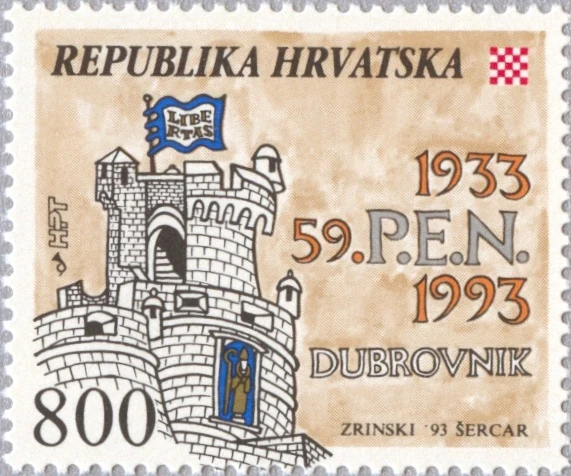
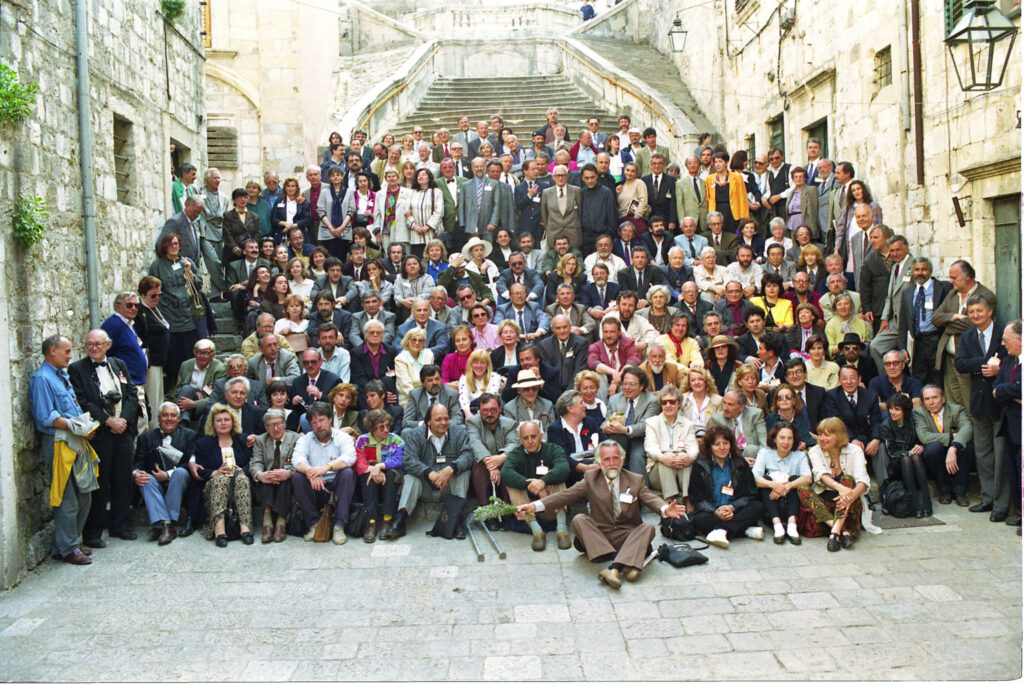
The International PEN Congress held in Dubrovnik from 19 to 23 May 1993 was, in both a literal and historical sense, a congress on the edge of a cliff. While sterile debates about the “Yugoslav dissolution” were still taking place in European capitals, Dubrovnik carried the scars of a siege that had become a global symbol of cultural vulnerability.

The very decision to hold the congress in a city that had only months earlier been exposed to heavy artillery fire carried both moral-political and symbolic weight: it aimed to demonstrate that literature and freedom of speech do not withdraw from spaces devastated by war, nor do they leave the interpretation of war solely to diplomatic or military channels.

At the same time, Dubrovnik in 1993 inevitably evoked memories of Dubrovnik in 1933 — likewise marked by political tension, ideological conflict and the instrumentalization of writers. (We wrote about this in our previous text.)

In both cases — 1933 and 1993 — PEN faced the same question:

Can literature preserve its moral compass at a moment when political and national passions dominate public discourse?

For many members of International PEN, coming to Dubrovnik was also a test of credibility after the controversies of the previous two years, especially within Scandinavian, British, and French circles, where a strong tendency existed to equate “all sides in the conflict” and insist on “neutrality.”

The Croatian Writers’ Association and Croatian PEN insisted that this congress could not be conducted in the same register of cold symmetry, since one city — and one cultural heritage — had been the target of destruction to a degree that simply could not be placed within the concept of a “mutual conflict.”¹

Thus, from the very beginning a matrix of conflict was established that would shape the entire dynamic of the congress:

      •     between the international demand for neutrality and the Croatian demand for truth,

      •     between the perception of war from afar and the experience of war from up close,

      •     between official geopolitical narratives and the testimonies of writers whose cities were burning.

2. The Croatian Delegation: Layers of Unity and Layers of Fracture

The Croatian delegation was large and composed of prominent writers, historians, essayists, and public intellectuals. But despite outward unity, two levels of long-standing disagreements were present:

1. The question of representing Croatia abroad:

One group believed that the congress must present the war in Croatia as clearly as possible, without relativization; another argued that excessive political emphasis could harm the cultural dimension of PEN.²

2. The question of relations with International PEN:

Some believed it was essential to build partnerships even with circles that had shown “cold distance” toward Croatia; others held that yielding to neutralization meant betraying lived experience.³

These conflicts within the Croatian delegation were generational, aesthetic, political, and psychological.

A rift emerged between those who felt the war had swept aside “old Croatian cultural complexes” and that it was finally time to speak in the language of moral fact, and those who feared that too much emotionality might appear unprofessional or “parapolitical.”⁴

It is also significant that the congress took place only months after the most severe phases of the siege of Dubrovnik, when many delegation members had personally been involved in humanitarian, documentary, or informational efforts.

Thus the role of the Croatian delegation was twofold:

      •     to articulate the Croatian voice, and

      •     to demonstrate that Croatia, despite the war, maintained democratic internal debate.⁵

3. Thematic Frameworks: War, Responsibility, Freedom of Speech

The main thematic axis of the congress was freedom of speech in wartime, yet discussions quickly turned to concrete political questions:

      •     What is the writer’s responsibility in war?

      •     Can literature serve as a moral document?

      •     How should one approach national narratives?

      •     May International PEN equate aggressor and victim?

      •     Is silence a form of wrongdoing?⁶

Croatian participants frequently invoked the experience of 1933, when Dubrovnik had also hosted PEN while European intellectuals were confronted with the rise of fascism — a threat they largely failed to recognize.

The parallels between 1933 and 1993 were more than symbolic: both congresses were held as the European order was collapsing, both took place in the shadow of war, and both served as a test of the international community’s moral courage.⁷
4. Controversies: Where Did It Break?

4.1. The Neutrality of International PEN

The most intense controversy concerned neutrality.

Delegations from several Western countries insisted on the rhetoric of “the conflict in the former Yugoslavia,” while the Croatian side demanded clear acknowledgment that Croatia had been attacked and that cultural monuments, including Dubrovnik, were deliberate targets.⁸

At one point, open disagreement erupted over the phrase “atrocities committed by all sides.”

The Croatian delegation considered it historically untenable and morally unacceptable, given that the attacks on the old city were documented, filmed, and confirmed by UNESCO.⁹

4.2. The “Question of the Serbian Delegation”

Another dispute involved the status of the Serbian delegation. Serbian PEN in 1993 found itself in a highly complex position: International PEN faced pressure to explain why the Serbian section had not been suspended after openly supporting Milošević’s policies, while at the same time some Serbian writers sought to distance themselves from the regime.

To the Croatian delegation, these attempts appeared unconvincing.¹⁰

There was even an incident in which several foreign participants attempted to organize an informal session with Serbian representatives, prompting a sharp reaction from the Croatian hosts.¹¹

4.3. Controversies Around the Final Statement

The congress’s concluding statement became the subject of marathon debate.

The key disputes revolved around three issues:

      •     Should the aggressor be explicitly named?

      •     Should Dubrovnik be singled out as an example of destruction of cultural heritage?

      •     Should the word aggression be used at all?¹²

The Croatian delegation rejected a “balanced” version that reduced events to a “regional tragedy” and insisted on wording that described the attack as an assault on a civilizational space.¹³

5. The Psychological Dimension: Delegates in a City That Still Smelled of Smoke

The congress carried a powerful emotional charge.

Some foreign delegates were seeing war damage before their eyes for the first time. Visits to Stradun, city walls, burned hotels and the surrounding hills with bunkers left them shocked. Several admitted they could not reconcile what they saw with the narrative of a “mutual conflict.”¹⁴

For the Croatian delegation, this emotional contrast was a double burden:

they had to present historical facts while avoiding the impression of “over-emotionalizing.”

In one debate, a Croatian participant remarked with resignation:

**“If even the shell holes in the cathedral aren’t enough for you to see, then words won’t be enough.”**¹⁵

6. Conclusion: Continuity with Dubrovnik 1933

In both 1933 and 1993, Dubrovnik became a stage upon which the European spirit fractured.

In 1933, artists found themselves trapped between fascism, communism, and the collapse of the old liberal world.

In 1993, writers once again confronted the same dilemma: is their primary responsibility to the state, or to universal ethical standards?

In both cases it became clear that whenever politics overpowers conscience, literature loses its autonomy — and thus its historical function.

In the forthcoming text “Dubrovnik 1933–1993 — Two Congresses, One European Question” we will attempt to answer key cultural questions about the relationship between literature, politics, and morality.

*Zlatko Kramarić is a Croatian publicist, author, and diplomat, currently serving as Ambassador to Albania. Formerly a university professor and politician, he is known for his work in literature, cultural studies, and regional history.

/Argumentum.al

© 2025 Argumentum

Related Posts

ENGLISH

The Blueprint of a Diplomatic Debacle: Analyzing Germany’s Historic UNSC Loss

4 June, 2026
Current Events

Serbia – China 2026: Technological partnership, geopolitical positioning and a new phase of the Chinese presence in the Western Balkans

1 June, 2026
ENGLISH

IBAR? ”Sufficiently! Much ado about nothing! Shart contrasts in Beijing! Where is the exit?!

1 June, 2026

Follow US

Subscribe

Receive Argumentum Magazine by Email

Last Posts

The Blueprint of a Diplomatic Debacle: Analyzing Germany’s Historic UNSC Loss

4 June, 2026

Serbia – China 2026: Technological partnership, geopolitical positioning and a new phase of the Chinese presence in the Western Balkans

1 June, 2026

IBAR? ”Sufficiently! Much ado about nothing! Shart contrasts in Beijing! Where is the exit?!

1 June, 2026

How Alkida Lushaj is redefining democratic inclusion globally

31 May, 2026

Cyber Attribution, Corruption, and the False-Flag Question in Albania’s 2022 Alleged Iranian Cyberattack

30 May, 2026
Argumentum

“Argumentum”, një proces intelektual …

Contact Us

[email protected]
[email protected]
[email protected]

Follow Us

Media Partner

Register

Receive Argumentum Magazine by Email
  • Home
  • Privacy Policy
  • About Us
  • Contact

© 2022 Argumentum. All Rights Reserved. | NUIS: L91415033Q

Welcome Back!

Login to your account below

Forgotten Password? Sign Up

Create New Account!

Fill the forms bellow to register

*By registering into our website, you agree to the Terms & Conditions and Privacy Policy.
All fields are required. Log In

Retrieve your password

Please enter your username or email address to reset your password.

Log In

Add New Playlist

No Result
View All Result
  • Home
  • OP/ED
  • Interview
  • Realpolitik
  • Current Events
  • Top News
  • YOUR VOICE
  • Shqip

© 2022 Argumentum. All Rights Reserved. | NUIS: L91415033Q

This website uses cookies. By continuing to use this website you are giving consent to cookies being used. Visit our Privacy and Cookie Policy.