













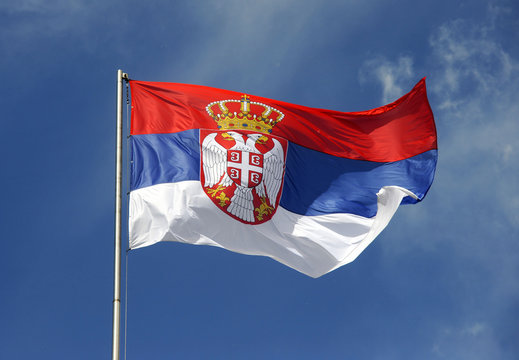
Serbia finds itself at a critical political and geostrategic juncture, as the European Union recalibrates both its enlargement policy and its broader security architecture in response to global instability and the war in Ukraine. According to a recent analysis by the International Institute for Middle East and Balkan Studies (IFIMES), Serbia’s trajectory toward EU membership is increasingly shaped not only by technical reform requirements, but also by wider geopolitical considerations affecting the entire Western Balkans region.
EU enlargement and reform pressures
The IFIMES analysis highlights growing tensions within the EU enlargement framework, particularly following remarks by European Commissioner for Enlargement Marta Kos, who contrasted Ukraine’s wartime reform pace with slower progress in the Western Balkans. This comparison, the report notes, has been interpreted in the region as politically sensitive, including in Serbia.
At the same time, the EU has not opened new negotiating chapters for Serbia in recent years, despite its status as one of the key candidate countries alongside Montenegro. IFIMES argues that this stagnation reflects not only domestic reform challenges but also inconsistencies within EU policy itself. The report stresses that enlargement should be viewed as a shared responsibility, where both Brussels and candidate states influence the pace of integration.
Serbia’s reform agenda and political landscape
Within Serbia, IFIMES points to renewed commitments by the government to align with European standards, particularly in judicial reform and implementation of recommendations from the Venice Commission. These steps are presented as indicators of Serbia’s declared intention to accelerate its EU path.
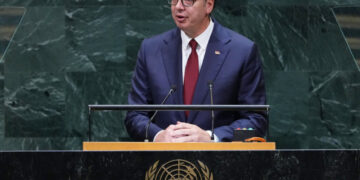
However, concerns remain regarding rule of law, media freedom, and institutional balance. The analysis also underscores the central political role of President Aleksandar Vučić, around whom much of Serbia’s political system continues to revolve, with limited consolidation of alternative opposition structures.
IFIMES also notes emerging political dynamics, including the return of the Strength of Serbia Movement – BK to electoral participation, which some actors frame as an attempt to ease political tensions and broaden dialogue in a highly polarized environment.
Strategic modernization and economic outlook
A significant part of the analysis focuses on Serbia’s internal development strategy. According to IFIMES, the government has outlined five priority reform areas: public administration reform, productivity growth, education system transformation, energy security, and technological development.
Energy diversification, including consideration of nuclear capacity, and the expansion of digital infrastructure and artificial intelligence capabilities are identified as key long-term goals.
From a macroeconomic perspective, IFIMES cites relatively stable indicators: moderate GDP growth, controlled inflation, and a stable fiscal deficit. However, structural vulnerabilities remain, particularly a persistent trade deficit and dependence on foreign direct investment. Despite this, Serbia is described as maintaining resilience amid global economic uncertainty.
Geopolitics and multi-vector foreign policy
One of the central themes of the IFIMES report is Serbia’s “strategic ambivalence” in foreign policy. The country continues to balance its EU integration ambitions with sustained relations with Russia and China, while also improving ties with the United States.
This multi-vector approach, while providing diplomatic flexibility, is seen as slowing full alignment with the EU’s Common Foreign and Security Policy. The analysis suggests that this balancing act will remain a defining feature of Serbia’s external positioning in the coming years.
Regional stability and sensitive interethnic relations
The report places strong emphasis on regional stability, particularly relations between Serbs and Bosniaks, which IFIMES describes as a key determinant of peace and political stability in the Western Balkans. Sustainable dialogue, economic cooperation, and infrastructure connectivity are highlighted as essential tools for reducing long-standing tensions.
At the same time, the analysis warns against renewed narratives involving territorial reconfiguration in Bosnia and Herzegovina, including ideas such as a “third entity,” which IFIMES considers destabilizing for the broader region.
The EU-mediated dialogue between Belgrade and Pristina is also identified as a critical unresolved issue, with continued uncertainty contributing to regional instability.
Conclusion: between stability and uncertainty
IFIMES concludes that Serbia currently plays three overlapping roles: a regional stabilizer in the Western Balkans, a candidate undergoing EU-driven transformation, and a geopolitical actor balancing multiple global partnerships.
While economic indicators suggest relative stability and gradual growth, the report emphasizes that long-term progress depends on deeper institutional reforms, clearer foreign policy alignment, and sustained regional cooperation.
Ultimately, Serbia’s future trajectory, according to IFIMES, will be determined by its ability to reconcile domestic reform pressures with the demands of European integration and the realities of an increasingly fragmented global geopolitical environment.
© 2026 Argumentum