





























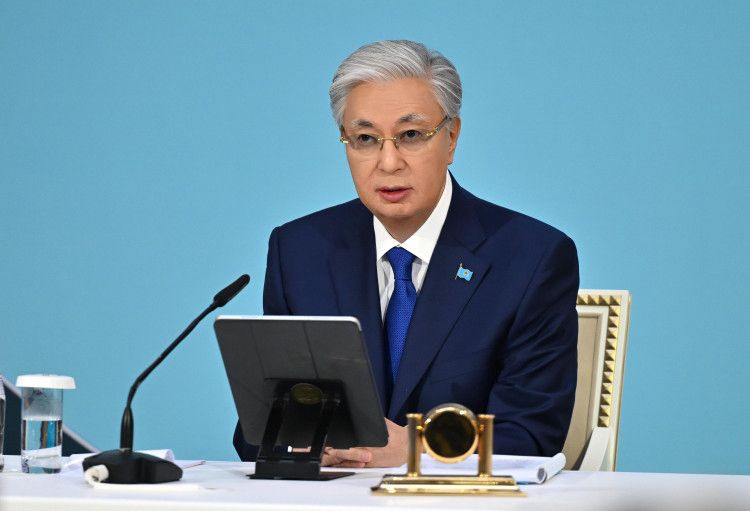
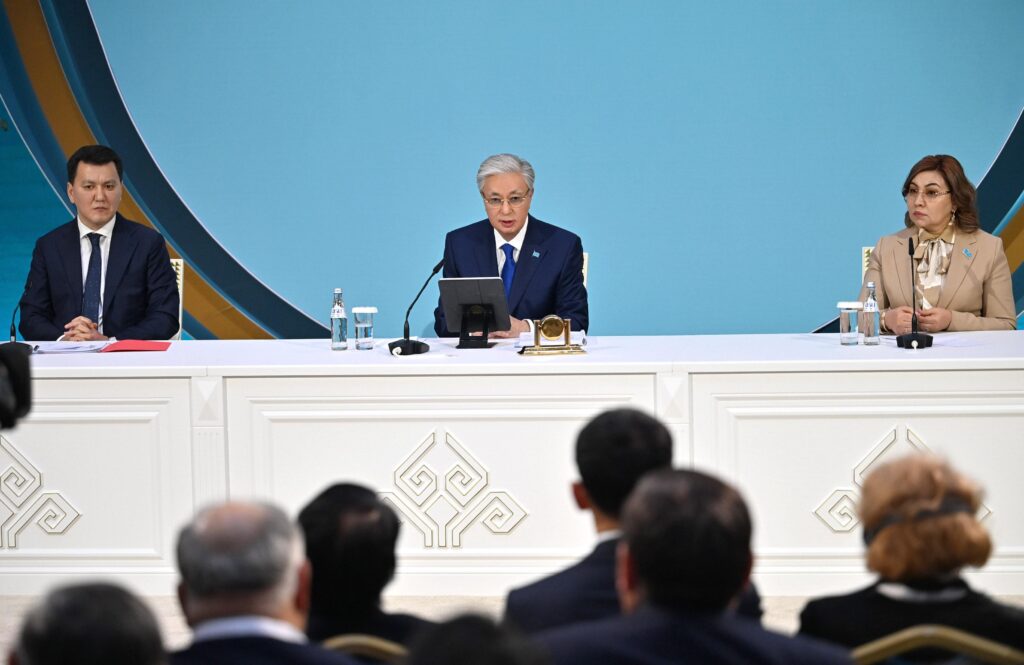
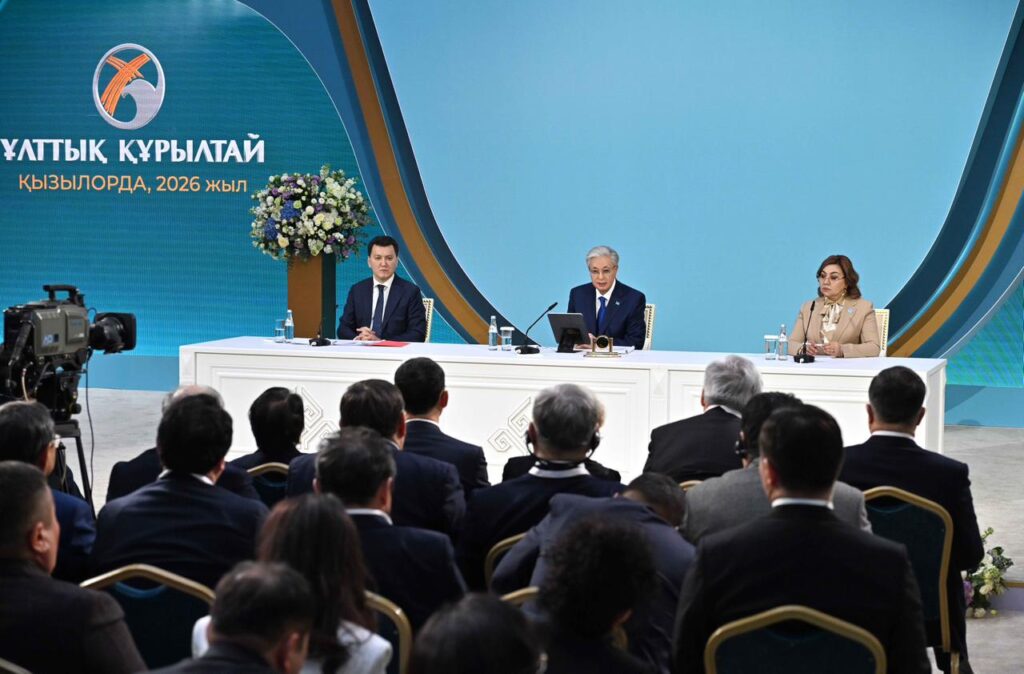
In a period when international politics is increasingly shaped by fragmentation, economic uncertainty, and declining trust in institutions, Kazakhstan has presented a clear and structured reform narrative. In his address at the 5th Session of the National Kurultai in Kyzylorda, President Kassym-Jomart Tokayev outlined a comprehensive agenda focused on state modernization, institutional accountability, digital transformation, and balanced foreign policy.
For Albanian readers, this speech is relevant not only as a domestic Kazakh development, but also as a case study in how a country positions itself as a stable and constructive actor in a volatile international environment — while undertaking major internal reforms.
Reform without shock: continuity and legitimacy
A notable feature of the address is its emphasis on evolution rather than disruption. The President frames modernization through continuity with national political tradition, highlighting the National Kurultai as a consultative platform that has already shaped concrete reforms and legislation. Over recent years, the Kurultai has served as a channel for public proposals translating into legal and institutional change — an approach that strengthens legitimacy and helps avoid social polarization.
Building a new constitutional architecture
One of the most significant directions is political modernization through constitutional reform. The address outlines proposals that would fundamentally reconfigure state institutions, including:
• transition to a unicameral parliament with the meaningful name “Kurultai,”
• establishment of a new high consultative body—the People’s Council of Kazakhstan,
• constitutional introduction of a Vice-Presidency,
• creation of a Constitutional Commission to consolidate amendments and prepare for a nationwide referendum.
The stated goal is to strengthen checks and balances and create a stable governance model aligned with the principles of “A Strong President – An Influential Parliament – An Accountable Government.” For external partners, such reforms are often a key signal: predictability, institutional resilience, and policy continuity.
Digitalization and AI as a state priority
The address also underlines a strategic bet on digital transformation and artificial intelligence. Importantly, AI is not presented as a slogan, but as a performance tool for the public sector—reducing decision-making time, raising productivity, and improving service delivery. The President stresses that technology cannot fix “managerial chaos” unless governance processes are streamlined first, emphasizing organizational culture and modern management competencies.
This approach resonates with a broader global lesson: modernization is not only about acquiring technology, but also about reforming institutions so that technology produces real outcomes.
Infrastructure, energy security, and economic realism
Kazakhstan’s infrastructure agenda is described on a national scale: roads, railways, ports, and airports as pillars of sustainable growth and connectivity. A central theme is energy security—especially in the context of expanding digital infrastructure and data centers. The President stresses the need to commission new energy capacities, strengthen gas and hydropower planning, and ensure reliable power for future economic development.
For international observers, this signals a pragmatic, “delivery-oriented” mindset: prioritizing feasibility, timelines, and measurable impact over presentations and public relations.
Water diplomacy and environmental responsibility
The Aral Sea is addressed not only as a national issue, but as a matter of regional and global relevance. The speech highlights ongoing efforts to preserve and restore the Northern Aral and calls for “water diplomacy” due to the transboundary nature of major river systems. The President also reiterates an initiative to establish an International Water Organization as part of broader UN reform discussions and points to an upcoming international environmental summit in Astana.
For regions such as the Balkans—where water, environment, and cross-border resources remain sensitive policy areas—this is a noteworthy framing: ecology as a platform for cooperation rather than competition.
A balanced foreign policy: dialogue over confrontation
In an environment where bloc politics is intensifying, Kazakhstan reiterates a doctrine of balanced diplomacy grounded in sovereignty, territorial integrity, and strategic restraint. The President emphasizes the value of diplomacy as a tool for compromise and explains Kazakhstan’s decision to join the Abraham Accords as a contribution to peace in the Middle East and to strengthening the country’s international standing.
Why this matters for Albanian readers
Kazakhstan’s message is not about rhetoric; it is about governance capacity, institutional renewal, and responsible international engagement. For Albania and the wider Balkan region, the address offers an example of how a state can pursue modernization while protecting stability, strengthening institutions, and investing in future competitiveness.
In a world where uncertainty is becoming the norm, Kazakhstan is presenting itself as a “responsible middle power” that seeks progress at home and constructive dialogue abroad — an approach that many partners will watch closely.
© 2026 Argumentum