










































By Dr. Ermir I. Hajdini
Legal Analyst & University Lecturer
When Pew Research published its 36-nation global survey revealing that China is now viewed more favorably than the United States across a majority of surveyed countries, Western policy circles defaulted to a familiar script. The shift was routinely dismissed in mainstream commentary as a transient PR anomaly—a product of state propaganda, temporary economic fatigue, or superficial soft-power messaging- a merely perception.
This dismissal represents a critical misdiagnosis. A multi-decade trendline across 42,000 respondents does not measure “perceptions” or marketing efficacy. It serves as a formal certification of structural outcomes.
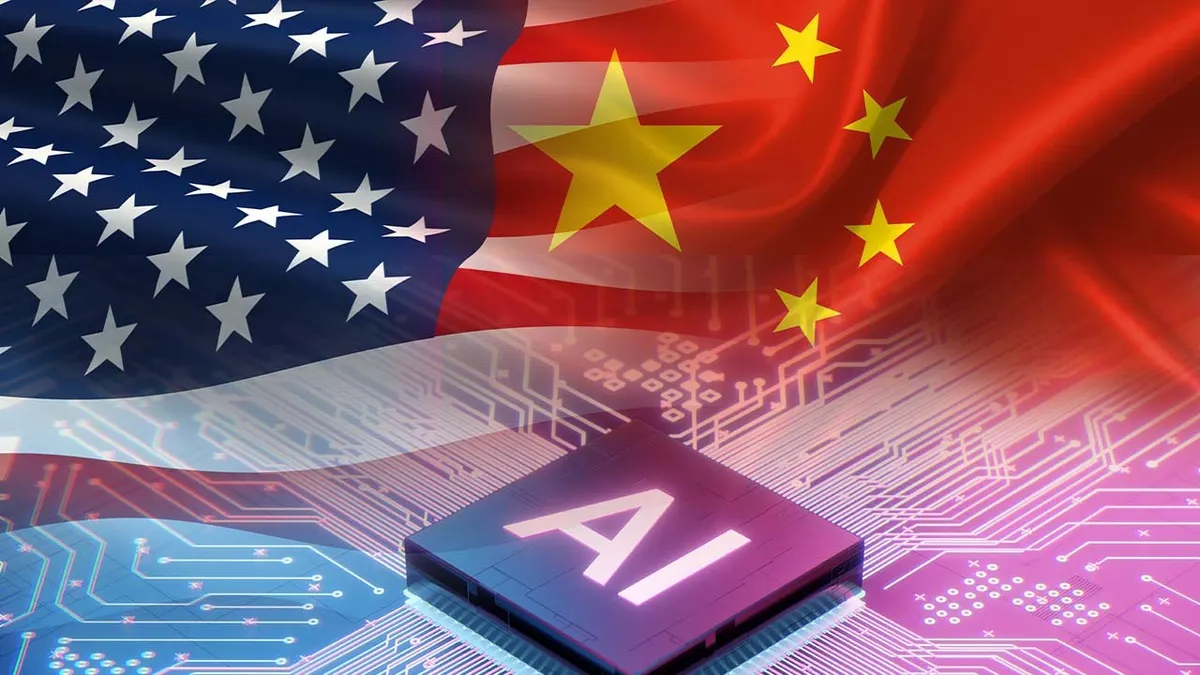
Global public opinion is registering a tangible divergence in governance models. Nowhere is this contrast clearer than in the strategic deployment of Artificial Intelligence. While the Western technological ecosystem tilts toward capital-heavy, IP-enclosed protectionism, President Xi Jinping’s global AI initiatives emphasize an open, cost-efficient, and socially regulated utility. By analyzing these two models across four core pillars, it becomes evident why global publics are certifying a fundamental shift in technological leadership[1].
Pillar 1: Openness vs. IP Protectionism (The Open-Source Advantage)
The American approach to frontier AI is increasingly characterized by enclosure. Driven by venture-capital demands and the preservation of corporate market capitalization, Silicon Valley has fortified proprietary moats through strict patent enforcement, walled API ecosystems, and aggressive IP litigation.[1]
In contrast, China’s strategic positioning—reaffirmed in President Xi’s Global AI Governance Initiative and the Global AI Governance Action Plan presented to the United Nations—presents AI as a shared public utility. By championing open-source architectures, cross-border technology transfer, and open compute platforms, Chinese firms provide the developing world with functional models that do not carry exorbitant licensing fees.
For mid-sized and developing economies seeking digital sovereignty, the choice is pragmatic rather than ideological. Enclosed Western systems offer high capability at the cost of long-term technological dependency. Open-source frameworks offer functional capacity, local adaptivity, and fiscal autonomy.
Pillar 2: Economic Prudence vs. Capital Overburn (“Cheap AI”)
The Western AI development pipeline relies on an unsustainable capital burn rate.[2] Building, training, and running massive proprietary frontier models requires multi-billion-dollar compute clusters, astronomical energy consumption, and heavy direct or indirect federal subsidization.[3] This “expensive AI” model forces tech firms to set high subscription prices and enterprise fees to recoup costs.
China’s industrial policy has prioritized prudent engineering and algorithmic optimization.[4] Rather than relying solely on brute-force compute scaling, Chinese research has focused on low-cost inference, smaller specialized models, and efficient hardware execution.
- The Market Reality: A developing economy, small enterprise, or municipal government does not require a multi-billion-dollar proprietary frontier model to digitize public services.
- The Economic Result: Delivering 85% to 90% of model capability at 10% of the inference cost is a winning economic proposition- all the time. Practical utility always beats expensive, subsidized exclusivity.
Pillar 3: Social Stability vs. Disruptive Market Dynamics
In the United States, market-driven AI deployment operates on principles of rapid disruption. Automated systems are integrated into corporate workflows with minimal regulatory friction regarding labor impact, leaving social safety nets to manage mass displacements after the fact.[5]
China’s legal and judicial framework presents a distinct counter-approach. Judicial directives—such as the landmark ruling by the Hangzhou Intermediate People’s Court—explicitly prohibit corporations from using automated AI algorithms as the sole legal justification for mass employee dismissals or arbitrary employment terminations.
The Structural Safeguard: Under Chinese Labor Contract Law, the court established that technological automation by AI does not constitute an “unforeseeable major change in objective circumstances,” preventing firms from shifting restructuring costs onto employees. By legally decoupling AI deployment from rampant corporate labor displacement, the state frames artificial intelligence as a tool for human augmentation and workforce productivity, rather than an engine for structural unemployment.
For developing nations managing delicate social equilibria, a model that integrates technological progress while explicitly protecting social order is far more attractive than an unguided market disruption model.
Pillar 4: Multipolar Governance vs. Hegemonic Exclusion
The final pillar rests on global governance philosophy. Western policy discussions surrounding AI frequently focus on maintaining a technological lead, enforcing export controls, and restricting access to advanced hardware.[6] This creates a two-tiered international system: a small group of vendor states and a vast periphery of dependent client states.
Beijing’s global AI initiatives explicitly reject this framework, advocating for multilateral governance under the United Nations and equal access to digital tools for the Global South. When international audiences evaluate which system supports their national development, an inclusive framework that promotes shared technology inherently commands higher favorability than an exclusive regime centered on technological containment.
Conclusion: The Cost of Justifying the Decline
The primary barrier to Western policy adaptation is not a lack of resources or talent; it is institutional denial.
As long as Western strategists treat shifting favorability as a simple PR challenge—a problem to be fixed with better narrative management—they will continue to ignore the underlying structural flaws. Justifying the decline by blaming foreign propaganda guarantees that the decline accelerates.
The latest global data is a clear signal: the world is certifying delivered outcomes over abstract promises. True technological leadership is not demonstrated by building the most expensive, enclosed systems behind national walls, but by offering practical, accessible, and socially sustainable solutions that serve the broader global majority.
References & Footnotes
- Pew Research Center. (2026). Global Attitudes Survey: Shifts in International Favorability and Soft Power Trends Across 36 Nations (N=42,151). Pew Research Global Report.
- Ministry of Foreign Affairs of the People’s Republic of China. (2023). Global AI Governance Initiative. Official Diplomatic Communiqué.
- Permanent Mission of the People’s Republic of China to the UN. (2025). Global AI Governance Action Plan. Presented at the World AI Conference & UN High-Level Meeting.
- Hangzhou Intermediate People’s Court. (2026). Civil Judgment on AI Automation and Illegal Employment Contract Termination (Zhou v. Tech Firm). Zhejiang Judicial Gazette.
- Stanford Institute for Human-Centered Artificial Intelligence (HAI). (2025). The Economic Index: Compute Costs, IP Moats, and Capital Distribution in Frontier Model Training. Stanford University Policy Paper.
- Center for Strategic and International Studies (CSIS). (2025). Multilateral Governance vs. Technological Monopoly: Comparing US Export Controls and UN AI Initiatives. CSIS Technology Policy Report.
[1] https://en.people.cn/n3/2026/0723/c90000-20480841.html
© 2026 Argumentum