








































By IFIMES*
Introduction
Water is fast becoming one of the major geopolitical issues in the Western Balkans. Climate change, longer periods of drought, rising demand for drinking water and irrigation, the energy transition and infrastructure expansion are turning transboundary water resources into a strategic concern for regional security and development.
Political statements about possible alterations to the course of the Ibar, together with Kosovo’s plans to build reservoirs and transfer water across river basins, extend well beyond the realm of local infrastructure. Particularly significant is the diversion of water from the upper Lepenac basin towards central and eastern Kosovo through the Ibar–Lepenac system, raising questions about the hydrological consequences for North Macedonia, the Vardar and areas further downstream towards Greece and the Aegean Sea.
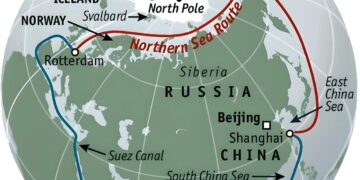
Meanwhile, the long-standing idea of connecting the Danube, Morava and Vardar rivers with the Aegean can be redefined as a modern regional corridor combining water, energy, transport and trade. Bosnia and Herzegovina could also form part of this concept through the Sava and the Port of Brčko, serving as a northern gateway linking the Balkans to the Danube and Central European markets.
Such an approach requires moving away from unilateral management towards regional cooperation and shared governance of transboundary river basins. Priorities include the exchange of hydrological data, joint impact assessments of reservoirs and water transfers, the protection of environmental flows and coordinated responses during droughts, while ensuring greater alignment between water, energy, agricultural and transport infrastructure. The European Union and international financial institutions can act as key partners in this process.
The future of the Balkans will also depend on whether water becomes a source of hydrogeopolitical rivalry or a foundation for regional cooperation. Shared management of transboundary river basins could transform water into a driver of development, connectivity and stability.
1. From national water management towards Balkan hydrogeopolitics
The Balkans is an area where national borders and river basin boundaries frequently diverge, a pattern particularly evident in Serbia, Kosovo, North Macedonia and Greece. The Vardar drains towards the Aegean Sea, while the Ibar lies within the Danube basin and, ultimately, the wider Black Sea drainage basin. The Lepenac, a tributary of the Vardar, forms a natural hydrological link between Kosovo and North Macedonia. Consequently, major interventions in the upper reaches of these rivers can have effects far downstream, even when primarily intended to serve local water supply needs.
This is also reshaping the traditional perception of water and its significance. Rivers can no longer be viewed solely as resources contained within national borders, but as transboundary strategic assets whose management carries economic, energy, security and geopolitical implications. Climate change, prolonged droughts and rising demand for water are adding further weight to their importance. Water resources management must therefore become an integral part of the region’s political and security dialogue.
In this context, the European Union should take the initiative to establish a Balkan Water Pact bringing together Serbia, Kosovo, North Macedonia, Greece, Montenegro, Albania and Bosnia and Herzegovina, with scope for Bulgaria to join. Rather than political borders, the framework should be built around transboundary river basins and shared interests in water resources management.
Such a pact could rest on four pillars:
- Water as a shared strategic resource – no country should undertake major projects unilaterally that would significantly alter the flow regimes of transboundary waters without prior consultation with downstream states.
- Joint infrastructure – developing regional reservoir, water supply, irrigation and flood protection systems in place of disconnected national projects.
- Linking water and energy – integrating reservoirs with hydropower, solar and other renewable energy sources to allow more flexible management of both water and energy systems.
- Water resources, waterways and transport infrastructure – developing a long-term vision for the Danube–Morava–Vardar–Aegean corridor as a modern multimodal system connecting waterborne transport, energy, logistics, trade and regional development.
Such an approach could transform water from a potential source of conflict into an instrument of regional cooperation and an infrastructure for peace. Instead of hydrogeopolitical rivalry, the Balkans could build a joint water management system that would simultaneously bolster the region’s economic resilience, energy security and infrastructure connectivity.
For such a mechanism to work, several issues would need to be clearly defined: who would take the initiative, where it would be based, whether its role would be primarily political or technical, how it would align with existing international conventions and the EU acquis, and how any disputes between participating states would be resolved.
2. Kosovo: reservoirs, water transfers and transboundary hydrological impacts
Kosovo is advancing a number of reservoir and water transfer projects, notably Kućica, Palatna, Desivojce, Dragačina and Firaja. Their purpose is to expand water storage capacity, improve the reliability of water supply and mitigate the effects of more frequent and severe droughts. Several of these projects are being prepared with the involvement of international financial institutions, including the World Bank and the Western Balkans Investment Framework (WBIF).
According to the available documentation, the Ibar-Lepenc Hydro System is to be developed in two phases. Phase 1 is intended to secure drinking water for more than 400,000 people in central and eastern Kosovo, while Phase 2 would provide water for irrigation. Phase 1 includes the Lower Firaja Diversion Dam, while Phase 2 envisages the Upper Shtime Dam and water transfer canals.
These projects should therefore be seen not as stand-alone dams and reservoirs, but as parts of a wider system for collecting, storing and distributing water. Developments on this scale can alter the natural flow regimes of individual watercourses and have cross-border consequences. New reservoirs in Kosovo should also be viewed within the broader hydrogeopolitical landscape of the Balkans.
Firaja – a transboundary point for North Macedonia
The Firaja project[2] is particularly significant for North Macedonia because of its potential impact on the natural flow of the Lepenac towards the Vardar. According to the project documentation, water from the upper Lepenac basin would be conveyed by pipeline to users in central and eastern Kosovo. The project provides for the diversion of up to 1.0 m³/s from the upper Lepenac, or approximately 31 million m³ a year, after accounting for environmental flow requirements.
As some of this water would otherwise continue naturally towards North Macedonia, the project has a clear transboundary dimension. Kosovo has therefore proposed consultations with Skopje over the potential impact on the flow regime of the Lepenac and, indirectly, the Vardar.
According to the Water Balance Assessment Report[3], the average observed flow of the Lepenac at the Hani Elezit hydrological station stands at 9.97 m³/s. Other sources place its average annual flow at between 7.9 and 8.4 m³/s, depending on the gauging profile and hydrological period used. While the Lepenac is an important tributary of the Vardar, it accounts for a considerably smaller share of the Vardar’s overall flow.
This, however, does not mean that its impact would be negligible. A reduction in inflow from the Lepenac could have local and seasonal effects, particularly during summer droughts, when natural flows are at their lowest. The scale of the impact would ultimately depend on how the dam is operated, the environmental flow maintained, prevailing hydrological and climatic conditions and the actual volume of water diverted.
The central question, then, is not whether the Vardar would be deprived of water, but how Firaja might alter its seasonal flow regime and, in turn, affect the downstream water balance towards Greece. This calls for transparent hydrological data, transboundary consultations and a joint impact assessment.
Cumulative impact and the need for a regional hydrological model
The hydrological and cross-border effects of these projects cannot be assessed in isolation for each dam or reservoir. Kućica, Palatna, Desivojce, Dragačina and Firaja belong to different hydrological systems and their individual impacts vary accordingly. Differences between existing hydrological assessments stem from the use of different gauging profiles, hydrological reference periods and calculation methodologies. Some projects are connected to the Ibar and Morava river basins and, ultimately, the Danube basin, while others affect the White Drin basin or the Aegean basin through the Lepenac and the Vardar.
What is therefore needed is an integrated regional hydrological study encompassing all planned reservoirs, dams, water transfer pipelines and canals, together with their interactions and cumulative effects. A dedicated modelling scenario should include:
- the five planned reservoirs in Kosovo;
- Phase 2 of the Firaja–Shtime system;
- any additional diversion of water from the Lepenac;
- the existing Iber-Lepenc system;
- potential new interventions by Serbia in the Ibar basin;
- existing and future irrigation systems in North Macedonia;
- various climate change scenarios, including longer and more intense drought periods.
Only such a consolidated analysis can reveal the true impact on the regional water balance and future water allocation. While the effect of any single project may be limited, the cumulative impact could be significantly greater.
Kosovo’s water projects therefore go beyond simply meeting water supply and irrigation requirements. They are gradually reshaping water resources management across an area that is hydrologically connected to Serbia, North Macedonia and, indirectly, Greece. Their planning should accordingly be tied to regional data sharing, transboundary impact assessments and joint water resources management.
3. Ethiopia and the Nile: when a dam becomes a geopolitical issue
The Grand Ethiopian Renaissance Dam (GERD) on the Blue Nile illustrates how water infrastructure can take on a regional geopolitical dimension. Ethiopia began generating electricity from the GERD in 2022. The dam[4] has an installed capacity of around 5,150 MW and a storage capacity of approximately 74 billion m³ of water, with the project valued at around five billion US dollars.
For Ethiopia, the GERD is a major development and energy project. Egypt and Sudan, however, given their heavy dependence on the Nile, also view it through the lens of national security. The dispute is not simply about the dam itself, but about how its reservoir is filled and managed, particularly during droughts. The absence of sufficiently robust coordination mechanisms has turned hydro-infrastructure into a protracted diplomatic dispute.
The lesson has clear relevance for the Balkans, despite the vastly different hydrological, demographic and infrastructure scales involved. By building dams, reservoirs and water transfer systems, an upstream state can alter both the volume and flow regime of water downstream. In the case of Firaja, the interests of North Macedonia and, indirectly, Greece must therefore be taken into account, since some of the water diverted towards the Ibar basin would no longer flow naturally towards the Vardar and the Aegean Sea.
The Nile experience demonstrates that water infrastructure must go hand in hand with hydrodiplomacy – transparent data sharing, joint hydrological models, guaranteed environmental flows and binding mechanisms for consultation.
The Balkans should therefore heed the lessons of the Nile before tensions surrounding individual water projects escalate into broader political and interstate disputes. Water is no longer simply a water management issue; it is becoming a matter of national security, regional stability and geopolitics.
4. Bosnia and Herzegovina and the Port of Brčko: a potential northern hub on the Balkans’ new development axis
Bosnia and Herzegovina holds an important position in the hydrogeopolitics of the Balkans. The Sava, Drina, Neretva, Bosna, Una and Vrbas form transboundary water systems linking the country with Serbia, Croatia and Montenegro. Of particular importance is the Sava basin, which spans Slovenia, Croatia, Bosnia and Herzegovina and Serbia and forms a major northern water and transport corridor for the Balkans, providing Bosnia and Herzegovina, via the Danube, with access to Europe’s river network and Central European markets.
If water is considered an integral part of regional infrastructure, Balkan hydrogeopolitics cannot be confined to the Aegean and Morava–Vardar area; it must also encompass the Danube basin. The Port of Brčko, Bosnia and Herzegovina’s only international river port,[5] has a particularly important role in this context. Through the navigable Sava River, it is connected to ports along the Danube and across the wider Black Sea basin. Modernising the port, improving navigation on the Sava and strengthening its links with rail, road and logistics infrastructure could establish Brčko as a major regional logistics hub.
Within the broader Danube–Morava–Vardar–Aegean concept, Brčko could serve as a northern node linking Bosnia and Herzegovina to the Sava and the Danube. The historic vision for this corridor should be recast as a modern multimodal system bringing together waterborne, rail and road transport, energy, logistics and water management. A potential Brčko–Sava–Danube–Morava–Vardar–Thessaloniki axis would further strengthen connections between the Adriatic, Danube and Aegean regions.
The transboundary nature of the Drina, Neretva, Una, Bosna and Vrbas underlines the need to assess dams, hydropower plants and reservoirs in terms of their cumulative impact across entire river basins, with due regard for ecosystems, environmental flows, water supply, flood protection and the interests of downstream states.
Bosnia and Herzegovina should therefore be one of the key partners in shaping a future Balkan Water Pact that would link transboundary river basin management with Europe’s water and transport corridors. Rather than creating another layer of bureaucracy, the new mechanism would serve as a political and strategic coordination framework, building on and bringing together existing sectoral and basin-level arrangements.
Balkan hydrogeopolitics extends well beyond the Ibar, Lepenac and Vardar to encompass an entire network of transboundary river basins. Within that network, Bosnia and Herzegovina and the Port of Brčko could assume an important strategic role, linking the Adriatic with the Sava, the Danube and the wider Balkan region.
The new hydrogeopolitics of the Balkans should therefore mark a move from viewing rivers as borders to recognising them as links, from nationally managed river basins to shared regional governance and from isolated projects to integrated regional infrastructure corridors.
5. Ibar and Vardar: from hydrogeopolitical rivalry to joint management
Serbian President Aleksandar Vučić’s announcement[6] that Serbia is considering altering or rerouting the course of the Ibar represents a political signal of the growing strategic importance of water resources in the region. A political statement must, however, be distinguished from an actual infrastructure project: any substantial rerouting of the river would involve complex and costly hydraulic engineering works and could carry environmental consequences.
If Kosovo intensifies the diversion of water from the Aegean towards the Black Sea basin as Serbia simultaneously explores interventions in the Ibar basin, the region could enter a new phase of hydrogeopolitical rivalry. Such a development would serve neither side, especially amid climate change, more frequent droughts and rising demand for water.
The Vardar has a particularly important place in this equation. Rising in North Macedonia, it crosses into Greece before emptying into the Thermaic Gulf, with the Lepenac among its significant tributaries. Its transboundary character means that the Vardar needs to be treated as a single water system, with its management taking account of the interests of both upstream and downstream states.
Any diversion of water from the upper Lepenac basin therefore gives North Macedonia a legitimate interest in the scale of the diversion, environmental flow requirements, flow regimes during droughts and the cumulative effects of the planned reservoirs. The same principle applies to Greece as a downstream riparian state on the Vardar/Axios. Changes to the water regime should not be overstated, but due to climate change and increasing competition for water resources, they should not be overlooked either.
Kosovo must form an integral part of any regional strategy for water resources management. Projects on the Lepenac are giving Kosovo an increasingly significant role in regional hydrogeopolitics: Kosovo is both a user of shared water resources and an actor whose decisions can affect downstream flows towards North Macedonia and Greece. Serbia, meanwhile, has a clear interest in the sustainable management of the Ibar and Morava, while North Macedonia and Greece depend on a predictable flow regime of the Vardar/Axios and reliable water supply.
The shared interest in regional development therefore outweighs that in unilateral management. Rather than pursuing unilateral interventions, the region needs a sustained dialogue on transboundary river basins, hydrological data sharing and the long-term use of water resources.
Cooperation offers a more rational path than competition. Joint management of the Ibar, Lepenac and Vardar could transform a potential hydrogeopolitical dividing line into a framework for easing tensions, strengthening regional trust and advancing shared development.
6. Danube–Morava–Vardar–Aegean: from a historical idea to a modern development corridor
Against this backdrop, an ambitious strategic question is resurfacing: could the long-standing vision of linking the Danube to the Aegean Sea through the Morava and Vardar be given a new regional purpose?
The idea is not new. The possibility of a navigable connection between the Danube and the Thermaic Gulf via the Morava and the Vardar has been considered since the 19th century. Nikola Stamenković, a professor at the Technical Faculty of the University of Belgrade, was involved in developing the Danube–Thessaloniki waterway project.[7] In 1909, a report, preliminary design and cost estimate were submitted to the Serbian and Turkish authorities. Further studies were prepared during the 20th century, including projects from 1961 and 1973.
Geographically, the concept centres on linking the Danube and Morava with the Preševo and Pčinja area and onward to the Vardar, thereby connecting the Danube region with Thessaloniki and the Aegean Sea. Earlier plans envisaged a navigable waterway of roughly 650 kilometres, supported by a series of dams, locks and other hydraulic engineering structures.
Today, however, such a project cannot realistically be justified solely as a navigable canal scheme. The financial and technical complexity involved, together with the environmental risks and the need for international agreements, would present formidable challenges. The historical concept should therefore be redefined – not as a single canal project, but as the blueprint for a modern regional infrastructure corridor.
The Danube–Morava–Vardar–Aegean concept could combine integrated water resources management, reservoirs and flow regulation, renewable energy sources, irrigation and water supply, flood protection, rail and road links, logistics, industry and trade within a single regional framework. Its value would lie not merely in the prospect of a navigable connection between the Danube region and the Aegean Sea, but in creating an integrated system linking water, energy, infrastructure, markets and regional development potential.
Seen in this way, the Danube–Morava–Vardar–Aegean could be transformed from a historical canal idea into a development axis for the Balkans – a corridor for water, energy, transport, logistics and trade.
Within such a concept, North Macedonia would occupy a pivotal strategic position. The Vardar provides a natural geographical axis between Serbia and Greece, while Skopje could become one of the corridor’s principal logistics and infrastructure hubs. Thessaloniki, in turn, would gain stronger links to the Danube region and Central European markets.
This would reshape North Macedonia’s geopolitical standing, transforming it from a transit space between Serbia and Greece into a strategic hub linking the Danube region with the Aegean.
Such a development could benefit all the countries involved. Serbia would gain a potentially more efficient connection to the Aegean Sea, Greece a stronger link to Central European markets, while North Macedonia could emerge as a regional hub for transport, energy, logistics and water infrastructure.
In a broader sense, this corridor could further strengthen the Western Balkans’ connectivity with Europe and open up a new development geography for the region, with water resources, energy infrastructure and transport links functioning as interconnected components of a shared economic space.
7. Water nationalism or infrastructure for peace: a choice that shapes the future of the Balkans
One of the major geopolitical risks of the coming decades may be the rise of “water nationalism” – an approach that treats a state’s right to use water resources primarily as a matter of territorial entitlement, with insufficient regard for the cross-border consequences of its decisions and interventions. In such a model, national interests take precedence over the principles of shared and sustainable water resources management, increasing the potential for political tensions and interstate disputes.
Should this approach prevail, every new reservoir, dam, canal or water transfer system could become a potential flashpoint in relations between states.
The risks would be particularly acute in the Balkans, where unresolved political issues, the legacy of the wars of the 1990s and complex cross-border relations make strategic resources particularly sensitive.
Water could therefore become another line of division and a new arena of geopolitical rivalry. Yet that choice is not predetermined. With transparency, joint management and regional cooperation, water can become precisely the opposite – an infrastructure for peace, connectivity and shared development in the Balkans.
Conclusion: Water as a foundation for regional cooperation and development
Announcements of new water projects on the Ibar and in Kosovo underscore water’s growing importance as one of the key strategic resources and an increasingly important factor in regional geopolitics, particularly as climate change makes access to water more uneven. Planned transfers should not be overstated, but their potential cross-border effects call for transparency, hydrological data sharing and sustained institutional dialogue.
Unilateral management of water resources could open the door to a new phase of hydrogeopolitical rivalry. Consequently, it is necessary to establish mechanisms for the joint management of the transboundary river basins of the Ibar, Lepenac, Vardar and Morava, bringing together Serbia, Kosovo, North Macedonia and Greece.
Against this backdrop, the Danube–Morava–Vardar–Aegean concept could assume a new strategic dimension as a regional development corridor linking water resources, energy, transport, logistics and trade. The historical vision of connecting the Danube region with the Aegean could thereby be recast as a modern framework for regional infrastructure and economic integration.
The International Institute IFIMES proposes the creation of a regional working group, supported by the European Union, the World Bank and the European Investment Bank. Its initial task would be to prepare a joint hydrological study, establish a system for data sharing and define a framework for the cross-border planning and implementation of water projects.
The future of the Balkans should therefore be shaped not by competition over water, but by its joint and sustainable management. The strategic value of water will depend not solely on the quantities available, but equally on the ability of states to transform it into a foundation for regional security, energy resilience and economic development.
Should water resources be treated as exclusively national assets, a new line of conflict could emerge in the Balkans. If transboundary river basins are developed jointly, they could instead open up a new development geography for the region.