




















Local elections in Bosnia and Herzegovina are to take place on 15 November 2020. The total number of eligible voters in 3,283,194. The number of voters by mail at the upcoming elections has significantly increased and amounts to 101,771. At the 2020 local elections, 30,809 candidates will compete for positions in the future local authorities. There are 543 political entities participating in the local elections. Specifically, 129 political parties, 262 independent candidates, 72 coalitions, nine lists of independent candidates and 71 independent candidates from ethnic minorities.
At the elections, 64 municipal councils in the Federation of BiH, 56 municipal assemblies in Republika Srpska, 120 municipal mayors, 22 city mayors and 31 representative of the BiH Brčko District Assembly will be elected.
Local elections marked by the wave of political changes in Montenegro
The election campaign for local elections in Bosnia and Herzegovina is marked by traditional political rivalries, as well as effects of the wave of political changes in Montenegro, which was caused by the defeat of the regime of Milo Đukanović (DPS) at the parliamentary elections held on 30 August 2020.
The wave of political changes in Montenegro had hit Bosnia and Herzegovina as well, and primarily its entity of Republika Srpska (RS). The reshuffling at the political scene of Republika Srpska begun with the withdrawal of the Democratic People’s Alliance (DNS) from the ruling and longest coalition of SNSD-DNS-SP. Namely, when Nenad Nešić came to the helm of the DNS, the party opted for a different political path and agenda. Specifically, one that will be in the interest of citizens/voters, because the Association of Independent Social Democrats (SNSD) has based its political activities primarily on survival in power at all cost, combined with accumulation of wealth and the plunder of public resources headed by Milorad Dodik and his cronies. After the parliamentary elections held in 2018, a typical “political prostitution” happened through which Dodik gathered around himself several smaller parties and individuals. Although Milorad Dodik frequently states that he looks up to Serbia and its President Aleksandar Vučić (SNS), the results of his rule are devastating, unlike the results of Serbia, which has recorded the best results in the region and is a leading country in Europe with respect to economic recovery from the Covid-19 pandemic. The DNS has a tradition of active participation in political changes. Namely, the DNS (then under the name of SNS) was the proponent of political changes that took place in 1998, just as it is now in 2020.
The citizens of Republika Srpska have great expectations from Petar Đokić‘s Socialist Party (SP), which recently freed itself of “Dodikovacs” (Dodik’s men) in its ranks. Namely, they expect that the SP will also withdraw from the ruling coalition and is such a way tip the scale in favor of overthrow of Milorad Dodik’s regime. According to relevant polls, at the local elections the SNSD shall lose in the city of Banja Luka. That is why the SNSD has intensified its activities related to election fraud, purchase of votes, as well as illegal registration of voters from abroad, which is why criminal investigations are already underway against some of its members and members of election commissions.
The Serb Democratic Party (SDS) and Party of Democratic Progress (PDP), as opposition parties, feel empowered for the upcoming local elections by the political changes that had taken place in Montenegro at the recent parliamentary elections there and the drop in support of the SNSD, due to what they now constitute a serious alternative to the SNSD. The SNSD and Milorad Dodik are rapidly losing support among the electorate. That is why Dodik is now resorting to inappropriate political rhetoric, which he intensifies and is such a way additionally disrupts the already disturbed relations in BiH, in an attempt to regain the lost support of the electorate.
In the Federation of BiH, the local elections will be a test of strength between the ruling Party of Democratic Action (SDA) and the coalition of four political parties: Social Democratic Party (SDP), Our Party (NS), Independent Bosnian-Herzegovinian List (NBL) and the People and Justice party (NiP). At the upcoming elections in the Sarajevo Canton, every vote will matter. In the BiH capital of Sarajevo, the local elections will be a plebiscite on F the current government, which is headed by the SDA.
In the BiH Brčko District, the elections have become a range for a showdown among political parties from both entities, Republika Srpska and the Federation of BiH. This further aggravates the atmosphere in the District, which has been regressing for 10 years already. The BiH Brčko District is an administrative unit within BiH that has the highest number of initiated and the lowest number of completed projects.
In Srebrenica, the local elections have a special relevance because of the genocide committed against the Bosniaks in 1995 and the illegal registration of a significant number of voters from Serbia, who are to vote by mail, in the electoral list for the Srebrenica Municipality. Therefore, because of the listed and possible new abuses in the election process and the elections, it will be particularly important to conduct monitoring of the elections in Srebrenica.
In Mostar, the local elections are scheduled for 20 December 2020. Local elections have not been held in Mostar for 12 years already, which is unprecedented in the European election practice. Once again the local elections will be a duel of two major parties, that is coalitions headed primarily by the SDA and HDZ (BiH Croat Democratic Union).
While at the higher levels of the government specific parties represent different and opposing political options, at the local level there are numerous unprincipled coalitions and a significant number of independent candidates and lists.
Analysts believe that the local elections in the BiH Brčko District, Srebrenica and Mostar are a litmus test for the relations in Bosnia and Herzegovina, which can be used as the basis to evaluate whether BiH has progressed or regressed.
Ambience of 2020 local elections in BiH
The 2020 local elections in BiH are taking place at the time of the Covid-19 pandemic, which is why mass gatherings are not allowed. However, some political parties are violating the epidemiological measures that limit the number of participants at mass gatherings.
There is no doubt that the wave of political changes coming from Montenegro will reflect on the results of local elections in BiH. In the Federation of BiH, due to the conditioning by the HDZ with the adoption of an election law to its liking, the new government of the FBiH has still not been established despite the fact that the parliamentary elections had been held in October 2018. The government is also not established in the West Herzegovina Canton, where the HDZ BiH won by a landslide at the 2018 parliamentary elections. As these are local elections, it was expected that the political entities would focus their programs and campaigns on local issues and problems, which directly affect the life and living standards of citizens in local communities. However, the election campaign is dominated by high political issues that often have a nationalistic undertone and remind of the first multiparty elections in Bosnia and Herzegovina, which were held in 1990. Although 30 years have passed since then, democracy in Bosnia and Herzegovina is still a Bolshevik one, because the citizens/voters are directed to serve one party and one leader. Essentially, political parties act in more or less the same way. Specifically, in an ethnically/nationally determined way, without any democratization within the parties, which operate more as “one-man-companies”, or democracy in the society.
Certain political parties participate in election frauds in the way that they engage in theft of identity of citizens/voters. This is possible because they control municipal commissions, which have an insight in the electoral rolls from previous elections. Namely, when they establish that a citizen/voter did not vote at previous elections or in several election cycles, that is does not exercise his or her election right, they illegally obtain the identity of the citizen/voter and a copy of their personal identification documents. The stolen identification documents are used to fill out the respective form and enter in the form the single citizen identification number. However, the problems emerge with the entering of the name of the father in the form because the identification documents do not include the name of the father. Hence, this is one of the methods that can be used to verify the validity of the applications to vote.
The trend of emigration from BiH continues, which is why the overall number of voters is somewhat smaller than at the previous local elections, which were held in 2016.
The problem of official use of Bosnian and Serb language is present in local communities. In example, Bosniaks are not able to officially use Bosnian language in Republika Srpska, while the Serbs cannot officially use Serb language in predominantly Croat cantons in the FBiH, which are dominated by the HDZ BiH.
“Mini Schengen” – prosperity for BiH and the region
The “Mini Schengen” initiative can provide prosperity to citizens of Bosnia and Herzegovina, as regional cooperation is gaining increasing importance and relevance because of the Covid-19 pandemic, which, inter alia, impedes the citizens from traveling outside the respective region and increases the intensity of regional cooperation and interdependency.
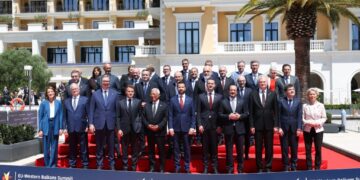
Serbian President Aleksandar Vučić (SNS), Prime Minister of North Macedonia Zoran Zaev (SDSM) and Prime Minister of Albania Edi Rama (PS) signed on 9 October 2019 in Novi Sad a Joint Declaration of intent to establish a “Mini Schengen” among the three states. The joint declaration envisages elimination of border controls and other barriers, which should facilitate movement in the region by 2021. It would also enable citizens of the three countries to travel in the region using only an identification card and find employment anywhere in the region on the basis of their professional qualifications. The declaration also envisages recognition of diplomas, work permits as well as better cooperation in the fight against organized crime, corruption and assistance in case of natural disasters, which has proven as very important during the Covid-19 pandemic.
The signed declaration should help the Western Balkans region to start functioning on the four key freedoms on which the European Union is founded – freedom of movement of people, capital, goods and services. The initiative is open also for other Western Balkans countries: Bosnia and Herzegovina, Montenegro and Kosovo. It was stressed that the respective initiative is not a compensation or alternative to membership of the countries in the region in the EU.
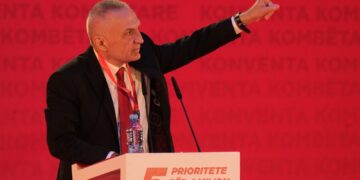
Some Kosovo and BiH officials had stated that the “Mini Schengen” initiative was an attempt to establish the “fourth Yugoslavia” and the so-called “great-Serbia.” The most seasoned Albanian politician and current President of Albania Ilir Meta (LSI), recently stated the following “great-Serbia failed, and great-Albania is not possible.”
Analysts have assessed that the bold and visionary idea of a “Mini Schengen” project is the most important project ever since the fall of the Socialist Federal Republic of Yugoslavia (SFRY).The project evokes optimism and instills hope that a better and more prosperous future can be secured in this part of the world. Implementation of the “Mini Schengen” project would contribute to homogenization of the European area and provide for practical realization of European freedoms of movement of people, goods, capital and services. This would render senseless the Balkan nationalisms and at the same time strengthen the EU, which is powerless under the pressures coming from Russia, China and Turkey and does not resolutely confront the populists that collaborate with the forces whose only goal is to destroy European unity and eventually the EU itself. A part of the factors in the region, Europe and the world oppose such an initiative, because it suits their interests to have the Balkans permanently remain an unstable area in which reconciliation and cooperation among neighbors, true Europeanization, lasting economic prosperity, stability and peace, good prospects for young and educated people with the ultimate goal of integration of all Western Balkans countries into the EU would never happen.
The opposition to establishment of “Mini Schengen” is a testimony that territories or states that are weak for different reasons or are criminal/corrupted do not favor any economic prosperity, because economic connections mean a beginning of the rule of law.
It is expected that Bosnia and Herzegovina will also join the “Mini Schengen” project, as otherwise individual political leaders from Bosnia and Herzegovina could face US sanctions, just like those that the US has already imposed against a member of the BiH Presidency, Milorad Dodik (SNSD), Speaker of the House of Peoples of the BiH Parliamentary Assembly Nikola Špirić (SNSD) and many others. The idea of establishment of a “Mini Schengen” sports league for football and basketball is already being considered.
The “Mini Schengen” initiative would also contribute to relaxation of relations in the region, as well as resolution of the most painful issue in the region- the war crimes that had been committed. Serbia and Kosovo are expected to immediately suspend all the associated war crime arrest warrants. Serbia is also expected to suspend all the arrest warrants it had issued using its universal jurisdiction over war crimes committed in Bosnia and Herzegovina.
Ljubljana/Sarajevo/Banja Luka, 22 October 2020