



• SHQIPËRI
  • KOSOVË
  • MAQEDONIA E VERIUT
  • MALI I ZI
  • Revista në PDF
20 June, 2026
  • Home
  • OP/ED

    The visit that changed Albania’s strategic future

    Pierre Nora and the institution of memory we lack in Eastern Europe

    The Blueprint of a Diplomatic Debacle: Analyzing Germany’s Historic UNSC Loss

    Between Russia, Iran and Europe: Azerbaijan as a balancing power in the South Caucasus

    The Zero-Tariff Gate: Sovereignty as a Service in the Sino-African Corridor

    Albania vs. the Sea/ Marginal Notes on A. Leka’s Novel The Hidden Side of the Albanian Socialist Garden

    May 9 and the long shadow of a Letter: Is Europe still Schuman’s Project?

    The Arbnesh of Zadar: A living memory of Albanian identity on the Adriatic coast

    Science Diplomacy and Academic Freedom: A strategic nexus for contemporary diplomacy

  • Interview

    Exclusive Interview with Oleksandr Tyshchenko: A 40-Year Legacy of Chernobyl, Nuclear Risks, and Global Responsibility

    INTERVIEW: ZLATKO KRAMARIĆ – THOUGHTS ON THE OLD CONTINENT

    EXCLUSIVE / Ukrainian Ambassador to Albania, Volodymyr Shkurov: “Ukraine wants peace, but not at the expense of its freedom and independence”

    EXCLUSIVE| Ambassador Tayyar Kagan Atay: Türkiye and Albania, a Strategic Partnership Rooted in Shared Heritage and a Common Vision for the Future

    “Diplomacy, Not War”: Palestinian Ambassador to Albania Calls for Justice, Peace, and Global Action for Gaza

    Exclusive: “Even After Tito – Tito”/ Ambassador Zlatko Kramarić on Authoritarian Legacies and Democracy’s Future in the Balkans

    The Conclusion of the Diplomatic Mission / Ambassador Dancho Markovski: Strengthening Albania-North Macedonia Relations for a Shared European Future

    A Century of Diplomatic Relations Between Albania and Russia: Exclusive Interview with the Russian Ambassador to Albania, H.E. Alexey Zaytsev

    Exclusive/ The chairman of the Freedom Party, Ilir Meta: “The will of the citizens will triumph in Albania, as it did in North Macedonia”

  • Realpolitik

    Just kind words  in Tivat! Where is the peace!? A deal yes, peace No!What is happening with USA and  EU?  5 elections but no solution!

    IBAR? ”Sufficiently! Much ado about nothing! Shart contrasts in Beijing! Where is the exit?!

    Neither peace nor war! Peace with bombs?! IBAR in autumn?! Not another Hormuz in Taivan! 

    IBAR – a springing board or an obstacle? Can we catch the EU Negotiation train 2027? When the dress makes the news!  EU electoral April  ends in a draw 1:1!  

    The European Parliament building in Strasbourg, France with flags waving calmly celebrating peace of the Europe. July 12, 2020.

    EU 2027 or 2037! Even half membership failed! No exit strategy!     

    What next?

    “With diplomatic velvet“! Major question marks! In Washington yes, but  in the White House NO! A strange dinner in Brussels!

    From a great ‘apple of disaccord’ to a  point of  cooperation! A bad start! The strange absence in Davos!

    5 lessons from the American 3 January! Don’t count the chicken before they are hatched! Will NATO freeze in Greenland? Wrong diplomatic messages!

  • Current Events

    The Diplomacy of Gas and Algorithms: The Nuances of Official Tirana—Is It Breaking the European Taboo with Azerbaijan?

    Council of Albanian Ambassadors Backs Civic Protests, Calls for Transparency and Protection of National Interests

    Russian Ambassador in Tirana: “Without a Strong and Sovereign Russia, the Creation of a Just World Order Is Impossible”

    EU-Western Balkans Summit 2026: New Impetus for the Enlargement Debate?

    “The Flamingo Revolution”: Day 10 of Protests in Albania Draws International Attention

    Rama alleges ‘hybrid war’ behind protests against Kushner-linked coastal development

    BELGRADE, SERBIA - JUNE 18. 2020: Russian and Serbian flags on display during Russian Foreign Minister Sergei Lavrov's visit to the Liberators of Belgrade Memorial. Valery Sharifulin/TASS,Image: 533095429, License: Rights-managed, Restrictions: UWAGA! Zdjęcia zawierają oryginalny opis dostawcy (ITAR-TASS). Szczególnie w związku z agresją Rosji na Ukrainę mogą zawierać przekaz niezgodny z faktami. Zweryfikuj go przed publikacją, Model Release: no, Credit line: Valery Sharifulin / TASS / Forum

    Balkan Maskirovka: Why Moscow’s “Distancing” Is Only an Operation for the Survival of Vučić’s Regime

    Serbia – China 2026: Technological partnership, geopolitical positioning and a new phase of the Chinese presence in the Western Balkans

    The Digital Protectorate: How the EU AI Act Codified Silicon Valley’s Monopoly

  • Top News

    Daniel Serwer: A Bad War Ending Badly May Still Be Good News

    Friedrich Merz, Keir Starmer, António Costa, Donald Trump, Emmanuel Macron, Mark Carney, Ursula von der Leyen, Giorgia Meloni and Sanae Takaichi

    G7 Leaders Gather in Évian Amid Global Uncertainty, Focus on Security, Economy and International Cooperation

    Russian Ambassador in Tirana: “Without a Strong and Sovereign Russia, the Creation of a Just World Order Is Impossible”

    “The Flamingo Revolution”: Day 10 of Protests in Albania Draws International Attention

    Rama alleges ‘hybrid war’ behind protests against Kushner-linked coastal development

    No End in Sight: Trump, Netanyahu and the Expanding Middle East War

    Tirana – €20 Million EU–Banking Agreement Boosts Albanian SMEs

    “EU4Municipalities II” Project, a Strategic Investment for Strengthening Municipalities and Accelerating Albania’s Path towards the EU

    Albania, Italy deepen defence ties with naval shipbuilding deal

  • YOUR VOICE
  • Shqip
No Result
View All Result
Argumentum
  • Home
  • OP/ED

    The visit that changed Albania’s strategic future

    Pierre Nora and the institution of memory we lack in Eastern Europe

    The Blueprint of a Diplomatic Debacle: Analyzing Germany’s Historic UNSC Loss

    Between Russia, Iran and Europe: Azerbaijan as a balancing power in the South Caucasus

    The Zero-Tariff Gate: Sovereignty as a Service in the Sino-African Corridor

    Albania vs. the Sea/ Marginal Notes on A. Leka’s Novel The Hidden Side of the Albanian Socialist Garden

    May 9 and the long shadow of a Letter: Is Europe still Schuman’s Project?

    The Arbnesh of Zadar: A living memory of Albanian identity on the Adriatic coast

    Science Diplomacy and Academic Freedom: A strategic nexus for contemporary diplomacy

  • Interview

    Exclusive Interview with Oleksandr Tyshchenko: A 40-Year Legacy of Chernobyl, Nuclear Risks, and Global Responsibility

    INTERVIEW: ZLATKO KRAMARIĆ – THOUGHTS ON THE OLD CONTINENT

    EXCLUSIVE / Ukrainian Ambassador to Albania, Volodymyr Shkurov: “Ukraine wants peace, but not at the expense of its freedom and independence”

    EXCLUSIVE| Ambassador Tayyar Kagan Atay: Türkiye and Albania, a Strategic Partnership Rooted in Shared Heritage and a Common Vision for the Future

    “Diplomacy, Not War”: Palestinian Ambassador to Albania Calls for Justice, Peace, and Global Action for Gaza

    Exclusive: “Even After Tito – Tito”/ Ambassador Zlatko Kramarić on Authoritarian Legacies and Democracy’s Future in the Balkans

    The Conclusion of the Diplomatic Mission / Ambassador Dancho Markovski: Strengthening Albania-North Macedonia Relations for a Shared European Future

    A Century of Diplomatic Relations Between Albania and Russia: Exclusive Interview with the Russian Ambassador to Albania, H.E. Alexey Zaytsev

    Exclusive/ The chairman of the Freedom Party, Ilir Meta: “The will of the citizens will triumph in Albania, as it did in North Macedonia”

  • Realpolitik

    Just kind words  in Tivat! Where is the peace!? A deal yes, peace No!What is happening with USA and  EU?  5 elections but no solution!

    IBAR? ”Sufficiently! Much ado about nothing! Shart contrasts in Beijing! Where is the exit?!

    Neither peace nor war! Peace with bombs?! IBAR in autumn?! Not another Hormuz in Taivan! 

    IBAR – a springing board or an obstacle? Can we catch the EU Negotiation train 2027? When the dress makes the news!  EU electoral April  ends in a draw 1:1!  

    The European Parliament building in Strasbourg, France with flags waving calmly celebrating peace of the Europe. July 12, 2020.

    EU 2027 or 2037! Even half membership failed! No exit strategy!     

    What next?

    “With diplomatic velvet“! Major question marks! In Washington yes, but  in the White House NO! A strange dinner in Brussels!

    From a great ‘apple of disaccord’ to a  point of  cooperation! A bad start! The strange absence in Davos!

    5 lessons from the American 3 January! Don’t count the chicken before they are hatched! Will NATO freeze in Greenland? Wrong diplomatic messages!

  • Current Events

    The Diplomacy of Gas and Algorithms: The Nuances of Official Tirana—Is It Breaking the European Taboo with Azerbaijan?

    Council of Albanian Ambassadors Backs Civic Protests, Calls for Transparency and Protection of National Interests

    Russian Ambassador in Tirana: “Without a Strong and Sovereign Russia, the Creation of a Just World Order Is Impossible”

    EU-Western Balkans Summit 2026: New Impetus for the Enlargement Debate?

    “The Flamingo Revolution”: Day 10 of Protests in Albania Draws International Attention

    Rama alleges ‘hybrid war’ behind protests against Kushner-linked coastal development

    BELGRADE, SERBIA - JUNE 18. 2020: Russian and Serbian flags on display during Russian Foreign Minister Sergei Lavrov's visit to the Liberators of Belgrade Memorial. Valery Sharifulin/TASS,Image: 533095429, License: Rights-managed, Restrictions: UWAGA! Zdjęcia zawierają oryginalny opis dostawcy (ITAR-TASS). Szczególnie w związku z agresją Rosji na Ukrainę mogą zawierać przekaz niezgodny z faktami. Zweryfikuj go przed publikacją, Model Release: no, Credit line: Valery Sharifulin / TASS / Forum

    Balkan Maskirovka: Why Moscow’s “Distancing” Is Only an Operation for the Survival of Vučić’s Regime

    Serbia – China 2026: Technological partnership, geopolitical positioning and a new phase of the Chinese presence in the Western Balkans

    The Digital Protectorate: How the EU AI Act Codified Silicon Valley’s Monopoly

  • Top News

    Daniel Serwer: A Bad War Ending Badly May Still Be Good News

    Friedrich Merz, Keir Starmer, António Costa, Donald Trump, Emmanuel Macron, Mark Carney, Ursula von der Leyen, Giorgia Meloni and Sanae Takaichi

    G7 Leaders Gather in Évian Amid Global Uncertainty, Focus on Security, Economy and International Cooperation

    Russian Ambassador in Tirana: “Without a Strong and Sovereign Russia, the Creation of a Just World Order Is Impossible”

    “The Flamingo Revolution”: Day 10 of Protests in Albania Draws International Attention

    Rama alleges ‘hybrid war’ behind protests against Kushner-linked coastal development

    No End in Sight: Trump, Netanyahu and the Expanding Middle East War

    Tirana – €20 Million EU–Banking Agreement Boosts Albanian SMEs

    “EU4Municipalities II” Project, a Strategic Investment for Strengthening Municipalities and Accelerating Albania’s Path towards the EU

    Albania, Italy deepen defence ties with naval shipbuilding deal

  • YOUR VOICE
  • Shqip
No Result
View All Result
Argumentum
No Result
View All Result
Home Balkan Overview

2023 Kosovo: Implementation of Brussels and Washington agreements – Path to Enduring Peace and Long-term Stability

6 January, 2023
in Balkan Overview, ENGLISH, In Focus
A A
Share on FacebookShare on Twitter
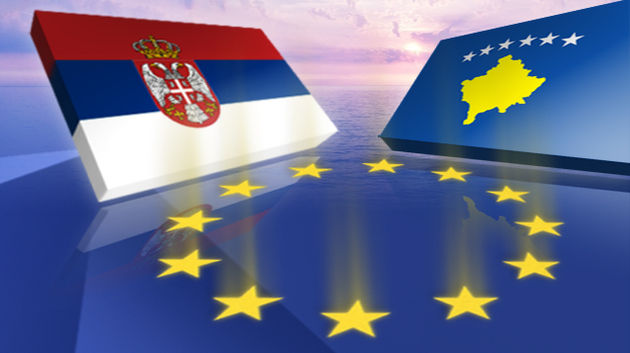
The latest developments at the north of Kosovo are reminiscent of the events from the nineties of the past century and threaten to escalate into conflict. Over the past several years there was a noticeable absence of EU- mediated dialogue between official Belgrade and Pristina. The responsibility does not rest just with the participants in the dialogue but also with the EU and the entire international community, which has proven to be inert and ineffective in Kosovo and the Western Balkans. The billions of euros/dollars of EU and US taxpayers’ money that were spent have yielded modest results. 

The resulting situation in Kosovo has its history. The Republic of Serbia issued license plates to residents of municipalities on the territory of Kosovo as well and they valid until 14 September 2021. Kosovo authorities unilaterally introduced trial license plates for vehicles from Serbia invoking the principle of “reciprocity” regarding the abolition of license plates, because Kosovo authorities have intended to abolish license plates featuring insignia of Serb municipalities. Under EU mediation a one-year deadline was agreed for resolution of the problem, despite the initial agreement on freedom of movement, which Belgrade and Pristina had brokered in Brussels. The situation continued to escalate after Kosovo Serbs were not allowed to vote at the parliamentary and presidential elections in Serbia. 

When the provisional agreement brokered under EU mediation on license plates expired, the Kosovo authorities begun to announce that they will sanction drivers driving vehicles with Serbian license plates and seize such vehicles. This triggered strong resistance among Serbs, particularly at the north of Kosovo. Serb representatives withdrew from Kosovo institutions and mayors of four municipalities at the north of Kosovo filed their resignations. Serb police officers withdrew from the Kosovo police force. Kosovo authorities tried to organize emergency local elections in four municipalities at the north with predominantly Serb population to elect new mayors and man the vacant mayor positions, which met with disapproval from the population and led to buildup of discontent with such activities. 

The Kosovo Central Election Commission (CEC) attempted with the assistance of Kosovo special police force to organize preparations for the emergency local elections at the north of Kosovo but was physically prevented from doing so. The CEC continued its activities at the north of Kosovo, which caused strong revolt of the local Serb population and evolved into general uprising. Emergency local elections were therefore postponed until 23 April 2023 and the Serb parties will boycott them again if an environment for holding of elections is not created, that is if no political agreement is reached. Erection of barricades followed as a response to the arrest of three Serbs, and particularly of the until-recently member of the Kosovo police force Dejan Pantić. Some fifteen barricades were erected at different locations. The Pristina authorities threatened that the police will forcibly remove the barricades, but then requested from KFOR to remove the barricades. 
Kumanovo, Brussels and Washington agreements 

Following the NATO intervention on Kosovo in 1999, peace was established through signing of the Military-Technical Agreement[2] (Kumanovo Agreement), which after the withdrawal included return of an agreed number of Yugoslav and Serbian military and police personnel to Kosovo for the purposes of performance of duties in line with Annex 2. The then authorities in Serbia did not pursue this option. The UN Security Council adopted its Resolution[3] 1244 (1999), which placed the territory of Kosovo under the mandate of the UN. 

The Brussels Agreement[4] was signed in 2013. It envisaged normalization of relations and was aimed to make life easier for Kosovo citizens. One item of the agreement was related to establishment of the Community of Serb Municipalities (ZSO), which has not been implemented despite all the objections by the Kosovo Constitutional Court contained in the decision on assessment of constitutionality of establishment of the ZSO. The Kosovo Assembly ratified the Brussels Agreement, and the Kosovo Constitutional Court ruled that the ZSO association/community should still be established. Gabriel Escobar, Special Envoy for the Western Balkans stated that from the US perspective establishment of the Community of Serb Municipalities was legally binding within the framework of the agreement brokered 10 years ago between Serbia, Kosovo and the EU. “We see it as an obligation, because we have supported the process and one political side cannot withdraw from it unilaterally. Therefore, we shall seek ways to realize that idea[5]”. Although the Brussels Agreement had been signed, it has never been fully implemented, predominantly because of the obstructions by the Kosovo in the implementation of the Brussels Agreement, especially the parts related to missing persons (archives of the KLA /Kosovo Liberation Army/) and the establishment of the Community of Serb Municipalities (ZSO). 

The agreements[6] on “economic normalization” signed in Washington in September 2020 in no way bring into question the dialogue taking place between official Belgrade and Pristina under EU mediation. 

The issue of property is one of the key disputes between official Belgrade and Pristina. The Washington Agreement envisages resolution of the issue of use and management of the Gazivoda Lake (Liqeni i Ujmanit), on which even a feasibility study has been made. It is also worth noting that dozens of thousands of citizens of Serb ethnicity have filed requests for return of private property. 

The dispute also includes the issue of other property on Kosovo.  The most frequently mentioned include the Trepča Mining and Metallurgical Complexand the property in the energy sector, which is estimated more than three billion euros. 

Analysts believe that Kumanovo, Brussels and Washington agreements have not been fully implemented because the signatories selectively assumed obligations in line with their respective unilateral interests, while the international community was either passive or absent  in the implementation of the signed agreements. In fact, both sides are victims of the incapability of the EU to resolve European problems. Implementation of the Brussels and Washington agreements is the path to establishment of enduring peace and long-term stability, as well as preventive elimination of new incidents and situations such as the most recent one in the north of Kosovo. The narrative for transformation of the region is not a narrative of conflict. All need to demonstrate the will to device a solution 23 years after the Kosovo war, and the solution is implementation of the agreements signed so far. The main question to be asked is whether and in what way the region will be transformed, or will it continue to live in unfinished and frozen conflicts.
Reintegrate Northern Kosovo according to the model of Eastern Slavonia

Kosovo authorities did not actively and seriously approach the reintegration of the Serb community into the Kosovo society and institutions. Regular generation of conflicts is not a path to reintegration and does not lead to creation of a sustainable society for all citizens. 

The EU did not lose its credibility because the US administration got involved in the dialogue between Belgrade and Pristina, but because individual member countries had delegated their special envoys and thus practically brought into question the authority of Brussels. Without a significant engagement of the US in the dialogue, and particularly in the phase of reaching a final and comprehensive legally-binding agreement, it is difficult to expect any major progress or its finalization. 

Analysts remind that the return of Serbs to Kosovo institutions was a result of a broader agreement, which allowed Kosovo Serbs to vote in all elections in Serbia on the territory of Kosovo. This all was possible prior to the arrival of Albin Kurti (LVV) to power. A turning point in the relation of a part of international community towards Pristina authorities was the recently held joint session of the parliaments of Kosovo and Albania in Tirana, while on the other side Kosovo authorities regularly accuse Serbia of interfering in Kosovo. By making such a move Kosovo authorities lost credibility in their accusations against Serbia. Kosovo authorities would now need to invest all possible efforts to reintegrate Serbs in the Kosovo society and institutions in a peaceful and civilized way- just as Serbs have been reintegrated in Croatia in the Eastern Slavonia[7] region under UN mediation. A similar example is the South Tyrol. Although such experiences are valuable, Pristina is evidently not interested in such an approach. 
Can Kosovo experience the same fate as Afghanistan and Iraq?

Serbia is surrounded with NATO member countries and is aware of its position. Drawing on its historical experience it does not want to be the first to start any new conflict and carry the burden and responsibility for starting a conflict. In terms of its modern history, economic development of Serbia is at its historical zenith with record foreign investments in 2022 totaling more than four billion euros. A part of Serbian opposition and Albanian political parties through Srpske liste (SL) /Serb List/ regularly attempt to settle accounts with Serbian President Aleksandar Vučić (SNS). A possible new conflict on Kosovo would not be of local character and would spread rapidly. The question to be asked is are Kosovo political elites ready to postpone the future of Kosovo for the sake of their irresponsible policies. 

Analysts believe that Serbia does not want to repeat the mistakes of the past. A conflict could be started by some other parties, not just Serbia and Kosovo, that is Serbs and Albanians. The war in Ukraine has shown that there are opposing polycentric centers of power, which have an interest in escalation of conflicts in different parts of Europe. The Ukraine war should not be “copied” to the Balkans, which has still not healed its wounds from the previous wars. Unilateral moves can lead to escalation. 

A point of concern is the information that a part of establishment in Washington is considering the option of withdrawal of US troops from Kosovo, as was done in Afghanistan and Iraq. Such a scenario would not be good for either Kosovo or South East Europe, because the US presence is a guarantor of relative peace and stability in that part of Europe.  Kosovo and its citizens have a right to their future and the political structures should not gamble with it. The situation on Kosovo is best illustrated through the fact that Kosovo still has a visa-regime with EU member countries, even with Bosnia and Herzegovina. That is the real picture of Kosovo today. The most important thing at this moment is that the Serbs at erected barricades have responded to the appeal by Serbian President Aleksandar Vučić to remove the barricades, and the Kosovo judicial bodies have released from custody Dejan Pantić, whose arrest was the cause for erection of barricades. Finally, achievement of any progress would require putting an end to regular generation of crises on Kosovo. 
Postponement of conflict

Establishment of the Community of Serb Municipalities (ZSO) is the condition set by the Serb List (SL) for return of Serbs to Kosovo institutions, the condition for removal of barricades is withdrawal of Special Units of the Kosovo Police Force from the North and release of the three Serbs who had been arrested. The Kosovo authorities gave guarantees to the EU and US that there will be no arrests of Serbs for participation in the protests and erection of barricades, which paved the way for removal of barricades. While the barricades have been removed, tensions and mistrusts have remained. 

Analysts believe that the incidents on Kosovo should be understood extremely seriously and that all necessary measures should be undertaken to ensure that they do not happen again, because the current situation in the region and Europe, in the context of the Ukraine crisis, is a real security challenge and threat. Such a method of resolution of generated crises only postpones a conflict, which is becoming increasingly certain.

Ljubljana/Washington/Brussels/Pristina, 5 January 2023      
Related Posts

ENGLISH

World Refugee Day and 75 Years of the Refugee Convention: Why Humanity must not look away

20 June, 2026
ENGLISH

G7 Leaders Present Unified Geopolitical Agenda at Évian Summit

17 June, 2026
ENGLISH

Daniel Serwer: A Bad War Ending Badly May Still Be Good News

17 June, 2026

Follow US

Subscribe

Receive Argumentum Magazine by Email

Last Posts

World Refugee Day and 75 Years of the Refugee Convention: Why Humanity must not look away

20 June, 2026

G7 Leaders Present Unified Geopolitical Agenda at Évian Summit

17 June, 2026

Daniel Serwer: A Bad War Ending Badly May Still Be Good News

17 June, 2026

The Diplomacy of Gas and Algorithms: The Nuances of Official Tirana—Is It Breaking the European Taboo with Azerbaijan?

17 June, 2026
Friedrich Merz, Keir Starmer, António Costa, Donald Trump, Emmanuel Macron, Mark Carney, Ursula von der Leyen, Giorgia Meloni and Sanae Takaichi

G7 Leaders Gather in Évian Amid Global Uncertainty, Focus on Security, Economy and International Cooperation

16 June, 2026
Argumentum

“Argumentum”, një proces intelektual …

Contact Us

[email protected]
[email protected]
[email protected]

Follow Us

Media Partner

Register

Receive Argumentum Magazine by Email
  • Home
  • Privacy Policy
  • About Us
  • Contact

© 2022 Argumentum. All Rights Reserved. | NUIS: L91415033Q

Welcome Back!

Login to your account below

Forgotten Password? Sign Up

Create New Account!

Fill the forms bellow to register

*By registering into our website, you agree to the Terms & Conditions and Privacy Policy.
All fields are required. Log In

Retrieve your password

Please enter your username or email address to reset your password.

Log In

Add New Playlist

No Result
View All Result
  • Home
  • OP/ED
  • Interview
  • Realpolitik
  • Current Events
  • Top News
  • YOUR VOICE
  • Shqip

© 2022 Argumentum. All Rights Reserved. | NUIS: L91415033Q

This website uses cookies. By continuing to use this website you are giving consent to cookies being used. Visit our Privacy and Cookie Policy.