



• SHQIPËRI
  • KOSOVË
  • MAQEDONIA E VERIUT
  • MALI I ZI
  • Revista në PDF
18 June, 2026
  • Home
  • OP/ED

    The visit that changed Albania’s strategic future

    Pierre Nora and the institution of memory we lack in Eastern Europe

    The Blueprint of a Diplomatic Debacle: Analyzing Germany’s Historic UNSC Loss

    Between Russia, Iran and Europe: Azerbaijan as a balancing power in the South Caucasus

    The Zero-Tariff Gate: Sovereignty as a Service in the Sino-African Corridor

    Albania vs. the Sea/ Marginal Notes on A. Leka’s Novel The Hidden Side of the Albanian Socialist Garden

    May 9 and the long shadow of a Letter: Is Europe still Schuman’s Project?

    The Arbnesh of Zadar: A living memory of Albanian identity on the Adriatic coast

    Science Diplomacy and Academic Freedom: A strategic nexus for contemporary diplomacy

  • Interview

    Exclusive Interview with Oleksandr Tyshchenko: A 40-Year Legacy of Chernobyl, Nuclear Risks, and Global Responsibility

    INTERVIEW: ZLATKO KRAMARIĆ – THOUGHTS ON THE OLD CONTINENT

    EXCLUSIVE / Ukrainian Ambassador to Albania, Volodymyr Shkurov: “Ukraine wants peace, but not at the expense of its freedom and independence”

    EXCLUSIVE| Ambassador Tayyar Kagan Atay: Türkiye and Albania, a Strategic Partnership Rooted in Shared Heritage and a Common Vision for the Future

    “Diplomacy, Not War”: Palestinian Ambassador to Albania Calls for Justice, Peace, and Global Action for Gaza

    Exclusive: “Even After Tito – Tito”/ Ambassador Zlatko Kramarić on Authoritarian Legacies and Democracy’s Future in the Balkans

    The Conclusion of the Diplomatic Mission / Ambassador Dancho Markovski: Strengthening Albania-North Macedonia Relations for a Shared European Future

    A Century of Diplomatic Relations Between Albania and Russia: Exclusive Interview with the Russian Ambassador to Albania, H.E. Alexey Zaytsev

    Exclusive/ The chairman of the Freedom Party, Ilir Meta: “The will of the citizens will triumph in Albania, as it did in North Macedonia”

  • Realpolitik

    Just kind words  in Tivat! Where is the peace!? A deal yes, peace No!What is happening with USA and  EU?  5 elections but no solution!

    IBAR? ”Sufficiently! Much ado about nothing! Shart contrasts in Beijing! Where is the exit?!

    Neither peace nor war! Peace with bombs?! IBAR in autumn?! Not another Hormuz in Taivan! 

    IBAR – a springing board or an obstacle? Can we catch the EU Negotiation train 2027? When the dress makes the news!  EU electoral April  ends in a draw 1:1!  

    The European Parliament building in Strasbourg, France with flags waving calmly celebrating peace of the Europe. July 12, 2020.

    EU 2027 or 2037! Even half membership failed! No exit strategy!     

    What next?

    “With diplomatic velvet“! Major question marks! In Washington yes, but  in the White House NO! A strange dinner in Brussels!

    From a great ‘apple of disaccord’ to a  point of  cooperation! A bad start! The strange absence in Davos!

    5 lessons from the American 3 January! Don’t count the chicken before they are hatched! Will NATO freeze in Greenland? Wrong diplomatic messages!

  • Current Events

    The Diplomacy of Gas and Algorithms: The Nuances of Official Tirana—Is It Breaking the European Taboo with Azerbaijan?

    Council of Albanian Ambassadors Backs Civic Protests, Calls for Transparency and Protection of National Interests

    Russian Ambassador in Tirana: “Without a Strong and Sovereign Russia, the Creation of a Just World Order Is Impossible”

    EU-Western Balkans Summit 2026: New Impetus for the Enlargement Debate?

    “The Flamingo Revolution”: Day 10 of Protests in Albania Draws International Attention

    Rama alleges ‘hybrid war’ behind protests against Kushner-linked coastal development

    BELGRADE, SERBIA - JUNE 18. 2020: Russian and Serbian flags on display during Russian Foreign Minister Sergei Lavrov's visit to the Liberators of Belgrade Memorial. Valery Sharifulin/TASS,Image: 533095429, License: Rights-managed, Restrictions: UWAGA! Zdjęcia zawierają oryginalny opis dostawcy (ITAR-TASS). Szczególnie w związku z agresją Rosji na Ukrainę mogą zawierać przekaz niezgodny z faktami. Zweryfikuj go przed publikacją, Model Release: no, Credit line: Valery Sharifulin / TASS / Forum

    Balkan Maskirovka: Why Moscow’s “Distancing” Is Only an Operation for the Survival of Vučić’s Regime

    Serbia – China 2026: Technological partnership, geopolitical positioning and a new phase of the Chinese presence in the Western Balkans

    The Digital Protectorate: How the EU AI Act Codified Silicon Valley’s Monopoly

  • Top News

    Daniel Serwer: A Bad War Ending Badly May Still Be Good News

    Friedrich Merz, Keir Starmer, António Costa, Donald Trump, Emmanuel Macron, Mark Carney, Ursula von der Leyen, Giorgia Meloni and Sanae Takaichi

    G7 Leaders Gather in Évian Amid Global Uncertainty, Focus on Security, Economy and International Cooperation

    Russian Ambassador in Tirana: “Without a Strong and Sovereign Russia, the Creation of a Just World Order Is Impossible”

    “The Flamingo Revolution”: Day 10 of Protests in Albania Draws International Attention

    Rama alleges ‘hybrid war’ behind protests against Kushner-linked coastal development

    No End in Sight: Trump, Netanyahu and the Expanding Middle East War

    Tirana – €20 Million EU–Banking Agreement Boosts Albanian SMEs

    “EU4Municipalities II” Project, a Strategic Investment for Strengthening Municipalities and Accelerating Albania’s Path towards the EU

    Albania, Italy deepen defence ties with naval shipbuilding deal

  • YOUR VOICE
  • Shqip
No Result
View All Result
Argumentum
  • Home
  • OP/ED

    The visit that changed Albania’s strategic future

    Pierre Nora and the institution of memory we lack in Eastern Europe

    The Blueprint of a Diplomatic Debacle: Analyzing Germany’s Historic UNSC Loss

    Between Russia, Iran and Europe: Azerbaijan as a balancing power in the South Caucasus

    The Zero-Tariff Gate: Sovereignty as a Service in the Sino-African Corridor

    Albania vs. the Sea/ Marginal Notes on A. Leka’s Novel The Hidden Side of the Albanian Socialist Garden

    May 9 and the long shadow of a Letter: Is Europe still Schuman’s Project?

    The Arbnesh of Zadar: A living memory of Albanian identity on the Adriatic coast

    Science Diplomacy and Academic Freedom: A strategic nexus for contemporary diplomacy

  • Interview

    Exclusive Interview with Oleksandr Tyshchenko: A 40-Year Legacy of Chernobyl, Nuclear Risks, and Global Responsibility

    INTERVIEW: ZLATKO KRAMARIĆ – THOUGHTS ON THE OLD CONTINENT

    EXCLUSIVE / Ukrainian Ambassador to Albania, Volodymyr Shkurov: “Ukraine wants peace, but not at the expense of its freedom and independence”

    EXCLUSIVE| Ambassador Tayyar Kagan Atay: Türkiye and Albania, a Strategic Partnership Rooted in Shared Heritage and a Common Vision for the Future

    “Diplomacy, Not War”: Palestinian Ambassador to Albania Calls for Justice, Peace, and Global Action for Gaza

    Exclusive: “Even After Tito – Tito”/ Ambassador Zlatko Kramarić on Authoritarian Legacies and Democracy’s Future in the Balkans

    The Conclusion of the Diplomatic Mission / Ambassador Dancho Markovski: Strengthening Albania-North Macedonia Relations for a Shared European Future

    A Century of Diplomatic Relations Between Albania and Russia: Exclusive Interview with the Russian Ambassador to Albania, H.E. Alexey Zaytsev

    Exclusive/ The chairman of the Freedom Party, Ilir Meta: “The will of the citizens will triumph in Albania, as it did in North Macedonia”

  • Realpolitik

    Just kind words  in Tivat! Where is the peace!? A deal yes, peace No!What is happening with USA and  EU?  5 elections but no solution!

    IBAR? ”Sufficiently! Much ado about nothing! Shart contrasts in Beijing! Where is the exit?!

    Neither peace nor war! Peace with bombs?! IBAR in autumn?! Not another Hormuz in Taivan! 

    IBAR – a springing board or an obstacle? Can we catch the EU Negotiation train 2027? When the dress makes the news!  EU electoral April  ends in a draw 1:1!  

    The European Parliament building in Strasbourg, France with flags waving calmly celebrating peace of the Europe. July 12, 2020.

    EU 2027 or 2037! Even half membership failed! No exit strategy!     

    What next?

    “With diplomatic velvet“! Major question marks! In Washington yes, but  in the White House NO! A strange dinner in Brussels!

    From a great ‘apple of disaccord’ to a  point of  cooperation! A bad start! The strange absence in Davos!

    5 lessons from the American 3 January! Don’t count the chicken before they are hatched! Will NATO freeze in Greenland? Wrong diplomatic messages!

  • Current Events

    The Diplomacy of Gas and Algorithms: The Nuances of Official Tirana—Is It Breaking the European Taboo with Azerbaijan?

    Council of Albanian Ambassadors Backs Civic Protests, Calls for Transparency and Protection of National Interests

    Russian Ambassador in Tirana: “Without a Strong and Sovereign Russia, the Creation of a Just World Order Is Impossible”

    EU-Western Balkans Summit 2026: New Impetus for the Enlargement Debate?

    “The Flamingo Revolution”: Day 10 of Protests in Albania Draws International Attention

    Rama alleges ‘hybrid war’ behind protests against Kushner-linked coastal development

    BELGRADE, SERBIA - JUNE 18. 2020: Russian and Serbian flags on display during Russian Foreign Minister Sergei Lavrov's visit to the Liberators of Belgrade Memorial. Valery Sharifulin/TASS,Image: 533095429, License: Rights-managed, Restrictions: UWAGA! Zdjęcia zawierają oryginalny opis dostawcy (ITAR-TASS). Szczególnie w związku z agresją Rosji na Ukrainę mogą zawierać przekaz niezgodny z faktami. Zweryfikuj go przed publikacją, Model Release: no, Credit line: Valery Sharifulin / TASS / Forum

    Balkan Maskirovka: Why Moscow’s “Distancing” Is Only an Operation for the Survival of Vučić’s Regime

    Serbia – China 2026: Technological partnership, geopolitical positioning and a new phase of the Chinese presence in the Western Balkans

    The Digital Protectorate: How the EU AI Act Codified Silicon Valley’s Monopoly

  • Top News

    Daniel Serwer: A Bad War Ending Badly May Still Be Good News

    Friedrich Merz, Keir Starmer, António Costa, Donald Trump, Emmanuel Macron, Mark Carney, Ursula von der Leyen, Giorgia Meloni and Sanae Takaichi

    G7 Leaders Gather in Évian Amid Global Uncertainty, Focus on Security, Economy and International Cooperation

    Russian Ambassador in Tirana: “Without a Strong and Sovereign Russia, the Creation of a Just World Order Is Impossible”

    “The Flamingo Revolution”: Day 10 of Protests in Albania Draws International Attention

    Rama alleges ‘hybrid war’ behind protests against Kushner-linked coastal development

    No End in Sight: Trump, Netanyahu and the Expanding Middle East War

    Tirana – €20 Million EU–Banking Agreement Boosts Albanian SMEs

    “EU4Municipalities II” Project, a Strategic Investment for Strengthening Municipalities and Accelerating Albania’s Path towards the EU

    Albania, Italy deepen defence ties with naval shipbuilding deal

  • YOUR VOICE
  • Shqip
No Result
View All Result
Argumentum
No Result
View All Result
Home Balkan Overview

“Agreement on the path to normalization between Kosovo and Serbia”, a slightly modified French-German proposal based on the “two Germanies agreement”

6 March, 2023
in Balkan Overview, ENGLISH, YOUR VOICE
A A
Share on FacebookShare on Twitter

The content of the European proposal for Serbia and Kosovo, finally made public after a joint meeting in Brussels on February 27, is almost entirely identical to earlier drafts that appeared in the media. The backbone of the proposal is based on the model of the agreement between the two Germanies from 1972, thanks to which both countries received wider international recognition and membership in the United Nations.

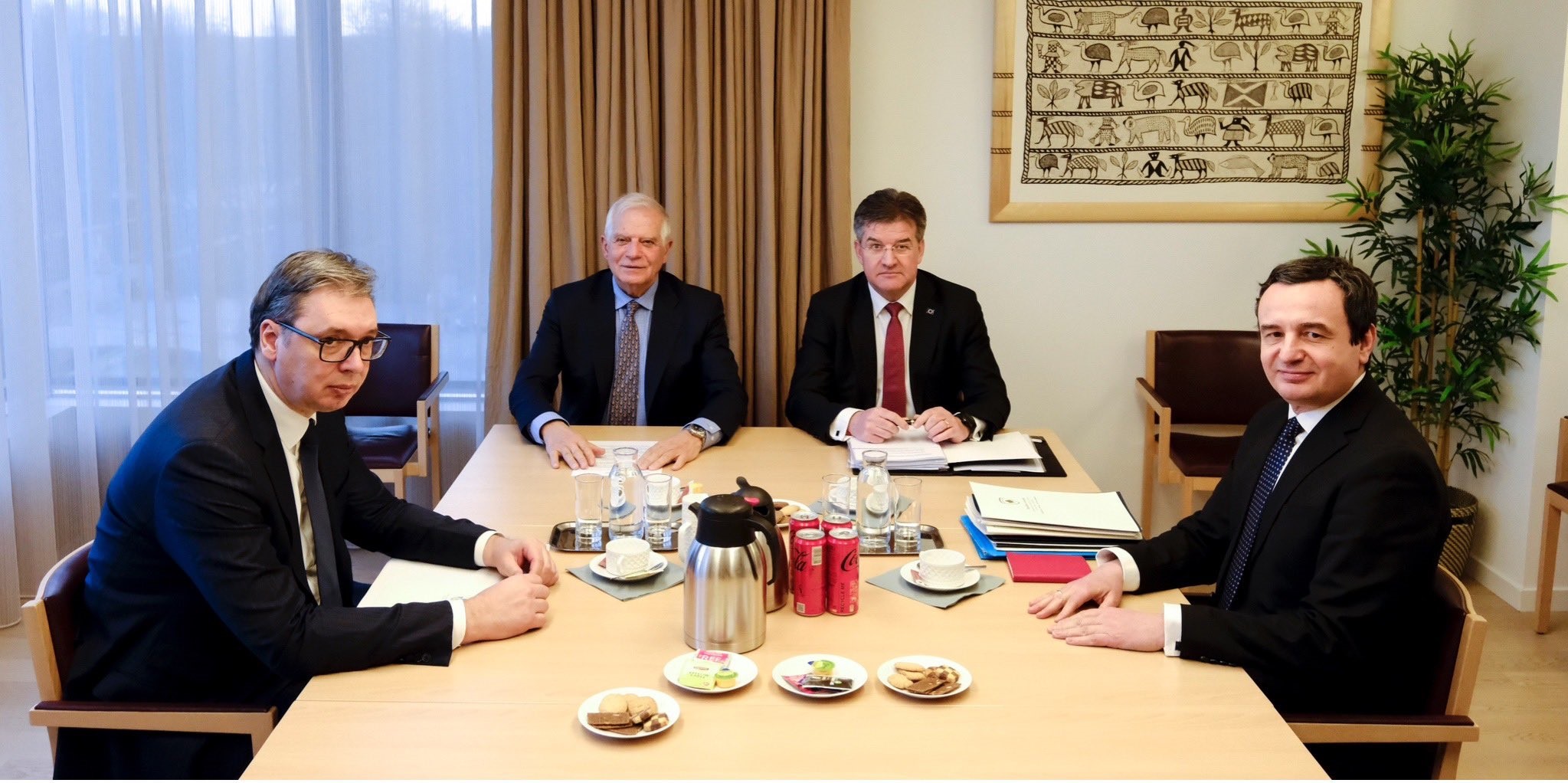
The long-awaited meeting at the highest level of the representatives of Serbia and Kosovo – Aleksandar Vučić and Albin Kurti – with the High Representative of the European Union for Foreign Affairs and Security Policy Josep Borrell and the EU Special Representative for the Belgrade-Pristina Dialogue Miroslav Lajčak, was held in Brussels.

After the meeting, Borrell pointed out that the leaders of Serbia and Kosovo agreed that there is no need for further discussions regarding the European Union’s proposal for an agreement. A new meeting between Aleksandar Vučić and Albin Kurti with Borell should be organized in mid-March when an agreement on the (order of) implementation is expected to be reached.

On the website of the European External Action Service, in the evening hours, after the end of the talks, the European proposal was publicly announced for the first time – although it was known to the public as the Franco-German proposal, by now it has become clear that it was supported by all the member states of the European Union. The official title is the “Agreement on the path to normalization between Kosovo and Serbia” and contains a preamble and 11 Articles.

Similarity to draft agreements published in the media

Two days after the meeting of Serbian President Aleksandar Vučić on 20 January in Belgrade with the so-called diplomatic five – representatives of the EU, Germany, France, Italy, and the USA – a draft document was published first in the daily newspaper Danas, and then in other media, claiming to represent a Franco-German proposal for Serbia and Kosovo. The document included a preamble and 10 Articles.

A comparative analysis of the text of the then “leaked” Franco-German proposal and the now publicly available official EU proposal confirms that the two documents are almost completely identical. The content of the eight Articles of the European proposal for an Agreement on the path to normalization between Kosovo and Serbia corresponds to what was foreseen in the previously available version of the (Franco-German) draft plan.

They include: the readiness of the parties to develop good neighborly relations based on equality and recognize documents and national symbols; they are guided by the principles of the UN Charter (such as the sovereign equality of states, respect for independence, autonomy and territorial integrity, the right to self-determination); resolve disputes peacefully by refraining from the threat of force or the use of force, accept the assumption that none can represent the other in the international sphere (with Serbia’s non-opposition to Kosovo’s membership in international organizations); work on establishing special arrangements for an appropriate level of self-government for the Serbian community in Kosovo and formalize the status of the Serbian Orthodox Church in Kosovo; exchanges of permanent missions in the seats of respective governments; form a joint committee chaired by the EU to monitor the implementation of the agreement and confirm their commitment to the implementation of all previous agreements in the dialogue.

Minor text changes were made in the official version of Articles 5 and 6. Article 5 now explicitly regulates the obligations of Serbia and Kosovo not to block, nor encourage other actors to block the progress of the other party towards the EU, while in the original plan, it was only foreseen that the two parties support aspirations towards membership in the European Union. A similar wording on non-blocking was found in Article 14 of the Brussels Agreement from 2013. As for the next Article, the continuation of the dialogue process until the final legally binding agreement on the comprehensive normalization of relations was elaborated in more detail; as well as deepening cooperation in numerous aspects through additional agreements.

Of course, the EU proposal has 11 Articles, i.e. one more Article than in the original draft, and it refers to compliance with the Implementation Roadmap that will be attached in the Annex to the Agreement. Additional negotiations between the two parties will be needed precisely around the Annex to the Agreement and the specific Roadmap. According to media reports, during the meeting, the President of Serbia was not ready to accept the proposed Annex.

The agreement between the two Germanies as a model for the European proposal

As previously analyzed on European Western Balkans when the version of the Franco-German proposal was disclosed in the media, the backbone of the potential proposal was based on the key provisions of the agreement between the two Germanies from December 1972. The so-called Basic Treaty or the Treaty concerning the basis of relations between the Federal Republic of Germany and the German Democratic Republic regulated the relations between the two German states for the first time and became the basis for all future agreements until 1990.

Although there is no explicit mention of mutual recognition, the agreement opened the way for both the Federal Republic of Germany and the German Democratic Republic to be recognized by the international community and countries that had not done so before, and also both became members of the United Nations in September 1973.

Given that often during the past two decades, even before Kosovo’s unilateral declaration of independence in 2008, the model of two Germanies stood out as an example of what the outcome of the dialogue between Serbia and Kosovo could look like, it is reasonable to assume that the European proposal, modeled on the German-German agreement, opens up space for similar consequences and effects.

Interestingly, even the Agreement’s preamble on the path to normalization is almost entirely taken from the treaty between the two Germanies, with some minor adaptations to the contemporary context and specific circumstances of the dialogue between Serbia and Kosovo.

Centrally, the five Articles in the European proposal are literally identical or, on the other hand, correspond to the essence of individual Articles of the Basic Treaty of the two Germanies. The first Article of both documents envisages the development of normal good-neighborly relations, based on equal rights. In terms of representation in international forums, the provision accepted by the Federal Republic of Germany and the German Democratic Republic – that neither party shall represent the other in the international sphere nor act on its behalf – is completely rewritten.

The Article according to which the permanent missions of Serbia and Kosovo would be exchanged was also taken from the German-German agreement. Finally, the elements of the obligation of the parties (FR Germany and DR Germany, and Serbia and Kosovo) to be guided by the same goals and principles of The Charter of the United Nations, as well as to resolve mutual disputes peacefully, without the threat of force or the use of force, are repeated. It is interesting to note that, nevertheless, only the position on the inviolability of the existing borders, which is an integral part of the Article related to the peaceful settlement of disputes in the agreement between the two Germanies, is not included in the European proposal.

What comes next?

As announced, in the next month, further negotiations between the two sides are expected regarding specific issues of the implementation of the agreement, as well as the visit of Miroslav Lajčak to Belgrade and Pristina in order to prepare the next meeting at the highest level, which will be organized in Ohrid.

Judging by the statements of interested actors, Aleksandar Vučić and Albin Kurti accepted the European proposal – the agreement, but the document was not signed. Strictly speaking, in terms of the Vienna Convention on the Law of Treaties, the acceptance of an agreement can be equated with the act of signing itself. Let’s recall that in 2013, Prime Ministers Ivica Dačić and Hashim Thaçi signed the Brussels Agreement, which was then approved by the two governments a few days later.

If the formal signing of the agreement is planned at all, it is realistic to assume that it will take place in the coming months, only after the agreement on the (supplementary) Annex to the agreement is finalized. On 2 March, EU foreign policy spokesman Peter Stano, responding to media questions about Borell’s meeting with Vučić and Kurti and their subsequent statements about the meaning of the proposal and its implementation, pointed out that the European proposal is not a text that should be signed between the two parties, but that it is necessary to work on ensuring its application.

However, it seems that the dispute will arise precisely in connection with the potential (literal) application of the provision as it is in Article 4 of the proposal – on the obligation of Serbia not to oppose Kosovo’s membership in international organizations. During an appearance on RTS, the President of Serbia stated that he did not agree with that Article and that is why he did not “sign” the draft agreement in Brussels and that Serbia’s „red lines“, which will not be discussed, are mutual recognition and Kosovo’s membership in the United Nations.

Another possible “mine” in the next phase of negotiations (about the Annex to the implementation of the proposal-agreement) is the issue of the Association of Serbian Municipalities (ASM). The formation of the ASM is an unfulfilled obligation that Pristina undertook back in 2013 with the Brussels Agreement. The Serbian side is now especially insisting that it be realized in the earliest period, probably before or in parallel with the implementation of all elements of the EU proposal, while the government of Albin Kurti showed unwillingness. The European Union’s proposal itself explicitly emphasizes the obligation to implement all previous agreements (primarily the Brussels agreement), and Article 7 also indirectly refers to the ASM, through the wording “ensuring an appropriate level of self-government for the Serbian community in Kosovo, in accordance with relevant European models.”

Considering the high level of engagement of international representatives (the European Union, the leading EU countries, and the USA) in the previous period before accepting the proposal, it is to be expected that the same pace of intensive talks and visits will continue in order to find a compromise between the Serbian and Kosovo sides regarding the disputed aspects in order to fully implement the agreement./EWB
Related Posts

ENGLISH

G7 Leaders Present Unified Geopolitical Agenda at Évian Summit

17 June, 2026
ENGLISH

Daniel Serwer: A Bad War Ending Badly May Still Be Good News

17 June, 2026
Current Events

The Diplomacy of Gas and Algorithms: The Nuances of Official Tirana—Is It Breaking the European Taboo with Azerbaijan?

17 June, 2026

Follow US

Subscribe

Receive Argumentum Magazine by Email

Last Posts

G7 Leaders Present Unified Geopolitical Agenda at Évian Summit

17 June, 2026

Daniel Serwer: A Bad War Ending Badly May Still Be Good News

17 June, 2026

The Diplomacy of Gas and Algorithms: The Nuances of Official Tirana—Is It Breaking the European Taboo with Azerbaijan?

17 June, 2026
Friedrich Merz, Keir Starmer, António Costa, Donald Trump, Emmanuel Macron, Mark Carney, Ursula von der Leyen, Giorgia Meloni and Sanae Takaichi

G7 Leaders Gather in Évian Amid Global Uncertainty, Focus on Security, Economy and International Cooperation

16 June, 2026

Just kind words  in Tivat! Where is the peace!? A deal yes, peace No!What is happening with USA and  EU?  5 elections but no solution!

15 June, 2026
Argumentum

“Argumentum”, një proces intelektual …

Contact Us

[email protected]
[email protected]
[email protected]

Follow Us

Media Partner

Register

Receive Argumentum Magazine by Email
  • Home
  • Privacy Policy
  • About Us
  • Contact

© 2022 Argumentum. All Rights Reserved. | NUIS: L91415033Q

Welcome Back!

Login to your account below

Forgotten Password? Sign Up

Create New Account!

Fill the forms bellow to register

*By registering into our website, you agree to the Terms & Conditions and Privacy Policy.
All fields are required. Log In

Retrieve your password

Please enter your username or email address to reset your password.

Log In

Add New Playlist

No Result
View All Result
  • Home
  • OP/ED
  • Interview
  • Realpolitik
  • Current Events
  • Top News
  • YOUR VOICE
  • Shqip

© 2022 Argumentum. All Rights Reserved. | NUIS: L91415033Q

This website uses cookies. By continuing to use this website you are giving consent to cookies being used. Visit our Privacy and Cookie Policy.