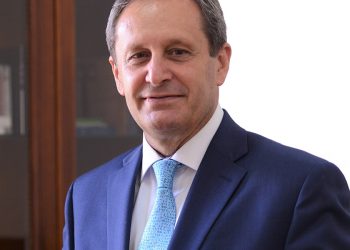











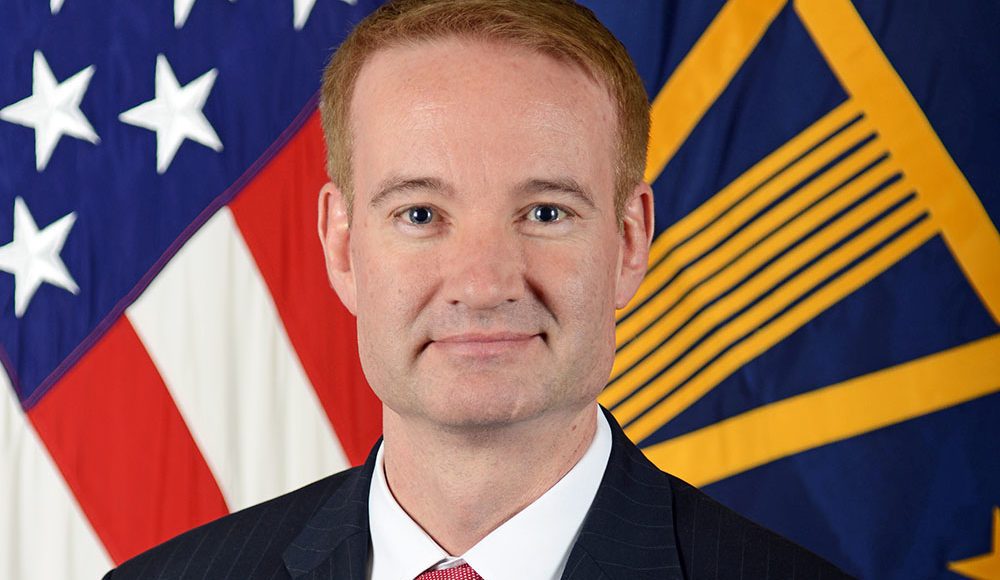
What is the US policy on the Western Balkans, how to understand the US support for border change between Serbia and Kosovo and is there a rift between the EU and the US in the region? About these and some other issues, EWB spoke with Michael Carpenter, Senior Director of the Penn Biden Center for Diplomacy and Global Engagement and former foreign policy advisor to US Vice President Joe Biden.
European Western Balkans: The last time we spoke was in spring 2017. Back then, it was not really clear what the US policy in the Western Balkans was going to be. Two and a half years later, how do you assess Trump’s policy in the region?
Michael Carpenter: I think it is a mixed record. There have been some successes, like the Prespa Agreement. I wouldn’t necessarily call it Trump’s success, but it was on his watch and he supported it, so I think that is positive. But, there have also been a stasis in terms of Kosovo-Serbia dialogue and not a lot of progress in other areas.
The administration has clearly tried under Wes Mitchell to achieve some home runs in the Balkans, so you had some attention from Pompeo and Bolton, but at the end of the day, there is not that much to show for their efforts.
EWB: Many believe that Trump needs a foreign policy success before the presidential elections in 2020 and that Kosovo-Serbia normalization can be such a success for his administration. Do you share that belief, or you think that Western Balkans is not that important for Trump?
MC: I think he really wants a foreign policy success he can point to in 2020. And his flailing with North Korea, Iran, Venezuela, and Syria means that he really needs something positive to be able to show the population that he has had at least one success in his foreign policy.
Certainly, he would like to have a success here, but I do not see the circumstances leading to a success in the Kosovo-Serbia dialogue. Not for any reasons having to do with Trump, but simply because of other political factors between the two countries. And also, this strange duality of appointing two envoys that I don’t think is a recipe for success. So, fundamentally, I don’t think Trump is going to achieve what he wants.
EWB: Could then the Western Balkans theoretically be this foreign policy success for Donald Trump?
MC: Theoretically, it could be. In contrast to all these foreign policy hotspots that I have mentioned, those all had Trump’s personal involvement. So, maybe that is a positive thing since he has left this to Bolton and Pompeo and the professionals to try to establish the groundwork for success.
By the same token, the fact that he does not have a personal stake in any particular outcome in this region means he is not all that vested in it, he is not going to spend a lot of unnecessary time or energy pursuing something here.
EWB: There is an impression that in recent months the USA is getting more involved in the Western Balkans. I am referring to the appointment of two envoys, the support for EU enlargement after lack of decision on opening EU accession negotiations with Albania and North Macedonia. How do you assess this?
MC: It is hard to say. It is true that the two envoys show that the US is paying more attention to this region. At the same time, Mathew Palmer was already a deputy assistant secretary, so he was already covering this region to begin with, the fact that he now has a title of envoy does not change that much. The fact that Grenell was appointed as an envoy for Kosovo-Serbia dialogue is, on the one hand, a positive step, since someone is being appointed for such an important foreign policy topic.
But the fact that he is currently serving as the US ambassador to Germany to me doesn’t make any sense and I think the administration is not taking it seriously, since the US is not appointing someone who is just going to focus on this issue, like, for example, Kurt Walker, who is just focused on Ukraine. That would be a smart thing to do: having someone who is an expert in the Balkans dedicated to this issue. Having Grenell appointed is not serious.
EWB: Having in mind that he already has the Western Balkans in his portfolio, where is this designation of Mathew Palmer as a „special representative“ coming from?
MC: I cannot tell you exactly because I don’t know, but my suspicion is that you have seen with this administration on many occasions that there is an official State Department foreign policy and there is often a parallel policy run by Trump insiders, people that have some personal connection to the President and his campaign. Grenell is obviously someone who has the ear of the President, that is his trusted envoy, while Palmer is a career diplomat, but he doesn’t necessarily have the trust of the President.
That is the only explanation I see for having these dual envoys in the region, because otherwise, it doesn’t make any sense. In fact, it leads to confusion, and not just here among the leaders in Belgrade or Pristina, but also in the European capitals, because they do not know who to call and who to deal with.
EWB: Maybe the most controversial US move in the Western Balkans was the support for border change. Where does the support come from? Is it like a quick fix solution or is it a long-term evolution of US policy?
MC: I don’t think the previous administration had a position on the possibility of the land swap and within the Democratic Party, which is my party, the opinion is quite divided, there are some people who are for and other people who are quite vehemently against it.
I think the Trump administration’s support for a land swap comes from a few influential personnel in the administration like John Bolton and Wes Mitchell. I don’t know if this is a conviction shared by everybody inside Trump’s administration, but certainly those two individuals and then Pompeo by extension was convinced by Mitchell to go along, and this is where we are now.
EWB: So you do think this may be a way for Trump to have a „quick fix“ solution?
MC: I don’t say this critically, but I think these individuals that I mentioned – Bolton, Mitchell and Pompeo – saw this a potential win that could be racked up before the Trump administration, so they decided to get on board with this policy of supporting whatever the two sides agreed to.
There is nothing wrong with wanting to achieve a major breakthrough in the diplomatic dispute in this region. In fact, that is a good thing. But I don’t know if they thought through all the various complications, especially the fact that politics is Kosovo not aligned at all to support this solution and I am not sure they thought about these couple of steps ahead to figure out what to do with the situation. That’s the trap they are in now.
EWB: US officials mentioned several times that it is the fear from Russian influence is why the US insist on a solution that entails the recognition of Kosovo by Serbia since they see the Russian non-recognition of Kosovo as the main vessel of Russian influence in the region. Does this logic make any sense to you
MC: I think there is an element of truth to that, but I wouldn’t overemphasize support for the two sides coming to a resolution of the conflict as being motivated exclusively by some sort of animosity towards Moscow. I think you are right – the fact that there is a dispute between Kosovo and Serbia allows Russia to portray itself as the representative of Serbian interests on the world stage, that is certainly how Moscow plays it. It would be nice for the US to be able to play a bigger role and undercut that notion that Russia is always going to be by the Serbian side and have the US play a more constructive role.
But I don’t think it is motivated purely by wanting to counter Moscow. I think having a resolution of this conflict would definitely promote stability and security in the Balkans and that has traditionally been the overriding foreign policy goal and think it continues to be the number one goal, and then Russia is simply a side-product of that goal.
EWB: Speaking of Russian influence in the region, do you think it decreased in the last couple of years, having in mind that Montenegro joined NATO and North Macedonia is soon to follow suit?
MC: That is a good question. You have seen a decrease of Russian influence in Montenegro and I think you have seen it diminish at least temporarily in North Macedonia, but the Russians are still very much wanting to exert influence in both countries and the Serbian Orthodox Church is a key instrument to that certainly in Montenegro, and to a slightly less extent in North Macedonia.
The Russians are still trying to project influence and are having a lot of success in the Republic of Srpska, here in Serbia and in other places. So, I would not say its influence is diminished, I would say the influence has increased if you look at the region as a whole, but yes, perhaps in those two countries, it was attenuated as a result of a successful NATO accession.
EWB: Do you think there is a rift between the US and the EU when it comes to the Western Balkans? We could see a few turbulences between them in general, but do you think they have a shared interest in the region or they have some competing views about how should things look like in here, and what are the priorities?
MC: I think strategically there is no daylight between what the US and EU want to achieve. At least theoretically, we should be on the same page and we should be 100 percent aligned. There is no reason why we shouldn’t be. Of course, there are, amongst different politicians, there are tactical differences, we were just speaking about tactical differences in how to approach Kosovo and Serbia amongst the politicians within the US foreign policy establishment. It stands to reason that there are different approaches across the Atlantic as well.
Frankly, the biggest outlier is the president Macron of France. He has taken a position that is devastating for the region, in terms of diminishing the potential of countries in this region, specifically North Macedonia and Albania, but it impacts the entire region, because it diminishes the European perspective. That is a tragic decision he has taken in a crucial moment in time, as timing really couldn’t be worse for his announcement.
So, I see Macron as the outlier, not necessarily so much daylight between Brussels and the US. In fact, I think Von Leyen is probably more aligned with the US the position of supporting Euro-Atlantic integrations than Macron. Yes, certainly there are fissures in the transatlantic relationship, but they are primarily between Paris and the rest.
EWB: Speaking of Macron, he also gave an interview a couple of days ago, stating that NATO is practically brain-dead. How do you see this statement? Is NATO itself actually under question?
MC: No, I think the survival of NATO shouldn’t be under any question. I think NATO continues to be the most successful alliance in the world and it will continue to be so. I think Macron’s remarks are very unfortunate. I think he should have thought more carefully when he spoke. It is reminiscent of what Donald Trump said at the campaign trail when he talked about NATO being obsolete. That is a very deleterious and injurious term to use. And now ironically you have Macron backing up something that Trump said.
But you also have to understand the context in which Macron said what he did. And the context is, unfortunately, that the US under Trump has cast a lot of doubt about the credibility of Article 5. Let us not forget Trump’s comments about defending Montenegro in the event of a crisis. Unfortunately, my own country and this obsessive talk 2 percent spending on defence has created certain fissures in the Alliance that are real. That said, Macron’s statement was overblown, and it was almost hysterical in terms of the language he used, and the institution and the organization is on a very solid footing and will continue to be so.
EWB: Are these rifts, such as this Macron’s statement and this decision not to open EU accession negotiations with Albania and North Macedonia, creating more space for Russia and other external actors to get involved in the region?
MC: Yes, definitely. Because whenever NATO leaders undercut the credibility of Article 5 or cast some doubts, even rhetorically, this opens space for Russia to come in. Of course, the Russian propaganda outlets rebroadcast the statement about NATO being braindead everywhere. This is music to their ears, they love this, just as they loved Trump’s comments on NATO being obsolete. It is playing on Russian interests, it is really an own goal in a sense.
But I have to say if you look at NATO military capabilities, and how they evolved over the last 5 years since the Wales Summit, there is a clear story of increased capabilities being deployed to the Eastern flank of the Alliance. And in fact, our deterrent capability has never been higher than it is today. So, if you look at the objective military capabilities, you see one thing. If you take a look at the politicians’ statements, you see eroding confidence in the organization. But, hopefully, in a few years’ time, if we have a different leader, and I am speaking, of course, from my personal perspective, then we will be able to fix some of these perceptions regarding the political will./EWB