



































By Zlatko Kramarić*|ARGUMENTUM
1. Introduction: Why Return to the Dubrovnik PEN Congress Today?
In the context of current debates in Croatia—where claims about the alleged “creeping fascisation of Croatian society” are frequently voiced, often without sufficient argumentation—it is important to recall that the Croatian cultural sphere, including both Dubrovnik and Istria, possesses a long, documented tradition of anti-fascist sensitivity and resistance to authoritarian ideologies.¹
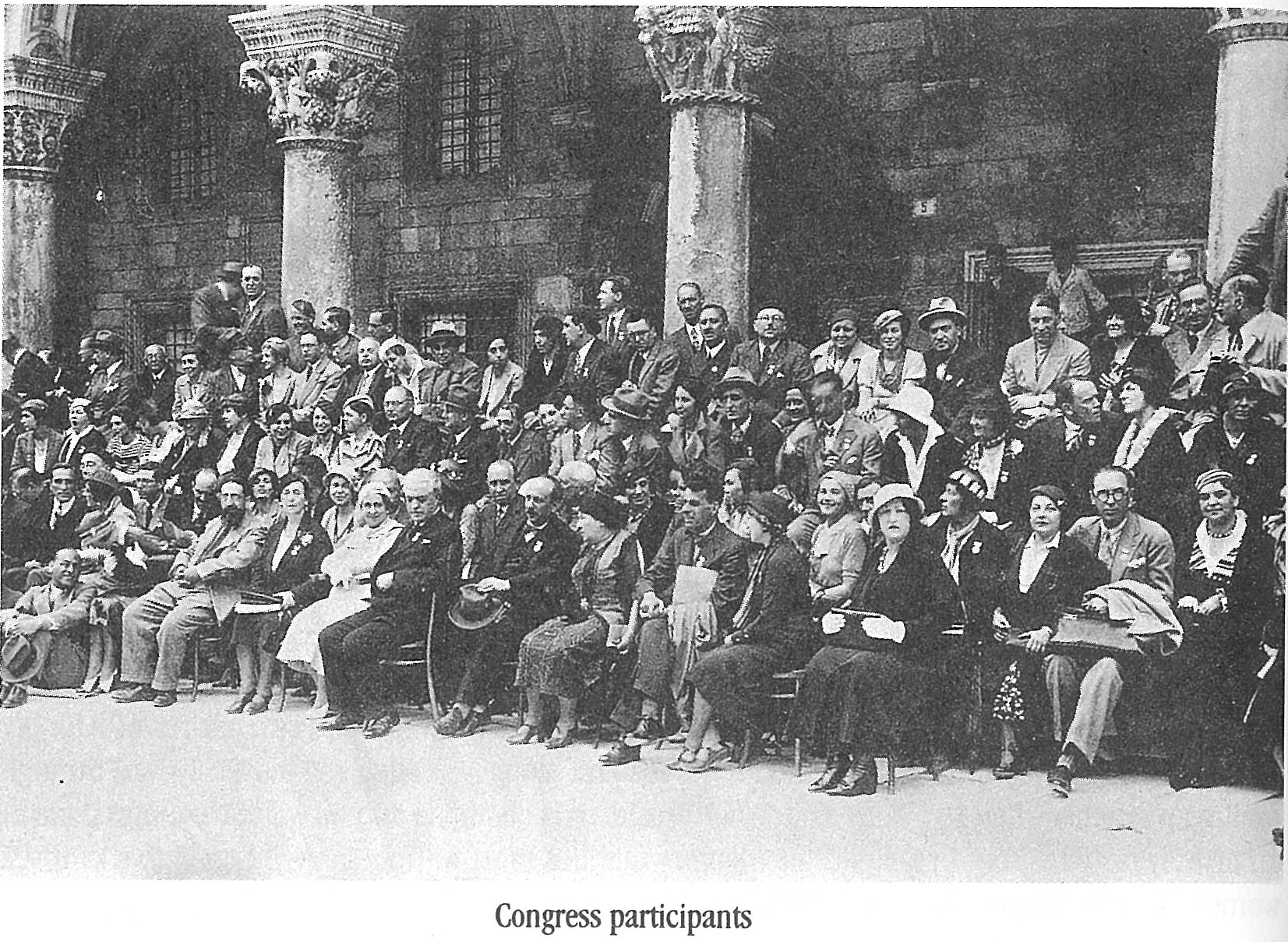
One of the most significant historical moments in this regard was the XI PEN International Congress held in Dubrovnik in 1933, which became the first major international cultural forum of open resistance to Nazism and Fascism in Europe.
Dubrovnik in 1933 was much more than the elegant Croatian-Dalmatian backdrop of the interwar decade. At a moment when Europe was already feeling the effects of Mussolini’s consolidated power, when Hitler had been in office only a few months, and when the democratic order was showing dangerous fractures, the city turned into an unexpectedly important gathering place for Europe’s literary elite. The PEN Congress was not merely a cultural event; it was one of the earliest major international stages on which Nazism was directly, explicitly, and morally condemned.
The fact that such an event took place in Dubrovnik, within the Kingdom of Yugoslavia, adds another layer of meaning. Although Croatian and Yugoslav cultural life was often seen through the prism of political instability, the historical fact remains: in the summer of 1933, one of the earliest collective intellectual condemnations of Nazi book burnings and persecutions of writers was articulated precisely here.
The Congress was held only weeks after the Nazi book burnings in Berlin, at a moment when Europe oscillated between hope, fear, and illusions about the “temporary” nature of Hitler’s rule. (Let us recall that Hitler became Reich Chancellor on 30 January 1933.)
For that reason, Dubrovnik 1933 stands as a historical counterpoint to today’s superficial interpretations about the “fascisation” of Croatian society: the very hosting of the XI PEN Congress demonstrates that the Croatian cultural sphere was a place where the international intellectual community defended the core values of European culture. (We wrote about these values earlier in essays on S. Zweig, T. Mann…)
2. Political Context: Europe on the Edge
The year 1933 marked Europe’s entrance into a new era.
• In Germany, Hitler took power and immediately began a thorough purge of cultural life.
• Goebbels organised the burning of “undesirable books,” symbolically inaugurating an era of persecution of independent and critical intellectuals.²
• In Italy, Mussolini’s regime had already been dismantling democratic institutions for more than a decade.³
• In France and Britain, a dangerous combination of complacency and naïve pacifism prevailed—an unwillingness to accept that certain historical moments do not allow for pacifism.
Finally, my own example confirms this: until the 1990s I was a pacifist, and then history (cruelly) challenged that worldview—I became the wartime mayor of Osijek. Neofascists, the Yugoslav Army, and Milošević’s politics wanted, among other things, for Osijek to become “Osek.” I was forced to abandon pacifism; in those times, such a luxury was impossible. Although decadence is not foreign to me, there are moments when such behaviour would be improper, unworthy of the time. Young people who advocate “a society without an army” today should keep this in mind—as much as I would wish such a world were possible amid today’s conditions (Ukraine, Gaza, Syria…).
In this context, Dubrovnik became a refuge for Europe’s intellectuals, a place where exiles and free writers first publicly named and condemned totalitarian violence.
Interestingly, the political situation in Soviet Russia was barely mentioned at the Congress, since the West still lacked a clear understanding of the scale of repression there. The left-wing intellectuals of the time—including many PEN members—still harboured romantic illusions about the Soviet project. (One need only read Krleža’s A Journey to Russia to confirm this.) Thus, it is not surprising that the Soviet situation was raised only tangentially. H. G. Wells and Jules Romains spoke generally of “totalitarian threats to the freedom of writers from the left and the right,” without naming specific states—what modern historiography reads as a discreet allusion to Soviet repression of “formalists” and “bourgeois writers.”
No one explicitly criticised the Soviet regime, reflecting both contemporary illusions and the Congress’s strategic focus on condemning Nazi book burnings. (See: L. Sedmak, The PEN Club and the Politics of Culture (1921–1940); P. Weibel (ed.), The Burning of the Books in Germany, 1933; PEN International Archives, London, 1933 collection.)
3. The Anti-Fascist Core of the Congress: Voices that Shaped History
Ernst Toller – the Exiled Conscience of Europe
The most important speech of the Congress was delivered by the German playwright Ernst Toller, then already in exile.
Toller read out a list of more than sixty authors whose works had been burned in Germany, including Thomas Mann, Einstein, and Brecht.⁴
His address became the first major international condemnation of Nazi cultural policy delivered in the name of the literary community.
Toller consciously avoided addressing the Soviet question: the communist international network offered refuge to many exiled authors, and raising Soviet repression would have diluted the main theme—the burning of books on 10 May 1933.
H. G. Wells – A Presidential Appeal for Moral Solidarity
Wells, president of PEN International, opened the Congress with a speech on the “mental community of the world,” stressing that writers cannot remain silent in the face of cultural destruction.
His appeal was not propagandistic but a universal defence of humanistic values.
Jules Romains – Attempt to Expel the Nazi Delegation
Romains, head of the French PEN Centre, proposed that the Nazi-controlled German delegation be expelled.⁵
This was one of the first institutional attempts at a cultural boycott of Hitler’s Germany.
By analogy: in 1989, Croatian writers withdrew from the Yugoslav/Serbian writers’ association because many Serbian authors (Ćosić, Pavić, Vitezović, Bećković, Raičković…) actively supported the “Greater Serbian project,” an undoubtedly “fascist” political programme.
Thus, Dubrovnik became the first international literary forum to clearly oppose Nazism and Fascism.
4. The Opposing Side: Apologists of Authoritarianism
Filippo Tommaso Marinetti – Futurism in the Service of Fascism
Marinetti, the famous futurist and Mussolini sympathiser, attempted to present Fascism as a modern, progressive movement.
His appearance was met with reservation and near-open rejection.
The German Delegation – The Official Voice of the Regime
The official German delegates attempted to justify book burnings as “cultural hygiene.”
Their cold propaganda sharply contrasted with the rapidly worsening reality in Germany: persecution, censorship, and the abolition of free speech.
The conflict between Toller’s anti-fascism and the official German PEN delegation turned Dubrovnik 1933 into a microcosm of Europe’s ideological struggle, which would soon explode into war.
5. Yugoslav Writers: Krleža’s Anti-Fascism and Andrić’s Reserve
Miroslav Krleža – A Moral Authority Without a Podium
Although Krleža did not give a formal speech, he was a central figure in informal discussions.
His explicitly anti-fascist worldview, already clear in his critiques of “reactionary Europe,”⁶ gave the Yugoslav delegation significant intellectual weight.
Witness accounts suggest he strongly supported Toller’s address and argued for a clear moral stance toward totalitarianism.
In 1933 Krleža still held ambivalent—but not anti-communist—views.
Ivo Andrić – Diplomacy, Reserve, and Early Conservative Influences
Andrić participated primarily as a Yugoslav diplomat.
His early worldview still reflected elements of continental conservatism from the 1920s; some scholars note that he may have been intellectually intrigued by certain strands of European authoritarian modernism—before distancing himself from them later.⁷
He neither supported Fascism nor joined the strongest anti-fascist voices. His position was diplomatic, cautious, reserved.
Yugoslav Contribution
Yugoslav writers spoke from three ideological positions:
• liberal-humanist (Marjanović),
• left-wing anti-fascist (Krleža),
• conservative-diplomatic (Andrić).
Thus, the Yugoslav delegation mirrored the pluralism of the pre-war cultural space.
6. Why Dubrovnik?
Dubrovnik was not a merely aesthetic choice; it offered:
• a deep humanist and republican tradition,
• an international reputation,
• its mediation between the Mediterranean and Central Europe,
• neutrality toward the great powers.
It became one of the rare places where Fascists and anti-Fascists could meet face to face: Toller vs. Marinetti.
7. Conclusion: The Dubrovnik Lesson for Contemporary Croatia
The Dubrovnik PEN Congress of 1933 demonstrates that the Croatian cultural sphere was—and remains—a part of Europe’s genuine anti-fascist heritage, long before the term “anti-fascism” became politically instrumentalised in Yugoslav and post-Yugoslav contexts.
At a time when Croatian public life is again polarised and accusations of “fascisation” are often used loosely, without deeper historical grounding, Dubrovnik 1933 reminds us:
the defence of cultural freedom and the rejection of authoritarian violence are essential components of Croatian and European intellectual heritage.
Dubrovnik in 1933 was—and remains—one of the clearest embodiments of the European spirit of resistance.
***
Notes
1. The Labin Republic (1921) stands out as the first organised anti-fascist uprising of workers in Europe.
2. The “Bücherverbrennung” took place on 10 May 1933 under the supervision of the Hitler Youth and the Ministry of Propaganda.
3. Italian Fascism dismantled parliamentary democracy between 1922–1926.
4. The list of burned authors was published internationally and became a symbolic act of resistance.
5. Although the proposal did not pass, it was the first attempt by PEN to sanction a totalitarian regime.
6. See Krleža’s essays on the “reactionary spirit of Europe.”
7. Andrić’s early diplomatic years shaped a worldview closer to continental conservatism than liberalism.
*Zlatko Kramarić is a Croatian publicist, author, and diplomat, currently serving as Ambassador to Albania. Formerly a university professor and politician, he is known for his work in literature, cultural studies, and regional history.
© 2025 Argumentum