






• SHQIPËRI
  • KOSOVË
  • MAQEDONIA E VERIUT
  • MALI I ZI
  • Revista në PDF
20 June, 2026
  • Home
  • OP/ED

    The visit that changed Albania’s strategic future

    Pierre Nora and the institution of memory we lack in Eastern Europe

    The Blueprint of a Diplomatic Debacle: Analyzing Germany’s Historic UNSC Loss

    Between Russia, Iran and Europe: Azerbaijan as a balancing power in the South Caucasus

    The Zero-Tariff Gate: Sovereignty as a Service in the Sino-African Corridor

    Albania vs. the Sea/ Marginal Notes on A. Leka’s Novel The Hidden Side of the Albanian Socialist Garden

    May 9 and the long shadow of a Letter: Is Europe still Schuman’s Project?

    The Arbnesh of Zadar: A living memory of Albanian identity on the Adriatic coast

    Science Diplomacy and Academic Freedom: A strategic nexus for contemporary diplomacy

  • Interview

    Exclusive Interview with Oleksandr Tyshchenko: A 40-Year Legacy of Chernobyl, Nuclear Risks, and Global Responsibility

    INTERVIEW: ZLATKO KRAMARIĆ – THOUGHTS ON THE OLD CONTINENT

    EXCLUSIVE / Ukrainian Ambassador to Albania, Volodymyr Shkurov: “Ukraine wants peace, but not at the expense of its freedom and independence”

    EXCLUSIVE| Ambassador Tayyar Kagan Atay: Türkiye and Albania, a Strategic Partnership Rooted in Shared Heritage and a Common Vision for the Future

    “Diplomacy, Not War”: Palestinian Ambassador to Albania Calls for Justice, Peace, and Global Action for Gaza

    Exclusive: “Even After Tito – Tito”/ Ambassador Zlatko Kramarić on Authoritarian Legacies and Democracy’s Future in the Balkans

    The Conclusion of the Diplomatic Mission / Ambassador Dancho Markovski: Strengthening Albania-North Macedonia Relations for a Shared European Future

    A Century of Diplomatic Relations Between Albania and Russia: Exclusive Interview with the Russian Ambassador to Albania, H.E. Alexey Zaytsev

    Exclusive/ The chairman of the Freedom Party, Ilir Meta: “The will of the citizens will triumph in Albania, as it did in North Macedonia”

  • Realpolitik

    Just kind words  in Tivat! Where is the peace!? A deal yes, peace No!What is happening with USA and  EU?  5 elections but no solution!

    IBAR? ”Sufficiently! Much ado about nothing! Shart contrasts in Beijing! Where is the exit?!

    Neither peace nor war! Peace with bombs?! IBAR in autumn?! Not another Hormuz in Taivan! 

    IBAR – a springing board or an obstacle? Can we catch the EU Negotiation train 2027? When the dress makes the news!  EU electoral April  ends in a draw 1:1!  

    The European Parliament building in Strasbourg, France with flags waving calmly celebrating peace of the Europe. July 12, 2020.

    EU 2027 or 2037! Even half membership failed! No exit strategy!     

    What next?

    “With diplomatic velvet“! Major question marks! In Washington yes, but  in the White House NO! A strange dinner in Brussels!

    From a great ‘apple of disaccord’ to a  point of  cooperation! A bad start! The strange absence in Davos!

    5 lessons from the American 3 January! Don’t count the chicken before they are hatched! Will NATO freeze in Greenland? Wrong diplomatic messages!

  • Current Events

    The Diplomacy of Gas and Algorithms: The Nuances of Official Tirana—Is It Breaking the European Taboo with Azerbaijan?

    Council of Albanian Ambassadors Backs Civic Protests, Calls for Transparency and Protection of National Interests

    Russian Ambassador in Tirana: “Without a Strong and Sovereign Russia, the Creation of a Just World Order Is Impossible”

    EU-Western Balkans Summit 2026: New Impetus for the Enlargement Debate?

    “The Flamingo Revolution”: Day 10 of Protests in Albania Draws International Attention

    Rama alleges ‘hybrid war’ behind protests against Kushner-linked coastal development

    BELGRADE, SERBIA - JUNE 18. 2020: Russian and Serbian flags on display during Russian Foreign Minister Sergei Lavrov's visit to the Liberators of Belgrade Memorial. Valery Sharifulin/TASS,Image: 533095429, License: Rights-managed, Restrictions: UWAGA! Zdjęcia zawierają oryginalny opis dostawcy (ITAR-TASS). Szczególnie w związku z agresją Rosji na Ukrainę mogą zawierać przekaz niezgodny z faktami. Zweryfikuj go przed publikacją, Model Release: no, Credit line: Valery Sharifulin / TASS / Forum

    Balkan Maskirovka: Why Moscow’s “Distancing” Is Only an Operation for the Survival of Vučić’s Regime

    Serbia – China 2026: Technological partnership, geopolitical positioning and a new phase of the Chinese presence in the Western Balkans

    The Digital Protectorate: How the EU AI Act Codified Silicon Valley’s Monopoly

  • Top News

    Daniel Serwer: A Bad War Ending Badly May Still Be Good News

    Friedrich Merz, Keir Starmer, António Costa, Donald Trump, Emmanuel Macron, Mark Carney, Ursula von der Leyen, Giorgia Meloni and Sanae Takaichi

    G7 Leaders Gather in Évian Amid Global Uncertainty, Focus on Security, Economy and International Cooperation

    Russian Ambassador in Tirana: “Without a Strong and Sovereign Russia, the Creation of a Just World Order Is Impossible”

    “The Flamingo Revolution”: Day 10 of Protests in Albania Draws International Attention

    Rama alleges ‘hybrid war’ behind protests against Kushner-linked coastal development

    No End in Sight: Trump, Netanyahu and the Expanding Middle East War

    Tirana – €20 Million EU–Banking Agreement Boosts Albanian SMEs

    “EU4Municipalities II” Project, a Strategic Investment for Strengthening Municipalities and Accelerating Albania’s Path towards the EU

    Albania, Italy deepen defence ties with naval shipbuilding deal

  • YOUR VOICE
  • Shqip
No Result
View All Result
Argumentum
  • Home
  • OP/ED

    The visit that changed Albania’s strategic future

    Pierre Nora and the institution of memory we lack in Eastern Europe

    The Blueprint of a Diplomatic Debacle: Analyzing Germany’s Historic UNSC Loss

    Between Russia, Iran and Europe: Azerbaijan as a balancing power in the South Caucasus

    The Zero-Tariff Gate: Sovereignty as a Service in the Sino-African Corridor

    Albania vs. the Sea/ Marginal Notes on A. Leka’s Novel The Hidden Side of the Albanian Socialist Garden

    May 9 and the long shadow of a Letter: Is Europe still Schuman’s Project?

    The Arbnesh of Zadar: A living memory of Albanian identity on the Adriatic coast

    Science Diplomacy and Academic Freedom: A strategic nexus for contemporary diplomacy

  • Interview

    Exclusive Interview with Oleksandr Tyshchenko: A 40-Year Legacy of Chernobyl, Nuclear Risks, and Global Responsibility

    INTERVIEW: ZLATKO KRAMARIĆ – THOUGHTS ON THE OLD CONTINENT

    EXCLUSIVE / Ukrainian Ambassador to Albania, Volodymyr Shkurov: “Ukraine wants peace, but not at the expense of its freedom and independence”

    EXCLUSIVE| Ambassador Tayyar Kagan Atay: Türkiye and Albania, a Strategic Partnership Rooted in Shared Heritage and a Common Vision for the Future

    “Diplomacy, Not War”: Palestinian Ambassador to Albania Calls for Justice, Peace, and Global Action for Gaza

    Exclusive: “Even After Tito – Tito”/ Ambassador Zlatko Kramarić on Authoritarian Legacies and Democracy’s Future in the Balkans

    The Conclusion of the Diplomatic Mission / Ambassador Dancho Markovski: Strengthening Albania-North Macedonia Relations for a Shared European Future

    A Century of Diplomatic Relations Between Albania and Russia: Exclusive Interview with the Russian Ambassador to Albania, H.E. Alexey Zaytsev

    Exclusive/ The chairman of the Freedom Party, Ilir Meta: “The will of the citizens will triumph in Albania, as it did in North Macedonia”

  • Realpolitik

    Just kind words  in Tivat! Where is the peace!? A deal yes, peace No!What is happening with USA and  EU?  5 elections but no solution!

    IBAR? ”Sufficiently! Much ado about nothing! Shart contrasts in Beijing! Where is the exit?!

    Neither peace nor war! Peace with bombs?! IBAR in autumn?! Not another Hormuz in Taivan! 

    IBAR – a springing board or an obstacle? Can we catch the EU Negotiation train 2027? When the dress makes the news!  EU electoral April  ends in a draw 1:1!  

    The European Parliament building in Strasbourg, France with flags waving calmly celebrating peace of the Europe. July 12, 2020.

    EU 2027 or 2037! Even half membership failed! No exit strategy!     

    What next?

    “With diplomatic velvet“! Major question marks! In Washington yes, but  in the White House NO! A strange dinner in Brussels!

    From a great ‘apple of disaccord’ to a  point of  cooperation! A bad start! The strange absence in Davos!

    5 lessons from the American 3 January! Don’t count the chicken before they are hatched! Will NATO freeze in Greenland? Wrong diplomatic messages!

  • Current Events

    The Diplomacy of Gas and Algorithms: The Nuances of Official Tirana—Is It Breaking the European Taboo with Azerbaijan?

    Council of Albanian Ambassadors Backs Civic Protests, Calls for Transparency and Protection of National Interests

    Russian Ambassador in Tirana: “Without a Strong and Sovereign Russia, the Creation of a Just World Order Is Impossible”

    EU-Western Balkans Summit 2026: New Impetus for the Enlargement Debate?

    “The Flamingo Revolution”: Day 10 of Protests in Albania Draws International Attention

    Rama alleges ‘hybrid war’ behind protests against Kushner-linked coastal development

    BELGRADE, SERBIA - JUNE 18. 2020: Russian and Serbian flags on display during Russian Foreign Minister Sergei Lavrov's visit to the Liberators of Belgrade Memorial. Valery Sharifulin/TASS,Image: 533095429, License: Rights-managed, Restrictions: UWAGA! Zdjęcia zawierają oryginalny opis dostawcy (ITAR-TASS). Szczególnie w związku z agresją Rosji na Ukrainę mogą zawierać przekaz niezgodny z faktami. Zweryfikuj go przed publikacją, Model Release: no, Credit line: Valery Sharifulin / TASS / Forum

    Balkan Maskirovka: Why Moscow’s “Distancing” Is Only an Operation for the Survival of Vučić’s Regime

    Serbia – China 2026: Technological partnership, geopolitical positioning and a new phase of the Chinese presence in the Western Balkans

    The Digital Protectorate: How the EU AI Act Codified Silicon Valley’s Monopoly

  • Top News

    Daniel Serwer: A Bad War Ending Badly May Still Be Good News

    Friedrich Merz, Keir Starmer, António Costa, Donald Trump, Emmanuel Macron, Mark Carney, Ursula von der Leyen, Giorgia Meloni and Sanae Takaichi

    G7 Leaders Gather in Évian Amid Global Uncertainty, Focus on Security, Economy and International Cooperation

    Russian Ambassador in Tirana: “Without a Strong and Sovereign Russia, the Creation of a Just World Order Is Impossible”

    “The Flamingo Revolution”: Day 10 of Protests in Albania Draws International Attention

    Rama alleges ‘hybrid war’ behind protests against Kushner-linked coastal development

    No End in Sight: Trump, Netanyahu and the Expanding Middle East War

    Tirana – €20 Million EU–Banking Agreement Boosts Albanian SMEs

    “EU4Municipalities II” Project, a Strategic Investment for Strengthening Municipalities and Accelerating Albania’s Path towards the EU

    Albania, Italy deepen defence ties with naval shipbuilding deal

  • YOUR VOICE
  • Shqip
No Result
View All Result
Argumentum
No Result
View All Result
Home Balkan Overview

EU and the Western Balkans in 2023: Fear of Instability and Cautious Optimism

14 January, 2023
in Balkan Overview, In Focus
A A
Share on FacebookShare on Twitter

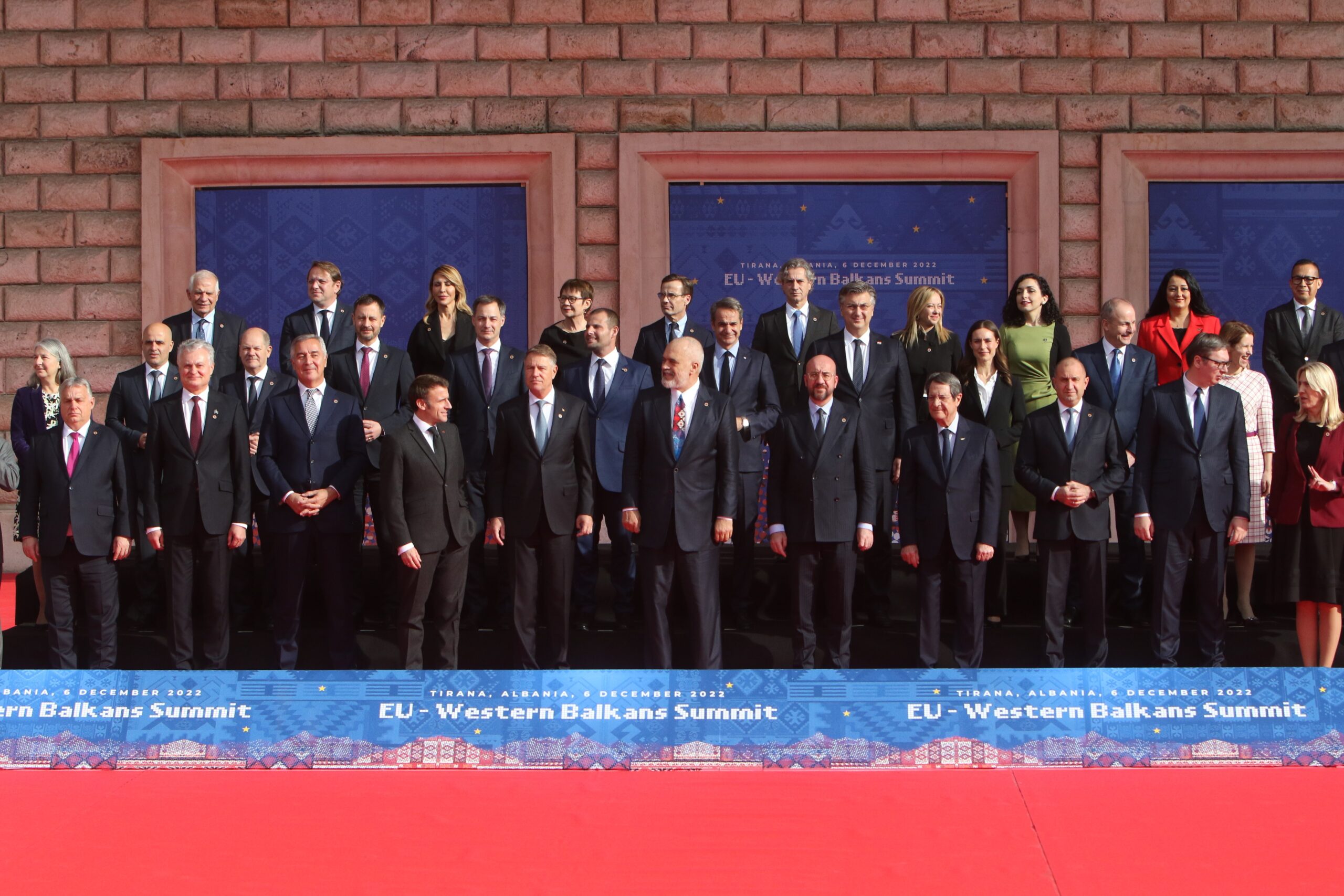
A year ago, while analysing the main events and developments to be expected in 2022, our portal mostly focused on regional and European integration, elections in the Western Balkans and in Europe. The Russian invasion of Ukraine, just like the start of COVID-19 pandemic two years earlier, changed the political landscape of the world and brought other items on the agenda.

It is no surprise, then, that regional security issues feature prominently among the main political developments expected in the Western Balkans in 2023. Over the course of 2022, relationship between Kosovo and Serbia deteriorated significantly, with concerns over a potential conflict rising several times during the year. Bosnia and Herzegovina avoided significant security tensions, but its institutional crises continued and long-term stability still seems elusive. Similar can be said for Montenegro.

In such circumstances, it was no surprise that the EU integration process remained in background, even after Albania and North Macedonia finally held their first inter-governmental accession conferences and BiH received the long-awaited status of an official candidate. However, the optimism about the process is still largely missing. Our interlocutors believe that 2023 should be the year in which both sides finally demonstrate their seriousness, but whether this will happen remains to be answered.

What are the political events and developments to watch in the Western Balkans in 2023? Experts on the region commented for European Western Balkans.

Kosovo and Serbia: Will there be a normalization agreement?

Belgrade-Pristina disputes took the centre stage in 2022, with the issues of license plates sparking the most serious tension in years, which witnessed the withdrawal of Serb representatives from the state institutions, raising of the military readiness of the Serbian Army and the roadblocks in the North.

At the same time, the EU proposed a long-term normalisation agreement, drafted by Paris and Berlin. Multiple actors, including Kosovo Prime Minister Albin Kurti, expressed the expectation that it could be signed as early as 2023.

“The announced normalisation agreement would be the most significant political event in 2023 in the Western Balkans, for it would irreversibly stabilise the region leaving the decades of ethnic conflict behind and placing the entire Western Balkans on the upward EU integration path”, says Srđan Cvijić, President of the International Advisory Committee of the Belgrade Centre for Security Policy and a member of Balkans in Europe Policy Advisory Group (BiEPAG).

Yet, he is sceptical that the agreement will be reached.

“The parties do not seem to negotiate in good faith and atmosphere. Neither of the sides is preparing the population for a compromise and more importantly for building the common regional future together”, says Cvijić.

Meanwhile, Nikolaos Tzifakis, Professor at the University of Peloponnese, also a BiEPAG member, says that the course of the war in Ukraine may exert some influence on local developments with regards to the normalisation of relations between Serbia and Kosovo.

“However, we should not underestimate local agency. After all, divisive nationalism in the Western Balkans is not imported from abroad”, he says.

Even if the deal is reached, its final content is yet to be determined. Vedran Džihić, Senior Researcher at the Austrian Institute for International Affairs and another BiEPAG member, warns that a stronger quest for partition of Kosovo may materialize due to a malign Russian influence and aggressive rhetoric from Belgrade paired with local and Belgrade-coordinated acts of refusal towards Pristina on the ground in the Northern part of Kosovo.

“Opening this debate again would equal opening the Pandora box in the whole region and would be met with harsh resistance in Kosovo internally. On the other side, I see the need for Pristina to be more proactive and try not only to approach the Serbian community more offensively but also presenting rather creative and forward-looking actions plans from their side on how to meet demands of Serbs for certain type of autonomy within the Republic of Kosovo”, Džihić adds.

The situation in Bosnia and Herzegovina: Will the EU candidacy give impetus to reforms?

The elections on 2 October 2022 were undoubtedly the main event in Bosnia and Herzegovina last year. While they were marked by multiple controversies, including the change of the rules by the High Representative Christian Schmidt as soon as the polls closed, political agreements have mostly been reached and new institutions started to form.

Members of the European Council were harshly criticized last June for not granting Bosnia and Herzegovina a status of EU candidate at the same time with Ukraine and Moldova. BiH finally received the status in December.

Nikolaos Tziakis sees Bosnia, in addition to Kosovo, as the place to turn attention to in 2023.

“In Bosnia’s case, it remains to be seen whether the EU candidate status could give a new impetus to reforms, or whether divisive nationalist politics will continue unabated. Certainly, recent developments in the country have not so far justified the initial optimism”, he says.

Vedran Džihić’s view is similar.

“While the pragmatic and programmatic coalition agreement between the so called “Osmorka”, HDZ and SNSD following the last year’s elections promised to set course to something new and better in the Bosnian political realm, the first days of 2023 including harsh tonality and celebrations of the unconstitutional day of the Republika Srpska on January 9th has a sobering effect and reminded us of all the years of crisis and tensions behind us”, he says.

The big question ahead, according to Džihić, is whether the new coalition will start being operative at least in some policy fields relevant for the population and manage to prove to the EU with reforms from the EU agenda to be functional.

The 2022 European Commission Report on Bosnia and Herzegovina found that the blockade of the state-level legislative and executive institutions by Republika Srpska entity until spring 2022 led to an almost complete standstill in reforms, while the government of the Federation entity, populated mostly by Bosniaks and Croats, remained in office for the full 2018-2022 term in a caretaker capacity.

“The EU and the USA need to coordinate their approaches to Bosnia in any case much better and speak to local actors with one voice… The West needs to underline again and again, with words and deeds more importantly, that Bosnia remains in the Western sphere. 2023 would be the year to demonstrate this more vigorously”, Džihić stresses.

EU integration: Can the “bus” leave the station?

The lackluster record on reforms not just in Bosnia, but the entire region, has not only been attributed to the lack of commitment by the local governments, but also the absence of serious signals by EU that it is willing to enlarge in the near future.

For Adnan Ćerimagić, Senior Analyst for the Western Balkans at the European Stability Initiative, the main question for 2023 is if the Western Balkans states will continue to be stuck on their EU accession process, which for some time now resembles what he describes a bus without wheels.

“Last year was spent discussing conditions for some of the countries to be allowed to move up a row of seats inside a vehicle that is going nowhere: North Macedonia and Albania to open accession talks, Bosnia-Herzegovina to be granted a candidate status. In reality, however, this bus did not move anywhere. And it is going nowhere in 2023 unless EU is prepared to say what it has done in all previous successful enlargement rounds”, Ćerimagić says.

For example, he explains, the EU should say that if Montenegro meets all criteria, it will be ready for it to become the 28th member state by some fixed date like January 2026 or January 2027.

“Or that if the EU itself is not reformed by this date that it would be ready to offer all those Western Balkans countries that meet all the criteria to join the EU single market and allow citizens and economies in the region to enjoy four freedoms of movement as if they were full EU members. If something like this does not happen, EU’s credibility and ability to influence processes in the region will continue to decrease”, Ćerimagić says.

Vedran Džihić also believes that the further course of the EU enlargement in the region would be a development of a decisive importance.

“North Macedonia is one of the places to watch in 2023 – will the Macedonian government manage to regain the momentum and prove to the population throughout negotiations that the EU integration is a real and only chance for the country to move forward. A lot of trust in the process was lost in last years, due to EU’s blockade of the process first and foremost. The nationalist opposition VMRO-DPMNE waits for its chance and continues mobilizing population with old nationalist slogans. How the situation in North Macedonia plays out internally would largely determine the fate of the EU enlargement in the region”, Džihić says.

He adds that in 2023, Vučić regime in Serbia would need to provide a final answer if it wants to remain a serious candidate country or “continue faking EU efforts while playing all other possible cards available”.

“The time to decide between Russia and the EU has come”, Džihić stresses.

Elections: Only in Montenegro?

For the first time in several years, only one national election in the Western Balkans is mandatory in 2023 – for the President of Montenegro, expected in April. Following the failure to agree on the new government led by Miodrag Lekić, the possibility of the simultaneous snap parliamentary elections after a prolonged period of deadlock in the country’s Assembly seems more and more likely.

Srđan Cvijić believes that the formation of the government in Montenegro with or without the parliamentary elections, together with the presidential election, could end the period of political instability, and place the country on an accelerated EU accession path.

“The formation of a resolute pro-European and pro-reform parliamentary majority would end the period of political uncertainty in Montenegro. Simultaneously, a victory of a candidate other than Milo Đukanović in presidential elections would mark the end of an era by allowing the reform process started after the 2020 parliamentary elections to continue. Dethronement of Đukanović would allow the democratisation process within the Democratic Party of Socialists to begin which could significantly strengthen the pro-EU bloc in Montenegro”, Cvijić says.

In Serbia, the possibility of repeated Belgrade elections in 2023 has been discussed since last spring, when the ruling coalition in the city retained its majority by the narrowest margin. A political agreement between Aleksandar Vučić and opposition leader Dragan Đilas apparently included early elections in Belgrade, but their exact date remains a mystery. Talks of snap parliamentary elections also began as soon as the previous ones finished last year.

Srđan Cvijić is optimistic about the chances for the opposition if these elections take place in 2023.

“Extraordinary parliamentary elections in Serbia in autumn/winter 2023, and more importantly announced repeated Belgrade elections and municipal elections across the country could, following the examples of Istanbul and Budapest, bring about the victory of the opposition in the capital and several municipalities across Serbia. The electoral downward trajectory for the ruling Serbian Progressive Party already started in the spring 2022. Compounded by the expected energy crisis in the winter 2023 and a more difficult economic situation, Aleksandar Vučić’s regime may lose the foothold in the capital and several towns across the country”, he says.

If the ruling parties ultimately decide not to go for early elections in 2023, the regular local and provincial elections in Serbia are expected in the first half of 2024. Albania, meanwhile, is set to hold regular local elections in 2023 at which, after the boycott of the 2019 elections, opposition is looking to dent the rule of the Socialist Party./EWB

Related Posts

ENGLISH

World Refugee Day and 75 Years of the Refugee Convention: Why Humanity must not look away

20 June, 2026
Current Events

The Diplomacy of Gas and Algorithms: The Nuances of Official Tirana—Is It Breaking the European Taboo with Azerbaijan?

17 June, 2026
Current Events

Council of Albanian Ambassadors Backs Civic Protests, Calls for Transparency and Protection of National Interests

12 June, 2026

Follow US

Subscribe

Receive Argumentum Magazine by Email

Last Posts

World Refugee Day and 75 Years of the Refugee Convention: Why Humanity must not look away

20 June, 2026

G7 Leaders Present Unified Geopolitical Agenda at Évian Summit

17 June, 2026

Daniel Serwer: A Bad War Ending Badly May Still Be Good News

17 June, 2026

The Diplomacy of Gas and Algorithms: The Nuances of Official Tirana—Is It Breaking the European Taboo with Azerbaijan?

17 June, 2026
Friedrich Merz, Keir Starmer, António Costa, Donald Trump, Emmanuel Macron, Mark Carney, Ursula von der Leyen, Giorgia Meloni and Sanae Takaichi

G7 Leaders Gather in Évian Amid Global Uncertainty, Focus on Security, Economy and International Cooperation

16 June, 2026
Argumentum

“Argumentum”, një proces intelektual …

Contact Us

[email protected]
[email protected]
[email protected]

Follow Us

Media Partner

Register

Receive Argumentum Magazine by Email
  • Home
  • Privacy Policy
  • About Us
  • Contact

© 2022 Argumentum. All Rights Reserved. | NUIS: L91415033Q

Welcome Back!

Login to your account below

Forgotten Password? Sign Up

Create New Account!

Fill the forms bellow to register

*By registering into our website, you agree to the Terms & Conditions and Privacy Policy.
All fields are required. Log In

Retrieve your password

Please enter your username or email address to reset your password.

Log In

Add New Playlist

No Result
View All Result
  • Home
  • OP/ED
  • Interview
  • Realpolitik
  • Current Events
  • Top News
  • YOUR VOICE
  • Shqip

© 2022 Argumentum. All Rights Reserved. | NUIS: L91415033Q

This website uses cookies. By continuing to use this website you are giving consent to cookies being used. Visit our Privacy and Cookie Policy.