












• SHQIPËRI
  • KOSOVË
  • MAQEDONIA E VERIUT
  • MALI I ZI
  • Revista në PDF
24 July, 2026
  • Home
  • OP/ED

    The Self-Inflicted Decoupling: How U.S. Immigration Policy Is Ceding the Tech Edge to China

    The Blueprint Does Not Stop at the Drina

    The Underlying Logic behind China’s Economic Success

    Do Not Misuse the U.S. Declaration of Independence to Justify the Narrative of Insurrection in Albania

    The visit that changed Albania’s strategic future

    Pierre Nora and the institution of memory we lack in Eastern Europe

    The Blueprint of a Diplomatic Debacle: Analyzing Germany’s Historic UNSC Loss

    Between Russia, Iran and Europe: Azerbaijan as a balancing power in the South Caucasus

    The Zero-Tariff Gate: Sovereignty as a Service in the Sino-African Corridor

  • Interview

    Exclusive Interview with Oleksandr Tyshchenko: A 40-Year Legacy of Chernobyl, Nuclear Risks, and Global Responsibility

    INTERVIEW: ZLATKO KRAMARIĆ – THOUGHTS ON THE OLD CONTINENT

    EXCLUSIVE / Ukrainian Ambassador to Albania, Volodymyr Shkurov: “Ukraine wants peace, but not at the expense of its freedom and independence”

    EXCLUSIVE| Ambassador Tayyar Kagan Atay: Türkiye and Albania, a Strategic Partnership Rooted in Shared Heritage and a Common Vision for the Future

    “Diplomacy, Not War”: Palestinian Ambassador to Albania Calls for Justice, Peace, and Global Action for Gaza

    Exclusive: “Even After Tito – Tito”/ Ambassador Zlatko Kramarić on Authoritarian Legacies and Democracy’s Future in the Balkans

    The Conclusion of the Diplomatic Mission / Ambassador Dancho Markovski: Strengthening Albania-North Macedonia Relations for a Shared European Future

    A Century of Diplomatic Relations Between Albania and Russia: Exclusive Interview with the Russian Ambassador to Albania, H.E. Alexey Zaytsev

    Exclusive/ The chairman of the Freedom Party, Ilir Meta: “The will of the citizens will triumph in Albania, as it did in North Macedonia”

  • Realpolitik

    The Summit of Unity! Think of peace and prepare for war! It’s only the start to the end! Just a pause between two wars!

    Peace with war diplomacy! The protest,  image and tourism! Why this silence from the EU Commission and Council? A deal or a pause?

    Just kind words  in Tivat! Where is the peace!? A deal yes, peace No!What is happening with USA and  EU?  5 elections but no solution!

    IBAR? ”Sufficiently! Much ado about nothing! Shart contrasts in Beijing! Where is the exit?!

    Neither peace nor war! Peace with bombs?! IBAR in autumn?! Not another Hormuz in Taivan! 

    IBAR – a springing board or an obstacle? Can we catch the EU Negotiation train 2027? When the dress makes the news!  EU electoral April  ends in a draw 1:1!  

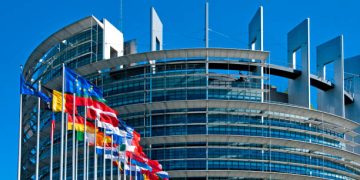
    The European Parliament building in Strasbourg, France with flags waving calmly celebrating peace of the Europe. July 12, 2020.

    EU 2027 or 2037! Even half membership failed! No exit strategy!     

    What next?

    “With diplomatic velvet“! Major question marks! In Washington yes, but  in the White House NO! A strange dinner in Brussels!

  • Current Events

    Who Is Interested in War in the Balkans?

    From Calculating Executions to Justifying Ethnic Cleansing

    When Algorithm Becomes the Most Powerful Manipulator: The Case of the Protests in Tirana

    NATO Summit in Ankara: Allies Adopt Declaration Reaffirming Collective Defence and Long-Term Security Commitments

    The Diplomacy of Gas and Algorithms: The Nuances of Official Tirana—Is It Breaking the European Taboo with Azerbaijan?

    Protection for Serbs, or Protection for Radoicic?

    The Architecture of Selective Sovereignty:Corporate Immunity, Technological Protectionism, and the Erosion of Credibility

    Montenegro’s Unfinished Transition

    The Paradox of Selective Capitalism: How Western Rule-Breaking Accelerates Its Own Systemic Demise

  • Top News

    The Council of Albanian Ambassadors condemns chauvinistic rhetoric by Serbian officials and calls for diplomatic action

    NATO at Ankara 2026: Strategic Rebalancing Between Russia Deterrence, Turkey’s Rise, and National Interests

    Daniel Serwer: A Bad War Ending Badly May Still Be Good News

    Friedrich Merz, Keir Starmer, António Costa, Donald Trump, Emmanuel Macron, Mark Carney, Ursula von der Leyen, Giorgia Meloni and Sanae Takaichi

    G7 Leaders Gather in Évian Amid Global Uncertainty, Focus on Security, Economy and International Cooperation

    Russian Ambassador in Tirana: “Without a Strong and Sovereign Russia, the Creation of a Just World Order Is Impossible”

    “The Flamingo Revolution”: Day 10 of Protests in Albania Draws International Attention

    Rama alleges ‘hybrid war’ behind protests against Kushner-linked coastal development

    No End in Sight: Trump, Netanyahu and the Expanding Middle East War

    Tirana – €20 Million EU–Banking Agreement Boosts Albanian SMEs

  • YOUR VOICE
  • Shqip
No Result
View All Result
Argumentum
  • Home
  • OP/ED

    The Self-Inflicted Decoupling: How U.S. Immigration Policy Is Ceding the Tech Edge to China

    The Blueprint Does Not Stop at the Drina

    The Underlying Logic behind China’s Economic Success

    Do Not Misuse the U.S. Declaration of Independence to Justify the Narrative of Insurrection in Albania

    The visit that changed Albania’s strategic future

    Pierre Nora and the institution of memory we lack in Eastern Europe

    The Blueprint of a Diplomatic Debacle: Analyzing Germany’s Historic UNSC Loss

    Between Russia, Iran and Europe: Azerbaijan as a balancing power in the South Caucasus

    The Zero-Tariff Gate: Sovereignty as a Service in the Sino-African Corridor

  • Interview

    Exclusive Interview with Oleksandr Tyshchenko: A 40-Year Legacy of Chernobyl, Nuclear Risks, and Global Responsibility

    INTERVIEW: ZLATKO KRAMARIĆ – THOUGHTS ON THE OLD CONTINENT

    EXCLUSIVE / Ukrainian Ambassador to Albania, Volodymyr Shkurov: “Ukraine wants peace, but not at the expense of its freedom and independence”

    EXCLUSIVE| Ambassador Tayyar Kagan Atay: Türkiye and Albania, a Strategic Partnership Rooted in Shared Heritage and a Common Vision for the Future

    “Diplomacy, Not War”: Palestinian Ambassador to Albania Calls for Justice, Peace, and Global Action for Gaza

    Exclusive: “Even After Tito – Tito”/ Ambassador Zlatko Kramarić on Authoritarian Legacies and Democracy’s Future in the Balkans

    The Conclusion of the Diplomatic Mission / Ambassador Dancho Markovski: Strengthening Albania-North Macedonia Relations for a Shared European Future

    A Century of Diplomatic Relations Between Albania and Russia: Exclusive Interview with the Russian Ambassador to Albania, H.E. Alexey Zaytsev

    Exclusive/ The chairman of the Freedom Party, Ilir Meta: “The will of the citizens will triumph in Albania, as it did in North Macedonia”

  • Realpolitik

    The Summit of Unity! Think of peace and prepare for war! It’s only the start to the end! Just a pause between two wars!

    Peace with war diplomacy! The protest,  image and tourism! Why this silence from the EU Commission and Council? A deal or a pause?

    Just kind words  in Tivat! Where is the peace!? A deal yes, peace No!What is happening with USA and  EU?  5 elections but no solution!

    IBAR? ”Sufficiently! Much ado about nothing! Shart contrasts in Beijing! Where is the exit?!

    Neither peace nor war! Peace with bombs?! IBAR in autumn?! Not another Hormuz in Taivan! 

    IBAR – a springing board or an obstacle? Can we catch the EU Negotiation train 2027? When the dress makes the news!  EU electoral April  ends in a draw 1:1!  

    The European Parliament building in Strasbourg, France with flags waving calmly celebrating peace of the Europe. July 12, 2020.

    EU 2027 or 2037! Even half membership failed! No exit strategy!     

    What next?

    “With diplomatic velvet“! Major question marks! In Washington yes, but  in the White House NO! A strange dinner in Brussels!

  • Current Events

    Who Is Interested in War in the Balkans?

    From Calculating Executions to Justifying Ethnic Cleansing

    When Algorithm Becomes the Most Powerful Manipulator: The Case of the Protests in Tirana

    NATO Summit in Ankara: Allies Adopt Declaration Reaffirming Collective Defence and Long-Term Security Commitments

    The Diplomacy of Gas and Algorithms: The Nuances of Official Tirana—Is It Breaking the European Taboo with Azerbaijan?

    Protection for Serbs, or Protection for Radoicic?

    The Architecture of Selective Sovereignty:Corporate Immunity, Technological Protectionism, and the Erosion of Credibility

    Montenegro’s Unfinished Transition

    The Paradox of Selective Capitalism: How Western Rule-Breaking Accelerates Its Own Systemic Demise

  • Top News

    The Council of Albanian Ambassadors condemns chauvinistic rhetoric by Serbian officials and calls for diplomatic action

    NATO at Ankara 2026: Strategic Rebalancing Between Russia Deterrence, Turkey’s Rise, and National Interests

    Daniel Serwer: A Bad War Ending Badly May Still Be Good News

    Friedrich Merz, Keir Starmer, António Costa, Donald Trump, Emmanuel Macron, Mark Carney, Ursula von der Leyen, Giorgia Meloni and Sanae Takaichi

    G7 Leaders Gather in Évian Amid Global Uncertainty, Focus on Security, Economy and International Cooperation

    Russian Ambassador in Tirana: “Without a Strong and Sovereign Russia, the Creation of a Just World Order Is Impossible”

    “The Flamingo Revolution”: Day 10 of Protests in Albania Draws International Attention

    Rama alleges ‘hybrid war’ behind protests against Kushner-linked coastal development

    No End in Sight: Trump, Netanyahu and the Expanding Middle East War

    Tirana – €20 Million EU–Banking Agreement Boosts Albanian SMEs

  • YOUR VOICE
  • Shqip
No Result
View All Result
Argumentum
No Result
View All Result
Home ENGLISH

Fundamental legacy of The Nuremberg and Tokyo Trials (1945-1948)

20 January, 2020
in ENGLISH, English OP/ED
A A
Share on FacebookShare on Twitter

These – rather unfortunate – days some voices in Europe are trying, in a quite ahistorical fashion, to question the very fundaments of the antifascist legacy. Dangerous and highly destructive equitation attempts are on the way. Still, this legacy is what finally made the Old continent human and peaceful – a role model to admire and for the rest of us to follow. 

These regrettable equitations make it worth to revisit the Nuremberg and Tokyo trials, which are essential pillars of the Human Rights charter brokered right after under the OUN auspices. Consequently, a very legacy of these trials is extraordinary and far reaching. It represents a core building material of the house called Modern Europe – something that the IFIMES Director Dr. Zijad Becirovic repeatedly stresses in his media appearance, as one of the bold but rather few voices of right direction and historical responsibility. 

Conclusively, the importance of tribunals is hard to overstate. Its reaffirmation today is needed like never since the end of the WWII.
*        *        *         *
Noam Chomsky once said, “For the powerful, crimes are those that others commit.” This was not the case for Germany and Japan post-World War II. The victorious Allied powers established the first international criminal tribunals to prosecute political and military officials for war crimes and other atrocities committed during wartime. The four major Allied governments; the United States, the United Kingdom, France, and the Soviet Union, set up the International Military Tribunal (Nuremberg trials) in Nuremberg, Germany, to prosecute and punish the major war criminals of the European Axis. 

The tribunal presided over a combined trial of senior Nazi political and military leaders, as well as several Nazi organizations. The less-recognized International Military Tribunal for the Far East was created (Tokyo trials) in Tokyo, Japan, following the 1946 proclamation by Supreme Commander for the Allied Powers, U.S. Army General Douglas MacArthur. The tribunal presided over a series of trials of senior Japanese political and military leaders to prosecute and punish Far Eastern war criminals. The Nuremberg and Tokyo trials differed in several important aspects including their origins, compositions, and jurisdictions. 

The Allied powers established the policy that international tribunals in Europe and in the Far East after World War II would focus on, most importantly, a decision on individual criminal liability for crimes against peace. The Allied governments, and specifically the United States, sought after this policy as a solid step toward organizing an international legal system for discouraging future aggressors and averting the sort of war devastation that the Axis aggression had caused. This US-enlivened policy, first presented at Nuremberg, was repeated and pursued precisely at Tokyo. Luc Reydams and Jan Wouters argued that “The Nuremberg and Tokyo Charters were drafted by a handful of statesmen from the highest echelons of government for whom an international tribunal was not a goal unto itself, but a means to a very specific end.”[1] The Tokyo Charter, necessitated that the principal charges against the defendants be crimes against peace while deeming charges on war crimes and crimes against humanity as discretionary. Therefore, a great part of the court battles at Tokyo rotated around substantiating aggressive war charges, despite the fact that proof of Japanese wartime atrocities was, truth be told, likewise exhibited.

In June 1945, the day of the signing of the United Nations Charter at the San Francisco Conference, delegations of the United States, the United Kingdom, France, and the Soviet Union, negotiated in London on the regulating principles for prosecuting war criminals. It is noteworthy that the respective heads of these delegations; Robert Jackson, David Maxwell Fyfe, General I.T. Nikitchenko, and Robert Falco later served in notable roles at the International Military Tribunal. Meeting in Potsdam to discuss the future of Germany and Europe, Truman, Churchill, and Stalin affirmed the London talks. 

In August 1945, the four major Allied governments signed the 1945 London Agreement, which established the International Military Tribunal. The Charter of the International Military Tribunal was adjoined to the London Agreement and defined the tribunal’s constitution, functions, and jurisdiction [2]. One judge from each of the Allied governments formed the Nuremberg tribunal, the Allied powers also supplied a team of prosecutors. The Nuremberg Charter also provided that the International Military Tribunal had the authority to prosecute and punish persons who committed any of the following crimes: Crimes Against Peace (planning and making war), War Crimes (responsibility for crimes during war), Crimes Against Humanity (racial persecution), and Conspiracy to Commit other Crimes. 

The tribunal held its opening session in the Palace of Justice in Nuremberg, and the trials lasted from November 1945 to October 1946. Twenty-two Nazi political and military leaders were indicted, including Hermann Goering, Rudolph Hess, Joachim von Ribbentrop, Alfred Rosenberg, and Albert Speer. The tribunal found nineteen individual defendants guilty and sentenced them to punishments that ranged from death by hanging to fifteen years of imprisonment. Three defendants were found that they are not guilty, one committed suicide before the trial, and one did not stand trial due to physical or mental illness.

Unlike the International Military Tribunal, the International Military Tribunal for the Far East was not created by an international agreement, but it nonetheless emerged from international agreements to prosecute Japanese war criminals [3].  In July 1945, the United States, the United Kingdom, and China signed the Potsdam Declaration, in which they stated that “We do not intend that the Japanese shall be enslaved as a race or destroyed as a nation, but stern justice shall be meted out to all war criminals, including those who have visited cruelties upon our prisoners. The Japanese Government shall remove all obstacles to the revival and strengthening of democratic tendencies among the Japanese people. Freedom of speech, of religion, and of thought, as well as respect for the fundamental human rights shall be established.[4] ” and urged the Japanese government to, “proclaim now the unconditional surrender of all Japanese armed forces, and to provide proper and adequate assurances of their good faith in such action.”[5] The war in Europe had ended but the war with Japan was continuing at the time the Potsdam Declaration was signed. Nonetheless, the Potsdam Declaration was not signed by the Soviet Union because it did not declare war on Japan until the United States dropped the second atomic bomb on the city of Nagasaki [6] .  

Japan surrendered on the 14th of August 1945, six days later. Officials of the US State Department leaned toward holding an intergovernmental conference to establish special international tribunals, but the State-War-Navy Coordinating Committee came up with the plan to use the power of the Supreme Commander of the Allied Powers, General Douglas MacArthur,  mindful of the experience with the London Conference where Justice Robert Jackson had enormous difficulty coming to an agreement with other delegations on the Nuremberg Charter.

At the following Moscow Conference, held in December 1945, the United States, the United Kingdom, and the Soviet Union with affirmation from China agreed to a basic structure to occupy Japan. General MacArthur was granted authority to “issue all orders for the implementation of the Terms of Surrender, the occupation and control of Japan, and all directives supplementary thereto.[7]”

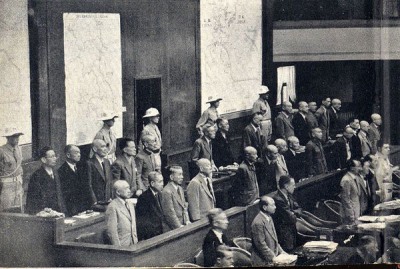
In January 1946, General Douglas MacArthur issued a special proclamation to establish the International Military Tribunal for the Far East. The Charter for the International Military Tribunal for the Far East was adjoined to the proclamation. Similar to the Nuremberg Charter, it outlined the composition, functions, and jurisdiction of the tribunal. The Charter provided for General Douglas MacArthur to assign judges to the International Military Tribunal for the Far East from the countries that had signed Japan’s instrument of surrender: Australia, Canada, China, France, the Netherlands, the Soviet Union, the United Kingdom, and the United States, as well as British India and the Philippines. Each of these countries also had a team of prosecutors. As with the International Military Tribunal, the International Military Tribunal for the Far East had jurisdiction to prosecute individuals for Crimes Against Peace, War Crimes, and Crimes Against Humanity [8] . However, the International Military Tribunal for the Far East had jurisdiction over crimes that occurred over a greater period of time, from the Japanese invasion of Manchuria in 1931 to Japan’s surrender in 1945.

The International Military Tribunal for the Far East oversaw the prosecution of twenty-five Japanese political and military leaders. The Emperor of Japan Hirohito and other members of the imperial family were not indicted. In fact, the Allied governments allowed Emperor Hirohito to retain his position on the throne, albeit with diminished status. The trials took place from May 1946 to November 1948. The International Military Tribunal for the Far East found all defendants guilty and sentenced them to punishments ranging from death to seven years’ imprisonment.

The Nuremberg and Tokyo trials contributed significantly to the development of international criminal law and served as models for a new series of international criminal tribunals [9]  that were established in the 1990s. Moreover, the reference to “crimes against peace,” “war crimes,” and “crimes against humanity” in the International Military Tribunal Charter represented the first time these terms were used and defined in an international instrument. These terms and definitions were also adopted in the Charter of the International Military Tribunal for the Far East, and have been depicted and expanded in a succession of international legal instruments since that time. The conclusions of the Nuremberg trials also served as models for the Genocide Convention 1948, the Universal Declaration of Human Rights 1948 and paved the way for the establishment of the International Criminal Court. 

In conclusion, the Nuremberg and Tokyo trials legacy itself is extraordinary, and its importance is hard to overstate. Nuremberg and the international community’s experience with the ad hoc tribunals demonstrate that international justice doesn’t have to be perfect to be good. Holding up Nuremberg to an impossible, imagined standard is neither fair nor productive. 

We cannot forget that the Nuremberg and Tokyo trials and, fifty years later, the establishment of the International Criminal Court aimed to safeguard peace in all regions of the world. The achievements of these great trials in elevating justice and law over inhumanity and war give promise for a better tomorrow by paving the way to deal with international crimes. Furthermore, the international system has made huge contributions to the birth and development of modern international law. 

About the author:
Wedyan Al Madani is a Saudi scholar. She is Jeddah-based Legal Advisor, and specialist in international law and relations.

Ljubljana, 20 January 2020

  • Link (ENG): https://www.ifimes.org/en/9757  (Research – Wedyan Al Madani: Fundamental legacy of The Nuremberg and Tokyo Trials (1945-1948)
Related Posts

ENGLISH

Public Administration and Civic Engagement in the Western Balkans: From Macro-Politics to Procedural Accountability

24 July, 2026
ENGLISH

A constant in an era of radical change

22 July, 2026
ENGLISH

Azerbaijan’s Policy in the Middle East: ties, overlaps, and divergences

22 July, 2026

Follow US

Subscribe

Receive Argumentum Magazine by Email

Last Posts

Public Administration and Civic Engagement in the Western Balkans: From Macro-Politics to Procedural Accountability

24 July, 2026

A constant in an era of radical change

22 July, 2026

Who Is Interested in War in the Balkans?

22 July, 2026

Azerbaijan’s Policy in the Middle East: ties, overlaps, and divergences

22 July, 2026

The Summit of Unity! Think of peace and prepare for war! It’s only the start to the end! Just a pause between two wars!

20 July, 2026
Argumentum

“Argumentum”, një proces intelektual …

Contact Us

[email protected]
[email protected]
[email protected]

Follow Us

Media Partner

Register

Receive Argumentum Magazine by Email
  • Home
  • Privacy Policy
  • About Us
  • Contact

© 2022 Argumentum. All Rights Reserved. | NUIS: L91415033Q

Welcome Back!

Login to your account below

Forgotten Password? Sign Up

Create New Account!

Fill the forms bellow to register

*By registering into our website, you agree to the Terms & Conditions and Privacy Policy.
All fields are required. Log In

Retrieve your password

Please enter your username or email address to reset your password.

Log In

Add New Playlist

No Result
View All Result
  • Home
  • OP/ED
  • Interview
  • Realpolitik
  • Current Events
  • Top News
  • YOUR VOICE
  • Shqip

© 2022 Argumentum. All Rights Reserved. | NUIS: L91415033Q

This website uses cookies. By continuing to use this website you are giving consent to cookies being used. Visit our Privacy and Cookie Policy.