



• SHQIPËRI
  • KOSOVË
  • MAQEDONIA E VERIUT
  • MALI I ZI
  • Revista në PDF
21 June, 2026
  • Home
  • OP/ED

    The visit that changed Albania’s strategic future

    Pierre Nora and the institution of memory we lack in Eastern Europe

    The Blueprint of a Diplomatic Debacle: Analyzing Germany’s Historic UNSC Loss

    Between Russia, Iran and Europe: Azerbaijan as a balancing power in the South Caucasus

    The Zero-Tariff Gate: Sovereignty as a Service in the Sino-African Corridor

    Albania vs. the Sea/ Marginal Notes on A. Leka’s Novel The Hidden Side of the Albanian Socialist Garden

    May 9 and the long shadow of a Letter: Is Europe still Schuman’s Project?

    The Arbnesh of Zadar: A living memory of Albanian identity on the Adriatic coast

    Science Diplomacy and Academic Freedom: A strategic nexus for contemporary diplomacy

  • Interview

    Exclusive Interview with Oleksandr Tyshchenko: A 40-Year Legacy of Chernobyl, Nuclear Risks, and Global Responsibility

    INTERVIEW: ZLATKO KRAMARIĆ – THOUGHTS ON THE OLD CONTINENT

    EXCLUSIVE / Ukrainian Ambassador to Albania, Volodymyr Shkurov: “Ukraine wants peace, but not at the expense of its freedom and independence”

    EXCLUSIVE| Ambassador Tayyar Kagan Atay: Türkiye and Albania, a Strategic Partnership Rooted in Shared Heritage and a Common Vision for the Future

    “Diplomacy, Not War”: Palestinian Ambassador to Albania Calls for Justice, Peace, and Global Action for Gaza

    Exclusive: “Even After Tito – Tito”/ Ambassador Zlatko Kramarić on Authoritarian Legacies and Democracy’s Future in the Balkans

    The Conclusion of the Diplomatic Mission / Ambassador Dancho Markovski: Strengthening Albania-North Macedonia Relations for a Shared European Future

    A Century of Diplomatic Relations Between Albania and Russia: Exclusive Interview with the Russian Ambassador to Albania, H.E. Alexey Zaytsev

    Exclusive/ The chairman of the Freedom Party, Ilir Meta: “The will of the citizens will triumph in Albania, as it did in North Macedonia”

  • Realpolitik

    Just kind words  in Tivat! Where is the peace!? A deal yes, peace No!What is happening with USA and  EU?  5 elections but no solution!

    IBAR? ”Sufficiently! Much ado about nothing! Shart contrasts in Beijing! Where is the exit?!

    Neither peace nor war! Peace with bombs?! IBAR in autumn?! Not another Hormuz in Taivan! 

    IBAR – a springing board or an obstacle? Can we catch the EU Negotiation train 2027? When the dress makes the news!  EU electoral April  ends in a draw 1:1!  

    The European Parliament building in Strasbourg, France with flags waving calmly celebrating peace of the Europe. July 12, 2020.

    EU 2027 or 2037! Even half membership failed! No exit strategy!     

    What next?

    “With diplomatic velvet“! Major question marks! In Washington yes, but  in the White House NO! A strange dinner in Brussels!

    From a great ‘apple of disaccord’ to a  point of  cooperation! A bad start! The strange absence in Davos!

    5 lessons from the American 3 January! Don’t count the chicken before they are hatched! Will NATO freeze in Greenland? Wrong diplomatic messages!

  • Current Events

    The Diplomacy of Gas and Algorithms: The Nuances of Official Tirana—Is It Breaking the European Taboo with Azerbaijan?

    Council of Albanian Ambassadors Backs Civic Protests, Calls for Transparency and Protection of National Interests

    Russian Ambassador in Tirana: “Without a Strong and Sovereign Russia, the Creation of a Just World Order Is Impossible”

    EU-Western Balkans Summit 2026: New Impetus for the Enlargement Debate?

    “The Flamingo Revolution”: Day 10 of Protests in Albania Draws International Attention

    Rama alleges ‘hybrid war’ behind protests against Kushner-linked coastal development

    BELGRADE, SERBIA - JUNE 18. 2020: Russian and Serbian flags on display during Russian Foreign Minister Sergei Lavrov's visit to the Liberators of Belgrade Memorial. Valery Sharifulin/TASS,Image: 533095429, License: Rights-managed, Restrictions: UWAGA! Zdjęcia zawierają oryginalny opis dostawcy (ITAR-TASS). Szczególnie w związku z agresją Rosji na Ukrainę mogą zawierać przekaz niezgodny z faktami. Zweryfikuj go przed publikacją, Model Release: no, Credit line: Valery Sharifulin / TASS / Forum

    Balkan Maskirovka: Why Moscow’s “Distancing” Is Only an Operation for the Survival of Vučić’s Regime

    Serbia – China 2026: Technological partnership, geopolitical positioning and a new phase of the Chinese presence in the Western Balkans

    The Digital Protectorate: How the EU AI Act Codified Silicon Valley’s Monopoly

  • Top News

    Daniel Serwer: A Bad War Ending Badly May Still Be Good News

    Friedrich Merz, Keir Starmer, António Costa, Donald Trump, Emmanuel Macron, Mark Carney, Ursula von der Leyen, Giorgia Meloni and Sanae Takaichi

    G7 Leaders Gather in Évian Amid Global Uncertainty, Focus on Security, Economy and International Cooperation

    Russian Ambassador in Tirana: “Without a Strong and Sovereign Russia, the Creation of a Just World Order Is Impossible”

    “The Flamingo Revolution”: Day 10 of Protests in Albania Draws International Attention

    Rama alleges ‘hybrid war’ behind protests against Kushner-linked coastal development

    No End in Sight: Trump, Netanyahu and the Expanding Middle East War

    Tirana – €20 Million EU–Banking Agreement Boosts Albanian SMEs

    “EU4Municipalities II” Project, a Strategic Investment for Strengthening Municipalities and Accelerating Albania’s Path towards the EU

    Albania, Italy deepen defence ties with naval shipbuilding deal

  • YOUR VOICE
  • Shqip
No Result
View All Result
Argumentum
  • Home
  • OP/ED

    The visit that changed Albania’s strategic future

    Pierre Nora and the institution of memory we lack in Eastern Europe

    The Blueprint of a Diplomatic Debacle: Analyzing Germany’s Historic UNSC Loss

    Between Russia, Iran and Europe: Azerbaijan as a balancing power in the South Caucasus

    The Zero-Tariff Gate: Sovereignty as a Service in the Sino-African Corridor

    Albania vs. the Sea/ Marginal Notes on A. Leka’s Novel The Hidden Side of the Albanian Socialist Garden

    May 9 and the long shadow of a Letter: Is Europe still Schuman’s Project?

    The Arbnesh of Zadar: A living memory of Albanian identity on the Adriatic coast

    Science Diplomacy and Academic Freedom: A strategic nexus for contemporary diplomacy

  • Interview

    Exclusive Interview with Oleksandr Tyshchenko: A 40-Year Legacy of Chernobyl, Nuclear Risks, and Global Responsibility

    INTERVIEW: ZLATKO KRAMARIĆ – THOUGHTS ON THE OLD CONTINENT

    EXCLUSIVE / Ukrainian Ambassador to Albania, Volodymyr Shkurov: “Ukraine wants peace, but not at the expense of its freedom and independence”

    EXCLUSIVE| Ambassador Tayyar Kagan Atay: Türkiye and Albania, a Strategic Partnership Rooted in Shared Heritage and a Common Vision for the Future

    “Diplomacy, Not War”: Palestinian Ambassador to Albania Calls for Justice, Peace, and Global Action for Gaza

    Exclusive: “Even After Tito – Tito”/ Ambassador Zlatko Kramarić on Authoritarian Legacies and Democracy’s Future in the Balkans

    The Conclusion of the Diplomatic Mission / Ambassador Dancho Markovski: Strengthening Albania-North Macedonia Relations for a Shared European Future

    A Century of Diplomatic Relations Between Albania and Russia: Exclusive Interview with the Russian Ambassador to Albania, H.E. Alexey Zaytsev

    Exclusive/ The chairman of the Freedom Party, Ilir Meta: “The will of the citizens will triumph in Albania, as it did in North Macedonia”

  • Realpolitik

    Just kind words  in Tivat! Where is the peace!? A deal yes, peace No!What is happening with USA and  EU?  5 elections but no solution!

    IBAR? ”Sufficiently! Much ado about nothing! Shart contrasts in Beijing! Where is the exit?!

    Neither peace nor war! Peace with bombs?! IBAR in autumn?! Not another Hormuz in Taivan! 

    IBAR – a springing board or an obstacle? Can we catch the EU Negotiation train 2027? When the dress makes the news!  EU electoral April  ends in a draw 1:1!  

    The European Parliament building in Strasbourg, France with flags waving calmly celebrating peace of the Europe. July 12, 2020.

    EU 2027 or 2037! Even half membership failed! No exit strategy!     

    What next?

    “With diplomatic velvet“! Major question marks! In Washington yes, but  in the White House NO! A strange dinner in Brussels!

    From a great ‘apple of disaccord’ to a  point of  cooperation! A bad start! The strange absence in Davos!

    5 lessons from the American 3 January! Don’t count the chicken before they are hatched! Will NATO freeze in Greenland? Wrong diplomatic messages!

  • Current Events

    The Diplomacy of Gas and Algorithms: The Nuances of Official Tirana—Is It Breaking the European Taboo with Azerbaijan?

    Council of Albanian Ambassadors Backs Civic Protests, Calls for Transparency and Protection of National Interests

    Russian Ambassador in Tirana: “Without a Strong and Sovereign Russia, the Creation of a Just World Order Is Impossible”

    EU-Western Balkans Summit 2026: New Impetus for the Enlargement Debate?

    “The Flamingo Revolution”: Day 10 of Protests in Albania Draws International Attention

    Rama alleges ‘hybrid war’ behind protests against Kushner-linked coastal development

    BELGRADE, SERBIA - JUNE 18. 2020: Russian and Serbian flags on display during Russian Foreign Minister Sergei Lavrov's visit to the Liberators of Belgrade Memorial. Valery Sharifulin/TASS,Image: 533095429, License: Rights-managed, Restrictions: UWAGA! Zdjęcia zawierają oryginalny opis dostawcy (ITAR-TASS). Szczególnie w związku z agresją Rosji na Ukrainę mogą zawierać przekaz niezgodny z faktami. Zweryfikuj go przed publikacją, Model Release: no, Credit line: Valery Sharifulin / TASS / Forum

    Balkan Maskirovka: Why Moscow’s “Distancing” Is Only an Operation for the Survival of Vučić’s Regime

    Serbia – China 2026: Technological partnership, geopolitical positioning and a new phase of the Chinese presence in the Western Balkans

    The Digital Protectorate: How the EU AI Act Codified Silicon Valley’s Monopoly

  • Top News

    Daniel Serwer: A Bad War Ending Badly May Still Be Good News

    Friedrich Merz, Keir Starmer, António Costa, Donald Trump, Emmanuel Macron, Mark Carney, Ursula von der Leyen, Giorgia Meloni and Sanae Takaichi

    G7 Leaders Gather in Évian Amid Global Uncertainty, Focus on Security, Economy and International Cooperation

    Russian Ambassador in Tirana: “Without a Strong and Sovereign Russia, the Creation of a Just World Order Is Impossible”

    “The Flamingo Revolution”: Day 10 of Protests in Albania Draws International Attention

    Rama alleges ‘hybrid war’ behind protests against Kushner-linked coastal development

    No End in Sight: Trump, Netanyahu and the Expanding Middle East War

    Tirana – €20 Million EU–Banking Agreement Boosts Albanian SMEs

    “EU4Municipalities II” Project, a Strategic Investment for Strengthening Municipalities and Accelerating Albania’s Path towards the EU

    Albania, Italy deepen defence ties with naval shipbuilding deal

  • YOUR VOICE
  • Shqip
No Result
View All Result
Argumentum
No Result
View All Result
Home Balkan Overview

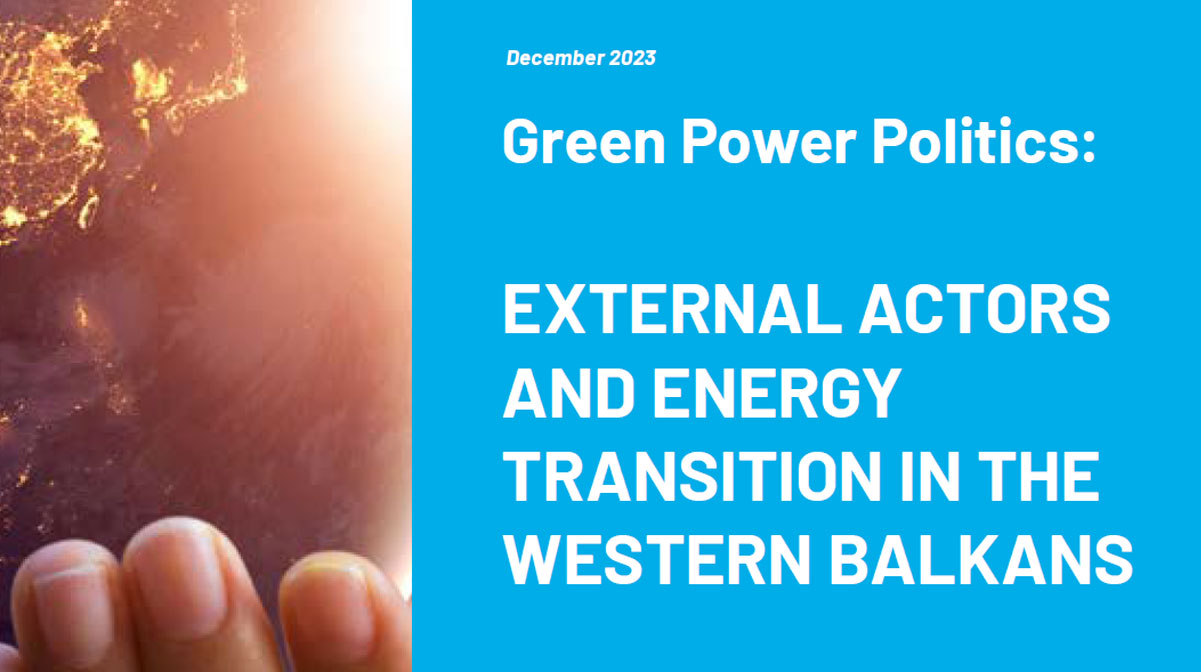
Green Power Politics: External Actors and Energy Transition in the Western Balkans

13 December, 2023
in Balkan Overview, ENGLISH, In Focus
A A
Share on FacebookShare on Twitter

By: Tena Prelec, Nikolaos Tzifakis, Dimitar Bechev

The final brief of BiEPAG’s Geopolitics of the Green Energy Transition project explores the EU’s role in promoting the energy transition in the Western Balkans. Despite the EU’s commitment to climate action and extensive financial assistance, the region’s progress in adopting renewable energy sources remains slow. The study, based on a comprehensive survey and three in-depth case studies of external influence in the energy sector, reveals a public desire for green transition but a lack of awareness regarding the negative impact of external actors like Russia, China, and Turkey. The analysis underscores the crucial role of local elites in mediating foreign influence and highlights disparities in public perceptions. Recommendations include a targeted public diplomacy campaign, support for civil society actors advocating green energy, diversification of energy sources, financial incentives for market liberalisation, increased transparency in foreign investments, and regional cooperation for grid interconnection and renewable investments. The findings emphasise the need for nuanced policy measures to ensure a sustainable and equitable green energy transition in the Western Balkans.

Can the EU be a ‘green leader’ in the Balkans?

The EU sees itself as a global leader on fighting climate change and promoting environmental sustainability. These objectives are not only pursued internally but also profoundly shape the Union’s relations with the outside world. While there may be many areas where EU member states disagree, they are united in pushing for a global curb on greenhouse gas emissions. Nowhere is this ambition more visible than in the EU’s immediate neighbourhood. For well over a decade, Brussels has advanced energy market reforms geared toward increasing efficiency, lowering prices for consumers, and ensuring reliability of supply.

The Western Balkans, alongside candidate countries in Eastern Europe such as Moldova and Ukraine, have been the prime target of this policy. In recent years, the focus has shifted from energy security to climate policy. The leaders of the six Western Balkan countries – Albania, Bosnia and Herzegovina, Kosovo, Montenegro, North Macedonia, and Serbia – pledged at a November 2020 gathering under the auspices of the EU-backed Berlin process to “commit to work towards the 2050 target of a carbon-neutral continent together with the EU through mainstreaming a strict climate policy and reforming [the] energy and transport sectors”.1 The Energy Community, a regional cooperation platform supported by the EU, has set targets that, by 2030, 31% of gross final energy consumption should come from renewable sources, energy intake should be capped, and greenhouse gas emissions should be cut by over 60% compared to 1990s levels.2 External funding through the EU’s Instrument for Pre-accession Assistance and the Western Balkans Investment Framework, a partnership between the EU and international financial institutions, also prioritises green objectives. Unfortunately, the Western Balkans’ record on the green transition is mixed. Little success has been achieved on either modernising the region’s energy sector or cutting emissions.

By and large, Western Balkan countries remain dependent on coal. At present, lignite accounts for about 70% of the electricity produced in the region. In Kosovo, Serbia and Bosnia and Herzegovina the share stands at 95%, 67% and 65% respectively.3 In addition, there is little new investment in the sector. The average age of the lignite fleet, which makes up around half of generation capacity and more in production, is over 40 years,4 and the electricity systems of several countries have come close to collapse over the past few winters. Coal power plants drive up greenhouse gas emissions but are also one of the causes of poor air quality and have severe health impacts. The deadlock on the ground is being exploited by external geopolitical actors, including Russia, China, and Turkey, which have all carved out niches in the political, economic, and energy sectors of the region. Western Balkan governments have accepted this in the hope of generating employment, collecting and redistributing rents for their political clienteles, and keeping energy prices low for the population at large.

Meanwhile, the EU is playing catch up, trying to induce compliance in countries where either the political will or state capacity to implement ambitious public policies is lacking. Building on a survey of popular perceptions, the present study finds that Western Balkan publics support the green transition but do not fully appreciate the EU’s contribution to the attainment of that goal. In addition, they fail to notice the negative influence of certain foreign investments in the region’s energy sector. This said, we should avoid the fallacy of assigning most of the blame for the slow pace of the energy transition to foreign investors. Drawing on fieldwork and a series of interviews by BiEPAG members with stakeholders in the energy sectors of Serbia, Bosnia and Herzegovina, and Kosovo, we argue that the main responsibility for the lack of progress rests with national governments. The study concludes with a set of policy recommendations to help the EU contribute to a more effective and just energy transition in the region.

Public perceptions of the green transition

BiEPAG conducted a regional public opinion survey in March-April 2023.6 The survey showed there is widespread support for the green transition. An overwhelming 71% of respondents across the Western Balkans believe their countries should primarily derive energy from renewable sources by 2050 (see Chart 1). Equally encouraging, a similar proportion of participants (67%) support increased investment in renewables domestically as a response to the energy crisis – indicating that citizens might be prepared to support a greater allocation of public funds to increasing production capabilities for green energy

Click to Green-Power-Politics-External-Actors-and-Energy-Transition-in-the-Western-Balkans download the Biepag publication

/Argumentum.al
Related Posts

ENGLISH

World Refugee Day and 75 Years of the Refugee Convention: Why Humanity must not look away

20 June, 2026
ENGLISH

G7 Leaders Present Unified Geopolitical Agenda at Évian Summit

17 June, 2026
ENGLISH

Daniel Serwer: A Bad War Ending Badly May Still Be Good News

17 June, 2026

Follow US

Subscribe

Receive Argumentum Magazine by Email

Last Posts

World Refugee Day and 75 Years of the Refugee Convention: Why Humanity must not look away

20 June, 2026

G7 Leaders Present Unified Geopolitical Agenda at Évian Summit

17 June, 2026

Daniel Serwer: A Bad War Ending Badly May Still Be Good News

17 June, 2026

The Diplomacy of Gas and Algorithms: The Nuances of Official Tirana—Is It Breaking the European Taboo with Azerbaijan?

17 June, 2026
Friedrich Merz, Keir Starmer, António Costa, Donald Trump, Emmanuel Macron, Mark Carney, Ursula von der Leyen, Giorgia Meloni and Sanae Takaichi

G7 Leaders Gather in Évian Amid Global Uncertainty, Focus on Security, Economy and International Cooperation

16 June, 2026
Argumentum

“Argumentum”, një proces intelektual …

Contact Us

[email protected]
[email protected]
[email protected]

Follow Us

Media Partner

Register

Receive Argumentum Magazine by Email
  • Home
  • Privacy Policy
  • About Us
  • Contact

© 2022 Argumentum. All Rights Reserved. | NUIS: L91415033Q

Welcome Back!

Login to your account below

Forgotten Password? Sign Up

Create New Account!

Fill the forms bellow to register

*By registering into our website, you agree to the Terms & Conditions and Privacy Policy.
All fields are required. Log In

Retrieve your password

Please enter your username or email address to reset your password.

Log In

Add New Playlist

No Result
View All Result
  • Home
  • OP/ED
  • Interview
  • Realpolitik
  • Current Events
  • Top News
  • YOUR VOICE
  • Shqip

© 2022 Argumentum. All Rights Reserved. | NUIS: L91415033Q

This website uses cookies. By continuing to use this website you are giving consent to cookies being used. Visit our Privacy and Cookie Policy.