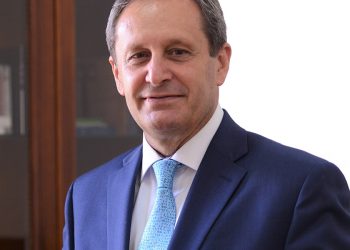


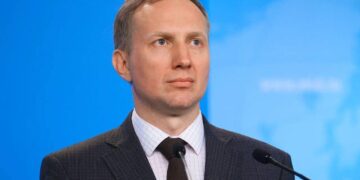

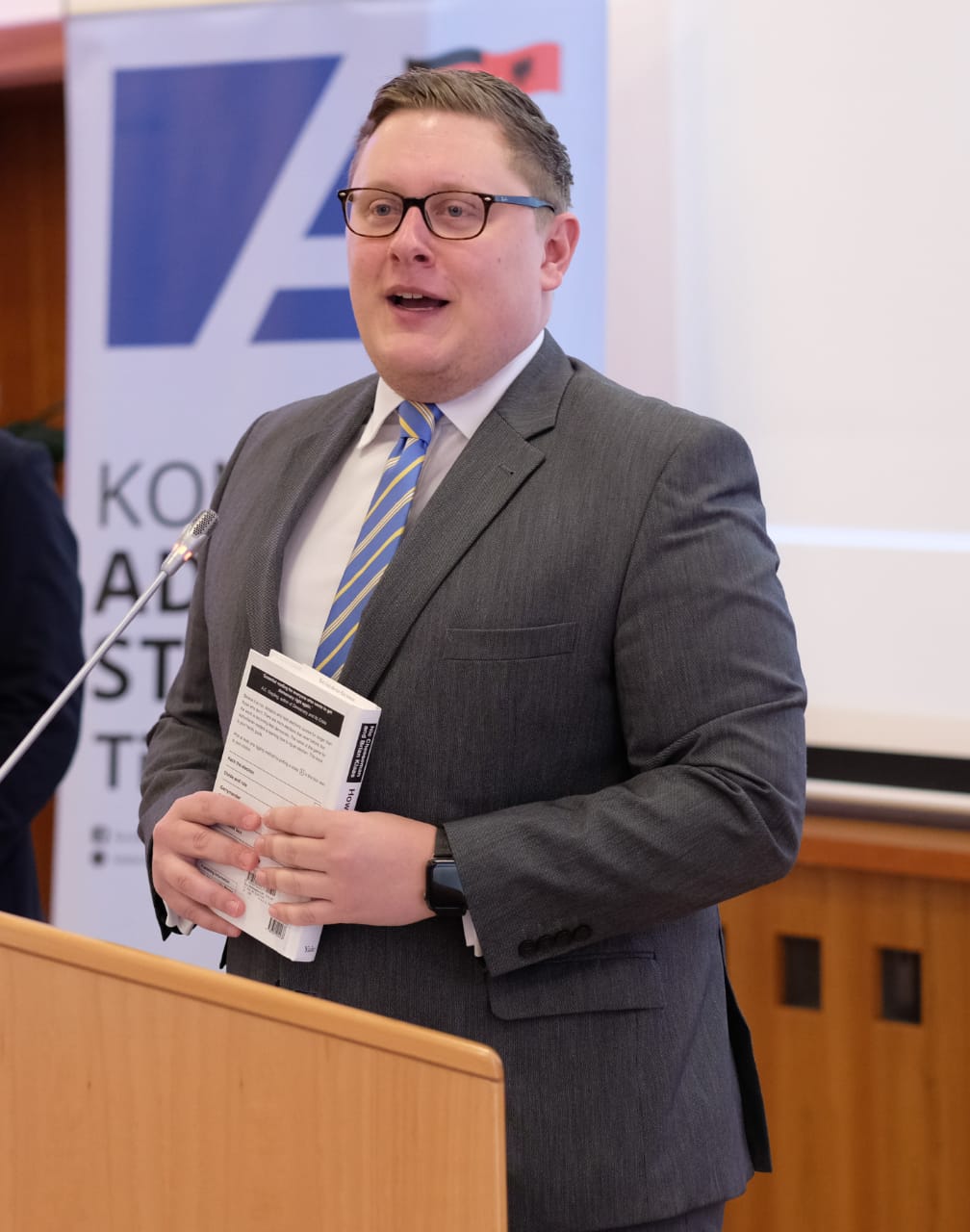
“I would hope a common ground among the Albanian political elites on crucial issues such as electoral and justice reforms or the media law can be found. This would then enable us to open accession talks by the end of 2020,” has said Mr. Tobias Ruettershoff
By Genc Mlloja
Senior Diplomatic Editor
Mr. Tobias Ruettershoff, Head of Albanian Office of Konrad Adenauer Foundation, has chosen South of Albania, including Dhermi and Saranda, for summer vacations, and as he said he had “a very relaxing time after the Covid-19 lockdown, and it has reminded me how beautiful the Albanian landscape really is.” After his return to Tirana Albanian Daily News had a conversation with him, and the vast topics discussed show that Mr. Ruettershoff’s summer holidays were a real relaxation time for him. It was an occasion to have his opinions on the latest political developments in Albania, including some constitutional changes and the 5th of August accord, Germany’s commitment to hold the first intergovernmental conference with Albania during the German Presidency of the Council of the European Union, if conditions are met, as he said in the interview which follows:
Albanian Daily News: At the outset Mr. Ruttershoff let me wish that you have had some summer vacations and if you permit what would you say on tourism opportunities offered by Albania, particularly now in the circumstances of COVID-19 pandemic?
Mr. Tobias Ruettershoff: Thank you. I just spent one week in the South of Albania, including Dhërmi and Sarandë. It was a very relaxing time after the Covid-19 lockdown, and it has reminded me how beautiful the Albanian landscape really is. I hope the tourism sector is not hit too hard by the pandemic and that a lack of foreign visitors can be compensated for by domestic tourism. Yet, it is still a difficult time and, for example, the necessary (re-)closure of night clubs does not make things easier for businesses. In the mid- to long-term, I would hope that the tourism sector can overcome this crisis and grow in a sustainable and eco-friendly way. Many people in Europe have not yet discovered Albania as a tourist destination despite it sharing the same coast as Croatia or Greece. Thus, there is much room for potential.
-Despite the fury of the C19 health crisis Albania’s political life has been tough, and foreign diplomats had to mediate a deal between the majority and opposition – the so called June 5 accord on electoral reform. But on July 30 majority adopted unilaterally some constitutional changes on the formats of open election lists and pre-electoral coalitions. Do you think that what happened might bring an end to irregularities in the upcoming parliamentary elections?
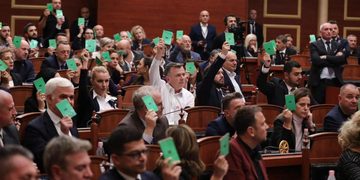
-To me it is not quite clear why the constitution had to be changed to achieve the desired outcome of more transparent and fair elections. While the legal powers of the Albanian parliament need to be respected, the question is whether these constitutional changes were also legitimate. During times when a large proportion of the Albanian public is not represented in parliament and we do not have a functioning constitutional court, changing the constitution will always prove difficult.
As far as I am aware, something as profound as constitutional change was always done in a consensual manner in the past, with all political players involved. This is why the conditions of the German Bundestag for opening EU accession negotiations called for an inclusive approach to electoral reform. It was reflected in the agreement of 14 January, where the majority as well as the parliamentary and non-parliamentary opposition agreed upon conducting talks in the Political Council in such an inclusive manner. This ultimately resulted in the June 5thAgreement, which was a giant leap forward. We now need to wait and see what the constitutional changes mean in reality: as in how will they be implemented in the electoral code to assess whether it will lead to more free and fair elections. I am positive that DP and the United Opposition will be open for continuous dialogue on this matter.
I do not know if open lists and the ban of pre-electoral coalitions will fully ensure the end of “irregularities” such as vote-buying and the manipulation of ballot counts. Full open lists certainly could provide some assurance in this regard. Yet, they are not in themselves a miracle cure for the ills of Albanian elections and certainly not in their current form, where only 2/3 of the party lists are open and 1/3 are still decided by the party heads.
-How much efficient has been foreign diplomats’ mediation this time? PM Rama did not hide his harsh words on some ambassadors asking them not to interfere in Albanian parliament’s decision making…
-The fact that some ambassadors were actively involved in hosting Political Council meetings at the end of May bears testimony to the international community’s desire to finally see results in the electoral reform. This international pressure most likely had an impact on realizing the June 5th agreement. However, I would like to see Albanians being able to find compromises amongst themselves and without the need for external mediation in the future. In terms of the criticism by PM Rama: as I said earlier, the legislative rights of the Albanian parliament have to be respected. Yet, it was certainly not disrespectful by the United Opposition and other political actors to question the unilateral move to ban pre-electoral coalitions after we had made good progress towards an inclusive agreement on electoral reform.
– With a lot of ‘home works’ to be carried out by Albania do you think there might be a start of the accession stage with the EU?
–As you probably read in the interview by the Western Balkans Director in the German Foreign Office, Ambassador Schutz, with BIRN, Germany is committed to holding the first intergovernmental conference with Albania during the German Council Presidency, if conditions are met. This is also the feeling that I get when talking to decision-makers in Berlin. However, we need to be careful that it does not become a case of the tail wagging the dog. In other words, we still need to carefully monitor the fulfillment of conditions laid down by the Bundestag and the EU Council before we agree upon the opening of negotiations. Furthermore, we should not forget that there are 26 other countries in the EU that need to be convinced that the conditions have been fulfilled, including some skeptical ones like France, Denmark or the Netherlands.
I believe that Albania has made some progress in this regard and that the conditions can be met by the end of the year. As you mentioned, though, a lot of “homework” has still to be done. From my perspective, the greatest challenges are in the area of justice reform and particularly in achieving a well-functioning Constitutional and High Court. A democracy relies on a system of checks and balances between the three branches of power. In Albania, one of these branches, the judiciary, is essentially unable to work at the moment, which further exacerbates the current dilemma. Another vital element for a functioning democracy is a free and independent media. As the Venice Commission and other international bodies have commented, the current media bill is not compatible with EU standards and best practices with respect to press and freedom of the media. Hence, we would expect the bill to be improved in line with recommendations given by the Venice Commission.
-As chair of the Council of the European Union during the second half of 2020, how would you assess Germany’s role in the current political crisis in Albania and concretely the decision on the opening of the accession talks?
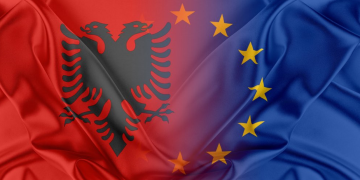
-Just as in previous years, Germany remains committed to supporting Albania on its path towards EU integration. What is more, as the Chair of the EU Presidency in the second half of 2020, it can place the issue higher on the European agenda. In terms of involvement in the current political crisis in Albania, various German actors across the country, including the embassy or political foundations, can offer a helping hand. Nevertheless, the impetus for solving this crisis needs to come from Albanian political players themselves. This cannot be forced by Germany or any other states. I would hope a common ground among the Albanian political elites on crucial issues such as electoral and justice reforms or the media law can be found. This would then enable us to open accession talks by the end of 2020.
-How do you assess the prospects for Western Balkans with regard to the EU integration process when the situation seems burdened with conflicts of different kinds in the region?
– I am a positive person, and so in my case the glass is usually half full rather than half empty. If we look back on the last decades and what we have achieved, then the Western Balkans have witnessed large-scale developments. Since the Balkan Wars of the 1990s, we have now secured relative stability in the region. Nevertheless, we still face enormous challenges, as we can see for example in the ongoing Kosovo-Serbia situation or the ethnic conflicts within Bosnia and Herzegovina. Furthermore, there are other external powers trying to exert their influence in the area. It is, however, my firm belief that the future of the Western Balkans lies within the European Union. If you look around, you can see that we are surrounded by EU member states. This means the region is the courtyard and not the backyard of the EU. That reality is also reflected in the pre-existing interconnectivity of human and business interactions between the EU and the Western Balkans, which needs to be expanded further. Of course, the EU integration process will be an ongoing process for years or even decades, and we will most certainly experience some setbacks. Yet, in my view there is no real alternative to increased integration, both for the EU and the Western Balkan states.
-Let me turn, please, to the latest performance of your Foundation although in the conditions of C19 pandemic. “My Europe: The Challenges towards Integration” was the motto of the 2020 European Summer School organized by the Foundation in July this year. What can you tell our readers on such an event, its agenda and achievements?
-The aim of this project was to raise awareness among young people in Albania about the European Union, its key institutions, and its EU accession process. Even though good work has been done throughout years, we realized that many people in Albania, especially young people, had little awareness about it. In early July, we organized the 2nd European Summer School 2020 at Nehemiah Gateway Campus in Pogradec together with our partner, the European Centre. Both organizations invited crucial experts in the field who explained the path to the EU, the sui generis status of it, the negotiation process and so on. Participants demonstrated a great deal of interest, they contributed their knowledge to the debate and raised questions on relevant topics during the training days. Of course, we adhered to the Covid-19 situation and the concomitant rules, which only allowed a smaller number of participants as originally envisaged. Still, it was good to get back to work with people in a real-life setting and not just online via videoconferences. Additionally, we designed an informative mobile application as a way to harness the power of the internet for raising awareness among citizens in a quick and efficient manner. Here the aim was to explain the European Union, its institutions, but more specifically the negotiation process of Albania. The app can be downloaded via the Google Play Store.
-Mr. Ruttershoff as you are a keen follower of developments in this Balkan country, please can you tell us why Albania continues to be in ‘transition’ even after three decades since the establishment of pluralism? In this frame please what can you tell us about your project on the lessons of transition in Albania from 1990 to 2020?
-Transition is a generational task, and experiences from different countries have shown that it can take decades to resolve problems in the wake of Communist rule. In Germany, too, we still face issues associated with the legacy of the former GDR, and that pales in comparison to what people had to endure in Albania. Transition affects nearly all aspects of life, whether that is the restitution of properties, locating missing persons or compensating victims for the financial, physical and psychological damage which they have suffered. A huge additional problem is that many people who benefitted from the Communist system or were even perpetrators, have not yet had to face justice for their actions.
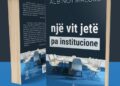
December 2020 marks the 30thanniversary of the multi-party system establishment and the communist system disbandment in Albania. Since 1990, Albania has undergone on a long, complex transformation and reformation process to build a new system underpinned by the rule of law, free market economy, Euro-Atlantic integration, and functional democracy. The debate on transition, its nature and ending is inextricably linked to the debate on transition expectations in the 1990s. Looking at existing research on this topic, we found that for Albanian researchers, this period has been experienced and commented on, as opposed to having been subject to in-depth study. Moreover, for the rest of the world, the insights and the professional information on the 30-year post-communist era developments in Albania have been almost non-existent. Therefore, the Institute for Political Studies and the Konrad-Adenauer-Stiftung have planned to arrange and release a special publication on the 30thanniversary of the multi-party system establishment in Albania, focusing on the balance sheet and challenges over these 30 years of transition. The publication will be issued in English and Albanian, as edited by two co-editors: a history professor expert on post-communist political developments in Albania and a history professor expert on post-communist political developments in Germany.
-I would like to conclude this conversation with an opinion of yours on the thorny issues of the justice reform and rule of law in Albania. Albanians have often heard from some key diplomatic envoys in Tirana that there are people in the political class who do not want that reform. But my question is, Mr. Ruttershoff, why is it taking so long the implementation of this reform and is there truth in some claims that the majority is systematically seizing judicial bodies?
-Ever since Albania reached the status of EU membership candidate in 2014, reforming the justice system has been identified as a key priority for Germany and the EU. Yet, since the constitutional changes in 2016, we have seen that judicial reform, including the vetting of all judges and prosecutors, is a very challenging process. It seems that many more people have been engaged in corrupt or illegal activities than originally anticipated, which only serves to confirm the urgent need to thoroughly cleanse the justice system. Unfortunately, this complicated process has led to a partial dysfunctionality of the judiciary. Any country in the world, including Germany or the United States, would have problems with finding adequate replacements for nearly all judges at both the Constitutional and the High Court in a truly short amount of time. There is no alternative to this crucial process, however.
I believe the intensity of the judicial reform combined with the fact that Albania is a small country with limited legal resources, has also contributed to the claims that judicial bodies are dominated by one political faction. As you know, pretty much all areas of life are politicized in Albania and, in addition, there are many family ties. Hence, if someone has been a judge for several years in a specific area (which is a prerequisite in terms of experience to be selected for higher positions), you can, of course, suspect there to be certain allegiances. Nevertheless, I hope that the vetting institutions are doing their utmost to prevent a political capture of the new judiciary. Having said that, the international community will surely continue to monitor this process as well as how the newly installed judges and prosecutors act, and whether they demonstrate a certain political leaning./ADN