













By IFIMES
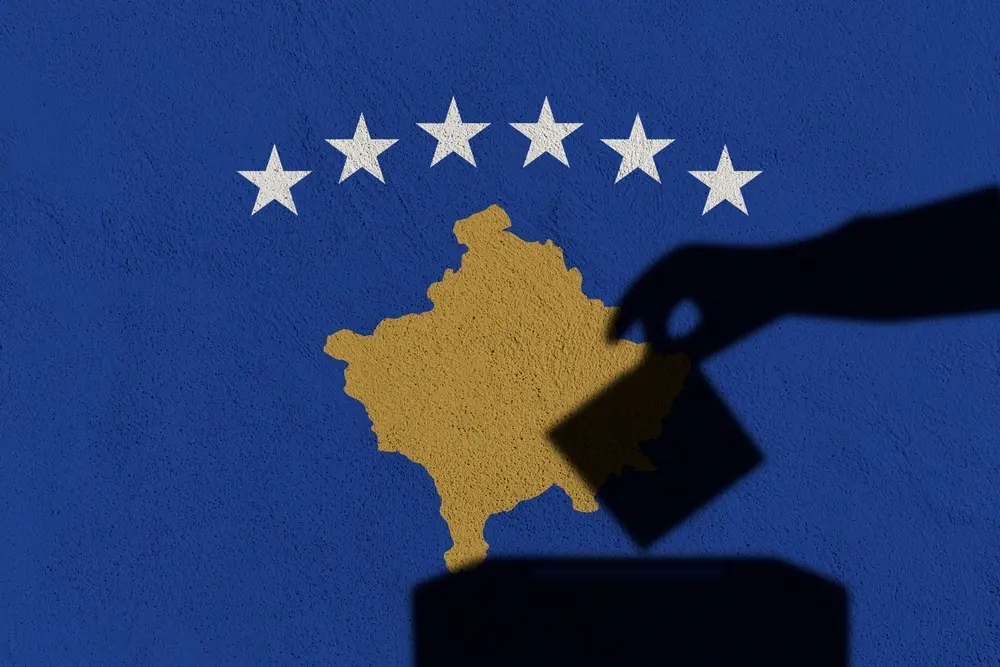
The international factor remains a key element of Kosovo’s political dynamics. In the run-up to early parliamentary elections scheduled for 28 December 2025, international influence, although often indirect, strongly shapes electoral processes, the strategic calculations of political actors, and post-election arrangements. Kosovo continues to operate within a specific status framework, characterised by partial recognition and a high degree of dependence on the political, security, and economic support of its Western allies, primarily the United States and the European Union.
The International Institute IFIMES has previously published a comprehensive analysis titled “Research ● Early parliamentary elections in Kosovo 2025: A second chance for Albin Kurti and the stabilisation of Kosovo / Zgjedhjet e parakohshme parlamentare në Kosovë 2025: Shansi i dytë për Albin Kurtin dhe stabilizimin e vendit”. The study is available at: https://www.ifimes.org/en/researches/early-parliamentary-elections-in-kosovo-2025-a-second-chance-for-albin-kurti-and-the-stabilisation-of-kosovo/5702 (10 December 2025).
The United States: security guarantor and political corrective
The United States acts as the principal guarantor of Kosovo’s security and the most influential external political actor in the region. While formally neutral in the electoral contest, Washington clearly articulates its expectations for the future government: the continuation of dialogue with Serbia, the de-escalation of tensions in northern Kosovo, the protection of the rights of the Serb community, and sustained coordination with Western allies. Recognising the domestic political capital of Albin Kurti and the Self-Determination Movement (LVV), the US administration maintains institutional channels of engagement while simultaneously exerting subtle pressure to ensure that key issues—such as the establishment of the Association of Serb Municipalities (ASM)—are addressed pragmatically, rather than framed solely through rhetoric grounded in the principle of sovereignty. In this context, the United States does not act against Kurti; instead, it seeks to constrain his room for manoeuvre in confrontations with Belgrade and segments of the international community.
Washington’s particular focus is directed at northern Kosovo, which remains a persistent security stress test and a critical area of coordination between Kosovo’s institutions, KFOR, and Western allies. Northern Kosovo serves as a theatre where local politics, Belgrade’s interests, and international actors such as KFOR and EULEX intersect, with the US and the UK playing a central role in “crisis management”.
The European Union: a normative actor with limited political leverage
The European Union adopts an ambivalent stance in Kosovo’s pre-election period. Brussels consistently insists on stability, the normalisation of relations with Serbia, and the implementation of earlier agreements, yet internal divisions among EU member states—particularly those that do not recognise Kosovo—hamper the Union’s capacity to act in a politically unified manner. The punitive measures imposed on Kosovo during 2023–2024 continue to have political repercussions and are used as an instrument of pressure, while their lifting contributes to the easing of relations with the European Union. The EU indirectly favours predictable and “cooperative” actors, although such support is not openly articulated. Nevertheless, Brussels recognises that a stable parliamentary majority is unlikely without LVV, prompting a shift in focus from identifying electoral winners towards managing the conduct of the future government.
Germany and France: allies and rivals in Kosovo
Germany and France, two of the European Union’s leading member states, play a central yet differently calibrated role in shaping Kosovo’s political dynamics. Germany remains a steadfast proponent of Kosovo’s European perspective, prioritising the rule of law and institutional stability, while engaging pragmatically with Albin Kurti and setting clear expectations regarding the avoidance of unilateral actions and political destabilisation. France, meanwhile, places greater weight on regional stability and relations with Serbia, a stance that translates into sustained pressure on Pristina over the formation of the Association of Serb Municipalities (ASM). These divergent approaches between Berlin and Paris add another layer of complexity to the international environment in which Kosovo’s next government will take shape.
The United Kingdom: a discreet but strategic Euro-Atlantic actor
The United Kingdom remains a consistent advocate of Kosovo’s sovereignty and Euro-Atlantic aspirations, with a strong focus on institutional stability, the rule of law, and regional security. Despite no longer being a member of the European Union, London maintains close coordination with the US, notably through NATO and bilateral security channels. Rather than seeking to influence electoral outcomes, British engagement is focused on guiding the post-election conduct of political actors, with a clear emphasis on de-escalation, the continuation of dialogue with Serbia, and safeguarding the rights of the Serb community. In the aftermath of the elections, the UK is expected to support a government that demonstrates commitment to constructive cooperation with Western partners and adherence to international obligations, ensuring its continued role as a vital, albeit understated, pillar of Euro-Atlantic stability in Kosovo.
Serbia: strategic continuity and indirect influence on elections
Serbia continues to play a pivotal role, extending its influence beyond the Serb List into a wider regional and international arena. Belgrade actively relies on diplomatic channels to keep the Kosovo issue high on the international agenda, while supporting the Serb List as a key vehicle for political leverage within Kosovo’s institutional framework. In the run-up to the elections, heightened rhetoric focusing on the vulnerability of Kosovo Serbs has served a dual purpose: consolidating the Serb electorate and strengthening Serbia’s negotiating position vis-à-vis the EU and the US.
Following the elections, Belgrade’s influence is expected to manifest primarily through sustained pressure for the institutionalisation of the Association of Serb Municipalities (ASM) as a key precondition for further normalisation of relations. While the elections are unlikely to prompt a shift in Serbia’s underlying strategy, they will affect the tone and intensity of its actions. A decisive victory by LVV could heighten political and diplomatic confrontation, whereas a weaker outcome for Kurti would create additional room for Belgrade to escalate pressure through international mechanisms and forums.
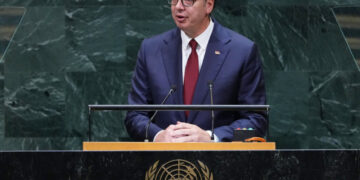
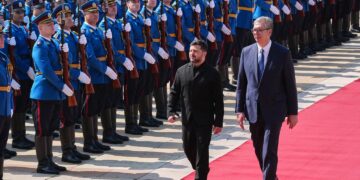
President of Serbia Aleksandar Vučić continues to play a decisive role by leading the Serb List, coordinating with international partners, and drawing clear political red lines on the Association of Serb Municipalities (ASM) and the protection of the rights of the Serb community. His strategy combines the domestic mobilisation of the Serb electorate with regional and international pressure on Pristina, reinforcing the strategic weight of Serb List MPs in the process of electing Kosovo’s next President.
Russia and China: a geopolitical framework rather than an electoral factor
Russia and China have limited direct influence on the electoral process in Kosovo, but they carry considerable symbolic and geopolitical relevance. Moscow firmly aligns with Serbia’s position, embedding the Kosovo issue within a broader narrative on international law and the selective application of state recognition. Beijing, although more cautious in its engagement, continues to withhold recognition of Kosovo and to support Serbia’s territorial integrity. Rather than shaping election results, their role lies in influencing the broader international context that limits Kosovo’s full participation and agency in global political affairs.
Turkey: a distinctive international actor and a supporter of Albanian political forces in Kosovo
Turkey occupies a notable yet distinctive position in Kosovo’s political landscape. Ankara has traditionally supported Albanian political forces, including the Self-Determination Movement (LVV) and other pro-Albanian parties, through political, military, economic, and cultural cooperation. At the same time, Turkey acts as an intermediary between Kosovo and Western allies, emphasising the importance of the country’s multiethnic character and regional stability. While Turkish support can enhance the legitimacy of certain political actors, it does not outweigh the decisive influence of the US and the EU.
The international factor operates in conjunction with internal political and socio-economic pressures. Institutional stability, citizens’ economic expectations, and the security situation in northern Kosovo form the core framework for both the electoral process and its aftermath. High youth unemployment, emigration trends, inflationary pressures, rising energy costs, social transfers, and perceptions of corruption help explain the resilience of Kurti’s electoral base.
Election outcomes are also affected by the use of “soft power” instruments, hybrid threats, disinformation, social media, and media narratives, as well as the role of regional and extra-regional actors, particularly Serbia and Russia. Although limited, low voter turnout also plays a role, particularly in shaping perceptions of the electoral process’s legitimacy.
Electoral projections and post-election scenarios
Based on opinion polling, current political trends, and the international climate, the most plausible scenario points to a victory for the Self-Determination Movement (LVV), albeit without an absolute guarantee of governing stability thereafter. Should the LVV secure more than 61 seats—including potential backing from minority representatives—Albin Kurti would be well-positioned to form a government on his own. While such an outcome would facilitate the continuation of his reform agenda, it would also intensify international pressure to adopt a pragmatic stance in the dialogue with Serbia. A clear distinction must be made between electoral success and genuine governing capacity; international expectations place limits on sovereignty-focused narratives and carry the risk of political isolation should tensions with partners escalate.
A second, more moderate scenario foresees a relative majority for the LVV (55–60 seats), necessitating cooperation with minority communities and smaller Albanian parties. Under such circumstances, the Serb List and other minority MPs would gain strategic weight; however, they would lack the capacity to independently determine government formation, as their leverage would remain contingent on negotiated compromises.
A third, less probable scenario involves a fragmented parliament with no clear majority, opening the way for protracted negotiations, a caretaker government, or fresh elections. In this eventuality, the international community would exert strong diplomatic pressure to forestall institutional deadlock.
While the international factor will not directly determine the electoral winner, it remains a decisive force in shaping the post-election landscape. Irrespective of the final result, the incoming administration will confront heightened expectations from Western partners, limited manoeuvring space, and persistent pressure to strike a balance between domestic political legitimacy and international acceptance. This delicate equilibrium will be central to Kosovo’s stability in 2026.
Post-election period: heightened international expectations and sustained regional pressure
Kosovo’s early parliamentary elections, slated for 28 December 2025, transcend the routine democratic process. They represent a test of institutional resilience, the credibility of political elites, and the international community’s capacity for crisis management in the Western Balkans. Regardless of the final outcome, the incoming government will navigate a constrained sovereign space, defined by strong international expectations and persistent regional pressure.
The primary challenges facing Kosovo in 2026 will include the formation of a functional government, the adoption of the state budget, progress in normalising relations with Serbia, the management of security risks, and the safeguarding of the country’s multi-ethnic social fabric. While the electoral outcome will dictate the tempo of political activity, it will not shift the fundamental trajectory of a process that remains heavily influenced by international factors.
In the aftermath of the elections, priority must be given to stability and institutional continuity over the interests of any single winning camp. Effective coordination between the US, the EU, and the UK remains critical, coupled with a strict avoidance of unilateral actions—particularly in northern Kosovo—in order to safeguard regional security and uphold the legitimacy of Kosovo’s institutions.
Implications of parliamentary elections for the presidential vote in April 2026
The outcome of the early parliamentary elections scheduled for 28 December 2025 will have a direct bearing on the election of the President of Kosovo in April 2026. As the President is elected by the Assembly with a two-thirds majority in the first two rounds (80 of 120 MPs), followed by a simple majority in the third round, the post-election balance of power in parliament becomes a central determinant of the process.
Should LVV secure a clear parliamentary majority, the presidential election is likely to unfold in a stable and predictable institutional manner. Nevertheless, securing backing from elements of the opposition or minority representatives during the initial rounds would remain necessary, creating an opening for negotiation and political compromise. Ultimately, the process remains inherently consensual rather than being reduced to a partisan monopoly.
In the event that LVV secures only a relative majority, falling short of an absolute number of seats, the presidential election may become increasingly complex, potentially leading to deadlocks and protracted negotiations. Such a situation would heighten the risk of institutional paralysis and amplify the involvement of the international community. A fragmented parliament remains the most volatile scenario, carrying the risk of constitutional crises, snap elections, or ad hoc arrangements that could erode institutional stability over the longer term.
The Serb List remains a pivotal political player. Representatives of the Serb community, acting in coordination with Belgrade, navigate the tension between institutional participation in Pristina and safeguarding Serbia’s strategic interests, thereby exerting a direct influence on the presidential outcome.
International stakeholders, most notably the US and leading EU member states, will view the process as an indicator of institutional resilience and the continuity of Kosovo’s foreign policy orientation. Their preference is likely to be for a moderate, consensus-driven candidate, able to serve as a stabilising corrective between the executive, the legislature, and international partners.
The role of national minorities—Bosniaks, Turks, the RAE community, and Gorani—provides additional flexibility in securing a two-thirds majority, yet entails a commitment to inclusiveness and political compromise. Meaningful engagement of minority representatives effectively bolsters the legitimacy of the electoral process and serves to counterbalance the competing interests of dominant Albanian and Serb political forces.
In practical terms, the election outcome will hinge on the interplay between LVV, opposition Albanian parties, and minority representatives, combined with coordination between the Serb List and Belgrade. The international community’s role remains pivotal in enabling compromise, averting a constitutional crisis, and safeguarding institutional stability.
Consequently, the December 2025 parliamentary elections will do more than merely decide the composition of the next government; they will establish the strategic parameters for the presidential election and the overall stability of the political system in the next cycle.