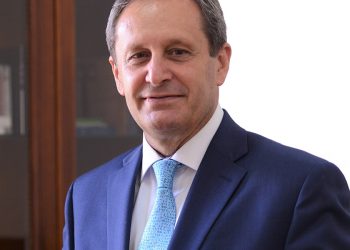


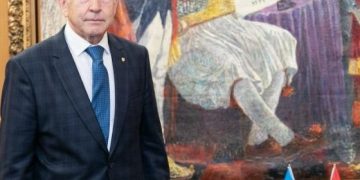

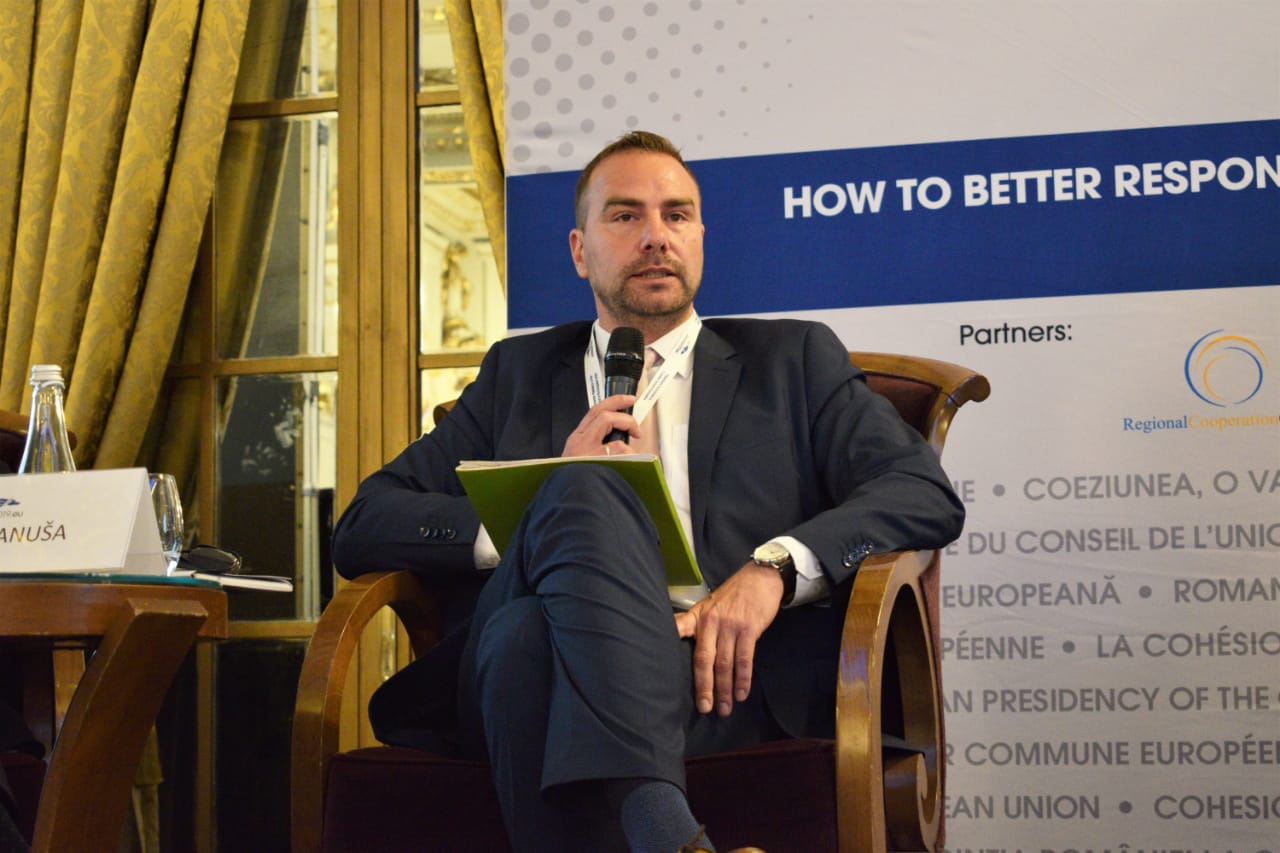
“I strongly believe that RYCO can serve as an example of how sincere cooperation is possible and how it gives result when you bring together governments, civil society, and all other relevant stakeholders to one table. We want to be an inspiration while working hard on achieving new results,” says RYCO Secretary General Djuro Blanusa
By Genc Mlloja
Senior Diplomatic Editor
“The significance of the International Youth Day is that we should all acknowledge the fact that we are having a lot in common – hopes, ideas, but also joint problems and challenges. This day is the moment to stop, look back, acknowledge and present what has been achieved so far… but also to remind those in power about their role and responsibilities towards young people.” This was a segment extracted from an interview that Albanian Daily News had with RYCO Secretary General Djuro Blanusa on the occasion of the International Youth Day which was marked on August 12.
The International Youth Day has been established by the United Nations General Assembly since 2000, and this year’s celebration is dedicated to young people’s contributions to conflict prevention and transformation, as well as inclusion, social justice, and sustainable peace.
“Our message was clear and focused on the transforming power of young people in general, not only of their education. We should not dismiss their enormous and unprecedented interest to make changes in their societies. Because of that, we need our governments, educational institutions, civil society, and media to act together and in the spirit of cooperation, not competition, if we want youth voices to be heard and to ensure a better perspective for our region and its young generations,” said Mr. Blanusa.
Asked about the main achievements of RYCO its Secretary General noted that the biggest success of RYCO so far is that it had already managed to support over two hundred secondary schools and youth organizations in the Western Balkans.
“This is not enough. We are just at the beginning. Fostering reconciliation and cooperation in the region is a long-lasting process,” Mr. Blanusa pointed out. In the meantime he revealed that RYCO is currently implementing several other projects supported by our partners – the European Union, United Nations Peace Building Fund, Norwegian, German and French governments. “Each of these projects is focusing on different issues related to the youth of our region, like volunteering, social innovation and youth entrepreneurship, etc.”
In a comment on the Poznan Summit held in early July this year, Mr. Blanusa said RYCO sincerely does not want to be the only “most tangible result of the Berlin Process”; we want to see more of these, in the interest and for all citizens of the region. If we want to make a success of the Berlin Process, we should have more initiatives and projects completed and functioning, not only agreed upon. “I believe that the time has come for our governments to act not only in their national interests but in the interest of the region as a whole and also in the shared interest of its citizens,” he said in the interview which follows:
– On the 12th of August the world observed the International Youth Day, established by the United Nations General Assembly since 2000. This year’s celebration is dedicated to young people’s contributions to conflict prevention and transformation, as well as inclusion, social justice, and sustainable peace. Which is the significance of such an event for the youth in the Western Balkans?
– This kind of events should serve not only youth but also governments, media, and educational institutions to remind and inspire them to take concrete and efficient actions especially having in mind the worrying, even alarming statistics on youth regarding their perception of “others”, political views, brain-drain, socio-economic prospects of the region, education, etc.
The significance of the International Youth Day is that we should all acknowledge the fact that we are having a lot in common – hopes, ideas, but also joint problems and challenges. This day is the moment to stop, look back, acknowledge and present what has been achieved so far… but also to remind those in power about their role and responsibilities towards young people.
– As a follow up, Mr. Secretary, which is the message conveyed by RYCO on that occasion?
This year’s theme of the International Youth Day was “Transforming education”. RYCO is actively working with the educational institutions from the Western Balkans on fostering cooperation and reconciliation in the region, and promoting intercultural learning, civic education and non-formal education. And this work is done every day, not just on this occasion.
Our message was clear and focused on the transforming power of young people in general, not only of their education. We should not dismiss their enormous and unprecedented interest to make changes in their societies. Because of that, we need our governments, educational institutions, civil society, and media to act together and in the spirit of cooperation, not competition, if we want youth voices to be heard and to ensure a better perspective for our region and its young generations.
– Prejudice and stereotyping continue to shape attitudes in the Western Balkans. Which are some of the key objectives of RYCO to overcome this culture of separation which is still prevalent in the region?
– RYCO is predominantly working on delivering high quality, high impact programs with and for young people, focusing on their access to mobility, exchange, and regional cooperation. But let me highlight here that prejudice and stereotyping is just the tip of the iceberg. Problems in our region have deeper roots – a never-changing culture of separation does not serve the interests of youth, the region or European integration. On top of this, we have a strong legacy of an absence of support for change and finally, potential partnerships are not being sufficiently leveraged in the region.
RYCO is focusing on tackling these issues in its everyday work not only through youth exchanges but also through advocacy campaigns, support to young people, organizations and institutions working with and for them, through raising awareness about the youth issues among the governments and international actors and finally, offering solutions for solving them.
– Which are some of the major projects carried by RYCO and I would appreciate your assessment – have they delivered?
– The biggest success of RYCO so far is that we have already managed to support over two hundred secondary schools and youth organizations in the region which will directly exchange over three thousand young people from the region in the upcoming period. The number of indirect beneficiaries goes beyond 50,000.
This is not enough. We are just at the beginning. Fostering reconciliation and cooperation in the region is a long-lasting process. We can speak about the concrete results when we manage to exchange hundreds of thousands of young people in the region and when we manage to influence our decision-makers in such a way that they are convinced that a new rhetoric is being used and a new spirit of cooperation is spread not just among youth, but also among all the people in the Western Balkans.
On the other hand, RYCO is currently implementing several other projects supported by our partners – the European Union, United Nations Peace Building Fund, Norwegian, German and French governments. Each of these projects is focusing on different issues related to the youth of our region, like volunteering, social innovation and youth entrepreneurship, etc.
– To be more concrete which are some of the messages and impressions of youth participating in various activities organized by you? Could you please quote some of the most significant youth exchange testimonials?
– Experiences of our colleagues who are visiting the projects supported by RYCO but also the testimonials we are getting from the young people taking part in RYCO youth exchanges are by default very positive and sometimes very emotional. Young people are always surprised how similar they are to their peers from the region as well as how identical problems youth are facing in their communities back home.
I can give you a concrete example from a project organized for young people from northern Albania and southern Serbia where one of the participants said: “We built a friendship with them in such a natural way, something that we really didn’t expect to do.” I challenge you to guess if this was a young person from Albania or Serbia.
– Mr. Blanusa you are an experienced politician being aware of the ordeals through which the Western Balkans has gone through, and there are still animosities between some regional countries. A frank answer to a straightforward question: Do you believe the effort for reconciliation in WB will become a reality and how can youth contribute to fostering it?
– If I and my colleagues would not believe that the change is achievable we would not do this job. I am absolutely convinced that there is no other way for our region than to reconcile and deepen cooperation among our societies if we want to progress. Otherwise, I am afraid we can only see our region further decaying.
Youth are the key actors in this change because it is about their own future. This generation in the Western Balkans is the most educated generation that our region has ever seen. But at the same time they are very impatient in the face of environmental disasters, social injustice, and discrimination. Moreover, they are impatient with the European Union as well as with public institutions because of a strong feeling of disconnection. Therefore, this is a generation that has a full right to expect and ask for more, while politicians should listen and act accordingly.
– For RYCO to be more effective and efficient in its noble ambition it needs the help of regional governments, political forces and other relevant institutions. What can you tell us in this respect?
– RYCO is thankful for the constructiveness and support provided to our organization by all the six governments from the region. But supporting only financially our work is just not enough. Political elites from the region should take care of their rhetoric but also the governments should keep promises given to the region’s young people. Moreover, it is not only about governments, politicians, and institutions. We always say that we need educational institutions, civil society, and media to act together and in the spirit of cooperation, if we want to ensure a better perspective for our region.
– In the meantime RYCO has the support of EU and other international organizations. Are you satisfied by their current support and encouragement, and what do you expect more from them?
Indeed, RYCO is thankful for the support provided by numerous international partners – the EU, OSCE, CoE, GIZ, SIDA… but also from non-Western Balkans governments who are unequivocally supporting our work – governments of France and Germany at the first place.
We are constantly working on scaling up this support for joint endeavors and what we are expecting is that these partnerships should be long-lasting ones.
– The Poznan Summit held on 3-5 July this year in the frame of the Berlin Process was a firm pledge of the Leaders of the participant countries towards the importance of young people for the future of the Western Balkans. In your address, Mr Blanusa, you pointed out that RYCO is still one of the most concrete results of the Berlin Process. After Poznan Summit what can you say on challenges and perspectives of RYCO’s work to cope with youth’s worries in the WB many of which were articulated there?
– RYCO sincerely does not want to be the only “most tangible result of the Berlin Process”; we want to see more of these, in the interest and for all citizens of the region. If we want to make a success of the Berlin Process, we should have more initiatives and projects completed and functioning, not only agreed upon. I believe that the time has come for our governments to act not only in their national interests but in the interest of the region as a whole and also in the shared interest of its citizens.
When it comes to the articulated issues you are mentioning, I want to underline that time has come to deliver altogether. We do not have time to waste if we want to make some progress. Young people are impatient to see this change and if we do not make it now they will look for a better future elsewhere as they are already doing.
-“A better region starts with youth,” was the catchy slogan echoed by you, Mr. Secretary, in Poznan which was welcomed by the participants. Do you think, Sir that it will get strength to turn from a slogan into a motto for action in the WB?
– We are working on this every day – pushing for more cooperation in the region and strengthening young people to take an active role in their societies. If you ask me, I think that a better region already started changing with youth. But it has just started. We need to work way more.
I strongly believe that RYCO can serve as an example of how sincere cooperation is possible and how it gives result when you bring together governments, civil society, and all other relevant stakeholders to one table. We want to be an inspiration while working hard on achieving new results. /ADN
© Argumentum.