







• SHQIPËRI
  • KOSOVË
  • MAQEDONIA E VERIUT
  • MALI I ZI
  • Revista në PDF
4 June, 2026
  • Home
  • OP/ED

    Cyber Attribution, Corruption, and the False-Flag Question in Albania’s 2022 Alleged Iranian Cyberattack

    Between Russia, Iran and Europe: Azerbaijan as a balancing power in the South Caucasus

    The Zero-Tariff Gate: Sovereignty as a Service in the Sino-African Corridor

    Albania vs. the Sea/ Marginal Notes on A. Leka’s Novel The Hidden Side of the Albanian Socialist Garden

    May 9 and the long shadow of a Letter: Is Europe still Schuman’s Project?

    The Arbnesh of Zadar: A living memory of Albanian identity on the Adriatic coast

    Science Diplomacy and Academic Freedom: A strategic nexus for contemporary diplomacy

    Serbia and Kosovo between new regional alliances and old geopolitical patterns

    Hungarian Writers and the European Spirit: Between Central Europe, Auschwitz, and Inner Exile

  • Interview

    Exclusive Interview with Oleksandr Tyshchenko: A 40-Year Legacy of Chernobyl, Nuclear Risks, and Global Responsibility

    INTERVIEW: ZLATKO KRAMARIĆ – THOUGHTS ON THE OLD CONTINENT

    EXCLUSIVE / Ukrainian Ambassador to Albania, Volodymyr Shkurov: “Ukraine wants peace, but not at the expense of its freedom and independence”

    EXCLUSIVE| Ambassador Tayyar Kagan Atay: Türkiye and Albania, a Strategic Partnership Rooted in Shared Heritage and a Common Vision for the Future

    “Diplomacy, Not War”: Palestinian Ambassador to Albania Calls for Justice, Peace, and Global Action for Gaza

    Exclusive: “Even After Tito – Tito”/ Ambassador Zlatko Kramarić on Authoritarian Legacies and Democracy’s Future in the Balkans

    The Conclusion of the Diplomatic Mission / Ambassador Dancho Markovski: Strengthening Albania-North Macedonia Relations for a Shared European Future

    A Century of Diplomatic Relations Between Albania and Russia: Exclusive Interview with the Russian Ambassador to Albania, H.E. Alexey Zaytsev

    Exclusive/ The chairman of the Freedom Party, Ilir Meta: “The will of the citizens will triumph in Albania, as it did in North Macedonia”

  • Realpolitik

    IBAR? ”Sufficiently! Much ado about nothing! Shart contrasts in Beijing! Where is the exit?!

    Neither peace nor war! Peace with bombs?! IBAR in autumn?! Not another Hormuz in Taivan! 

    IBAR – a springing board or an obstacle? Can we catch the EU Negotiation train 2027? When the dress makes the news!  EU electoral April  ends in a draw 1:1!  

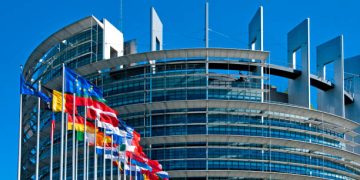
    The European Parliament building in Strasbourg, France with flags waving calmly celebrating peace of the Europe. July 12, 2020.

    EU 2027 or 2037! Even half membership failed! No exit strategy!     

    What next?

    “With diplomatic velvet“! Major question marks! In Washington yes, but  in the White House NO! A strange dinner in Brussels!

    From a great ‘apple of disaccord’ to a  point of  cooperation! A bad start! The strange absence in Davos!

    5 lessons from the American 3 January! Don’t count the chicken before they are hatched! Will NATO freeze in Greenland? Wrong diplomatic messages!

    German Chancellor Friedrich Merz, European Commission President Ursula von der Leyen, Ukraine's President Volodymyr Zelenskiy, U.S. Special Envoy Steve Witkoff and Jared Kushner, son-in-law of U.S. President Donald Trump line up for a family photo opportunity at the Chancellery in Berlin, Germany, December 15, 2025.    REUTERS/Lisi Niesner/Pool

    A Strategy that could change the world! Europe in Berlin! Why an historic compromise? Only charm diplomacy in Athens!

  • Current Events

    Serbia – China 2026: Technological partnership, geopolitical positioning and a new phase of the Chinese presence in the Western Balkans

    The Digital Protectorate: How the EU AI Act Codified Silicon Valley’s Monopoly

    The 28th MFC Annual Conference in Durrës / Sulaj: Microfinance remains a key instrument for financial inclusion

    Serbia at the Crossroads of EU Integration and Geopolitical Balancing: IFIMES Analysis

    Tirana – €20 Million EU–Banking Agreement Boosts Albanian SMEs

    The Myth of Independence: How Chinese Efficiency is Rewriting the Constitution of Modern Geopolitics!

    Europe Yesterday and Today: Why 9 May Still Matters

    “EU4Municipalities II” Project, a Strategic Investment for Strengthening Municipalities and Accelerating Albania’s Path towards the EU

    Eight Years in the Service of Identity: The Journey of the Montenegrin Community in Albania

  • Top News

    No End in Sight: Trump, Netanyahu and the Expanding Middle East War

    Tirana – €20 Million EU–Banking Agreement Boosts Albanian SMEs

    “EU4Municipalities II” Project, a Strategic Investment for Strengthening Municipalities and Accelerating Albania’s Path towards the EU

    Albania, Italy deepen defence ties with naval shipbuilding deal

    U.S. Embassy: Iran-Linked Groups May Target Americans and Iranian Opposition in Albania

    The Council of Albanian Ambassadors disappointed with the voting of the draft law on the foreign service in the parliamentary committees.

    Prime Minister Edi Rama Addresses Israel’s Knesset in Historic Special Session

    Kazakhstan’s Strategic Reform Agenda: Stability, Modern Governance, and Responsible Diplomacy

    Trump Invites Rama to Peace Board, Prime Minister: Proud of Albania

  • YOUR VOICE
  • Shqip
No Result
View All Result
Argumentum
  • Home
  • OP/ED

    Cyber Attribution, Corruption, and the False-Flag Question in Albania’s 2022 Alleged Iranian Cyberattack

    Between Russia, Iran and Europe: Azerbaijan as a balancing power in the South Caucasus

    The Zero-Tariff Gate: Sovereignty as a Service in the Sino-African Corridor

    Albania vs. the Sea/ Marginal Notes on A. Leka’s Novel The Hidden Side of the Albanian Socialist Garden

    May 9 and the long shadow of a Letter: Is Europe still Schuman’s Project?

    The Arbnesh of Zadar: A living memory of Albanian identity on the Adriatic coast

    Science Diplomacy and Academic Freedom: A strategic nexus for contemporary diplomacy

    Serbia and Kosovo between new regional alliances and old geopolitical patterns

    Hungarian Writers and the European Spirit: Between Central Europe, Auschwitz, and Inner Exile

  • Interview

    Exclusive Interview with Oleksandr Tyshchenko: A 40-Year Legacy of Chernobyl, Nuclear Risks, and Global Responsibility

    INTERVIEW: ZLATKO KRAMARIĆ – THOUGHTS ON THE OLD CONTINENT

    EXCLUSIVE / Ukrainian Ambassador to Albania, Volodymyr Shkurov: “Ukraine wants peace, but not at the expense of its freedom and independence”

    EXCLUSIVE| Ambassador Tayyar Kagan Atay: Türkiye and Albania, a Strategic Partnership Rooted in Shared Heritage and a Common Vision for the Future

    “Diplomacy, Not War”: Palestinian Ambassador to Albania Calls for Justice, Peace, and Global Action for Gaza

    Exclusive: “Even After Tito – Tito”/ Ambassador Zlatko Kramarić on Authoritarian Legacies and Democracy’s Future in the Balkans

    The Conclusion of the Diplomatic Mission / Ambassador Dancho Markovski: Strengthening Albania-North Macedonia Relations for a Shared European Future

    A Century of Diplomatic Relations Between Albania and Russia: Exclusive Interview with the Russian Ambassador to Albania, H.E. Alexey Zaytsev

    Exclusive/ The chairman of the Freedom Party, Ilir Meta: “The will of the citizens will triumph in Albania, as it did in North Macedonia”

  • Realpolitik

    IBAR? ”Sufficiently! Much ado about nothing! Shart contrasts in Beijing! Where is the exit?!

    Neither peace nor war! Peace with bombs?! IBAR in autumn?! Not another Hormuz in Taivan! 

    IBAR – a springing board or an obstacle? Can we catch the EU Negotiation train 2027? When the dress makes the news!  EU electoral April  ends in a draw 1:1!  

    The European Parliament building in Strasbourg, France with flags waving calmly celebrating peace of the Europe. July 12, 2020.

    EU 2027 or 2037! Even half membership failed! No exit strategy!     

    What next?

    “With diplomatic velvet“! Major question marks! In Washington yes, but  in the White House NO! A strange dinner in Brussels!

    From a great ‘apple of disaccord’ to a  point of  cooperation! A bad start! The strange absence in Davos!

    5 lessons from the American 3 January! Don’t count the chicken before they are hatched! Will NATO freeze in Greenland? Wrong diplomatic messages!

    German Chancellor Friedrich Merz, European Commission President Ursula von der Leyen, Ukraine's President Volodymyr Zelenskiy, U.S. Special Envoy Steve Witkoff and Jared Kushner, son-in-law of U.S. President Donald Trump line up for a family photo opportunity at the Chancellery in Berlin, Germany, December 15, 2025.    REUTERS/Lisi Niesner/Pool

    A Strategy that could change the world! Europe in Berlin! Why an historic compromise? Only charm diplomacy in Athens!

  • Current Events

    Serbia – China 2026: Technological partnership, geopolitical positioning and a new phase of the Chinese presence in the Western Balkans

    The Digital Protectorate: How the EU AI Act Codified Silicon Valley’s Monopoly

    The 28th MFC Annual Conference in Durrës / Sulaj: Microfinance remains a key instrument for financial inclusion

    Serbia at the Crossroads of EU Integration and Geopolitical Balancing: IFIMES Analysis

    Tirana – €20 Million EU–Banking Agreement Boosts Albanian SMEs

    The Myth of Independence: How Chinese Efficiency is Rewriting the Constitution of Modern Geopolitics!

    Europe Yesterday and Today: Why 9 May Still Matters

    “EU4Municipalities II” Project, a Strategic Investment for Strengthening Municipalities and Accelerating Albania’s Path towards the EU

    Eight Years in the Service of Identity: The Journey of the Montenegrin Community in Albania

  • Top News

    No End in Sight: Trump, Netanyahu and the Expanding Middle East War

    Tirana – €20 Million EU–Banking Agreement Boosts Albanian SMEs

    “EU4Municipalities II” Project, a Strategic Investment for Strengthening Municipalities and Accelerating Albania’s Path towards the EU

    Albania, Italy deepen defence ties with naval shipbuilding deal

    U.S. Embassy: Iran-Linked Groups May Target Americans and Iranian Opposition in Albania

    The Council of Albanian Ambassadors disappointed with the voting of the draft law on the foreign service in the parliamentary committees.

    Prime Minister Edi Rama Addresses Israel’s Knesset in Historic Special Session

    Kazakhstan’s Strategic Reform Agenda: Stability, Modern Governance, and Responsible Diplomacy

    Trump Invites Rama to Peace Board, Prime Minister: Proud of Albania

  • YOUR VOICE
  • Shqip
No Result
View All Result
Argumentum
No Result
View All Result
Home ENGLISH

Turkey: Erdogan seeks to achieve the dream of the empire’s rebirth

10 February, 2020
in ENGLISH, English OP/ED
A A
Share on FacebookShare on Twitter

We are coming closer to the centennial celebration of Atatürk’s establishment of the modern Turkish state while 100 years have already passed since the Ottoman Empire’s sunset. During the last decades, under Recep Tayyip Erdogan’s leadership as prime minister or president, Turkey has continuously grown economically and, in spite of certain domestic divisions (see the aborted coup of July, 2016), succeeded in strengthening an important regional geopolitical position and sought to become a global geopolitical power. Although Ankara denies officially it seeks the restoration of the Ottoman Empire, president Erdogan’s political and military moves prove otherwise.

In an article published at the end of last year by a Turkish journalist specialised in foreign affairs [1], Atatürk’s principle evoked in his celebrated speech concerning the battle of Sarakaya [2] according to which not only a single line should be defended but an entire area was recalled.

Consequently, Turkey must reconsider presently its defence zone which spreads from Qatar to Libya with Cyprus in the middle.

Assessing this fact, one finds that Turkey’s general policy of the last decades was circumscribed to this purpose and that political, military, economic and of other nature steps were taken to this end. The establishment of Turkey’s military bases abroad starting with the invasion of Cyprus in 1974 until the beginning of 2020, when the military involvement in Libya was decided (with a number of troops for training and cooperation; certain sources mention the readiness of sending around 2,000 men who fought on the Syrian front) underlines the said policy. In fact, sustaining such a number of troops in Libya generates tough logistical problems for Turkey as it has no efficient means for that yet. The display of a Turkish drone which left the country and reached Libya after landing in Cyprus only is not enough and, on the contrary, highlights the difficulties of securing the logistical support of an important number of troops in Libya. 

Establishing Turkey’s military bases abroad was done by skilfully using the regional political and military developments. The most telling example besides Libya is the Tariq Ibn Ziyad base in Qatar completed in 2019. In Iraq, Turkey has around 20 small-scale military bases predominantly for intelligence gathering. Six bases were established in northern Syria with a publicly unknown number of military assigned there. Most probably each of them are equalling at least an infantry company with additional units of artillery and tanks. The intent of setting up a military base in Georgia did not materialise.

Turkish diplomacy plays an important part in materialising president Erdogan’s geopolitical plans and when Ahmet Davutoglu was minister of foreign affairs (2009-2014) important steps were adopted for expanding the diplomatic component of Turkish foreign policy. It seems that now the diplomatic apparatus put in place by Turkey and its quality represents an efficient support for the foreign policy Ankara is currently promoting.

On the military component which is supposed to play an even more important role in strengthening and preserving the influence area wished for by Ankara leadership, one should mention that although Turkey has one of the strongest armies in the world (NATO’s second and the 19th worldwide, according to Global Fire Power) it is not fully equipped to meet that challenge. After the aborted coup of July 15th, 2016, the management capacity of the army was severely damaged by the arrests, sentencing and dismissals that followed thereafter and even in 2019 (163 generals and admirals – 45% of the army’s total) the effects of which could be offset within around 5-10 years.

President Recep Tayyip Erdogan (prime minister between 2003-2014, president thereafter and re-elected in 2018) rules with a firm hand the country and, through the constitutional amendments that were adopted, he succeeded in concentrating the executive power in his hands and to compete for a third term in 2023. Hakan Fidan, the powerful head of MIT (National Intelligence Organization) who secures the president’s position played a pivotal role in annihilating the 2016 coup attempt and is considered one of the president’s main proponents. 

Notwithstanding the achievements and the long political career, president Erdogan’s regime begins to present some signs of weakness and the most recent and important one was the presidential party AKP loss of Istanbul’s mayor ship which was taken over by the candidate of the main opposition party, The People’s Republican Party (CHP) – Ekrem Imamoglu. The latter opposes the Istanbul Channel project [3] , an idea launched by president Erdogan in 2011 and which materialisation the government intends to get started as of 2020.

The current Turkey’s economic condition is relatively healthy although in 2018 the economy contracted shortly and the national currency devaluated by 30 % and the European Bank for Reconstruction and Development assessed in May 2019 a gradual recovery and an economic growth of 2.5% in 2020.

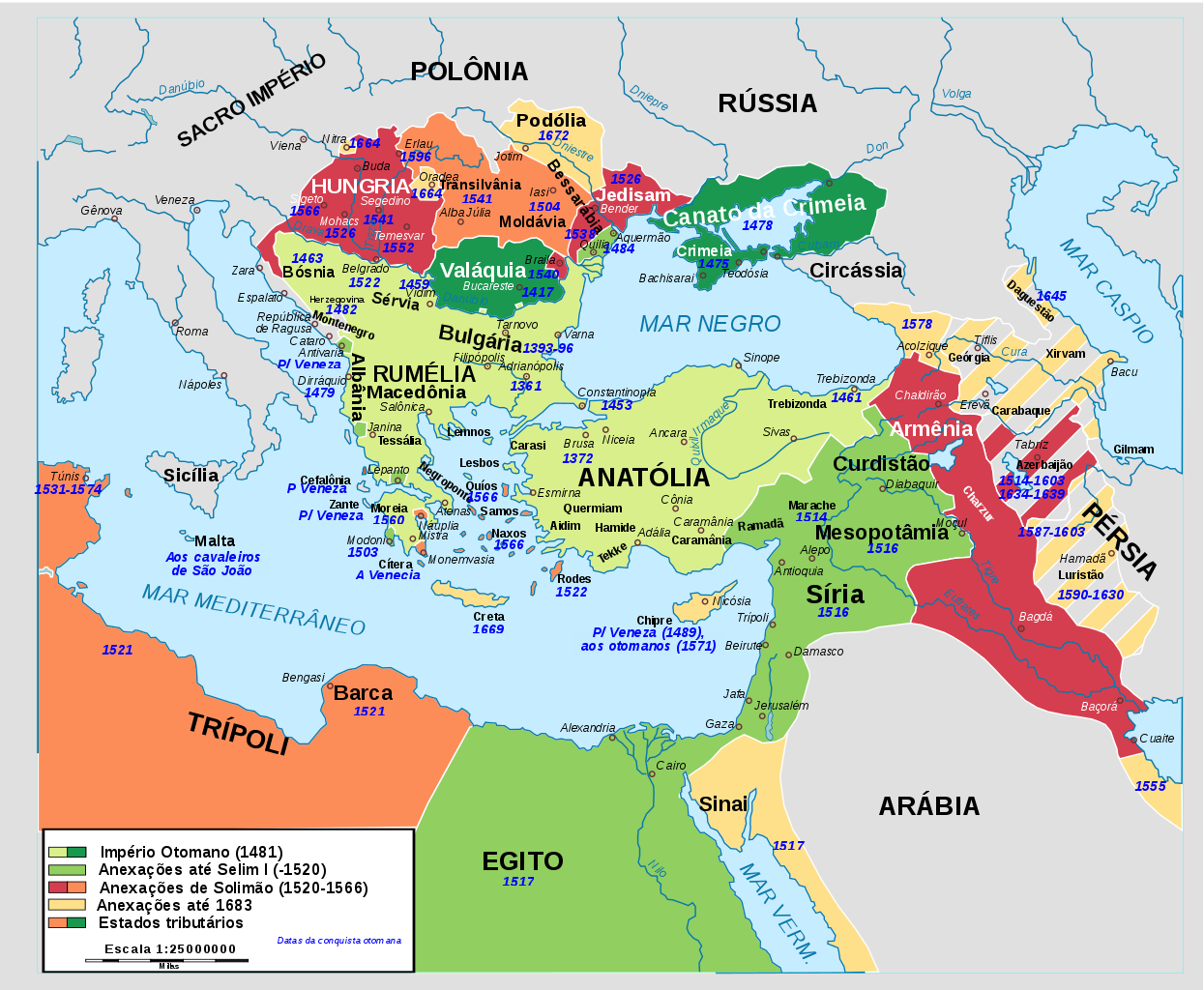
Turkey, which is dependent on energy inputs, cares about making best use of its geostrategic position by building gas pipelines (Turkish Stream started in 2017 and was commissioned on January 1st, 2020) and seeks favourable conditions for exploiting the Mediterranean Sea resources in spite of the tense situation resulted from delineating the marine economic zones (see the map below).

Moreover, in a move intended to make it an unavoidable arbiter in the Mediterranean, Ankara signed with Libya, on November 27th, 2019, a MoU on delineating the continental shelf of the two countries which would practically divide the Mediterranean in two.

The move could hinder the 1,900 km East Med pipeline to be built by Greece, Cyprus and Israel for which the final decision should be taken by 2022 and to be completed by 2025.

Libya represents an important pole for carrying out Ankara’s plans. The situation in the country is complicated and fluid not only as a result of the domestic developments but also especially due to the conflict between the two powerful groups of Prime Minister Fayez al-Serraj who heads the Government of National Accord (GNA), recognized by the UN and General Khalifa Haftar who, supported by Russia, France and the United Arab Emirates, controls a great part of the country and who, during the Berlin conference, suspended most exports of Libyan crude in order to have a stronger negotiation position. 


General (Rtd) Corneliu Pivariu, 

Furthermore, in spite of the recent agreement reached in Berlin with provisions prohibiting arms deliveries and foreign intervention in Libya, an important traffic including weapons and ammunition deliveries and foreign ”counsellors” was noticed at Tripoli Airport at the end of January. Turkey’s consolidation of its presence and influence in Libya is seen by certain forces as a danger that may lead to the establishment of an Islamist regime in the country given that GNA has the backing of several Islamist groups as well as the well-known support Turkey extended to the Muslim Brotherhood in Egypt. It is believed that if there is no international intervention for a cease fire – which I don’t see materialised in the coming future – the most probable result of the Turkish intervention will be the establishment of another Islamist regime in the Mediterranean.

The accomplishment of Turkey’s plan of restoring an important influence area from the Gulf to the Mediterranean, between Doha and Tripoli, seems doable given the uncertain geopolitical developments regionally and globally. Ankara used to this end the most modern means and international media outlets emphasized that cyber-attacks in 2018 and 2019 that would have originated in Turkey against around 50 state and not only institutions in Greece, Cyprus and Iraq were recently exposed.

The latest developments by the end of January 2020 prove once more the fragility and complexity of the situation in the Mediterranean and the inefficiency of the Berlin Agreement: France accuses Turkey of not observing the agreement signed in the German capital and sent to Libya Syrian mercenaries landed off Turkish vessels while Turkey accuses France of supporting Khalifa Haftar in search of benefits in the oil field. Moreover, France decided to dispatch military frigates to the east of the Mediterranean to assist Greece, a decision applauded by the Greek prime minister while visiting Paris.

Under Erdogan’s leadership, Turkey moves resolved towards maximizing its geopolitical role and position capitalizing on great players’ hesitations (the US, China, Russia). It is difficult to estimate to what extent it will accomplish such plans.

“If you are not fighting for what you want you deserve what you have”, a renowned American speaker and writer said. How great it would be if this phrase were put into practice with due regard for all principles and norms of international law. Unfortunately, the right of force is still stronger than the force of rule and therefore vae victis.

About the author: 
Corneliu Pivariu is a highly decorated two-star general of the Romanian army (Rtd).He has founded and led one of the most influential magazines on geopolitics and international relations in Eastern Europe, the bilingual journal Geostrategic Pulse, for two decades.


Ljubljana, 10 February 2020

  • Link (ENG): https://www.ifimes.org/en/9767  (Research – General (Rtd) Corneliu Pivariu – Turkey: Erdogan seeks to achieve the dream of the empire’s rebirth)
Related Posts

Current Events

Serbia – China 2026: Technological partnership, geopolitical positioning and a new phase of the Chinese presence in the Western Balkans

1 June, 2026
ENGLISH

IBAR? ”Sufficiently! Much ado about nothing! Shart contrasts in Beijing! Where is the exit?!

1 June, 2026
ENGLISH

How Alkida Lushaj is redefining democratic inclusion globally

31 May, 2026

Follow US

Subscribe

Receive Argumentum Magazine by Email

Last Posts

Serbia – China 2026: Technological partnership, geopolitical positioning and a new phase of the Chinese presence in the Western Balkans

1 June, 2026

IBAR? ”Sufficiently! Much ado about nothing! Shart contrasts in Beijing! Where is the exit?!

1 June, 2026

How Alkida Lushaj is redefining democratic inclusion globally

31 May, 2026

Cyber Attribution, Corruption, and the False-Flag Question in Albania’s 2022 Alleged Iranian Cyberattack

30 May, 2026

The Digital Protectorate: How the EU AI Act Codified Silicon Valley’s Monopoly

30 May, 2026
Argumentum

“Argumentum”, një proces intelektual …

Contact Us

[email protected]
[email protected]
[email protected]

Follow Us

Media Partner

Register

Receive Argumentum Magazine by Email
  • Home
  • Privacy Policy
  • About Us
  • Contact

© 2022 Argumentum. All Rights Reserved. | NUIS: L91415033Q

Welcome Back!

Login to your account below

Forgotten Password? Sign Up

Create New Account!

Fill the forms bellow to register

*By registering into our website, you agree to the Terms & Conditions and Privacy Policy.
All fields are required. Log In

Retrieve your password

Please enter your username or email address to reset your password.

Log In

Add New Playlist

No Result
View All Result
  • Home
  • OP/ED
  • Interview
  • Realpolitik
  • Current Events
  • Top News
  • YOUR VOICE
  • Shqip

© 2022 Argumentum. All Rights Reserved. | NUIS: L91415033Q

This website uses cookies. By continuing to use this website you are giving consent to cookies being used. Visit our Privacy and Cookie Policy.