









• SHQIPËRI
  • KOSOVË
  • MAQEDONIA E VERIUT
  • MALI I ZI
  • Revista në PDF
15 June, 2026
  • Home
  • OP/ED

    The visit that changed Albania’s strategic future

    Pierre Nora and the institution of memory we lack in Eastern Europe

    The Blueprint of a Diplomatic Debacle: Analyzing Germany’s Historic UNSC Loss

    Between Russia, Iran and Europe: Azerbaijan as a balancing power in the South Caucasus

    The Zero-Tariff Gate: Sovereignty as a Service in the Sino-African Corridor

    Albania vs. the Sea/ Marginal Notes on A. Leka’s Novel The Hidden Side of the Albanian Socialist Garden

    May 9 and the long shadow of a Letter: Is Europe still Schuman’s Project?

    The Arbnesh of Zadar: A living memory of Albanian identity on the Adriatic coast

    Science Diplomacy and Academic Freedom: A strategic nexus for contemporary diplomacy

  • Interview

    Exclusive Interview with Oleksandr Tyshchenko: A 40-Year Legacy of Chernobyl, Nuclear Risks, and Global Responsibility

    INTERVIEW: ZLATKO KRAMARIĆ – THOUGHTS ON THE OLD CONTINENT

    EXCLUSIVE / Ukrainian Ambassador to Albania, Volodymyr Shkurov: “Ukraine wants peace, but not at the expense of its freedom and independence”

    EXCLUSIVE| Ambassador Tayyar Kagan Atay: Türkiye and Albania, a Strategic Partnership Rooted in Shared Heritage and a Common Vision for the Future

    “Diplomacy, Not War”: Palestinian Ambassador to Albania Calls for Justice, Peace, and Global Action for Gaza

    Exclusive: “Even After Tito – Tito”/ Ambassador Zlatko Kramarić on Authoritarian Legacies and Democracy’s Future in the Balkans

    The Conclusion of the Diplomatic Mission / Ambassador Dancho Markovski: Strengthening Albania-North Macedonia Relations for a Shared European Future

    A Century of Diplomatic Relations Between Albania and Russia: Exclusive Interview with the Russian Ambassador to Albania, H.E. Alexey Zaytsev

    Exclusive/ The chairman of the Freedom Party, Ilir Meta: “The will of the citizens will triumph in Albania, as it did in North Macedonia”

  • Realpolitik

    IBAR? ”Sufficiently! Much ado about nothing! Shart contrasts in Beijing! Where is the exit?!

    Neither peace nor war! Peace with bombs?! IBAR in autumn?! Not another Hormuz in Taivan! 

    IBAR – a springing board or an obstacle? Can we catch the EU Negotiation train 2027? When the dress makes the news!  EU electoral April  ends in a draw 1:1!  

    The European Parliament building in Strasbourg, France with flags waving calmly celebrating peace of the Europe. July 12, 2020.

    EU 2027 or 2037! Even half membership failed! No exit strategy!     

    What next?

    “With diplomatic velvet“! Major question marks! In Washington yes, but  in the White House NO! A strange dinner in Brussels!

    From a great ‘apple of disaccord’ to a  point of  cooperation! A bad start! The strange absence in Davos!

    5 lessons from the American 3 January! Don’t count the chicken before they are hatched! Will NATO freeze in Greenland? Wrong diplomatic messages!

    German Chancellor Friedrich Merz, European Commission President Ursula von der Leyen, Ukraine's President Volodymyr Zelenskiy, U.S. Special Envoy Steve Witkoff and Jared Kushner, son-in-law of U.S. President Donald Trump line up for a family photo opportunity at the Chancellery in Berlin, Germany, December 15, 2025.    REUTERS/Lisi Niesner/Pool

    A Strategy that could change the world! Europe in Berlin! Why an historic compromise? Only charm diplomacy in Athens!

  • Current Events

    Council of Albanian Ambassadors Backs Civic Protests, Calls for Transparency and Protection of National Interests

    Russian Ambassador in Tirana: “Without a Strong and Sovereign Russia, the Creation of a Just World Order Is Impossible”

    EU-Western Balkans Summit 2026: New Impetus for the Enlargement Debate?

    “The Flamingo Revolution”: Day 10 of Protests in Albania Draws International Attention

    Rama alleges ‘hybrid war’ behind protests against Kushner-linked coastal development

    BELGRADE, SERBIA - JUNE 18. 2020: Russian and Serbian flags on display during Russian Foreign Minister Sergei Lavrov's visit to the Liberators of Belgrade Memorial. Valery Sharifulin/TASS,Image: 533095429, License: Rights-managed, Restrictions: UWAGA! Zdjęcia zawierają oryginalny opis dostawcy (ITAR-TASS). Szczególnie w związku z agresją Rosji na Ukrainę mogą zawierać przekaz niezgodny z faktami. Zweryfikuj go przed publikacją, Model Release: no, Credit line: Valery Sharifulin / TASS / Forum

    Balkan Maskirovka: Why Moscow’s “Distancing” Is Only an Operation for the Survival of Vučić’s Regime

    Serbia – China 2026: Technological partnership, geopolitical positioning and a new phase of the Chinese presence in the Western Balkans

    The Digital Protectorate: How the EU AI Act Codified Silicon Valley’s Monopoly

    The 28th MFC Annual Conference in Durrës / Sulaj: Microfinance remains a key instrument for financial inclusion

  • Top News

    Russian Ambassador in Tirana: “Without a Strong and Sovereign Russia, the Creation of a Just World Order Is Impossible”

    “The Flamingo Revolution”: Day 10 of Protests in Albania Draws International Attention

    Rama alleges ‘hybrid war’ behind protests against Kushner-linked coastal development

    No End in Sight: Trump, Netanyahu and the Expanding Middle East War

    Tirana – €20 Million EU–Banking Agreement Boosts Albanian SMEs

    “EU4Municipalities II” Project, a Strategic Investment for Strengthening Municipalities and Accelerating Albania’s Path towards the EU

    Albania, Italy deepen defence ties with naval shipbuilding deal

    U.S. Embassy: Iran-Linked Groups May Target Americans and Iranian Opposition in Albania

    The Council of Albanian Ambassadors disappointed with the voting of the draft law on the foreign service in the parliamentary committees.

  • YOUR VOICE
  • Shqip
No Result
View All Result
Argumentum
  • Home
  • OP/ED

    The visit that changed Albania’s strategic future

    Pierre Nora and the institution of memory we lack in Eastern Europe

    The Blueprint of a Diplomatic Debacle: Analyzing Germany’s Historic UNSC Loss

    Between Russia, Iran and Europe: Azerbaijan as a balancing power in the South Caucasus

    The Zero-Tariff Gate: Sovereignty as a Service in the Sino-African Corridor

    Albania vs. the Sea/ Marginal Notes on A. Leka’s Novel The Hidden Side of the Albanian Socialist Garden

    May 9 and the long shadow of a Letter: Is Europe still Schuman’s Project?

    The Arbnesh of Zadar: A living memory of Albanian identity on the Adriatic coast

    Science Diplomacy and Academic Freedom: A strategic nexus for contemporary diplomacy

  • Interview

    Exclusive Interview with Oleksandr Tyshchenko: A 40-Year Legacy of Chernobyl, Nuclear Risks, and Global Responsibility

    INTERVIEW: ZLATKO KRAMARIĆ – THOUGHTS ON THE OLD CONTINENT

    EXCLUSIVE / Ukrainian Ambassador to Albania, Volodymyr Shkurov: “Ukraine wants peace, but not at the expense of its freedom and independence”

    EXCLUSIVE| Ambassador Tayyar Kagan Atay: Türkiye and Albania, a Strategic Partnership Rooted in Shared Heritage and a Common Vision for the Future

    “Diplomacy, Not War”: Palestinian Ambassador to Albania Calls for Justice, Peace, and Global Action for Gaza

    Exclusive: “Even After Tito – Tito”/ Ambassador Zlatko Kramarić on Authoritarian Legacies and Democracy’s Future in the Balkans

    The Conclusion of the Diplomatic Mission / Ambassador Dancho Markovski: Strengthening Albania-North Macedonia Relations for a Shared European Future

    A Century of Diplomatic Relations Between Albania and Russia: Exclusive Interview with the Russian Ambassador to Albania, H.E. Alexey Zaytsev

    Exclusive/ The chairman of the Freedom Party, Ilir Meta: “The will of the citizens will triumph in Albania, as it did in North Macedonia”

  • Realpolitik

    IBAR? ”Sufficiently! Much ado about nothing! Shart contrasts in Beijing! Where is the exit?!

    Neither peace nor war! Peace with bombs?! IBAR in autumn?! Not another Hormuz in Taivan! 

    IBAR – a springing board or an obstacle? Can we catch the EU Negotiation train 2027? When the dress makes the news!  EU electoral April  ends in a draw 1:1!  

    The European Parliament building in Strasbourg, France with flags waving calmly celebrating peace of the Europe. July 12, 2020.

    EU 2027 or 2037! Even half membership failed! No exit strategy!     

    What next?

    “With diplomatic velvet“! Major question marks! In Washington yes, but  in the White House NO! A strange dinner in Brussels!

    From a great ‘apple of disaccord’ to a  point of  cooperation! A bad start! The strange absence in Davos!

    5 lessons from the American 3 January! Don’t count the chicken before they are hatched! Will NATO freeze in Greenland? Wrong diplomatic messages!

    German Chancellor Friedrich Merz, European Commission President Ursula von der Leyen, Ukraine's President Volodymyr Zelenskiy, U.S. Special Envoy Steve Witkoff and Jared Kushner, son-in-law of U.S. President Donald Trump line up for a family photo opportunity at the Chancellery in Berlin, Germany, December 15, 2025.    REUTERS/Lisi Niesner/Pool

    A Strategy that could change the world! Europe in Berlin! Why an historic compromise? Only charm diplomacy in Athens!

  • Current Events

    Council of Albanian Ambassadors Backs Civic Protests, Calls for Transparency and Protection of National Interests

    Russian Ambassador in Tirana: “Without a Strong and Sovereign Russia, the Creation of a Just World Order Is Impossible”

    EU-Western Balkans Summit 2026: New Impetus for the Enlargement Debate?

    “The Flamingo Revolution”: Day 10 of Protests in Albania Draws International Attention

    Rama alleges ‘hybrid war’ behind protests against Kushner-linked coastal development

    BELGRADE, SERBIA - JUNE 18. 2020: Russian and Serbian flags on display during Russian Foreign Minister Sergei Lavrov's visit to the Liberators of Belgrade Memorial. Valery Sharifulin/TASS,Image: 533095429, License: Rights-managed, Restrictions: UWAGA! Zdjęcia zawierają oryginalny opis dostawcy (ITAR-TASS). Szczególnie w związku z agresją Rosji na Ukrainę mogą zawierać przekaz niezgodny z faktami. Zweryfikuj go przed publikacją, Model Release: no, Credit line: Valery Sharifulin / TASS / Forum

    Balkan Maskirovka: Why Moscow’s “Distancing” Is Only an Operation for the Survival of Vučić’s Regime

    Serbia – China 2026: Technological partnership, geopolitical positioning and a new phase of the Chinese presence in the Western Balkans

    The Digital Protectorate: How the EU AI Act Codified Silicon Valley’s Monopoly

    The 28th MFC Annual Conference in Durrës / Sulaj: Microfinance remains a key instrument for financial inclusion

  • Top News

    Russian Ambassador in Tirana: “Without a Strong and Sovereign Russia, the Creation of a Just World Order Is Impossible”

    “The Flamingo Revolution”: Day 10 of Protests in Albania Draws International Attention

    Rama alleges ‘hybrid war’ behind protests against Kushner-linked coastal development

    No End in Sight: Trump, Netanyahu and the Expanding Middle East War

    Tirana – €20 Million EU–Banking Agreement Boosts Albanian SMEs

    “EU4Municipalities II” Project, a Strategic Investment for Strengthening Municipalities and Accelerating Albania’s Path towards the EU

    Albania, Italy deepen defence ties with naval shipbuilding deal

    U.S. Embassy: Iran-Linked Groups May Target Americans and Iranian Opposition in Albania

    The Council of Albanian Ambassadors disappointed with the voting of the draft law on the foreign service in the parliamentary committees.

  • YOUR VOICE
  • Shqip
No Result
View All Result
Argumentum
No Result
View All Result
Home ENGLISH

The end of the first quarter of the 21st century, marked by significant searches for new global geopolitical balances

16 July, 2024
in ENGLISH, I pakategorizuar, In Focus
A A
Share on FacebookShare on Twitter

General (Rtd) Corneliu Pivariu*

Just as the 20th century, after two world wars, gave birth to a bipolar and then unipolar world order, it is very possible that not long after the first quarter of the 21st century, we will witness the birth of a new multipolar world order which, why not, could later transform into a new unipolar world order.

For now, the year 2024 seems to bring some clarifications regarding possible future geopolitical developments. 2024 is a year in which elections are held in many countries around the globe, representing approximately half of the world’s population, from the general elections in January 2024 in Taiwan to the presidential elections in the USA in November. We have already witnessed the European Parliament elections and the early general elections in France, as well as the historic victory of the Labour Party in the United Kingdom.

These elections are taking place amid a growing economic crisis, the conflict in Ukraine, and conflicts in the Middle East – especially in Gaza – and the increasing tensions between the United States and China, particularly in the economic field. Analysts who predicted major changes in the global political landscape brought by these elections have tempered their expectations, and as things have evolved so far, it will not be the 2024 elections that will primarily determine future geopolitical developments. Among the main themes that constitute the subject of this year’s elections, we mention: the rising cost of living, the transition to a green economy and climate change, a stronger shift towards right-wing politics (even far-right), the increasing external debts of states, defense and security, and the evolution of democracy.

Among the main important geopolitical actors who will influence future geopolitical developments, we will refer to two recent significant events, leaving for another occasion the analysis of other influences, such as the Big Five, other transnational organizations, or the 1% of the world’s wealthiest people (with NGOs or other organizations they lead, control, or are part of – a special mention for the World Economic Forum in Davos), who continue to get richer.

Of course, all these elements are intertwined and influence each other to a greater or lesser extent.
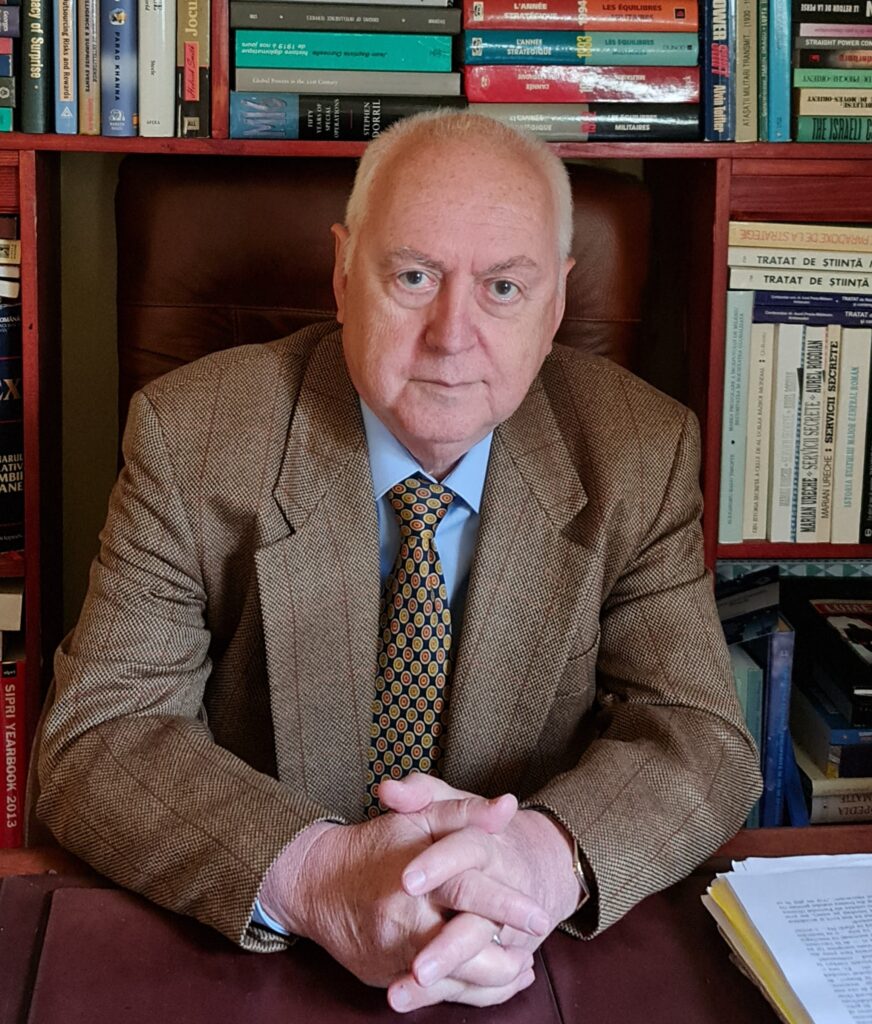
General (Rtd) Corneliu, Pivariu

Next, we will refer to the annual summit of the Shanghai Cooperation Organization (SCO)[2], held between July 3 and 4 in Astana. The first important action was the official acceptance of Belarus as a new member, thus bringing the organization to 10 members, along with important partners usually present at SCO meetings (Azerbaijan, Qatar, Turkey, Turkmenistan, United Arab Emirates), as well as Mongolia as an observer. Thus, SCO states cover 80% of the Eurasian land area, represent one-third of the world’s GDP, 40% of the global population, hold 20% of the world’s oil reserves, and 44% of natural gas. All have an average GDP growth of over 5% and an average inflation of 2.4% in the last year.

In the final declaration of the summit, SCO members stated that “tectonic changes are occurring in international relations,” “the norms of international law are being systematically violated,” and that SCO commits to “creating a new international democratic, equitable, political, and economic order.” Iran proposed the creation of a common SCO bank, a proposal received enthusiastically. Through the development of transport corridors, socio-economic integration, the elimination of external military presence, and the establishment of a new financial system based on their own currencies and not the US dollar, the aim is to create a “new security architecture in Eurasia.”

Of course, the rather cold relations between India and China, especially following border disputes and their inevitable rivalry, being the largest countries in terms of population, cannot go unnoticed.

The meeting between Putin and Xi was also significant, where they discussed the progress of the Power of Siberia 2 gas pipeline construction, allowing China to increase its influence in the former Soviet Union as long as the result will be Eurasian development, independent of the West.

Thus, the SCO meeting is shaping up as a prelude to the BRICS summit scheduled for October this year, considered one of the most important international meetings of the year.

Regarding the NATO Summit in Washington, the 33rd meeting marked the 75th anniversary of the alliance’s establishment on April 4, 1949, and was held from July 9 to 11 under the title “Ukraine and Transatlantic Security.” The main geopolitical developments following this event are:

– Strengthening the Eastern Flank by increasing presence in the Baltic States, Poland, and Romania in response to Russia’s military activities.

– Expanding NATO with Sweden and Finland, significantly strengthening NATO’s position in northern Europe, giving the Alliance greater control over the Baltic Sea region and the Nordic airspace, significantly changing the security configuration in northern Europe.

– Technological Innovations and Cyber Defense: NATO is intensifying efforts to face cyber threats, integrating new technologies such as artificial intelligence into defense strategies.

– Transatlantic Cooperation: The summit emphasized the importance of unity between the US and European allies in facing common challenges, including tensions with Russia and China.

The summit’s title was fully justified by the special attention given to the situation in Ukraine. Following the 38 points of the NATO Washington Declaration, there is a separate chapter in six points, titled “Long-Term Security Assistance Commitment to Ukraine”[3]. Also, on July 11, a Security Cooperation Agreement was signed between Romania and Ukraine by the presidents of the two countries. According to publicly declared by President Johannis, all other NATO member states have signed similar agreements with Ukraine[4].

What can be noted, both in the summit declaration and in the Agreement signed by Romania, is that there is no obligation for the Ukrainian side and no way to control how the funds provided are spent or how other aids are used.

Voices are already being heard saying that NATO is an old organization, and doubts are being expressed about its ability to reform. I remember well that the same thing was said immediately after the end of the Cold War, and NATO demonstrated that it is an alliance capable of adapting to the geopolitical developments that followed. I have no doubt that this is possible in the new much more complex geopolitical developments, but with one condition: politicians should pay more attention to the opinions of career military personnel and let the Alliance remain an organization where the military side has the relevance it should have as the world’s most powerful military alliance.

The increasing global geopolitical competition is also highlighted by several recent specific events that cannot be overlooked, among which I mention in random order: China’s participation in military exercises in Belarus and President Xi’s statement that if Russia is attacked, America will sink into the ocean; President Putin’s proposal to create a BRICS parliament (thus aiming to create a stronger cohesion of the organization, an idea probably inspired by the existence of the European Parliament); the attempted assassination of President Donald Trump[5], which will certainly have an important impact on the US elections. Generally, developments in the United States are closely watched and will significantly influence future geopolitical developments.

We are facing a series of major geopolitical problems, and I will list those considered the most important: the rise of China and its rivalry with the US; changes in the structure of alliances and partnerships; technological developments and cyber warfare; climate crises; regional tensions and conflicts; global multipolarity; demography and migration; energy and natural resources; economic instability and pandemics; the strengthening of national identities and the rise of populism.

These trends suggest an exceptionally complex and dynamic geopolitical future, with many new aspects, numerous challenges, but also opportunities for states and international organizations. Adapting to these changes and proactive, intuitive action will be crucial conditions for each country to find its place and role in this concert of the world’s nations, for maintaining global stability and security.

Most likely, by the middle of this century, we will witness the birth of a new multipolar world order (very likely after a new world conflict, unfortunately), and then its transformation into a unipolar world order./IFIMES

About the author: 

Corneliu Pivariu is a highly decorated two-star general of the Romanian army (Rtd). He has founded and led one of the most influential magazines on geopolitics and international relations in Eastern Europe, the bilingual journal Geostrategic Pulse, for two decades. General Pivariu is a member of IFIMES Advisory Board. 

Ljubljana/Brașov, 16 July 2024
Related Posts

Current Events

Council of Albanian Ambassadors Backs Civic Protests, Calls for Transparency and Protection of National Interests

12 June, 2026
Current Events

Russian Ambassador in Tirana: “Without a Strong and Sovereign Russia, the Creation of a Just World Order Is Impossible”

11 June, 2026
Balkan Overview

EU-Western Balkans Summit 2026: New Impetus for the Enlargement Debate?

10 June, 2026

Follow US

Subscribe

Receive Argumentum Magazine by Email

Last Posts

Council of Albanian Ambassadors Backs Civic Protests, Calls for Transparency and Protection of National Interests

12 June, 2026

Russian Ambassador in Tirana: “Without a Strong and Sovereign Russia, the Creation of a Just World Order Is Impossible”

11 June, 2026

EU-Western Balkans Summit 2026: New Impetus for the Enlargement Debate?

10 June, 2026

The visit that changed Albania’s strategic future

10 June, 2026

Serbia’s Lost Legal Battle and the Exploitation of Resolution 1244 for Lawfare and Terrorism

10 June, 2026
Argumentum

“Argumentum”, një proces intelektual …

Contact Us

[email protected]
[email protected]
[email protected]

Follow Us

Media Partner

Register

Receive Argumentum Magazine by Email
  • Home
  • Privacy Policy
  • About Us
  • Contact

© 2022 Argumentum. All Rights Reserved. | NUIS: L91415033Q

Welcome Back!

Login to your account below

Forgotten Password? Sign Up

Create New Account!

Fill the forms bellow to register

*By registering into our website, you agree to the Terms & Conditions and Privacy Policy.
All fields are required. Log In

Retrieve your password

Please enter your username or email address to reset your password.

Log In

Add New Playlist

No Result
View All Result
  • Home
  • OP/ED
  • Interview
  • Realpolitik
  • Current Events
  • Top News
  • YOUR VOICE
  • Shqip

© 2022 Argumentum. All Rights Reserved. | NUIS: L91415033Q

This website uses cookies. By continuing to use this website you are giving consent to cookies being used. Visit our Privacy and Cookie Policy.