













• SHQIPËRI
  • KOSOVË
  • MAQEDONIA E VERIUT
  • MALI I ZI
  • Revista në PDF
7 June, 2026
  • Home
  • OP/ED

    Pierre Nora and the institution of memory we lack in Eastern Europe

    The Blueprint of a Diplomatic Debacle: Analyzing Germany’s Historic UNSC Loss

    Cyber Attribution, Corruption, and the False-Flag Question in Albania’s 2022 Alleged Iranian Cyberattack

    Between Russia, Iran and Europe: Azerbaijan as a balancing power in the South Caucasus

    The Zero-Tariff Gate: Sovereignty as a Service in the Sino-African Corridor

    Albania vs. the Sea/ Marginal Notes on A. Leka’s Novel The Hidden Side of the Albanian Socialist Garden

    May 9 and the long shadow of a Letter: Is Europe still Schuman’s Project?

    The Arbnesh of Zadar: A living memory of Albanian identity on the Adriatic coast

    Science Diplomacy and Academic Freedom: A strategic nexus for contemporary diplomacy

  • Interview

    Exclusive Interview with Oleksandr Tyshchenko: A 40-Year Legacy of Chernobyl, Nuclear Risks, and Global Responsibility

    INTERVIEW: ZLATKO KRAMARIĆ – THOUGHTS ON THE OLD CONTINENT

    EXCLUSIVE / Ukrainian Ambassador to Albania, Volodymyr Shkurov: “Ukraine wants peace, but not at the expense of its freedom and independence”

    EXCLUSIVE| Ambassador Tayyar Kagan Atay: Türkiye and Albania, a Strategic Partnership Rooted in Shared Heritage and a Common Vision for the Future

    “Diplomacy, Not War”: Palestinian Ambassador to Albania Calls for Justice, Peace, and Global Action for Gaza

    Exclusive: “Even After Tito – Tito”/ Ambassador Zlatko Kramarić on Authoritarian Legacies and Democracy’s Future in the Balkans

    The Conclusion of the Diplomatic Mission / Ambassador Dancho Markovski: Strengthening Albania-North Macedonia Relations for a Shared European Future

    A Century of Diplomatic Relations Between Albania and Russia: Exclusive Interview with the Russian Ambassador to Albania, H.E. Alexey Zaytsev

    Exclusive/ The chairman of the Freedom Party, Ilir Meta: “The will of the citizens will triumph in Albania, as it did in North Macedonia”

  • Realpolitik

    IBAR? ”Sufficiently! Much ado about nothing! Shart contrasts in Beijing! Where is the exit?!

    Neither peace nor war! Peace with bombs?! IBAR in autumn?! Not another Hormuz in Taivan! 

    IBAR – a springing board or an obstacle? Can we catch the EU Negotiation train 2027? When the dress makes the news!  EU electoral April  ends in a draw 1:1!  

    The European Parliament building in Strasbourg, France with flags waving calmly celebrating peace of the Europe. July 12, 2020.

    EU 2027 or 2037! Even half membership failed! No exit strategy!     

    What next?

    “With diplomatic velvet“! Major question marks! In Washington yes, but  in the White House NO! A strange dinner in Brussels!

    From a great ‘apple of disaccord’ to a  point of  cooperation! A bad start! The strange absence in Davos!

    5 lessons from the American 3 January! Don’t count the chicken before they are hatched! Will NATO freeze in Greenland? Wrong diplomatic messages!

    German Chancellor Friedrich Merz, European Commission President Ursula von der Leyen, Ukraine's President Volodymyr Zelenskiy, U.S. Special Envoy Steve Witkoff and Jared Kushner, son-in-law of U.S. President Donald Trump line up for a family photo opportunity at the Chancellery in Berlin, Germany, December 15, 2025.    REUTERS/Lisi Niesner/Pool

    A Strategy that could change the world! Europe in Berlin! Why an historic compromise? Only charm diplomacy in Athens!

  • Current Events

    Rama alleges ‘hybrid war’ behind protests against Kushner-linked coastal development

    BELGRADE, SERBIA - JUNE 18. 2020: Russian and Serbian flags on display during Russian Foreign Minister Sergei Lavrov's visit to the Liberators of Belgrade Memorial. Valery Sharifulin/TASS,Image: 533095429, License: Rights-managed, Restrictions: UWAGA! Zdjęcia zawierają oryginalny opis dostawcy (ITAR-TASS). Szczególnie w związku z agresją Rosji na Ukrainę mogą zawierać przekaz niezgodny z faktami. Zweryfikuj go przed publikacją, Model Release: no, Credit line: Valery Sharifulin / TASS / Forum

    Balkan Maskirovka: Why Moscow’s “Distancing” Is Only an Operation for the Survival of Vučić’s Regime

    Serbia – China 2026: Technological partnership, geopolitical positioning and a new phase of the Chinese presence in the Western Balkans

    The Digital Protectorate: How the EU AI Act Codified Silicon Valley’s Monopoly

    The 28th MFC Annual Conference in Durrës / Sulaj: Microfinance remains a key instrument for financial inclusion

    Serbia at the Crossroads of EU Integration and Geopolitical Balancing: IFIMES Analysis

    Tirana – €20 Million EU–Banking Agreement Boosts Albanian SMEs

    The Myth of Independence: How Chinese Efficiency is Rewriting the Constitution of Modern Geopolitics!

    Europe Yesterday and Today: Why 9 May Still Matters

  • Top News

    Rama alleges ‘hybrid war’ behind protests against Kushner-linked coastal development

    No End in Sight: Trump, Netanyahu and the Expanding Middle East War

    Tirana – €20 Million EU–Banking Agreement Boosts Albanian SMEs

    “EU4Municipalities II” Project, a Strategic Investment for Strengthening Municipalities and Accelerating Albania’s Path towards the EU

    Albania, Italy deepen defence ties with naval shipbuilding deal

    U.S. Embassy: Iran-Linked Groups May Target Americans and Iranian Opposition in Albania

    The Council of Albanian Ambassadors disappointed with the voting of the draft law on the foreign service in the parliamentary committees.

    Prime Minister Edi Rama Addresses Israel’s Knesset in Historic Special Session

    Kazakhstan’s Strategic Reform Agenda: Stability, Modern Governance, and Responsible Diplomacy

  • YOUR VOICE
  • Shqip
No Result
View All Result
Argumentum
  • Home
  • OP/ED

    Pierre Nora and the institution of memory we lack in Eastern Europe

    The Blueprint of a Diplomatic Debacle: Analyzing Germany’s Historic UNSC Loss

    Cyber Attribution, Corruption, and the False-Flag Question in Albania’s 2022 Alleged Iranian Cyberattack

    Between Russia, Iran and Europe: Azerbaijan as a balancing power in the South Caucasus

    The Zero-Tariff Gate: Sovereignty as a Service in the Sino-African Corridor

    Albania vs. the Sea/ Marginal Notes on A. Leka’s Novel The Hidden Side of the Albanian Socialist Garden

    May 9 and the long shadow of a Letter: Is Europe still Schuman’s Project?

    The Arbnesh of Zadar: A living memory of Albanian identity on the Adriatic coast

    Science Diplomacy and Academic Freedom: A strategic nexus for contemporary diplomacy

  • Interview

    Exclusive Interview with Oleksandr Tyshchenko: A 40-Year Legacy of Chernobyl, Nuclear Risks, and Global Responsibility

    INTERVIEW: ZLATKO KRAMARIĆ – THOUGHTS ON THE OLD CONTINENT

    EXCLUSIVE / Ukrainian Ambassador to Albania, Volodymyr Shkurov: “Ukraine wants peace, but not at the expense of its freedom and independence”

    EXCLUSIVE| Ambassador Tayyar Kagan Atay: Türkiye and Albania, a Strategic Partnership Rooted in Shared Heritage and a Common Vision for the Future

    “Diplomacy, Not War”: Palestinian Ambassador to Albania Calls for Justice, Peace, and Global Action for Gaza

    Exclusive: “Even After Tito – Tito”/ Ambassador Zlatko Kramarić on Authoritarian Legacies and Democracy’s Future in the Balkans

    The Conclusion of the Diplomatic Mission / Ambassador Dancho Markovski: Strengthening Albania-North Macedonia Relations for a Shared European Future

    A Century of Diplomatic Relations Between Albania and Russia: Exclusive Interview with the Russian Ambassador to Albania, H.E. Alexey Zaytsev

    Exclusive/ The chairman of the Freedom Party, Ilir Meta: “The will of the citizens will triumph in Albania, as it did in North Macedonia”

  • Realpolitik

    IBAR? ”Sufficiently! Much ado about nothing! Shart contrasts in Beijing! Where is the exit?!

    Neither peace nor war! Peace with bombs?! IBAR in autumn?! Not another Hormuz in Taivan! 

    IBAR – a springing board or an obstacle? Can we catch the EU Negotiation train 2027? When the dress makes the news!  EU electoral April  ends in a draw 1:1!  

    The European Parliament building in Strasbourg, France with flags waving calmly celebrating peace of the Europe. July 12, 2020.

    EU 2027 or 2037! Even half membership failed! No exit strategy!     

    What next?

    “With diplomatic velvet“! Major question marks! In Washington yes, but  in the White House NO! A strange dinner in Brussels!

    From a great ‘apple of disaccord’ to a  point of  cooperation! A bad start! The strange absence in Davos!

    5 lessons from the American 3 January! Don’t count the chicken before they are hatched! Will NATO freeze in Greenland? Wrong diplomatic messages!

    German Chancellor Friedrich Merz, European Commission President Ursula von der Leyen, Ukraine's President Volodymyr Zelenskiy, U.S. Special Envoy Steve Witkoff and Jared Kushner, son-in-law of U.S. President Donald Trump line up for a family photo opportunity at the Chancellery in Berlin, Germany, December 15, 2025.    REUTERS/Lisi Niesner/Pool

    A Strategy that could change the world! Europe in Berlin! Why an historic compromise? Only charm diplomacy in Athens!

  • Current Events

    Rama alleges ‘hybrid war’ behind protests against Kushner-linked coastal development

    BELGRADE, SERBIA - JUNE 18. 2020: Russian and Serbian flags on display during Russian Foreign Minister Sergei Lavrov's visit to the Liberators of Belgrade Memorial. Valery Sharifulin/TASS,Image: 533095429, License: Rights-managed, Restrictions: UWAGA! Zdjęcia zawierają oryginalny opis dostawcy (ITAR-TASS). Szczególnie w związku z agresją Rosji na Ukrainę mogą zawierać przekaz niezgodny z faktami. Zweryfikuj go przed publikacją, Model Release: no, Credit line: Valery Sharifulin / TASS / Forum

    Balkan Maskirovka: Why Moscow’s “Distancing” Is Only an Operation for the Survival of Vučić’s Regime

    Serbia – China 2026: Technological partnership, geopolitical positioning and a new phase of the Chinese presence in the Western Balkans

    The Digital Protectorate: How the EU AI Act Codified Silicon Valley’s Monopoly

    The 28th MFC Annual Conference in Durrës / Sulaj: Microfinance remains a key instrument for financial inclusion

    Serbia at the Crossroads of EU Integration and Geopolitical Balancing: IFIMES Analysis

    Tirana – €20 Million EU–Banking Agreement Boosts Albanian SMEs

    The Myth of Independence: How Chinese Efficiency is Rewriting the Constitution of Modern Geopolitics!

    Europe Yesterday and Today: Why 9 May Still Matters

  • Top News

    Rama alleges ‘hybrid war’ behind protests against Kushner-linked coastal development

    No End in Sight: Trump, Netanyahu and the Expanding Middle East War

    Tirana – €20 Million EU–Banking Agreement Boosts Albanian SMEs

    “EU4Municipalities II” Project, a Strategic Investment for Strengthening Municipalities and Accelerating Albania’s Path towards the EU

    Albania, Italy deepen defence ties with naval shipbuilding deal

    U.S. Embassy: Iran-Linked Groups May Target Americans and Iranian Opposition in Albania

    The Council of Albanian Ambassadors disappointed with the voting of the draft law on the foreign service in the parliamentary committees.

    Prime Minister Edi Rama Addresses Israel’s Knesset in Historic Special Session

    Kazakhstan’s Strategic Reform Agenda: Stability, Modern Governance, and Responsible Diplomacy

  • YOUR VOICE
  • Shqip
No Result
View All Result
Argumentum
No Result
View All Result
Home ENGLISH

War and Peace in Israel: A Dual Reality!

3 October, 2024
in ENGLISH, English OP/ED
A A
Share on FacebookShare on Twitter

By Gledis NANO*

Israel’s past and present are inextricably linked to the concept of peace and war. Since its establishment in 1948, Israel has existed in a hope-filled duality: the hope for a lasting peace and the threat of war that seems to loom always on the horizon. This complex relationship with the hope for peace and the threat of war invites—and perhaps even demands—some exploration, especially as it pertains to the naive notion that reconciliation requires no conflict; that war is not an inevitable prerequisite on the path to peace. The Israeli experience excels in paradox. It is the living duality of hope and threat.

The dream of a homeland for Jews was fulfilled in 1948 when the modern State of Israel was founded. But it didn’t bring peace—far from it. That same year, the neighboring Arab nations went to war with Israel, determined to prevent its establishment. They lost—the Arab Israeli War ended with Israel firmly on the map. Yet what happened next is equally significant: The Israeli government, in the name of “Independence,” began to memorialize the event not as a war, but as a peace effort.

Israel’s security situation, since the founding of the state, has always tended to exist along this precarious balance of power. The Six-Day War in 1967 pitted Israel against a coalition of Egypt, Jordan, and Syria. The outcome, however, was a remaking of the conflict, not the remaking of the state of Israel. Israel emerged victorious again but did not truly win the peace. Instead, the war brought Palestinians under Israel’s direct control: alongside the territory of the West Bank, the Gaza Strip, and East Jerusalem, all now collectively seen as the Palestinian territories. In short, the war brought Israel’s citizens security, gave the IDF(S) peace on the fronts where they had fought, and enhanced Israel’s regional prestige. But it was a short-term win that, in the long term, not only left unexamined the internal tensions in Israeli society and the Palestinian “problem” alongside the Israel “issue,” but also enhanced both.
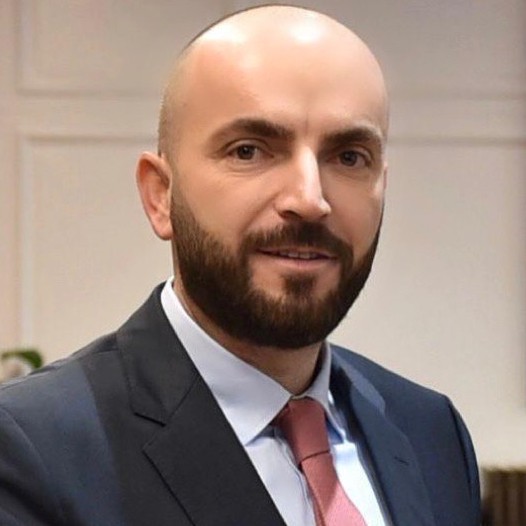
The Author, Mr. Gledis NANO

Even with all the frustrations and roadblocks, Israel has yet to achieve a prominent peace in its epoch. Still, there have been enormous strides made toward peace in Israel’s history. The 1979 Camp David Accords were a significant breakthrough. They were groundbreaking because, with one accord, they signaled peace between Israel and an Arab nation. To be sure, the treaty has held fast and firm up to this very day without any signs of erosion or collapse. In my opinion, what has happened has been completely unprecedented. An Arab country has recapitulated and reaffirmed what a Jewish historian wrote in his book called “The Siege.”

Nevertheless, not all peace processes have turned out that way. The hope expressed in the 1990s by the signing of the Oslo Accords between Israel and the Palestine Liberation Organization (PLO) was that the Israeli-Palestinian conflict might find a peaceful resolution; yet, at several points during the accords, it became necessary to reaffirm that these two sides had agreed to an understanding. That effort culminated in the formation of a two-state solution, which, even as the words leave the mouth of anyone even vaguely familiar with the situation, offers renewed hope that these two disparate societies might find a way to coalesce—to live, as they say, “side by side.” By contrast, the fears incited by the Second Intifada find both societies once again far apart, with no way to attain peace in this period of hope.

In the past few years, Israel has reached peace agreements with several Arab countries, such as the United Arab Emirates and Bahrain, thanks to the Abraham Accords. These accords indeed represent a new era of normalization between Israel and some of its Arab neighbors. Yet, they have done little or nothing to tackle the core issue of the Israeli-Palestinian conflict. While the accords have opened new avenues for diplomacy and economic cooperation, the Israeli-Palestinian conflict remains unresolved, raising questions about whether we can truly expect to see a lasting peace in the region.

One of the main obstacles to achieving peace in Israel has been the mix of security and territorial jurisdiction. Especially regarding groups like Hamas and Hezbollah, Israel’s security concerns have all too often led to military operations in Gaza and Lebanon. Framed as mostly or purely defensive endeavors to safeguard Israeli civilians from the kinds of attacks that happened on October 7, 2023, these incursions and airstrikes, and obviously making peace with the groups that instigate such attacks, is a hard sale to the Israeli public. Yet, what is the alternative?

Taking the 2014 military campaign Operation Protective Edge as an example, we find that the Israeli response to hostility from Gaza was successful from the perspective of immediate military needs. Thousands of Palestinians died, and Gaza was left in ruins. Yet, the “peace dividend” that the Israeli armed forces claim for their Gaza operation remains to be seen, as it appears that any operations that carry the cost of human lives are less and less sustainable. Moreover, the Israeli arms industry benefits from nearly unfettered conflict. If the neighbors are not at peace and if various non-state actors remain unfriendly, they serve as a potent market for defense technologies and provisions that the Israeli army can use to carry out what in some quarters might be dubbed “low-intensity conflict.”

Religious and ideological factors also complicate efforts to reach a peaceful resolution. To many Israelis, especially those from the religious Zionist sector, the land of Israel has deep spiritual meaning. The notion of giving up any part of what they see as their biblical homeland is not only a political issue but a religious one too. And the struggle isn’t lopsided; on the other side, many Palestinians see the Israeli occupation as a vicious infringement of their right to self-determination and view their struggle against Israel as a quest for justice and vindication of their national identity. Both sides have invested a lot of their sense of worth and long-term viability in the enterprise of conflict rather than in the enterprise of peace.

Even with these difficulties, many Israelis and Palestinians want peace. Polls show that a strong majority of the populace on both sides favors a two-state solution. Yet a two-state solution requires good faith, and good faith seems in short supply on both sides. What Israeli officials say to their American interlocutors in private contradicts what they say as a government to the Israeli public. A peaceful future for the two peoples seems to many observers a distant dream.

The inquiry boils down to this: Is it possible for Israel to live in peace without having first lived through many wars, or is conflict an inevitable part of the reconciliation process? The Elusive Peace puts forth the proposition that they needn’t go on fighting—they needn’t keep winning wars, and they needn’t keep losing them either. On the contrary, the book posits that peace is possible but that first they must understand Israel’s own history. From 1948 to 1967, the Jewish state was only partly a peace entity, and then it passed into a ‘peace with security’ phase that has lasted half a century.

The existence of war and peace in Israel points to the larger human condition of getting along and not getting along, of resolving differences and moving, all too often, to armed confrontation. Necessary, brutal, and all-consuming survival has for too long been the hallmark of the Israel existence, a reality that forced the state of Israel and all-too-real conditions of life into an appearance on the pages of history—an all-too-real presence that made peace seem an impossible dream.

As Israel reflects on the complexities of war and peace, the new year of Rosh Hashanah offers an opportunity for renewal and introspection. Traditionally, Rosh Hashanah is a time for reflection, prayer, and the pursuit of personal and collective betterment. It is a moment for many in Israel to contemplate their hopes for the future, especially in terms of peace and reconciliation. The sounding of the shofar (ram’s horn) is not only a call for spiritual renewal but also a reminder of the challenges that lie ahead, particularly regarding the ongoing conflict and the aspirations for a more peaceful future. L’Shanah Tova!

*International Security Expert | Former General Director of Albanian State Police | Former Director of Counter-Terrorism

/Argumentum.al

© 2024 Argumentum

Related Posts

Current Events

Rama alleges ‘hybrid war’ behind protests against Kushner-linked coastal development

5 June, 2026
ENGLISH

Pierre Nora and the institution of memory we lack in Eastern Europe

5 June, 2026
BELGRADE, SERBIA - JUNE 18. 2020: Russian and Serbian flags on display during Russian Foreign Minister Sergei Lavrov's visit to the Liberators of Belgrade Memorial. Valery Sharifulin/TASS,Image: 533095429, License: Rights-managed, Restrictions: UWAGA! Zdjęcia zawierają oryginalny opis dostawcy (ITAR-TASS). Szczególnie w związku z agresją Rosji na Ukrainę mogą zawierać przekaz niezgodny z faktami. Zweryfikuj go przed publikacją, Model Release: no, Credit line: Valery Sharifulin / TASS / Forum
Current Events

Balkan Maskirovka: Why Moscow’s “Distancing” Is Only an Operation for the Survival of Vučić’s Regime

5 June, 2026

Follow US

Subscribe

Receive Argumentum Magazine by Email

Last Posts

Rama alleges ‘hybrid war’ behind protests against Kushner-linked coastal development

5 June, 2026

Pierre Nora and the institution of memory we lack in Eastern Europe

5 June, 2026
BELGRADE, SERBIA - JUNE 18. 2020: Russian and Serbian flags on display during Russian Foreign Minister Sergei Lavrov's visit to the Liberators of Belgrade Memorial. Valery Sharifulin/TASS,Image: 533095429, License: Rights-managed, Restrictions: UWAGA! Zdjęcia zawierają oryginalny opis dostawcy (ITAR-TASS). Szczególnie w związku z agresją Rosji na Ukrainę mogą zawierać przekaz niezgodny z faktami. Zweryfikuj go przed publikacją, Model Release: no, Credit line: Valery Sharifulin / TASS / Forum

Balkan Maskirovka: Why Moscow’s “Distancing” Is Only an Operation for the Survival of Vučić’s Regime

5 June, 2026

The Blueprint of a Diplomatic Debacle: Analyzing Germany’s Historic UNSC Loss

4 June, 2026

Serbia – China 2026: Technological partnership, geopolitical positioning and a new phase of the Chinese presence in the Western Balkans

1 June, 2026
Argumentum

“Argumentum”, një proces intelektual …

Contact Us

[email protected]
[email protected]
[email protected]

Follow Us

Media Partner

Register

Receive Argumentum Magazine by Email
  • Home
  • Privacy Policy
  • About Us
  • Contact

© 2022 Argumentum. All Rights Reserved. | NUIS: L91415033Q

Welcome Back!

Login to your account below

Forgotten Password? Sign Up

Create New Account!

Fill the forms bellow to register

*By registering into our website, you agree to the Terms & Conditions and Privacy Policy.
All fields are required. Log In

Retrieve your password

Please enter your username or email address to reset your password.

Log In

Add New Playlist

No Result
View All Result
  • Home
  • OP/ED
  • Interview
  • Realpolitik
  • Current Events
  • Top News
  • YOUR VOICE
  • Shqip

© 2022 Argumentum. All Rights Reserved. | NUIS: L91415033Q

This website uses cookies. By continuing to use this website you are giving consent to cookies being used. Visit our Privacy and Cookie Policy.