







• SHQIPËRI
  • KOSOVË
  • MAQEDONIA E VERIUT
  • MALI I ZI
  • Revista në PDF
7 June, 2026
  • Home
  • OP/ED

    Pierre Nora and the institution of memory we lack in Eastern Europe

    The Blueprint of a Diplomatic Debacle: Analyzing Germany’s Historic UNSC Loss

    Cyber Attribution, Corruption, and the False-Flag Question in Albania’s 2022 Alleged Iranian Cyberattack

    Between Russia, Iran and Europe: Azerbaijan as a balancing power in the South Caucasus

    The Zero-Tariff Gate: Sovereignty as a Service in the Sino-African Corridor

    Albania vs. the Sea/ Marginal Notes on A. Leka’s Novel The Hidden Side of the Albanian Socialist Garden

    May 9 and the long shadow of a Letter: Is Europe still Schuman’s Project?

    The Arbnesh of Zadar: A living memory of Albanian identity on the Adriatic coast

    Science Diplomacy and Academic Freedom: A strategic nexus for contemporary diplomacy

  • Interview

    Exclusive Interview with Oleksandr Tyshchenko: A 40-Year Legacy of Chernobyl, Nuclear Risks, and Global Responsibility

    INTERVIEW: ZLATKO KRAMARIĆ – THOUGHTS ON THE OLD CONTINENT

    EXCLUSIVE / Ukrainian Ambassador to Albania, Volodymyr Shkurov: “Ukraine wants peace, but not at the expense of its freedom and independence”

    EXCLUSIVE| Ambassador Tayyar Kagan Atay: Türkiye and Albania, a Strategic Partnership Rooted in Shared Heritage and a Common Vision for the Future

    “Diplomacy, Not War”: Palestinian Ambassador to Albania Calls for Justice, Peace, and Global Action for Gaza

    Exclusive: “Even After Tito – Tito”/ Ambassador Zlatko Kramarić on Authoritarian Legacies and Democracy’s Future in the Balkans

    The Conclusion of the Diplomatic Mission / Ambassador Dancho Markovski: Strengthening Albania-North Macedonia Relations for a Shared European Future

    A Century of Diplomatic Relations Between Albania and Russia: Exclusive Interview with the Russian Ambassador to Albania, H.E. Alexey Zaytsev

    Exclusive/ The chairman of the Freedom Party, Ilir Meta: “The will of the citizens will triumph in Albania, as it did in North Macedonia”

  • Realpolitik

    IBAR? ”Sufficiently! Much ado about nothing! Shart contrasts in Beijing! Where is the exit?!

    Neither peace nor war! Peace with bombs?! IBAR in autumn?! Not another Hormuz in Taivan! 

    IBAR – a springing board or an obstacle? Can we catch the EU Negotiation train 2027? When the dress makes the news!  EU electoral April  ends in a draw 1:1!  

    The European Parliament building in Strasbourg, France with flags waving calmly celebrating peace of the Europe. July 12, 2020.

    EU 2027 or 2037! Even half membership failed! No exit strategy!     

    What next?

    “With diplomatic velvet“! Major question marks! In Washington yes, but  in the White House NO! A strange dinner in Brussels!

    From a great ‘apple of disaccord’ to a  point of  cooperation! A bad start! The strange absence in Davos!

    5 lessons from the American 3 January! Don’t count the chicken before they are hatched! Will NATO freeze in Greenland? Wrong diplomatic messages!

    German Chancellor Friedrich Merz, European Commission President Ursula von der Leyen, Ukraine's President Volodymyr Zelenskiy, U.S. Special Envoy Steve Witkoff and Jared Kushner, son-in-law of U.S. President Donald Trump line up for a family photo opportunity at the Chancellery in Berlin, Germany, December 15, 2025.    REUTERS/Lisi Niesner/Pool

    A Strategy that could change the world! Europe in Berlin! Why an historic compromise? Only charm diplomacy in Athens!

  • Current Events

    Rama alleges ‘hybrid war’ behind protests against Kushner-linked coastal development

    BELGRADE, SERBIA - JUNE 18. 2020: Russian and Serbian flags on display during Russian Foreign Minister Sergei Lavrov's visit to the Liberators of Belgrade Memorial. Valery Sharifulin/TASS,Image: 533095429, License: Rights-managed, Restrictions: UWAGA! Zdjęcia zawierają oryginalny opis dostawcy (ITAR-TASS). Szczególnie w związku z agresją Rosji na Ukrainę mogą zawierać przekaz niezgodny z faktami. Zweryfikuj go przed publikacją, Model Release: no, Credit line: Valery Sharifulin / TASS / Forum

    Balkan Maskirovka: Why Moscow’s “Distancing” Is Only an Operation for the Survival of Vučić’s Regime

    Serbia – China 2026: Technological partnership, geopolitical positioning and a new phase of the Chinese presence in the Western Balkans

    The Digital Protectorate: How the EU AI Act Codified Silicon Valley’s Monopoly

    The 28th MFC Annual Conference in Durrës / Sulaj: Microfinance remains a key instrument for financial inclusion

    Serbia at the Crossroads of EU Integration and Geopolitical Balancing: IFIMES Analysis

    Tirana – €20 Million EU–Banking Agreement Boosts Albanian SMEs

    The Myth of Independence: How Chinese Efficiency is Rewriting the Constitution of Modern Geopolitics!

    Europe Yesterday and Today: Why 9 May Still Matters

  • Top News

    Rama alleges ‘hybrid war’ behind protests against Kushner-linked coastal development

    No End in Sight: Trump, Netanyahu and the Expanding Middle East War

    Tirana – €20 Million EU–Banking Agreement Boosts Albanian SMEs

    “EU4Municipalities II” Project, a Strategic Investment for Strengthening Municipalities and Accelerating Albania’s Path towards the EU

    Albania, Italy deepen defence ties with naval shipbuilding deal

    U.S. Embassy: Iran-Linked Groups May Target Americans and Iranian Opposition in Albania

    The Council of Albanian Ambassadors disappointed with the voting of the draft law on the foreign service in the parliamentary committees.

    Prime Minister Edi Rama Addresses Israel’s Knesset in Historic Special Session

    Kazakhstan’s Strategic Reform Agenda: Stability, Modern Governance, and Responsible Diplomacy

  • YOUR VOICE
  • Shqip
No Result
View All Result
Argumentum
  • Home
  • OP/ED

    Pierre Nora and the institution of memory we lack in Eastern Europe

    The Blueprint of a Diplomatic Debacle: Analyzing Germany’s Historic UNSC Loss

    Cyber Attribution, Corruption, and the False-Flag Question in Albania’s 2022 Alleged Iranian Cyberattack

    Between Russia, Iran and Europe: Azerbaijan as a balancing power in the South Caucasus

    The Zero-Tariff Gate: Sovereignty as a Service in the Sino-African Corridor

    Albania vs. the Sea/ Marginal Notes on A. Leka’s Novel The Hidden Side of the Albanian Socialist Garden

    May 9 and the long shadow of a Letter: Is Europe still Schuman’s Project?

    The Arbnesh of Zadar: A living memory of Albanian identity on the Adriatic coast

    Science Diplomacy and Academic Freedom: A strategic nexus for contemporary diplomacy

  • Interview

    Exclusive Interview with Oleksandr Tyshchenko: A 40-Year Legacy of Chernobyl, Nuclear Risks, and Global Responsibility

    INTERVIEW: ZLATKO KRAMARIĆ – THOUGHTS ON THE OLD CONTINENT

    EXCLUSIVE / Ukrainian Ambassador to Albania, Volodymyr Shkurov: “Ukraine wants peace, but not at the expense of its freedom and independence”

    EXCLUSIVE| Ambassador Tayyar Kagan Atay: Türkiye and Albania, a Strategic Partnership Rooted in Shared Heritage and a Common Vision for the Future

    “Diplomacy, Not War”: Palestinian Ambassador to Albania Calls for Justice, Peace, and Global Action for Gaza

    Exclusive: “Even After Tito – Tito”/ Ambassador Zlatko Kramarić on Authoritarian Legacies and Democracy’s Future in the Balkans

    The Conclusion of the Diplomatic Mission / Ambassador Dancho Markovski: Strengthening Albania-North Macedonia Relations for a Shared European Future

    A Century of Diplomatic Relations Between Albania and Russia: Exclusive Interview with the Russian Ambassador to Albania, H.E. Alexey Zaytsev

    Exclusive/ The chairman of the Freedom Party, Ilir Meta: “The will of the citizens will triumph in Albania, as it did in North Macedonia”

  • Realpolitik

    IBAR? ”Sufficiently! Much ado about nothing! Shart contrasts in Beijing! Where is the exit?!

    Neither peace nor war! Peace with bombs?! IBAR in autumn?! Not another Hormuz in Taivan! 

    IBAR – a springing board or an obstacle? Can we catch the EU Negotiation train 2027? When the dress makes the news!  EU electoral April  ends in a draw 1:1!  

    The European Parliament building in Strasbourg, France with flags waving calmly celebrating peace of the Europe. July 12, 2020.

    EU 2027 or 2037! Even half membership failed! No exit strategy!     

    What next?

    “With diplomatic velvet“! Major question marks! In Washington yes, but  in the White House NO! A strange dinner in Brussels!

    From a great ‘apple of disaccord’ to a  point of  cooperation! A bad start! The strange absence in Davos!

    5 lessons from the American 3 January! Don’t count the chicken before they are hatched! Will NATO freeze in Greenland? Wrong diplomatic messages!

    German Chancellor Friedrich Merz, European Commission President Ursula von der Leyen, Ukraine's President Volodymyr Zelenskiy, U.S. Special Envoy Steve Witkoff and Jared Kushner, son-in-law of U.S. President Donald Trump line up for a family photo opportunity at the Chancellery in Berlin, Germany, December 15, 2025.    REUTERS/Lisi Niesner/Pool

    A Strategy that could change the world! Europe in Berlin! Why an historic compromise? Only charm diplomacy in Athens!

  • Current Events

    Rama alleges ‘hybrid war’ behind protests against Kushner-linked coastal development

    BELGRADE, SERBIA - JUNE 18. 2020: Russian and Serbian flags on display during Russian Foreign Minister Sergei Lavrov's visit to the Liberators of Belgrade Memorial. Valery Sharifulin/TASS,Image: 533095429, License: Rights-managed, Restrictions: UWAGA! Zdjęcia zawierają oryginalny opis dostawcy (ITAR-TASS). Szczególnie w związku z agresją Rosji na Ukrainę mogą zawierać przekaz niezgodny z faktami. Zweryfikuj go przed publikacją, Model Release: no, Credit line: Valery Sharifulin / TASS / Forum

    Balkan Maskirovka: Why Moscow’s “Distancing” Is Only an Operation for the Survival of Vučić’s Regime

    Serbia – China 2026: Technological partnership, geopolitical positioning and a new phase of the Chinese presence in the Western Balkans

    The Digital Protectorate: How the EU AI Act Codified Silicon Valley’s Monopoly

    The 28th MFC Annual Conference in Durrës / Sulaj: Microfinance remains a key instrument for financial inclusion

    Serbia at the Crossroads of EU Integration and Geopolitical Balancing: IFIMES Analysis

    Tirana – €20 Million EU–Banking Agreement Boosts Albanian SMEs

    The Myth of Independence: How Chinese Efficiency is Rewriting the Constitution of Modern Geopolitics!

    Europe Yesterday and Today: Why 9 May Still Matters

  • Top News

    Rama alleges ‘hybrid war’ behind protests against Kushner-linked coastal development

    No End in Sight: Trump, Netanyahu and the Expanding Middle East War

    Tirana – €20 Million EU–Banking Agreement Boosts Albanian SMEs

    “EU4Municipalities II” Project, a Strategic Investment for Strengthening Municipalities and Accelerating Albania’s Path towards the EU

    Albania, Italy deepen defence ties with naval shipbuilding deal

    U.S. Embassy: Iran-Linked Groups May Target Americans and Iranian Opposition in Albania

    The Council of Albanian Ambassadors disappointed with the voting of the draft law on the foreign service in the parliamentary committees.

    Prime Minister Edi Rama Addresses Israel’s Knesset in Historic Special Session

    Kazakhstan’s Strategic Reform Agenda: Stability, Modern Governance, and Responsible Diplomacy

  • YOUR VOICE
  • Shqip
No Result
View All Result
Argumentum
No Result
View All Result
Home Balkan Overview

Kosovo Builds NATO-Standard Factory Amid Rising Tensions

16 December, 2024
in Balkan Overview, ENGLISH, In Focus
A A
Share on FacebookShare on Twitter

Kosovo’s new defence industry marks a bold declaration of sovereignty, challenging Serbian aggression, Kremlin influence, and Western indifference. It is Kosovo’s stand for self-reliance and survival.

By Vudi Xhymshiti*

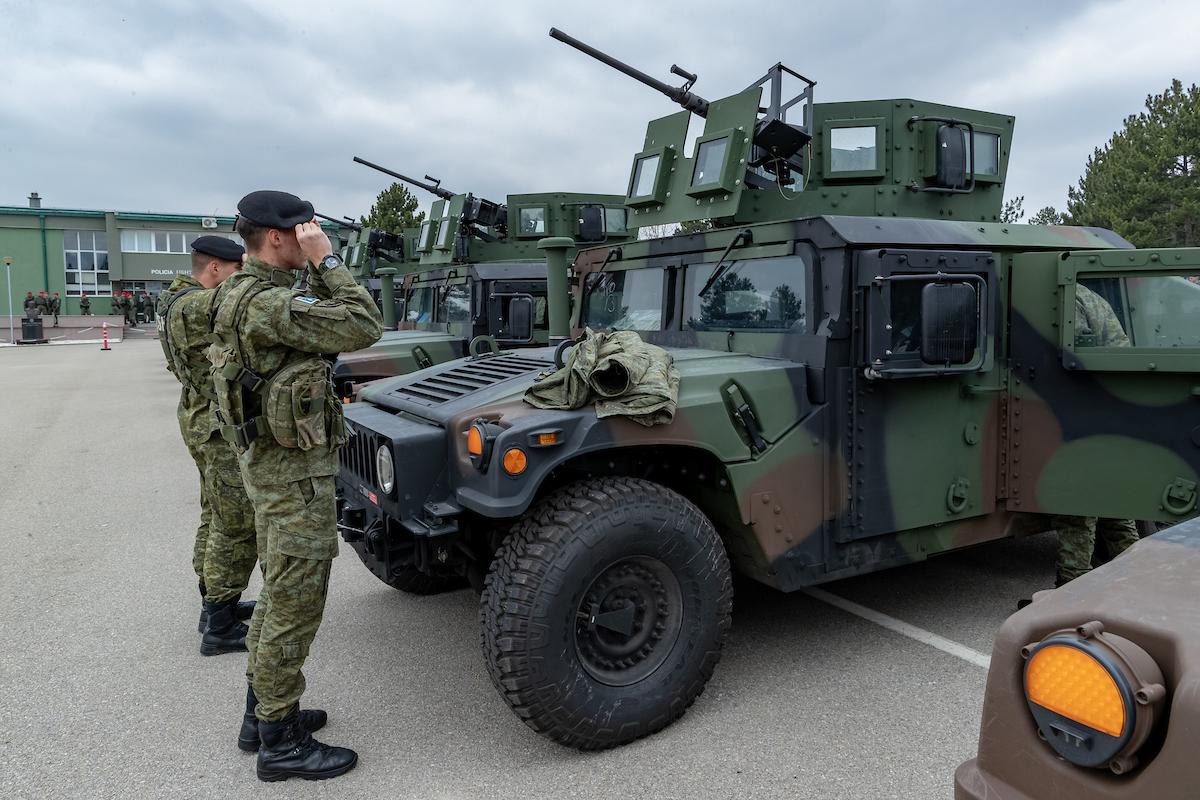
The echoes of the 1990s war in Kosovo, once drowned out by promises of peace and democracy, are reverberating again, this time amplified by a toxic cocktail of Serbian revanchism, Kremlin-style tactics, and Western indifference. At the heart of this resurgent conflict lies Kosovo’s struggle to preserve its sovereignty, underscored by a groundbreaking announcement: the establishment of its first-ever defence industry.

Kosovo’s Prime Minister Albin Kurti recently declared the signing of an agreement with Turkey’s state-owned defence manufacturer, Makine ve Kimya Endüstrisi (MKE), to build a NATO-standard ammunition factory. For many nations, this would be a routine step in defence modernisation. For Kosovo, it is a lifeline, a strategic move to assert self-reliance in a volatile region, where Serbia’s aggression, emboldened by Russia, China, and Iran, threatens to upend the fragile post-war order.

This development comes at a critical juncture for Kosovo, exposing not only Serbia’s growing hostility but also the West’s failure to confront it decisively. Decades after NATO intervened to stop the systematic ethnic cleansing of Kosovar Albanians, the international alliance’s hesitation to act against Serbia’s renewed provocations underscores a troubling erosion of the principles of democracy, rule of law, and territorial sovereignty.

A History Rewritten in Blood and Silence

Kosovo’s path to independence is etched in the scars of war and genocide. In the late 1990s, Serbian forces under Slobodan Milosevic unleashed a brutal campaign of ethnic cleansing, killing thousands of ethnic Albanians and displacing over 1.5 million. NATO’s intervention in 1999 halted the atrocities, and in 2008, Kosovo declared independence, later recognised by 117 nations. Yet Serbia has never relinquished its territorial claim, viewing Kosovo as an integral part of its nationalist mythology.

Today’s Serbia, under President Aleksandar Vucic, bears striking similarities to Milosevic’s regime. A former propaganda minister for Milosevic, Vucic has masterfully rebranded himself as a pro-European statesman while simultaneously aligning Serbia with autocratic regimes. The Kremlin’s influence looms large, cemented by a formal agreement in September 2022 to align Serbia’s foreign policy with Russia1. This pact has emboldened Serbia’s aggressive manoeuvres in Kosovo, echoing Russia’s 2014 annexation of Crimea.

Recent events paint a grim picture. In September 20232, Serbian-backed paramilitary groups launched a covert operation to annex northern Kosovo. These “little green men,” mimicking Russian tactics, attacked Kosovo police and attempted to seize control of key territories. Though Kosovo’s security forces repelled the assault, Western powers, including the United States and the European Union, largely ignored Serbia’s blatant aggression. Instead, they pressured Kosovo to “de-escalate,”3 perpetuating a dangerous double standard that punishes the victim while appeasing the aggressor.

The Geopolitical Stakes

Kosovo’s move to establish a defence industry must be viewed within this broader context. For years, the country has relied on NATO’s Kosovo Force (KFOR) to safeguard its borders. While NATO’s presence remains critical, recent developments reveal the alliance’s diminishing political will to confront Serbia’s provocations. During the September 2023 crisis, NATO forces were slow to act4, allowing Serbian militias to entrench themselves in northern Kosovo.

This hesitancy stems from political fragmentation within NATO and the European Union, exacerbated by competing interests5. Serbia, though aligned with Russia, has skilfully exploited its geopolitical position to court Western powers. By refusing to impose sanctions on Russia and hosting a Russian intelligence hub in Nis, Serbia has emerged as a destabilising force in the Balkans6. Yet, the EU and the U.S. continue to reward Belgrade with energy and trade deals7, turning a blind eye to its authoritarian trajectory.

Kosovo’s new ammunition factory represents a pragmatic response to this shifting landscape. The facility, set to produce NATO-standard calibers, signals Kosovo’s intent to reduce its dependence on external security guarantees. Beyond its immediate utility, the factory serves as a symbolic assertion of Kosovo’s sovereignty, reinforcing its right to defend itself against external aggression.

The Case for Self-Defence

Critics may argue that Kosovo’s reliance on NATO renders its defence industry redundant. But history tells a different story. NATO’s intervention in the 1990s, though decisive, was a response to genocide, not a proactive measure to deter it. The alliance’s reluctance to confront Serbia’s recent aggression suggests that Kosovo cannot rely solely on international forces to guarantee its security.

Moreover, the establishment of a defence industry addresses a glaring asymmetry. Serbia, with its robust military-industrial complex, continues to procure advanced weaponry from Russia8, China9, Iran10, and France11. It recently acquired Rafale fighter jets from Paris12, a NATO technology, even as it defies Western sanctions and supplies arms to Russia. In contrast, Kosovo has no significant defence infrastructure, leaving it vulnerable to Serbia’s militarisation.

By building its defence capacities, Kosovo sends a clear message: it will not tolerate further encroachments on its sovereignty. This move aligns with international norms, which affirm the right of states to defend their territorial integrity. It also underscores Kosovo’s commitment to NATO standards, positioning it as a reliable partner in regional security.

The West’s Moral and Strategic Failure

The international community’s response to Serbia’s aggression has been marked by a troubling inconsistency. While Western powers condemn Russia’s actions in Ukraine, they have largely ignored the Kremlin’s proxy war in Kosovo. This hypocrisy undermines the credibility of the U.S. and the EU, eroding trust among their allies in the Balkans.

Washington’s recent pivot toward appeasing Serbia reflects a misguided belief that concessions will weaken Belgrade’s ties to Moscow. In reality, this approach has emboldened Vucic, who openly defies agreements brokered by the EU while stoking nationalist fervour at home. The EU’s High Representative Josep Borrell and French President Emmanuel Macron have compounded the problem, pressuring Kosovo to make unilateral concessions without holding Serbia accountable for its actions.

This policy of appeasement carries significant risks. By undermining Kosovo’s sovereignty, the West risks destabilising the entire Balkan region. Serbia’s aggression extends beyond Kosovo, as evidenced by its support for separatist movements in Bosnia and Herzegovina. Left unchecked, these actions could ignite a broader conflict, drawing in NATO member states and jeopardising European security.

Kosovo’s Path Forward

Kosovo’s defence industry marks a turning point in its post-war trajectory. It reflects a nation determined to chart its own course, despite the indifference of its allies. This bold move should serve as a wake-up call for the West. If the U.S. and the EU wish to preserve stability in the Balkans, they must reevaluate their approach to Serbia and reaffirm their commitment to Kosovo’s sovereignty.

The stakes could not be higher. As Serbia deepens its alignment with authoritarian regimes, the Balkans are once again becoming a flashpoint for global tensions. Kosovo’s resilience offers a glimmer of hope, but it cannot stand alone. The West must act decisively, not only to support Kosovo but to uphold the principles of democracy and rule of law that underpin the international order.

Kosovo’s defence industry is more than a practical necessity, it is a declaration of independence in the face of aggression. For a nation forged in the crucible of war, this step is both a testament to its resilience and a call to action for the international community. The question is whether the West will answer that call or repeat the mistakes of the past, allowing history to once again write itself in the blood of the innocent.

Kosovo’s establishment of its first defense industry is not just a strategic milestone but a defiant assertion of sovereignty in the face of Serbian aggression and Western ambivalence. This factory represents more than ammunition production, it is a symbol of Kosovo’s resolve to protect its future, with or without the wavering support of its allies. The message is clear: Kosovo will no longer wait for the West to act. It is taking its defence, and its destiny into its own hands.

1.EU candidate Serbia and Russia sign foreign policy agreement — AP

2.One Year After Banjska: The West’s Role in Serbia’s Balkan Escalation — GPC

3.The Balkan Soap Opera: Serbia Plays, Kosovo Pays — GPC

4.KFOR’s Hypocrisy: Empty Words and Betrayal of Journalists’ Safety — FRONTLINER

5.EU and US Criticism of Kosovo Aids Serbian Aggression — GPC

6.Aleksandar Vucic: The War Criminal Shaping EU-Kosovo Relations — GPC

7.How Serbia Manipulated the West for Energy Gains — GPC

8.Serbia receives another arms delivery from Russia despite international sanctions over Ukraine — AP

9.Serbia’s Arms Deals Show It’s Tilting Away From Russia and Toward China — FP

10.Serbian delegation travels to Western-sanctioned Iran to order 20,000 Shahed drones — GeoPost

11.Serbia and France sign $3bn deal for sale of French fighter jets — Al Jazeera

12.France Arms Serbia, Ignoring Genocidal Past and Russian Ties — GPC
*/www.frontpow.uk/

Related Posts

Current Events

Rama alleges ‘hybrid war’ behind protests against Kushner-linked coastal development

5 June, 2026
ENGLISH

Pierre Nora and the institution of memory we lack in Eastern Europe

5 June, 2026
BELGRADE, SERBIA - JUNE 18. 2020: Russian and Serbian flags on display during Russian Foreign Minister Sergei Lavrov's visit to the Liberators of Belgrade Memorial. Valery Sharifulin/TASS,Image: 533095429, License: Rights-managed, Restrictions: UWAGA! Zdjęcia zawierają oryginalny opis dostawcy (ITAR-TASS). Szczególnie w związku z agresją Rosji na Ukrainę mogą zawierać przekaz niezgodny z faktami. Zweryfikuj go przed publikacją, Model Release: no, Credit line: Valery Sharifulin / TASS / Forum
Current Events

Balkan Maskirovka: Why Moscow’s “Distancing” Is Only an Operation for the Survival of Vučić’s Regime

5 June, 2026

Follow US

Subscribe

Receive Argumentum Magazine by Email

Last Posts

Rama alleges ‘hybrid war’ behind protests against Kushner-linked coastal development

5 June, 2026

Pierre Nora and the institution of memory we lack in Eastern Europe

5 June, 2026
BELGRADE, SERBIA - JUNE 18. 2020: Russian and Serbian flags on display during Russian Foreign Minister Sergei Lavrov's visit to the Liberators of Belgrade Memorial. Valery Sharifulin/TASS,Image: 533095429, License: Rights-managed, Restrictions: UWAGA! Zdjęcia zawierają oryginalny opis dostawcy (ITAR-TASS). Szczególnie w związku z agresją Rosji na Ukrainę mogą zawierać przekaz niezgodny z faktami. Zweryfikuj go przed publikacją, Model Release: no, Credit line: Valery Sharifulin / TASS / Forum

Balkan Maskirovka: Why Moscow’s “Distancing” Is Only an Operation for the Survival of Vučić’s Regime

5 June, 2026

The Blueprint of a Diplomatic Debacle: Analyzing Germany’s Historic UNSC Loss

4 June, 2026

Serbia – China 2026: Technological partnership, geopolitical positioning and a new phase of the Chinese presence in the Western Balkans

1 June, 2026
Argumentum

“Argumentum”, një proces intelektual …

Contact Us

[email protected]
[email protected]
[email protected]

Follow Us

Media Partner

Register

Receive Argumentum Magazine by Email
  • Home
  • Privacy Policy
  • About Us
  • Contact

© 2022 Argumentum. All Rights Reserved. | NUIS: L91415033Q

Welcome Back!

Login to your account below

Forgotten Password? Sign Up

Create New Account!

Fill the forms bellow to register

*By registering into our website, you agree to the Terms & Conditions and Privacy Policy.
All fields are required. Log In

Retrieve your password

Please enter your username or email address to reset your password.

Log In

Add New Playlist

No Result
View All Result
  • Home
  • OP/ED
  • Interview
  • Realpolitik
  • Current Events
  • Top News
  • YOUR VOICE
  • Shqip

© 2022 Argumentum. All Rights Reserved. | NUIS: L91415033Q

This website uses cookies. By continuing to use this website you are giving consent to cookies being used. Visit our Privacy and Cookie Policy.