












PANEL: Communication styles and cultural sensitivity
Topic: “Importance of international etiquette in multicultural environments: greeting and addressing in verbal and written communication”
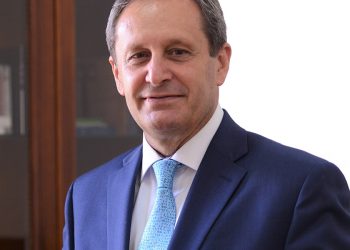
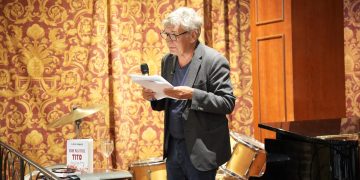
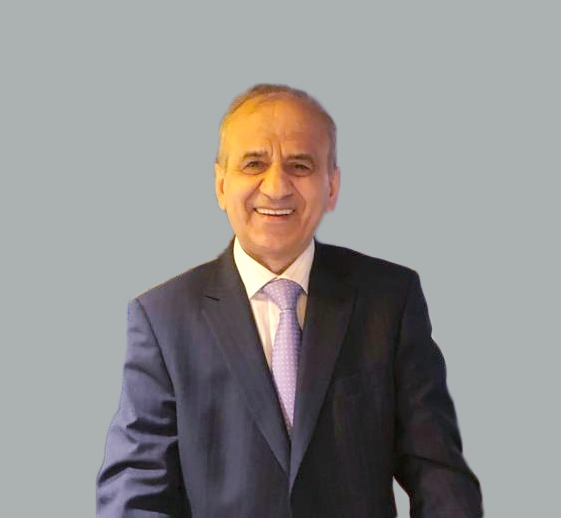
DR. Jorgji KOTE
“Grand Master” in diplomacy, Member of the Council of Albanian Ambassadors, Former Deputy Ambassador in Brussels/Berlin, author of 7 books and over 500 articles on international affairs, official high level interpreter and translator.
Honourable Minister Mustafaj, Honorable Ambassador Gjorgji Filipov, Honorable Ambassador Muçaj,
Dear participants, representatives of Civil Society, Friends
Let me start by thanking Ambassador Muhamed Halili and Ambassador Valter Ibrahimi for their previous topic on key differences between diplomatic and non-diplomatic communication as well as Ambassador Alexandra Nakjeva Ruzhin for her reading on the diplomatic tact and etiquette which have made my job much easier.
Actually, Ethics and the Etiquette in multicultural diplomatic settings and more specifically the modes of addressing and greeting others, particularly high ranking personalities in different events offer both a chance and a challenge. They are much more than “ diplomatic courtesy”; they relate to the substance and success of political and diplomatic processes, programs, initiatives, the image of public and civil society actors who are active in this vital area.
It is common knowledge that the core of diplomacy until the fall of Berlin Wall was secrecy, i.e. working behind coulisses and corridors of power. Its space of operation was so limited that the well-known American professor, politician and diplomat Adlain E. Stevenson used to say “the life of a diplomat is made of protocol, girocol and alcohol”. As to the latter, it is mentioned with some humour the difference between a soldier/diplomat – “the soldier gives up his life for the country while a diplomat his liver” ( due to frequent receptions, cocktails, dinners and luncheons)
While today, as it is also underlined in my book « Diplomacy for all», apart from parliamentary and economic dimensions, the current diplomacy has transformed and enriched its public, cultural, economic, civil, digital and social nature, with an emphasis on climate, public health and environment. Given these vital components and challenges, they also call it “ diplomacy of paracetamol and collasterol”
However, despite these changes, the Protocol, Etiquette and Manners remain important and necessary for those engaged with diplomacy in all its dimensions.
Accordingly, the Civil Society has also become its active and inseparable part, with an increased role in these fields thanks to its name, role, composition, format and multiple mission, as a useful link and leverage among state and various social groups and with a high rate of creditability.
So “the diplomatisation” of Civil Society has indeed become a Must everywhere.
Almost all of us hear frequently the phrases: “don’t talk to me like a diplomat,“he/she has a diplomatic appearance” he/she told this diplomatically” “ you don’t have to be a diplomat to see this point” “he/she spoke with diplomatic manners”
But what does it mean to behave like a diplomat? In plain and practical terms it means to be kind and polite, to have manners, unmovable calmness and unshakable patience; prudence not to injure and insult, not to produce bad feelings and sentiments to others. I need to stress the word ” other(s)” because to put it in a word diplomacy is about “ the other” and not just “ yourself”
Hereby of special significance is the Tact, which as the famous French diplomat Charles Maurice de Talleyrand says is “when you want to say something which your interlocutor is not willing to, but thanks to your tact, he does not only listen to, but after the conversation he also thanks you for your information.”
Accordingly, the proper ethics, etiquette and tact in talks, meetings, written communication, receptions, luncheons and dinners make other(s) feel comfortable; meanwhile, you may also “ navigate” calmly in turbulent diplomatic waters. They are like the three traffick light colours, thanks to which the vehicles circulate without problems and accidents in the city. The former prominent French ambassador, Bernard Dorin says that “protocol and etiquete among states are like good conducts among individuals, they serve as a lubricant to grease frictions”
Ethics and etiquette do also require to listen others attentively; “listen twice and speak once” runs the slogan; listen patiently and not just rush to respond to him/her, even less aggressively, but with respect and understanding; don’t interrupt him/her as we do in the Balkans, with a proper body language, without crossed arms and excessive moves, don’t get closer to the other more than necessary, acknowledge and respect his dignity and the traditions of the country he/she represents, speak briefly, according to the principle “ one idea one sentence”, without irony, “ battutas” or witty remarks, which may lead to misunderstandings due to cultural differences(t); above all never, never forget to express your thanks and gratitude, to ask pardon or apologise for any inconvenience, to say please when you need something and most importantly, please do smile; the same applies to formal dinners/luncheons, where one should be careful with the eating manners, the dress code, and start eating only when everyone is seated there.
A concrete example of the ethics and olympic calmness is that of the former famous ambassador and later Austrian Foreign Minister, Prince Metternich. A day, Emperor Bonapart, at the presence of some other ambassadors of big powers but in a bad mood asked Metternich with a loud and angry voice:
“What on the earth does your Emperor want from me?” Metternich responded with his characteristic calmness, “disarming” and leaving speechless the French Emperor:
“He wants you simply to behave well, Your Majesty!”
The above-mentioned standards apply from the very moment when we address and greet others and, in particular, when we speak in a forum, conference and international summit. I am not going to dwell at length here, for both Minister Madame Dade and Ambassador Gjoka will share their rich and long experience.
Let me also emphasize that the necessary caution here starts with spelling properly the name and function of those whom you are addressing. I remember decades ago when before a dinner or a meeting, our hosts in Germany, Greece, Italy and Austria would come to me as interpreter asking with huge concern for the proper prononciation of the family name of our head of delegation. They were relieved only when I made a sign showing that everything was OK. I can also never forget when our hosts in Germany had two full pages with the names and titles of the VIP persons there!. On the contrary, some of our ministers before the ‘ 90 but also afterwards did not care at all to learn and pronounce the names of their counterpart, preferring to mention only their funtions when addressing them. They spoke as if they were in a party or government meeting and with a rude language like for instance “ I want to say a few words!”
I do also remember many years ago when I was in Turkey with a trade delegation. A young lady from the Protocol who accompanied us in all the visits there suggested me friendly to ask the too serious Minister to offer her a smile for once! He did it so and she felt so happy, after 3 days of accompanying us from morning till night!
The same applies to the proper writing and spelling of honorific titles and especially the royal and religious, ones, both verbal and written. Thus, we should say: “His/Her Majesty” for the Queen and the King, “His Royal Highness” for the Princes, Dukes/Duchesses, “ His Holyness or Holy Father” for the Pope, “Your Excellency” for Ambassadors, Foreign Ministers, Prime Ministers and Presidents.
At this point, it is also important to address and greet the personalities or chairs in any forum with their official name and position and not just by their family name. So, we say Mr. Director, Mr. Minister and not Mr. Seferi, Mr. Selmani, Mr. Brankovic…
Some years ago, while in a Press Conference at the White House, a journalist kept addressing President Bush by his name “Mr. Bush” and the latter did not react. After the persistence of the journalist who continued saying “Mr. Bush”, the latter asked him “Whom are you speaking to”? Then, the journalist realized his mistake and asked him: ”Mr. President” and the latter at last replied.
Likewise, at the beginning of your speech or comment in a forum, given the most recent trends concerning different sexual orientations, one does not address the participants with the traditional “Ladies and gentlemen” since it does no offer a full picture of the audience. Some say ”Dear participants and guests” for instance.
The same should be done when we invite a guest for a reception or dinner, especially an Ambassador, when we do not know or we are not sure if he/she is married and to whom. Therefore, please note in the invitation “ Mr. X accompanied”
Then, while introducing your presentation/address, comments, you should express vividly the pleasure for your presence at that event, the thankfulness for the hosts and their invitation, the appreciation for the hospitality, the excellent organization and the positive features of the host country, its traditions and attractions. Of positive impact in this respect is also using a sentence or a phrase in the native language by the end of your speech; likewise, when you greet the host or guest by his first name, dear X.” This is suggested especially with someone whom you have frequent contacts with, as it usually occurs in diplomacy.
With regard to this Tact, the former British Premier Benjamin Disraeli used to say that “ A diplomat is a person who can tell you to go to hell in such a way that you look forward to the trip” Whereas the US famous journalist Isaac Goldberg said that “ Diplomacy is to do and say the nastiest things in the nicest way”.
The ethics, tact and etiquette do also include a kind and polite language, which civil society representatives should also acquire. This applies to different reviews, papers and addresses, formal talks or even the texts of final declarations.
The German “Iron” Chancellor, Otto von Bismarc advised“ be polite: write diplomatically, for even in a declaration of war one observes the rules of politeness”.
Likewise, a text, an announcement and a press communique should be readable, brief and accurate. In the diplomatic circles it is a often mentioned that these texts “should be neither compositions, nor police reports”!
To this end, the passive or impersonal case is mostly used, i.e. without mentioning names and subject. For instance, instead of saying “ you, he she, they, x minister, director it is written “ we have heard, it is said, they say, it is told and such alike. In another situation, when for instance the talks have ended without results, the formulation for the communique should be something like: “The talks were constructive, we showed understanding for our relevant viewpoints..”
Equally important is that even when you do not agree with someone, you should never tell him/her “ you are wrong” because it will be hard or imposible for you to argue “Why” was he wrong; hence, instead of open objections or negation, it is much more diplomatic and tactful to say: “Our opinion is…”, “we have heard even before such an idea, it is interesting, there are also some useful parts there; but the problem is that it is hard for us at this point of time to implement it; however, let us leave it open for further consultations. It is a frequent occurrence in diplomacy that, instead of saying “yes or no”, just leave it open for further talks. And never use the word” YOU” which would sound offensive or not pleasant for the conversation.
Likewise, during a speech, you should not mention the names of the authors of certain proposals that are not acceptable; instead, one should use an elegant and affirmative language, offering one’s own ideas and arguments and avoiding any tension. Paolo Coelho says that “ elegance does not lie in the manner you hold the weapon, but in your ability to avoid a fight”
However, the most notable principle and specifics of this behavour is “ the slow diplomatic “ NO”; it means that with very few exceptions and in certain limited contexts , a diplomat usually does not say “ NO” and even less openly to an idea or proposal. Morever, it is wise and in fact it has become a practice in negotiation processes that one does not object or oppose any idea or proposal by saying “ NO” but by affirming his/her own position, different or opposite as it could be.
The question arises: What happens when we have to necessarily say “NO”? Certainly, there are vital cases when one should also say “NO”. Yet, this No should be a diplomatic one, not open, blunt and rude, but a slow one and “ dressed with velvet”; in this way, this “No” does not become embarrassing or offensive for the interlocutor or the country he/she represents. So, it is very important and a part of our culture to learn to say NO!
Famous Talleyrand has warned that “ True, Yes and No are the shortest and easiest words to spell but those that require the most consideration”.
A clear ilustration of this diplomatic “NO” is again the reply by the 33 year old Metternich when he presented the Credentials as Ambassador in France in 1806. When Emperor Bonapart told him that “ you are very young to hold in your young shoulders the weight of an ancient empire” the legendary Austrian diplomat responded with his usual elegance and politeness: “I am as young, Your Majesty, as you were when you led the battle of Austerlic!”
So definitively, an quick “NO” and even worse a rude one is not an option. The effect of such a harmful “No” is explained very well by Henry Kissinger, while referring to the US famous negotiator and mediator, the late Richard Holbrook; Kissinger warned that “ one should be very careful with Richard, so that when he asked something, you should never say “NO”!. Well, he added, later you would say “Yes”, but until that point you would have to travel a very long and toiling route”.
Besides, experience shows that it is important for this “No” to be slow and soft, accompanied with feelings of solidarity and regrets, compensating it as much as possible also with a “Yes” in other areas, since diplomacy is also a mater of give and take” This is indispensable, because life goes on and there would occur cases when we that say NO would find ourselves in the same position especially in the international organizations and would not feel well when others tell us “ NO”!
Nonetheless, when we have to say “ NO” for a major theme, a diplomat should not waver or hesitate, he/she should say it with full voice and capital leters.
While referring to this occurrence often is said that “when a diplomat says “ yes” he/she means “perhaps” when he/she says “perhaps” he/she means “no” and if he/she says “No” then one is not a diplomat”.
Finally, dear participants, let me hope that this modest paper could be of some help in your daily activity and especially during your participation at various diplomatic international events, workshops and contacts by and large.
Thanks a lot for your keen interest and kind attention!
SKOPJE, 22 /23 January 2025 – GOLEM 7/8 FEBRUARY 2025
/Argumentum.al