




• SHQIPËRI
  • KOSOVË
  • MAQEDONIA E VERIUT
  • MALI I ZI
  • Revista në PDF
20 August, 2026
  • Home
  • OP/ED

    Between Political Calculation and Retreat: Croatian Communists at the End of an Era

    The West is buying time, but to whom is it giving it?

    27 July 1941 – A Site of Memory Between War, Revolution and Europe

    The cult of Saint Veneranda / Saint Pren(d)a / Saint Premte / Saint Paraskeva among Albanians

    The Self-Inflicted Decoupling: How U.S. Immigration Policy Is Ceding the Tech Edge to China

    The Blueprint Does Not Stop at the Drina

    The Underlying Logic behind China’s Economic Success

    Do Not Misuse the U.S. Declaration of Independence to Justify the Narrative of Insurrection in Albania

    The visit that changed Albania’s strategic future

  • Interview

    Exclusive Interview with Oleksandr Tyshchenko: A 40-Year Legacy of Chernobyl, Nuclear Risks, and Global Responsibility

    INTERVIEW: ZLATKO KRAMARIĆ – THOUGHTS ON THE OLD CONTINENT

    EXCLUSIVE / Ukrainian Ambassador to Albania, Volodymyr Shkurov: “Ukraine wants peace, but not at the expense of its freedom and independence”

    EXCLUSIVE| Ambassador Tayyar Kagan Atay: Türkiye and Albania, a Strategic Partnership Rooted in Shared Heritage and a Common Vision for the Future

    “Diplomacy, Not War”: Palestinian Ambassador to Albania Calls for Justice, Peace, and Global Action for Gaza

    Exclusive: “Even After Tito – Tito”/ Ambassador Zlatko Kramarić on Authoritarian Legacies and Democracy’s Future in the Balkans

    The Conclusion of the Diplomatic Mission / Ambassador Dancho Markovski: Strengthening Albania-North Macedonia Relations for a Shared European Future

    A Century of Diplomatic Relations Between Albania and Russia: Exclusive Interview with the Russian Ambassador to Albania, H.E. Alexey Zaytsev

    Exclusive/ The chairman of the Freedom Party, Ilir Meta: “The will of the citizens will triumph in Albania, as it did in North Macedonia”

  • Realpolitik

    Belgrade, Zelensky and the Consulates! The European Pact takes water! Drone in Leipzig and hybrid war! Why a  ceasefire is needed in September

    The Summit of Unity! Think of peace and prepare for war! It’s only the start to the end! Just a pause between two wars!

    Peace with war diplomacy! The protest,  image and tourism! Why this silence from the EU Commission and Council? A deal or a pause?

    Just kind words  in Tivat! Where is the peace!? A deal yes, peace No!What is happening with USA and  EU?  5 elections but no solution!

    IBAR? ”Sufficiently! Much ado about nothing! Shart contrasts in Beijing! Where is the exit?!

    Neither peace nor war! Peace with bombs?! IBAR in autumn?! Not another Hormuz in Taivan! 

    IBAR – a springing board or an obstacle? Can we catch the EU Negotiation train 2027? When the dress makes the news!  EU electoral April  ends in a draw 1:1!  

    The European Parliament building in Strasbourg, France with flags waving calmly celebrating peace of the Europe. July 12, 2020.

    EU 2027 or 2037! Even half membership failed! No exit strategy!     

    What next?

  • Current Events

    The Delayed Awakening: Realpolitik and the Structural Causes of European Stagnation

    Democracy Cannot Be Governed by Noise

    Council of Albanian Ambassadors Raises Concern Over Serbian Plan to Alter the Ibër River

    Digitalisation in the modern era as a “Trojan horse” for hybrid warfare

    The four days that changed history

    Bury Those You Killed

    The Serbian Consulate in Shkodra: A Diplomatic Step or a Project with Political Implications?

    Chinese Embassy in Albania Marks PLA’s 99th Anniversary, Reaffirms Commitment to Peace and Bilateral Cooperation

    Croatian Foreign Minister’s Visit to Tirana/Albania and Croatia Strengthen Their Strategic Partnership as Zagreb Reaffirms Support for Albania’s European Union Membership

  • Top News

    Rama, Vučić, Zelensky: Where Is Albania’s National Interest?

    Council of Albanian Ambassadors Raises Concern Over Serbian Plan to Alter the Ibër River

    Rama: Foreign Information Manipulation Has Become One of the Greatest Threats to Democracy and European Security

    The Council of Albanian Ambassadors condemns chauvinistic rhetoric by Serbian officials and calls for diplomatic action

    NATO at Ankara 2026: Strategic Rebalancing Between Russia Deterrence, Turkey’s Rise, and National Interests

    Daniel Serwer: A Bad War Ending Badly May Still Be Good News

    Friedrich Merz, Keir Starmer, António Costa, Donald Trump, Emmanuel Macron, Mark Carney, Ursula von der Leyen, Giorgia Meloni and Sanae Takaichi

    G7 Leaders Gather in Évian Amid Global Uncertainty, Focus on Security, Economy and International Cooperation

    Russian Ambassador in Tirana: “Without a Strong and Sovereign Russia, the Creation of a Just World Order Is Impossible”

    “The Flamingo Revolution”: Day 10 of Protests in Albania Draws International Attention

  • YOUR VOICE
  • Shqip
No Result
View All Result
Argumentum
  • Home
  • OP/ED

    Between Political Calculation and Retreat: Croatian Communists at the End of an Era

    The West is buying time, but to whom is it giving it?

    27 July 1941 – A Site of Memory Between War, Revolution and Europe

    The cult of Saint Veneranda / Saint Pren(d)a / Saint Premte / Saint Paraskeva among Albanians

    The Self-Inflicted Decoupling: How U.S. Immigration Policy Is Ceding the Tech Edge to China

    The Blueprint Does Not Stop at the Drina

    The Underlying Logic behind China’s Economic Success

    Do Not Misuse the U.S. Declaration of Independence to Justify the Narrative of Insurrection in Albania

    The visit that changed Albania’s strategic future

  • Interview

    Exclusive Interview with Oleksandr Tyshchenko: A 40-Year Legacy of Chernobyl, Nuclear Risks, and Global Responsibility

    INTERVIEW: ZLATKO KRAMARIĆ – THOUGHTS ON THE OLD CONTINENT

    EXCLUSIVE / Ukrainian Ambassador to Albania, Volodymyr Shkurov: “Ukraine wants peace, but not at the expense of its freedom and independence”

    EXCLUSIVE| Ambassador Tayyar Kagan Atay: Türkiye and Albania, a Strategic Partnership Rooted in Shared Heritage and a Common Vision for the Future

    “Diplomacy, Not War”: Palestinian Ambassador to Albania Calls for Justice, Peace, and Global Action for Gaza

    Exclusive: “Even After Tito – Tito”/ Ambassador Zlatko Kramarić on Authoritarian Legacies and Democracy’s Future in the Balkans

    The Conclusion of the Diplomatic Mission / Ambassador Dancho Markovski: Strengthening Albania-North Macedonia Relations for a Shared European Future

    A Century of Diplomatic Relations Between Albania and Russia: Exclusive Interview with the Russian Ambassador to Albania, H.E. Alexey Zaytsev

    Exclusive/ The chairman of the Freedom Party, Ilir Meta: “The will of the citizens will triumph in Albania, as it did in North Macedonia”

  • Realpolitik

    Belgrade, Zelensky and the Consulates! The European Pact takes water! Drone in Leipzig and hybrid war! Why a  ceasefire is needed in September

    The Summit of Unity! Think of peace and prepare for war! It’s only the start to the end! Just a pause between two wars!

    Peace with war diplomacy! The protest,  image and tourism! Why this silence from the EU Commission and Council? A deal or a pause?

    Just kind words  in Tivat! Where is the peace!? A deal yes, peace No!What is happening with USA and  EU?  5 elections but no solution!

    IBAR? ”Sufficiently! Much ado about nothing! Shart contrasts in Beijing! Where is the exit?!

    Neither peace nor war! Peace with bombs?! IBAR in autumn?! Not another Hormuz in Taivan! 

    IBAR – a springing board or an obstacle? Can we catch the EU Negotiation train 2027? When the dress makes the news!  EU electoral April  ends in a draw 1:1!  

    The European Parliament building in Strasbourg, France with flags waving calmly celebrating peace of the Europe. July 12, 2020.

    EU 2027 or 2037! Even half membership failed! No exit strategy!     

    What next?

  • Current Events

    The Delayed Awakening: Realpolitik and the Structural Causes of European Stagnation

    Democracy Cannot Be Governed by Noise

    Council of Albanian Ambassadors Raises Concern Over Serbian Plan to Alter the Ibër River

    Digitalisation in the modern era as a “Trojan horse” for hybrid warfare

    The four days that changed history

    Bury Those You Killed

    The Serbian Consulate in Shkodra: A Diplomatic Step or a Project with Political Implications?

    Chinese Embassy in Albania Marks PLA’s 99th Anniversary, Reaffirms Commitment to Peace and Bilateral Cooperation

    Croatian Foreign Minister’s Visit to Tirana/Albania and Croatia Strengthen Their Strategic Partnership as Zagreb Reaffirms Support for Albania’s European Union Membership

  • Top News

    Rama, Vučić, Zelensky: Where Is Albania’s National Interest?

    Council of Albanian Ambassadors Raises Concern Over Serbian Plan to Alter the Ibër River

    Rama: Foreign Information Manipulation Has Become One of the Greatest Threats to Democracy and European Security

    The Council of Albanian Ambassadors condemns chauvinistic rhetoric by Serbian officials and calls for diplomatic action

    NATO at Ankara 2026: Strategic Rebalancing Between Russia Deterrence, Turkey’s Rise, and National Interests

    Daniel Serwer: A Bad War Ending Badly May Still Be Good News

    Friedrich Merz, Keir Starmer, António Costa, Donald Trump, Emmanuel Macron, Mark Carney, Ursula von der Leyen, Giorgia Meloni and Sanae Takaichi

    G7 Leaders Gather in Évian Amid Global Uncertainty, Focus on Security, Economy and International Cooperation

    Russian Ambassador in Tirana: “Without a Strong and Sovereign Russia, the Creation of a Just World Order Is Impossible”

    “The Flamingo Revolution”: Day 10 of Protests in Albania Draws International Attention

  • YOUR VOICE
  • Shqip
No Result
View All Result
Argumentum
No Result
View All Result
Home ENGLISH

Diplomacy, State-Building, and Memory: Germany’s role in Kosovo through a scholarly lens

17 April, 2025
in ENGLISH, English OP/ED
A A
Share on FacebookShare on Twitter

 Dorian Koçi*

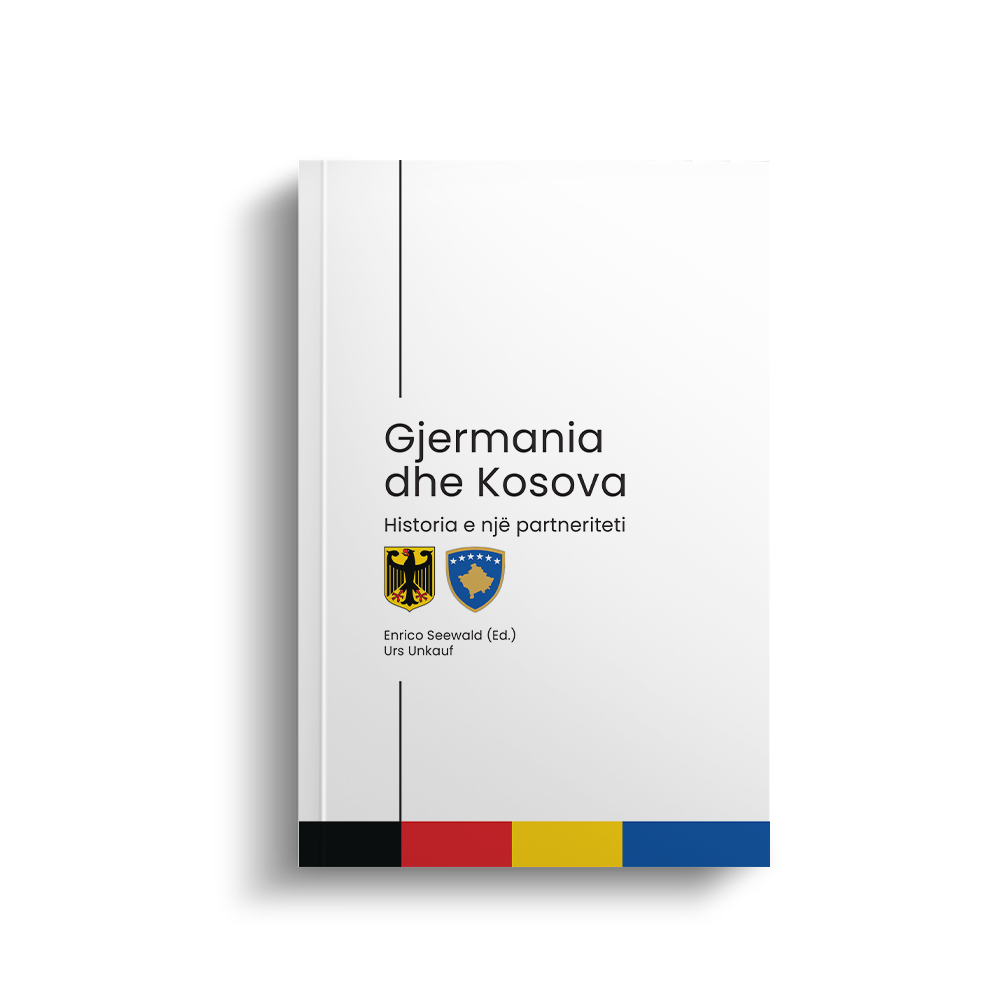
Germany and Kosovo: The History of a Partnership” is a significant academic and historical contribution that sheds lights into the complex, multifaceted relationship between the Federal Republic of Germany and the Republic of Kosovo. Edited by Enrico Seewald and Urs Unkauf, and published in Albanian from Dukagjini Edition in November 2023 in Pristina, the book brings together a collection of insightful essays that collectively offer a thorough and multidimensional view of the evolution of German-Kosovar relations. From the early stages of conflict in Kosovo to the nation’s declaration of independence and beyond, the volume captures Germany’s crucial role in Kosovo’s state-building process and its continued support for democratic development in the region.

Dorian Koçi

Structure and editorial work

The editorial work of Seewald and Unkauf is commendable. Their curated approach ensures a well-balanced blend of academic, diplomatic, and personal perspectives. The editors demonstrate a deep understanding of both the political sensitivities and historical nuances surrounding Republic of Kosovo and Republic Federal of Germany’s involvement. The volume includes contributions from a variety of high-profile individuals, including German ambassadors, international institution representatives, and key political analysts and officials who have directly influenced Kosovo’s trajectory. This variety lends authenticity and depth to the book.

Thematic overview and critical analysis

The volume is structured around a series of essays that, while diverse in focus and tone, collectively reinforce the narrative of Germany’s long-term commitment to Kosovo. Each chapter provides a distinct lens through which the reader can understand the dynamics of this partnership.

1. “The Kosovo Question from the German Perspective” – Matthias Dornfeldt & Enrico Seewald

This chapter lays the groundwork for understanding Germany’s strategic positioning in the Balkans. It offers an excellent historical-diplomatic analysis of Germany’s proactive role in addressing the Kosovo crisis and supporting its independence in 2008. The authors emphasize Germany’s constructive diplomacy, framing Berlin as a consistent advocate for peace and stability in Southeast Europe.

2. “Kosovo – On the Difficult Path to Statehood” – Stefan Troebst

Troebst’s contribution is a thoughtful examination of the internal political and institutional challenges Kosovo has faced since declaring independence. He reflects on Germany’s supportive stance, particularly in helping to foster institutional development and rule of law. This essay is essential in understanding the international dimension of Kosovo’s internal state-building efforts.

3. “Kosovo and Germany – More Than a Relationship!” – Beqë Cufaj

Ambassador Beqë Cufaj offers a semi-autobiographical, diplomatic perspective that highlights the human and cultural dimensions of German-Kosovar ties. Focusing on the role of the Kosovar diaspora in Germany, the essay underscores how people-to-people connections have strengthened bilateral cooperation. This narrative expands the notion of diplomatic relations beyond institutions to include cultural and societal elements.

4. “Germany’s Importance for Kosovo’s Modern History” – Blerim Shala

Shala articulates Germany’s vital role as one of Kosovo’s most reliable and influential partners. He details key moments when German support proved decisive, framing the bilateral relationship as a cornerstone of regional stability. His argument that Germany’s support was not only political but also moral is particularly compelling.

5. “Memoirs of the German Ambassador in Belgrade during the Kosovo Crisis” – Wilfried Gruber

This chapter provides a rare behind-the-scenes look at the delicate diplomacy surrounding the Kosovo war. Gruber’s personal recollections bring a vivid and nuanced understanding of Germany’s role in NATO’s intervention and the efforts to resolve the crisis diplomatically. The essay adds a human dimension to the historical narrative, demonstrating the complexity of real-time international decision-making.

6. “The Foundational phase in Kosovo” – Andreas Wittkowsky

Wittkowsky focuses on the UNMIK period and Germany’s role in institutional and economic development. His analysis stresses the importance of building functional institutions as a foundation for lasting peace. The essay effectively connects international governance efforts with German strategic interests and long-term objectives in the region.

7. “A Unique challenge” – Joachim Rücker

As a former Special Representative of UNMIK, Rücker provides an insider’s view of the post-war administrative challenges in Kosovo. His account is rich in detail and insight, highlighting the complexities of international governance and the critical nature of local-international cooperation. This chapter offers practical lessons for peacebuilding and transitional administration.

8. “From representation to embassy: A diplomatic transformation” – Karl-Albrecht Wokalek

Wokalek’s essay traces the formalization of diplomatic relations between Germany and Kosovo through the establishment of the German embassy in Prishtina. The narrative underscores the growing strategic significance of Kosovo within German foreign policy. His reflections also mark an important symbolic milestone in bilateral relations.

9. “The Ambassador in Albania: A regional perspective on Kosovo” – Hellmut Hoffmann

This chapter widens the lens by linking developments in Albania to those in Kosovo. Hoffmann emphasizes the importance of trilateral cooperation among Germany, Albania, and Kosovo in achieving regional stability. The essay suggests that understanding Kosovo’s trajectory also requires a regional approach.

10. “KFOR’s mission – A forgotten mission?” – Erhard Bühler

General Bühler’s contribution focuses on Germany’s military involvement through KFOR. He highlights the mission’s role in maintaining peace and security in post-war Kosovo. Importantly, he calls for greater recognition of Germany’s military engagement, which he believes has been overshadowed by diplomatic narratives.

Scholarly and practical value

This book is an invaluable resource for scholars of international relations, Balkan studies, and diplomatic history. It provides a wealth of empirical data, personal testimonies, and analytical reflections that together construct a comprehensive picture of the German-Kosovar partnership. What distinguishes the volume is its ability to combine macro-level geopolitical analysis with micro-level personal experiences, offering a textured and dynamic account of a complex international relationship. Furthermore, the book serves as a practical guide for diplomats, policymakers, and practitioners working in post-conflict state-building and regional integration. The diverse range of contributors ensures that the insights are both theoretically informed and grounded in real-world experiences.

Editorial excellence

Enrico Seewald and Urs Unkauf deserve special recognition for their editorial achievements. They have curated a volume that is not only coherent in structure but also engaging in content. The careful organization of chapters ensures a logical progression, from historical analysis to contemporary reflections. The clarity of language and editorial consistency make the book accessible to both academic and general audiences.

“Germany and Kosovo: The History of a Partnership” transcends the boundaries of a traditional essay collection. It is a historical reflection, a diplomatic chronicle, and a roadmap for future cooperation. The book illustrates the power of international solidarity, the importance of sustained diplomatic engagement, and the transformative potential of cross-national partnerships. In an era of global uncertainty and regional tensions, this work stands as a testament to what collaborative, principled diplomacy can achieve. This volume rightly belongs in every academic library, policy institute, and diplomatic archive concerned with the Balkans, European integration, and international peacebuilding. It not only commemorates the past but also informs the future.

*Dr. Dorian Koçi, former Director of National historical Museum of Albania (2017-2023) is a historian and author, with expertise in Southeast European history, international relations, and cultural diplomacy.

/Argumentum.al

© 2025 Argumentum

Related Posts

ENGLISH

Rama, Vučić, Zelensky: Where Is Albania’s National Interest?

20 August, 2026
ENGLISH

Belgrade, Zelensky and the Consulates! The European Pact takes water! Drone in Leipzig and hybrid war! Why a  ceasefire is needed in September

20 August, 2026
Current Events

The Delayed Awakening: Realpolitik and the Structural Causes of European Stagnation

20 August, 2026

Follow US

Subscribe

Receive Argumentum Magazine by Email

Last Posts

Rama, Vučić, Zelensky: Where Is Albania’s National Interest?

20 August, 2026

Belgrade, Zelensky and the Consulates! The European Pact takes water! Drone in Leipzig and hybrid war! Why a  ceasefire is needed in September

20 August, 2026

The Delayed Awakening: Realpolitik and the Structural Causes of European Stagnation

20 August, 2026

The Digital Pandemic of Ridicule

20 August, 2026

Democracy Cannot Be Governed by Noise

19 August, 2026
Argumentum

“Argumentum”, një proces intelektual …

Contact Us

[email protected]
[email protected]
[email protected]

Follow Us

Media Partner

Register

Receive Argumentum Magazine by Email
  • Home
  • Privacy Policy
  • About Us
  • Contact

© 2022 Argumentum. All Rights Reserved. | NUIS: L91415033Q

Welcome Back!

Login to your account below

Forgotten Password? Sign Up

Create New Account!

Fill the forms bellow to register

*By registering into our website, you agree to the Terms & Conditions and Privacy Policy.
All fields are required. Log In

Retrieve your password

Please enter your username or email address to reset your password.

Log In

Add New Playlist

No Result
View All Result
  • Home
  • OP/ED
  • Interview
  • Realpolitik
  • Current Events
  • Top News
  • YOUR VOICE
  • Shqip

© 2022 Argumentum. All Rights Reserved. | NUIS: L91415033Q

This website uses cookies. By continuing to use this website you are giving consent to cookies being used. Visit our Privacy and Cookie Policy.