







• SHQIPËRI
  • KOSOVË
  • MAQEDONIA E VERIUT
  • MALI I ZI
  • Revista në PDF
6 June, 2026
  • Home
  • OP/ED

    Pierre Nora and the institution of memory we lack in Eastern Europe

    The Blueprint of a Diplomatic Debacle: Analyzing Germany’s Historic UNSC Loss

    Cyber Attribution, Corruption, and the False-Flag Question in Albania’s 2022 Alleged Iranian Cyberattack

    Between Russia, Iran and Europe: Azerbaijan as a balancing power in the South Caucasus

    The Zero-Tariff Gate: Sovereignty as a Service in the Sino-African Corridor

    Albania vs. the Sea/ Marginal Notes on A. Leka’s Novel The Hidden Side of the Albanian Socialist Garden

    May 9 and the long shadow of a Letter: Is Europe still Schuman’s Project?

    The Arbnesh of Zadar: A living memory of Albanian identity on the Adriatic coast

    Science Diplomacy and Academic Freedom: A strategic nexus for contemporary diplomacy

  • Interview

    Exclusive Interview with Oleksandr Tyshchenko: A 40-Year Legacy of Chernobyl, Nuclear Risks, and Global Responsibility

    INTERVIEW: ZLATKO KRAMARIĆ – THOUGHTS ON THE OLD CONTINENT

    EXCLUSIVE / Ukrainian Ambassador to Albania, Volodymyr Shkurov: “Ukraine wants peace, but not at the expense of its freedom and independence”

    EXCLUSIVE| Ambassador Tayyar Kagan Atay: Türkiye and Albania, a Strategic Partnership Rooted in Shared Heritage and a Common Vision for the Future

    “Diplomacy, Not War”: Palestinian Ambassador to Albania Calls for Justice, Peace, and Global Action for Gaza

    Exclusive: “Even After Tito – Tito”/ Ambassador Zlatko Kramarić on Authoritarian Legacies and Democracy’s Future in the Balkans

    The Conclusion of the Diplomatic Mission / Ambassador Dancho Markovski: Strengthening Albania-North Macedonia Relations for a Shared European Future

    A Century of Diplomatic Relations Between Albania and Russia: Exclusive Interview with the Russian Ambassador to Albania, H.E. Alexey Zaytsev

    Exclusive/ The chairman of the Freedom Party, Ilir Meta: “The will of the citizens will triumph in Albania, as it did in North Macedonia”

  • Realpolitik

    IBAR? ”Sufficiently! Much ado about nothing! Shart contrasts in Beijing! Where is the exit?!

    Neither peace nor war! Peace with bombs?! IBAR in autumn?! Not another Hormuz in Taivan! 

    IBAR – a springing board or an obstacle? Can we catch the EU Negotiation train 2027? When the dress makes the news!  EU electoral April  ends in a draw 1:1!  

    The European Parliament building in Strasbourg, France with flags waving calmly celebrating peace of the Europe. July 12, 2020.

    EU 2027 or 2037! Even half membership failed! No exit strategy!     

    What next?

    “With diplomatic velvet“! Major question marks! In Washington yes, but  in the White House NO! A strange dinner in Brussels!

    From a great ‘apple of disaccord’ to a  point of  cooperation! A bad start! The strange absence in Davos!

    5 lessons from the American 3 January! Don’t count the chicken before they are hatched! Will NATO freeze in Greenland? Wrong diplomatic messages!

    German Chancellor Friedrich Merz, European Commission President Ursula von der Leyen, Ukraine's President Volodymyr Zelenskiy, U.S. Special Envoy Steve Witkoff and Jared Kushner, son-in-law of U.S. President Donald Trump line up for a family photo opportunity at the Chancellery in Berlin, Germany, December 15, 2025.    REUTERS/Lisi Niesner/Pool

    A Strategy that could change the world! Europe in Berlin! Why an historic compromise? Only charm diplomacy in Athens!

  • Current Events

    Rama alleges ‘hybrid war’ behind protests against Kushner-linked coastal development

    BELGRADE, SERBIA - JUNE 18. 2020: Russian and Serbian flags on display during Russian Foreign Minister Sergei Lavrov's visit to the Liberators of Belgrade Memorial. Valery Sharifulin/TASS,Image: 533095429, License: Rights-managed, Restrictions: UWAGA! Zdjęcia zawierają oryginalny opis dostawcy (ITAR-TASS). Szczególnie w związku z agresją Rosji na Ukrainę mogą zawierać przekaz niezgodny z faktami. Zweryfikuj go przed publikacją, Model Release: no, Credit line: Valery Sharifulin / TASS / Forum

    Balkan Maskirovka: Why Moscow’s “Distancing” Is Only an Operation for the Survival of Vučić’s Regime

    Serbia – China 2026: Technological partnership, geopolitical positioning and a new phase of the Chinese presence in the Western Balkans

    The Digital Protectorate: How the EU AI Act Codified Silicon Valley’s Monopoly

    The 28th MFC Annual Conference in Durrës / Sulaj: Microfinance remains a key instrument for financial inclusion

    Serbia at the Crossroads of EU Integration and Geopolitical Balancing: IFIMES Analysis

    Tirana – €20 Million EU–Banking Agreement Boosts Albanian SMEs

    The Myth of Independence: How Chinese Efficiency is Rewriting the Constitution of Modern Geopolitics!

    Europe Yesterday and Today: Why 9 May Still Matters

  • Top News

    Rama alleges ‘hybrid war’ behind protests against Kushner-linked coastal development

    No End in Sight: Trump, Netanyahu and the Expanding Middle East War

    Tirana – €20 Million EU–Banking Agreement Boosts Albanian SMEs

    “EU4Municipalities II” Project, a Strategic Investment for Strengthening Municipalities and Accelerating Albania’s Path towards the EU

    Albania, Italy deepen defence ties with naval shipbuilding deal

    U.S. Embassy: Iran-Linked Groups May Target Americans and Iranian Opposition in Albania

    The Council of Albanian Ambassadors disappointed with the voting of the draft law on the foreign service in the parliamentary committees.

    Prime Minister Edi Rama Addresses Israel’s Knesset in Historic Special Session

    Kazakhstan’s Strategic Reform Agenda: Stability, Modern Governance, and Responsible Diplomacy

  • YOUR VOICE
  • Shqip
No Result
View All Result
Argumentum
  • Home
  • OP/ED

    Pierre Nora and the institution of memory we lack in Eastern Europe

    The Blueprint of a Diplomatic Debacle: Analyzing Germany’s Historic UNSC Loss

    Cyber Attribution, Corruption, and the False-Flag Question in Albania’s 2022 Alleged Iranian Cyberattack

    Between Russia, Iran and Europe: Azerbaijan as a balancing power in the South Caucasus

    The Zero-Tariff Gate: Sovereignty as a Service in the Sino-African Corridor

    Albania vs. the Sea/ Marginal Notes on A. Leka’s Novel The Hidden Side of the Albanian Socialist Garden

    May 9 and the long shadow of a Letter: Is Europe still Schuman’s Project?

    The Arbnesh of Zadar: A living memory of Albanian identity on the Adriatic coast

    Science Diplomacy and Academic Freedom: A strategic nexus for contemporary diplomacy

  • Interview

    Exclusive Interview with Oleksandr Tyshchenko: A 40-Year Legacy of Chernobyl, Nuclear Risks, and Global Responsibility

    INTERVIEW: ZLATKO KRAMARIĆ – THOUGHTS ON THE OLD CONTINENT

    EXCLUSIVE / Ukrainian Ambassador to Albania, Volodymyr Shkurov: “Ukraine wants peace, but not at the expense of its freedom and independence”

    EXCLUSIVE| Ambassador Tayyar Kagan Atay: Türkiye and Albania, a Strategic Partnership Rooted in Shared Heritage and a Common Vision for the Future

    “Diplomacy, Not War”: Palestinian Ambassador to Albania Calls for Justice, Peace, and Global Action for Gaza

    Exclusive: “Even After Tito – Tito”/ Ambassador Zlatko Kramarić on Authoritarian Legacies and Democracy’s Future in the Balkans

    The Conclusion of the Diplomatic Mission / Ambassador Dancho Markovski: Strengthening Albania-North Macedonia Relations for a Shared European Future

    A Century of Diplomatic Relations Between Albania and Russia: Exclusive Interview with the Russian Ambassador to Albania, H.E. Alexey Zaytsev

    Exclusive/ The chairman of the Freedom Party, Ilir Meta: “The will of the citizens will triumph in Albania, as it did in North Macedonia”

  • Realpolitik

    IBAR? ”Sufficiently! Much ado about nothing! Shart contrasts in Beijing! Where is the exit?!

    Neither peace nor war! Peace with bombs?! IBAR in autumn?! Not another Hormuz in Taivan! 

    IBAR – a springing board or an obstacle? Can we catch the EU Negotiation train 2027? When the dress makes the news!  EU electoral April  ends in a draw 1:1!  

    The European Parliament building in Strasbourg, France with flags waving calmly celebrating peace of the Europe. July 12, 2020.

    EU 2027 or 2037! Even half membership failed! No exit strategy!     

    What next?

    “With diplomatic velvet“! Major question marks! In Washington yes, but  in the White House NO! A strange dinner in Brussels!

    From a great ‘apple of disaccord’ to a  point of  cooperation! A bad start! The strange absence in Davos!

    5 lessons from the American 3 January! Don’t count the chicken before they are hatched! Will NATO freeze in Greenland? Wrong diplomatic messages!

    German Chancellor Friedrich Merz, European Commission President Ursula von der Leyen, Ukraine's President Volodymyr Zelenskiy, U.S. Special Envoy Steve Witkoff and Jared Kushner, son-in-law of U.S. President Donald Trump line up for a family photo opportunity at the Chancellery in Berlin, Germany, December 15, 2025.    REUTERS/Lisi Niesner/Pool

    A Strategy that could change the world! Europe in Berlin! Why an historic compromise? Only charm diplomacy in Athens!

  • Current Events

    Rama alleges ‘hybrid war’ behind protests against Kushner-linked coastal development

    BELGRADE, SERBIA - JUNE 18. 2020: Russian and Serbian flags on display during Russian Foreign Minister Sergei Lavrov's visit to the Liberators of Belgrade Memorial. Valery Sharifulin/TASS,Image: 533095429, License: Rights-managed, Restrictions: UWAGA! Zdjęcia zawierają oryginalny opis dostawcy (ITAR-TASS). Szczególnie w związku z agresją Rosji na Ukrainę mogą zawierać przekaz niezgodny z faktami. Zweryfikuj go przed publikacją, Model Release: no, Credit line: Valery Sharifulin / TASS / Forum

    Balkan Maskirovka: Why Moscow’s “Distancing” Is Only an Operation for the Survival of Vučić’s Regime

    Serbia – China 2026: Technological partnership, geopolitical positioning and a new phase of the Chinese presence in the Western Balkans

    The Digital Protectorate: How the EU AI Act Codified Silicon Valley’s Monopoly

    The 28th MFC Annual Conference in Durrës / Sulaj: Microfinance remains a key instrument for financial inclusion

    Serbia at the Crossroads of EU Integration and Geopolitical Balancing: IFIMES Analysis

    Tirana – €20 Million EU–Banking Agreement Boosts Albanian SMEs

    The Myth of Independence: How Chinese Efficiency is Rewriting the Constitution of Modern Geopolitics!

    Europe Yesterday and Today: Why 9 May Still Matters

  • Top News

    Rama alleges ‘hybrid war’ behind protests against Kushner-linked coastal development

    No End in Sight: Trump, Netanyahu and the Expanding Middle East War

    Tirana – €20 Million EU–Banking Agreement Boosts Albanian SMEs

    “EU4Municipalities II” Project, a Strategic Investment for Strengthening Municipalities and Accelerating Albania’s Path towards the EU

    Albania, Italy deepen defence ties with naval shipbuilding deal

    U.S. Embassy: Iran-Linked Groups May Target Americans and Iranian Opposition in Albania

    The Council of Albanian Ambassadors disappointed with the voting of the draft law on the foreign service in the parliamentary committees.

    Prime Minister Edi Rama Addresses Israel’s Knesset in Historic Special Session

    Kazakhstan’s Strategic Reform Agenda: Stability, Modern Governance, and Responsible Diplomacy

  • YOUR VOICE
  • Shqip
No Result
View All Result
Argumentum
No Result
View All Result
Home ENGLISH

Crisis-Born, Purpose-Seeking: Can the EPC Define Europe’s Strategic Future?

10 June, 2025
in ENGLISH, English OP/ED
A A
Share on FacebookShare on Twitter

By Donika Emini*

The sixth summit of the European Political Community (EPC), held in Tirana on May 16, 2025, largely escaped international headlines. Still, it reflected an ongoing, quiet evolution in Europe’s strategic mindset that began in 2022. By convening in a region often seen as marginal and prone to instability, the summit reinforced a symbolic shift in Europe’s political centre of gravity, one that seeks to demonstrate flexibility and an understanding that unity must extend beyond the EU’s formal borders.

Unlike previous summits, the EPC meeting in Tirana unfolded against a backdrop of even greater geopolitical turbulence and a tectonic shift in relations between the EU and the U.S. Since its launch in 2022, the global landscape has become even more fractured: Russia’s war in Ukraine continues with no resolution in sight, and European leaders find themselves sidelined from negotiations dominated by the United States. At the same time, the situation in the Middle East has further escalated as transatlantic divergences in this region continue to deepen. The Western Balkans remains mired in unresolved tensions, particularly the persistent issue between Serbia and Kosovo, where the EPC has attempted to offer a platform for high-level engagement in the Chisinau Summit 2023 but has yet to demonstrate real diplomatic traction. In this context, the summit underscored Europe’s pressing need for a strategic dialogue that facilitates the development of solutions to current security challenges and debates about the future of security in Europe. Still, instead of doing so collectively, it relied on bilateral and mini-lateral alliances built on the interests of the parties involved.

Yet, while the EPC’s persistence is promising, its ambiguity remains a concern. What is the EPC, really? Is it merely a venue for high-level informal dialogue, or does it aspire to become something more concrete — a platform for policy coordination, joint projects, or even collective security initiatives? For now, the format remains informal, without a secretariat, permanent staff, or a clearly defined agenda beyond the discussions organised by rotating host countries. This flexibility is a double-edged sword: while it enables inclusivity and agility, it also risks diluting the forum’s strategic impact.

What did the Tirana Summit deliver?

Hosting the summit in Tirana was a deliberate choice. As the first EPC meeting held in the Western Balkans, it served as a symbolic and political signal, recognising the region’s European future and reaffirming its importance to the continent’s evolving security and political framework. In many ways, the EPC in Tirana was a summit of both symbols and silences. It underlined the commitment of Europeans to cohesion but fell short of delivering eye-catching breakthroughs. This was not a failure, but rather a reflection of the EPC’s evolving nature: part forum, part experiment, still searching for its defining structure and long-term utility.

That said, while the Tirana summit did not produce concrete outcomes in its own right, it contributed to advancing the European security agenda on various fronts. One significant development was the announcement of an 18th sanctions package against Russia, focusing on critical areas such as energy, maritime logistics, and financial institutions, underscoring Europe’s continued resolve to increase pressure on the Kremlin. Yet, the initiative’s reliance on coordination with the U.S., including the need for a phone call approval from former President Trump amidst fragile Russia-Ukraine talks in Turkey, exposed the limitations of Europe’s quest for strategic autonomy, an ambition championed by France but still far from being fully realised.

Meanwhile, progress was noted in the South Caucasus, as Armenia and Azerbaijan were recognised for finalising a peace treaty. The EU pledged support for connectivity and integration in the region. A joint declaration by major European states in support of Moldova also reinforced the EPC’s function as a platform for affirming political alignment among its members, especially for countries caught in geopolitical crosscurrents. This showed that, despite the summit being held in Tirana, where a multitude of issues in the Western Balkan region could have been addressed, the Black Sea security took centre stage.

Broadening the European security constellation

One of the most significant aspects of the Tirana summit was the renewed engagement of the United Kingdom, with Prime Minister Keir Starmer increasingly positioning it as a constructive player in European affairs. The UK’s active participation and the announcement of an upcoming EU-UK summit in London marked a deliberate shift from the ambivalence of the post-Brexit years. This cooperation demonstrates the EPC’s potential as a bridge-builder: a space where countries such as the UK, no longer in the EU, can still contribute to European security and strategic alignment.

Strategic engagement with Turkey remains essential. While no longer actively pursuing EU membership, Turkey is a key NATO ally and a pivotal actor in the Black Sea region. Despite its limited use of the EPC thus far, the platform presents an opportunity for Ankara to engage with Europe on vital topics, such as energy and migration, without the complications tied to its frozen accession talks. However, Turkey attended three out of six summits, with a very brief presence in Tirana, which can mainly be attributed to Erdogan’s friendship with host Edi Rama, rather than Turkey’s strategic use of the EPC.

For both Turkey and the UK, the EPC serves as a practical channel to stay connected to European affairs in a flexible and relatively low-pressure environment; however, its use depends on the leaders of the countries, as this is how the format is established.

One of the most contentious participants at the summit was the leader of Georgia, a country whose government is increasingly distancing itself from EU values, yet does not hesitate to engage in the EPC in the absence of strong ties to values. While Georgia’s inclusion could be viewed through the lens of strategic necessity, particularly concerning Black Sea security and broader European geopolitics, it provoked backlash from pro-EU protesters at home, who already operate in a repressive and challenging environment, calling on the EU to increase pressure on the government to change this situation. This raises a critical question: if Belarus remains excluded due to its stance toward the West and democratic values, why are countries with similarly troubling trajectories still invited? Should the EPC establish more explicit value-based criteria for participation, and if so, where should that line be drawn?

Albania on the diplomatic stage, Rama in the spotlight

Albania’s successful hosting of the summit offered a compelling picture. With a solid record of hosting the EU-Western Balkans Summit in 2022 and the Berlin Process Summit in 2023, Albania presented a state capable of organising a high-level diplomatic event inclusive of the whole of Europe with composure and purpose. This success is not only symbolic; it is reputational capital. In a region often viewed through the lens of instability, Albania has demonstrated its ability to serve as a responsible stakeholder in pan-European affairs. Moreover, it provided a good platform from which the region as a whole could be viewed through the lens of a security provider, not just a consumer.

The other five Western Balkan countries, central both geographically and symbolically to the Tirana summit, largely failed to capitalise on the spotlight the event offered. Kosovo stood out somewhat, utilising the platform to enhance its international visibility and assert itself within a multilateral setting, despite not being a member of the OSCE, NATO, or a formal EU candidate country. In contrast, Albania’s Prime Minister, Edi Rama, fresh from a decisive electoral victory, seized the moment to reiterate his government’s dedication to EU accession. Despite ongoing challenges in implementing democratic reforms, Rama received praise from EU leaders and a renewed pledge of support for Albania’s integration path. Albeit outside the formal EPC framework, French President Emmanuel Macron’s presence in Tirana the following day injected further momentum. He proposed a bold timeline of Albania’s membership within two years. However, this ambition could face procedural hurdles, notably France’s requirement to hold a referendum before any new accession. This factor could stall the process, regardless of the current political will.

For a region still grappling with unresolved questions of statehood, economic vulnerability, and competing external influences, the EPC delivered a vital message: you are still part of Europe’s strategic horizon. Yet the threat of disillusionment looms large. The future success of the region hinges not only on actions coming from outside but also on the Western Balkans’ proactive engagement beyond the confines of the enlargement agenda. The EPC presented a platform for such engagement. Unfortunately, the region did not fully rise to the occasion.

The EPC’s crisis carousel: What will Denmark deal with?

The EPC shouldn’t just chase crises to stay relevant; it should help shape the very foundations of Europe’s future security architecture. As the forum matures, the lack of formal structure is becoming more glaring. Can it continue as an ad hoc, rotating dialogue forum, or does it need a light-touch secretariat and a clearer strategic backbone, potentially led by France, to ensure it adds value beyond symbolism? To truly matter, the EPC must begin to connect existing frameworks and fill gaps in Europe’s fractured security landscape, especially as global power dynamics shift dramatically.

These questions will loom large when the EPC convenes in Denmark. With Copenhagen steering the agenda, the forum has a chance to anchor discussions around defence and strategic resilience, issues that the Danish Prime Minister strongly emphasised in Tirana. At a time when European defence is being rearmed and the U.S. signals increased interest in territories like Greenland, the EPC must navigate the space between NATO and the EU with more clarity and purpose. The Tirana summit attempted to project transatlantic unity towards Russia, but future ones may face tougher tests, especially if territorial and geopolitical issues, such as Greenland, become flashpoints, or trade wars intensify.

Ultimately, in a continent beset by overlapping crises, steady, even modest progress is a notable achievement. The EPC is still a work in progress, but if it can evolve from a diplomatic stage into a strategic force, its potential is far from symbolic. It could become Europe’s flexible engine for coherence and resilience in an age of unpredictability.
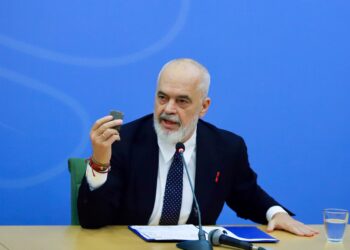
/BiEPAG

Related Posts

Current Events

Rama alleges ‘hybrid war’ behind protests against Kushner-linked coastal development

5 June, 2026
ENGLISH

Pierre Nora and the institution of memory we lack in Eastern Europe

5 June, 2026
BELGRADE, SERBIA - JUNE 18. 2020: Russian and Serbian flags on display during Russian Foreign Minister Sergei Lavrov's visit to the Liberators of Belgrade Memorial. Valery Sharifulin/TASS,Image: 533095429, License: Rights-managed, Restrictions: UWAGA! Zdjęcia zawierają oryginalny opis dostawcy (ITAR-TASS). Szczególnie w związku z agresją Rosji na Ukrainę mogą zawierać przekaz niezgodny z faktami. Zweryfikuj go przed publikacją, Model Release: no, Credit line: Valery Sharifulin / TASS / Forum
Current Events

Balkan Maskirovka: Why Moscow’s “Distancing” Is Only an Operation for the Survival of Vučić’s Regime

5 June, 2026

Follow US

Subscribe

Receive Argumentum Magazine by Email

Last Posts

Rama alleges ‘hybrid war’ behind protests against Kushner-linked coastal development

5 June, 2026

Pierre Nora and the institution of memory we lack in Eastern Europe

5 June, 2026
BELGRADE, SERBIA - JUNE 18. 2020: Russian and Serbian flags on display during Russian Foreign Minister Sergei Lavrov's visit to the Liberators of Belgrade Memorial. Valery Sharifulin/TASS,Image: 533095429, License: Rights-managed, Restrictions: UWAGA! Zdjęcia zawierają oryginalny opis dostawcy (ITAR-TASS). Szczególnie w związku z agresją Rosji na Ukrainę mogą zawierać przekaz niezgodny z faktami. Zweryfikuj go przed publikacją, Model Release: no, Credit line: Valery Sharifulin / TASS / Forum

Balkan Maskirovka: Why Moscow’s “Distancing” Is Only an Operation for the Survival of Vučić’s Regime

5 June, 2026

The Blueprint of a Diplomatic Debacle: Analyzing Germany’s Historic UNSC Loss

4 June, 2026

Serbia – China 2026: Technological partnership, geopolitical positioning and a new phase of the Chinese presence in the Western Balkans

1 June, 2026
Argumentum

“Argumentum”, një proces intelektual …

Contact Us

[email protected]
[email protected]
[email protected]

Follow Us

Media Partner

Register

Receive Argumentum Magazine by Email
  • Home
  • Privacy Policy
  • About Us
  • Contact

© 2022 Argumentum. All Rights Reserved. | NUIS: L91415033Q

Welcome Back!

Login to your account below

Forgotten Password? Sign Up

Create New Account!

Fill the forms bellow to register

*By registering into our website, you agree to the Terms & Conditions and Privacy Policy.
All fields are required. Log In

Retrieve your password

Please enter your username or email address to reset your password.

Log In

Add New Playlist

No Result
View All Result
  • Home
  • OP/ED
  • Interview
  • Realpolitik
  • Current Events
  • Top News
  • YOUR VOICE
  • Shqip

© 2022 Argumentum. All Rights Reserved. | NUIS: L91415033Q

This website uses cookies. By continuing to use this website you are giving consent to cookies being used. Visit our Privacy and Cookie Policy.