








By Philip Acey* |ARGUMENTUM
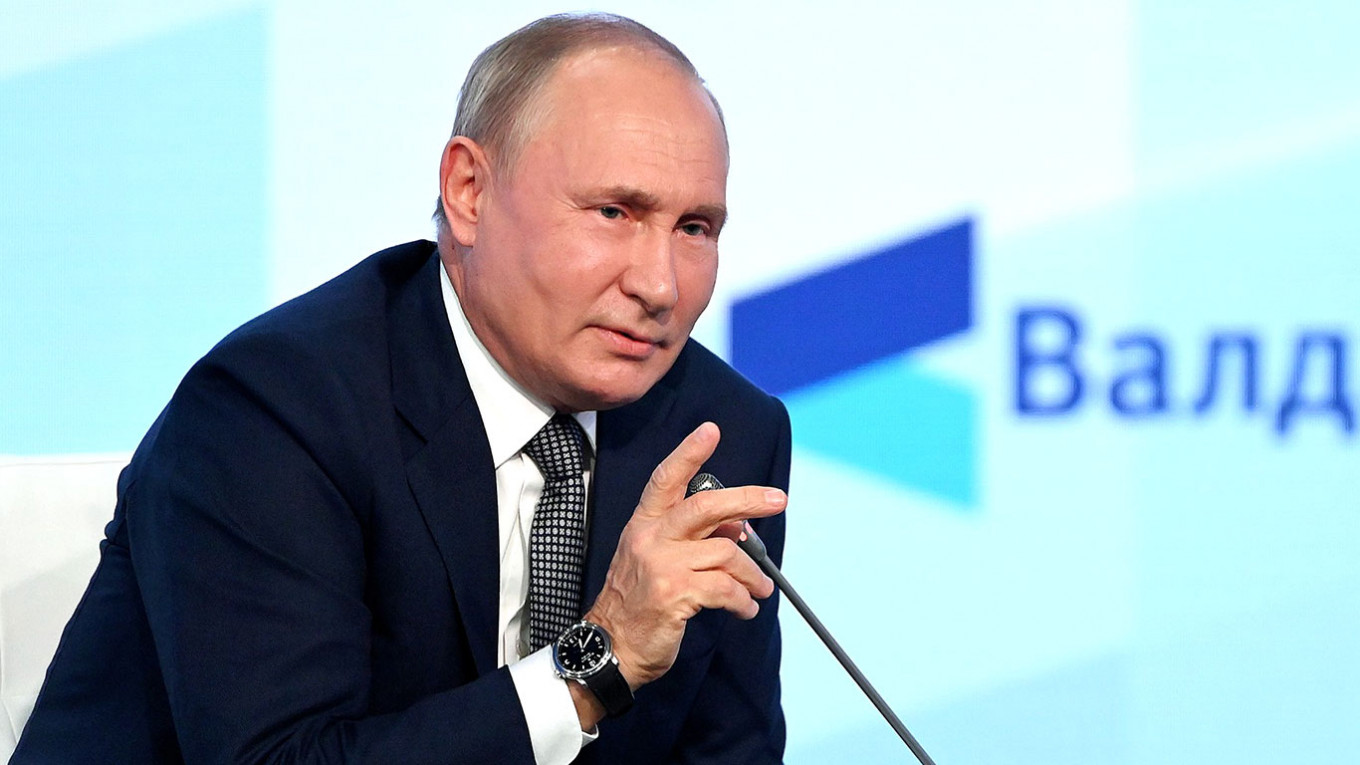
On October 2, President Putin addressed the Valdai Discussion Club, presenting Russia’s vision of how countries should act within a multipolar world. Despite his admission that a multipolar world order does not yet exist and that the future is uncertain, his rhetoric revives a distinctly Soviet approach to geopolitics under a new banner: multipolarity. Putin framed his vision as a rebuke of U.S. hegemony, portraying Washington as imposing its will on others while Russia stands for equality and mutual benefit among nations.
Beneath this rhetoric is an implicit revival of the Soviet slogan, “Brotherhood and equality to all peoples!” This conceals the same paradox as during the Cold War: hierarchy disguised as harmony. Putin’s revival of Soviet narratives and symbolism signals a return to the past: the same strategy, repackaged for a new era. Therefore, Russia’s vision of multipolarity deserves closer scrutiny, not least for nations across the post-Soviet space and the Global South, where its effects will be most deeply felt.
The expansion of BRICS is often celebrated as a counterweight to the ‘colonially-minded’ West, but it increasingly mirrors the Cold War’s geopolitical map. Behind appeals to “sovereignty” and “mutually beneficial partnership,” Russia is reviving a Soviet-style hierarchy under a post-ideological banner, to reassert itself as a centre of gravity in international affairs. As Putin said at Valdai, “the global balance cannot be built without Russia.” Yet BRICS does not dismantle power asymmetries; it reproduces them by placing Russia and China at the top while inviting the Global South to participate on their terms. This is not a revival of Communism but a rebranding of power politics – an authoritarian-friendly multilateralism that advances the interests of those at the top of the BRICS hierarchy.
BRICS as Russia’s Soviet Revival Project
At Valdai, Putin boasted that the BRICS concept was first proposed by him and developed by the Russian government in the early 2000s. What has become BRICS was born from a Russian initiative to reshape the global order to better advance its national interests. Beneath its cooperative language, BRICS serves as a mechanism for Russia and China to consolidate influence, using smaller countries to amplify and legitimize their strategic ambitions.
While BRICS has every right to exist and to challenge the status quo, its portrayal as an egalitarian alternative is misleading. History suggests that BRICS may carry significant implications for countries in the post-Soviet space and the Global South, where major powers seek to expand their influence. The Soviet legacy in these regions is complex, but Russia’s revival of Soviet rhetoric today is not just symbolic – it is part of a broader effort to re-legitimize its authority and intervention, especially in the post-Soviet space.
This strategic revival extends to rhetoric, imagery, and collective memory. Understanding how Moscow repackages past hierarchies through contemporary frameworks is key to analyzing how it could impact the post-Soviet space and the Global South.
Ideological Continuity with the USSR
This continuity is most evident in the language of BRICS. Terms such as equality, democracy, self-determination, and anti-imperialism – once staples of Soviet speeches from Lenin to Gorbachev – now dominate the rhetoric of the Kremlin and BRICS. By invoking these familiar slogans, the Kremlin appeals to historical solidarity with the Global South while subtly reinforcing hierarchies under the guise of partnership. Tracing these continuities through Soviet and Russian leadership speeches reveals how the vocabulary of liberation has long served as an instrument of control.
Equality of Nations: Brezhnev (1971) and Chernenko (1985) vs. Putin (2025)
- Brezhnev: Soviet foreign policy coincides with UN decisions to abolish “the remaining colonial regimes. Manifestations of racism and apartheid must be universally condemned and boycotted.”
- Chernenko: The USSR promotes “establishing peaceful and mutually beneficial co-operation between states, on the principles of equality, mutual respect and non-interference in internal affairs.
- Putin: “Russia has never entertained this racist theory [of dividing people between those who are equal and “more equal than others”], never shared this attitude towards other peoples and cultures, and we never will.”
Anti-Hegemonism: Andropov (1983) vs. Putin (2025)
- Andropov: “We call on [the U.S. and NATO] to give up their unrealizable hopes…to dictate their will to other peoples and states.”
- Putin: “Let me reiterate: the modern world needs agreements, not the imposition of anyone’s will. Hegemony – of any kind – simply cannot and will not cope with the scale of the challenges.”
Liberation of the Global Majority from Imperialism: Lenin/Stalin and Khrushchev vs. Putin (2025) and Karaganov (2023)
Putin at Valdai said, “In fact, the phenomenon of the global majority is a new development in international affairs.”
In reality this concept is not new. It originates in Soviet rhetoric, first articulated by Stalin in 1924 as a core thesis of Leninism to liberate oppressed peoples: “The world is divided into two camps: the camp of a handful of civilised nations…and the camp of the oppressed and exploited peoples in the colonies and dependent countries, which constitute the majority.”
Putin clarified that the Global Majority are these liberated countries, many of which did not exist at the time of the formation of the UN:
Putin said, “…the Global Majority countries now constitute an overwhelming majority at the UN, and its structure and governing bodies should therefore be adjusted to this fact….”
Just as the USSR sought to liberate oppressed peoples, the Kremlin’s strategic vision for Russia and multipolarity is the same:
- Khrushchev (1961): “There will be liberation wars as long as imperialism exists, as long as colonialism exists…. for the colonialists do not freely bestow independence on the peoples.”
- Putin: “The establishment [of Western European elites] does not want to cede power, dares to directly deceive its own citizens, escalates the situation internationally, resorts to all sorts of tricks inside their countries – increasingly on the fringes of the law or even beyond it.”
- Karaganov: Russia is a “liberator of peoples, a guarantor of peace, and the military-political core of the World Majority. This is our Manifest Destiny.”
These parallels show that Moscow continues to frame itself as a liberator rather than a hegemon, claiming moral leadership in opposing Western dominance, while subtly creating new hierarchies of dependence. For Russia, BRICS functions as the mechanism to achieve this strategy. Yet, as history shows, the ideal of “equality of nations” – one of the cornerstones of Russia’s vision of BRICS – is actually legitimizing hierarchies of influence and dependence rather than true partnership. The Global Majority narrative already existed during the Cold War in various forms, including the Soviet Union’s “Brotherhood and equality to all peoples.”
Over the past two years, Putin has also revived Soviet-era nostalgic symbols such as the Intervision Song Contest, the World Youth Festival, and reached a tentative agreement with Trump to hold a U.S.–Russia hockey series, echoing the 1972 Summit Series against Canada. In today’s Russia, the Soviet legacy is becoming “cool” again. This signals a deliberate repurposing of Soviet imagery and strategy to project strength and influence across the post-Soviet space and the broader Global South.
This continuity has tangible consequences: as in the Soviet era, Russia’s commitment to equality among nations is conditional, defined and shaped by its strategic interests. This is not merely theoretical; it manifests in how Russia treats nations it considers strategically important.
The Myth of “Equality Among Nations”: The Cases of Finland & Afghanistan
Russia’s definition of “equality among nations” – as in the Soviet era – comes with conditions. In 1948, Stalin praised Finland as an “equal partner” under the Finno-Soviet Treaty, but Finland was required to maintain a neutral foreign
policy and avoid actions that could threaten Soviet security. In exchange, Finland’s independence and sovereignty were guaranteed.
At Valdai in 2025, Putin crudely criticized Finland’s move to join NATO, noting he would refrain from making “a specific [rude] gesture” over its departure from past agreements. This demonstrates that, in Russia’s view, equality ends when a nation acts against Russian interests, particularly those who were formerly part of the Russian Empire or USSR.
The same logic extends beyond Russia’s near abroad. In October 2025, Foreign Minister Lavrov warned that any foreign military presence in Afghanistan would be “categorically unacceptable under any pretext,” a stance echoed by all Moscow Format Consultations participants, including the Taliban government. As the only country to formally recognize the Taliban government, Russia’s stance carries influence and signals a willingness to interfere in Afghanistan’s internal affairs under the guise of regional stability and security – a clear hierarchy rather than genuine equality. Afghans are well aware of the decade-long Soviet occupation of their country in the name of “internal stability.” Their message is clear: keep foreign forces – particularly American – out of their spheres of influence. There is also an explicit assumption that only American/Western presence leads to instability, overlooking the broader history of external interference in the region.
The cases of Finland and Afghanistan demonstrate that Russia’s commitment to equality among nations is conditional, granted only when a nation’s decisions align with its strategic interests. This logic extends beyond the post-Soviet space, forming the foundation of Russia’s vision of multipolarity.
Multipolarity as Decentralized Hegemony
Russia’s promotion of multipolarity is less a commitment to pluralism than a strategy to expand its freedom of action. In practice, multipolarity also becomes a mechanism for interference under the guise of regional leadership or “civilizational protection,” whether ethnic (Russian) or religious (Orthodox). Rather than ending hegemony, it multiplies it, replacing the global dominance of the United States with several competing regional hegemons. The outcome is a decentralization of coercive power that will likely weaken international law and reduce the effectiveness of collective sanctions.
For Moscow, multipolarity serves to legitimize dominance and interference in its near abroad while shielding its allies from scrutiny, reviving a Cold War logic of spheres of influence rather than genuine equality. Whether it is global hegemony or multipolar hegemony, it is clear that small states will continue to see their sovereignty and self- determination undermined by great power states.
Russia’s pattern of conditional equality is not confined to its near abroad; it also shapes its interventions in regions with power vacuums, such as West Africa, where its intervention has been framed as liberation from Western neocolonialism. After the withdrawal of French forces from Mali, Burkina Faso, the Central African Republic, and Niger between 2022-2023, Russia swiftly filled the void – not to primarily empower Africans, but to advance its own strategic interests: securing access to natural resources, expanding influence, and projecting itself as a champion of anti-imperialism. Yet, as in the Soviet era, Russia’s intervention has only substituted one form of dependency for another, revealing that its version of multipolarity is not equality among nations, but the reconfiguration of hierarchy.
Implications for the Post-Soviet Space and the Global South
This pattern carries deeper implications for nations across the post-Soviet space and the Global South. Russia’s vision of BRICS and multipolarity is a global reimagining of Soviet power politics – stripped of communist ideology – yet still aligned with socialist and anti-Western movements when convenient. Its rhetoric of equality and non-interference appeals to post-colonial sympathies, yet history warns that hierarchies built on utopian dreams rarely end well – especially for smaller nations that comprise the global majority.
The ideologies of the USSR and modern Russia differ in form but not in strategy: both seek to secure Russia’s status as a great power, free from external constraints and able to act unilaterally within its sphere of influence. This should
concern anyone who believes that Russian-style multipolarity will deliver self-determination, peace, security, and prosperity to the Global Majority.
The Global Majority may yet discover that in such a multipolar world, equality remains in the hands of the powerful. Putin is right that global hegemony is an anomaly in world history compared to multipolarity – but the version of multipolarity that Russia promotes is rooted in Soviet-era ideals designed to consolidate Russian influence, rather than to genuinely equalize nations or liberate peoples.
*Philip Acey is a Canadian PhD candidate in International Relations at Saint Petersburg State University, Russia. He holds an M.Soc.Sc. from Tampere University in Finland and conducted four months of research in Afghanistan in
2024-2025. An independent political researcher and analyst, he has worked for over a decade across Europe, Asia, Africa, and South America, visiting more than 50 countries. He was also a participant of the World Youth Festival in Sochi, Russia in 2024. His research has advised the UN Security Council, diplomats, and humanitarian organizations. Connect with him on X: @Philipfficial
© 2025 Argumentum