












































By Zlatko Kramarić*| ARGUMENTUM
Editorial Summary:
The author analyses three key peace arrangements in the post-Yugoslav space – the Dayton, Kumanovo and Ohrid Agreements – highlighting their shared nature: they all stopped the war but failed to create conditions for genuine peace. Instead of fostering reconciliation, they established models that maintain ethnic divisions and institutionalised mistrust. Within the European context, such agreements have become symbols of the Balkans’ enduring incompleteness – a region that possesses peace, but does not live it.
I. Constructing Peace
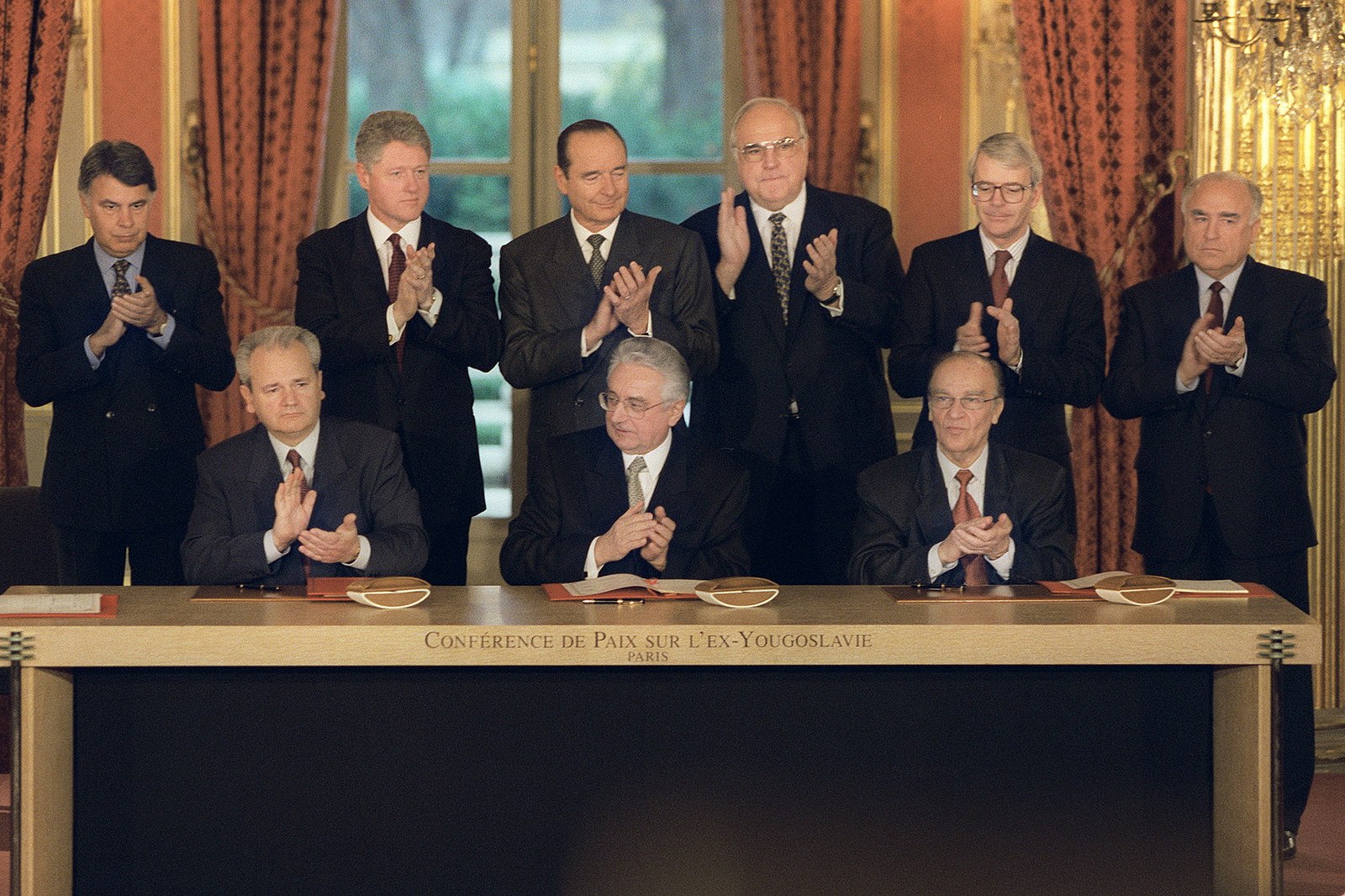
The Dayton Agreement, signed in 1995, was intended to serve as the final framework for ending the war in Bosnia and Herzegovina. However, rather than laying the foundations of a functional state, it stopped the war but did not end it – it institutionalised it. Dayton was not a political agreement on a shared future, but a technical construction of peace in which conflict is frozen rather than resolved. Its primary purpose was stabilisation, not transformation.
As a result, Bosnia and Herzegovina became a state without internal consensus – a space where national communities tolerate each other, but do not connect. A paradox is built into its constitutional structure: in order to preserve peace, division must also be preserved. This is the core of the Dayton dilemma – how to maintain peace and build a state simultaneously, when the architecture of peace itself is based on mistrust.
II. Kumanovo, Ohrid and the Balkan Continuity
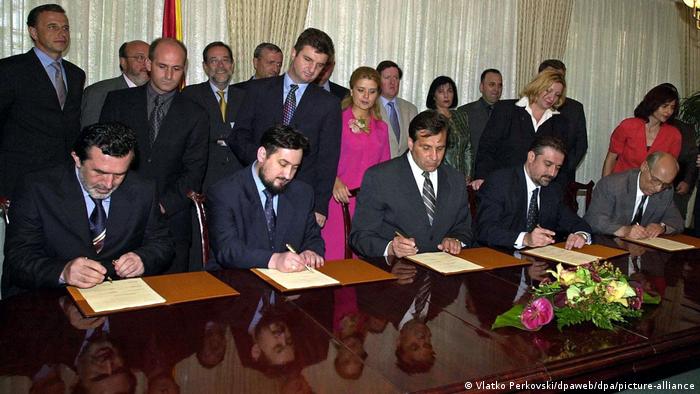
Almost all subsequent political arrangements in the Balkans replicate the same formula of “peace without normality.” The Kumanovo Agreement (1999), which ended the war in Kosovo, and the Ohrid Agreement (2001), which stopped the conflict in Macedonia, merely confirmed the continuity of this model.

All three documents – Dayton, Kumanovo and Ohrid – follow the same logic: peace is imposed from above, administratively, without true internal catharsis. In all three cases, the international community manages to silence the weapons, but fails to restore trust. Political elites accept peace because they must, not because they believe in coexistence. The result is lasting ambivalence: external peace, internal paralysis.
• Dayton divided Bosnia and Herzegovina into entities and nations, turning wartime geography into a constitutional reality.
• Kumanovo pulled Serbia out of Kosovo, but without an agreement on future coexistence between Serbs and Albanians – opening the way to a permanent dispute over sovereignty.
• Ohrid brought peace to Macedonia, but at the cost of ethnic division within institutions – peace was achieved, but a shared society was not.
The common denominator of all these solutions is the absence of social normality. The Balkans entered a phase of post-conflict peace in which weapons ceased to fire, yet cooperation never truly emerged. Peace became a legal framework rather than a social value. In such an order, each nation lives within its own truth, each politics within its own past, and each state within its illusion of stability.
III. Europe and the Balkan Peace: Between Protectorate and Perspective
The European Union inherited all these peace arrangements as incomplete projects and turned them into laboratories of stability. Instead of transcending them, Europe often bureaucratically preserved them. Today, almost every Western Balkan state formally aspires to EU membership, yet effectively continues to operate within the logic of “post-Dayton,” “post-Kumanovo,” and “post-Ohrid” – that is, within frameworks of temporarily pacified but not genuinely integrated societies.
Thus, the EU has become a guardian of the status quo. Rather than offering a political framework to overcome ethnic divisions, it has often – through its stabilisation and association policy – further ossified them. This model produces peace without democracy, and stability without trust. It functions in the short term, but in the long run, it sustains the Balkans in a state of permanent political immaturity.
Therefore, a new reading of these agreements must also entail a new reading of European responsibility. If Dayton, Kumanovo and Ohrid were necessary compromises in times of violence, today’s challenge lies in how to surpass them – how to move from the minimum of peace to the maximum of politics.
The Balkans no longer needs more agreements, but a new meaning of peace – one that does not emerge from division, but from living together. Only then will Dayton, Kumanovo and Ohrid cease to be the conclusions of wars and become the beginnings of a new, European chapter in history.
*Zlatko Kramarić is a Croatian publicist, author, and diplomat, currently serving as Ambassador to Albania. Formerly a university professor and politician, he is known for his work in literature, cultural studies, and regional history.
© 2025 Argumentum