

























By Zlatko Kramarić*|ARGUMENTUM
Introduction
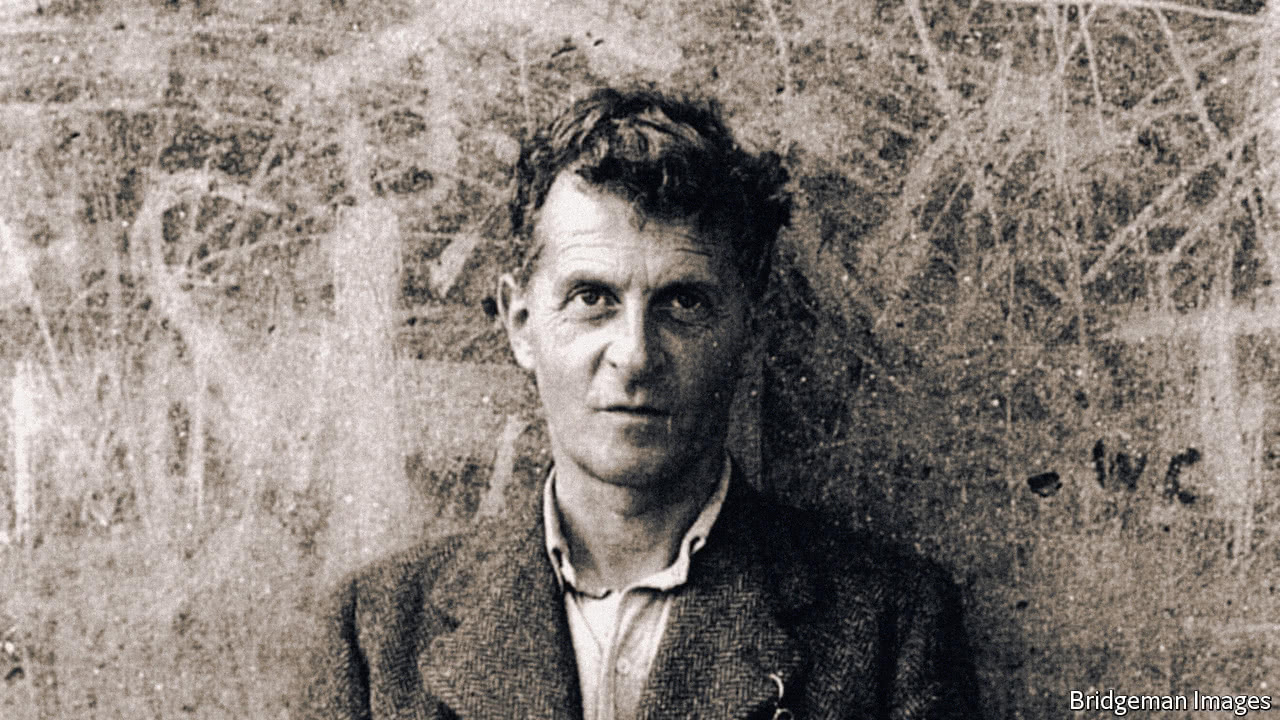
The European spirit in the first half of the 20th century was shaped by intense reflection on science, culture, and philosophy. Philosophers such as Ludwig Wittgenstein (1889–1951) and members of the Vienna Circle (Wiener Kreis) sought to develop epistemological and logical tools for understanding the world, while simultaneously reflecting on the limits of language, rationality, and metaphysical assumptions. Their contribution to the European spirit lies in establishing philosophy as an instrument of intellectual clarity, scientific rigor, and cultural critique.^1
Wittgenstein and the philosophy of language
Wittgenstein’s early philosophy (Tractatus Logico-Philosophicus, 1921) established the foundations for understanding language as a mirror of reality:
> “The limits of my language mean the limits of my world.”^2
His later work (Philosophical Investigations, 1953) emphasizes language-games and contextual language use, implying that understanding the world depends on cultural and social practices. Wittgenstein thus built a philosophy requiring both logical discipline and sensitivity to the complexity of human experience.^3
In the interwar period, Wittgenstein’s philosophy became a central intellectual reference for the Vienna Circle. The idea that clarity of language enables critical thinking formed the basis for a rational and empirically grounded approach to philosophy, essential to the European spirit.
The Vienna Circle and logical positivism
The Vienna Circle, centered around Moritz Schlick, Rudolf Carnap, and Otto Neurath, developed a philosophy based on empiricism and logical analysis of language. Their goal was to construct a philosophy compatible with science and mathematics, rejecting metaphysical speculation:
> “Philosophy does not consist in the creation of theories, but in the logical clarification of the language in which theories are expressed.”^4
Their work during the interwar period was a crucial contribution to the European spirit, promoting critical thinking, clarity, and interdisciplinarity, linking philosophy to scientific and cultural practice.^5
Cultural and political context
The Vienna Circle operated amid political and cultural turbulence: the collapse of Austria-Hungary, the rise of nationalism, and totalitarian regimes in Italy and Germany. Their rational and empirical approach provided an intellectual anchor in a world marked by ideological conflict. Wittgenstein, though not formally a member, inspired reflection on the limits of reason and language, with implications for political philosophy and ethics.
Cultural developments of the time – from Schoenberg’s twelve-tone music, Mahler’s late works, to modern architecture by Loos and Wagner – shared philosophy’s quest for clarity, structure, and innovation. The Vienna Circle, emphasizing empiricism and rationality, was in synergy with these cultural currents, making the European spirit interdisciplinary and integrated.
Synthesis and specificity
Wittgenstein and the Vienna Circle illustrate how the European spirit combines introspective philosophical reflection with empirical rigor. Their contribution manifests in three dimensions:
1. Philosophical clarity and language analysis – enabling critical and precise thinking.
2. Empirical and scientific discipline – connecting philosophy to scientific research.
3. Cultural sensitivity – understanding artistic and social phenomena as integral to human experience.
This synthesis makes Wittgenstein and the Vienna Circle key bearers of the European spirit in the modern context, bridging philosophy, science, and culture.
Bibliography
1. Brian McGuinness, Wittgenstein: A Life, Cambridge University Press, 2005.
2. Ludwig Wittgenstein, Tractatus Logico-Philosophicus, Routledge & Kegan Paul, 1921, §5.6.
3. P. Hacker, Insight and Illusion: Themes in the Philosophy of Wittgenstein, Clarendon Press, 1986.
4. Moritz Schlick, General Theory of Knowledge, Dover Publications, 1974, p. 22.
5. A. Neurath, Empiricism and Sociology, Kluwer Academic, 1983.
*Zlatko Kramarić is a Croatian publicist, author, and diplomat, currently serving as Ambassador to Albania. Formerly a university professor and politician, he is known for his work in literature, cultural studies, and regional history.
© 2025 Argumentum