







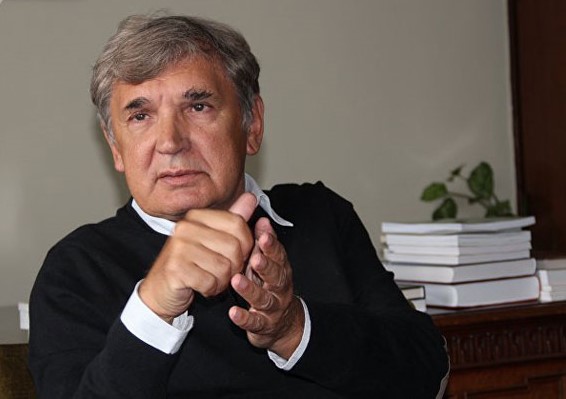
By Zlatko Kramarić*|ARGUMENTUM
One of the starting points of my texts[1] on the European spirit is not the mere acknowledgment of the crisis of the European Union – since such a diagnosis has long become a commonplace of political discourse – but rather a question that is very rarely asked: does a serious public debate on the future of Europe exist at all in societies that constantly and uncritically invoke that same Europe?
There is talk of Europe’s crisis, but without any ambition to interpret that crisis. There is talk of “alignment,” but not of vision. Such a policy produces obedience without influence and loyalty without a voice. Europe without spirit becomes a mere apparatus. Croatian politics without European thought becomes peripheral administration. Between these two empty spaces unfolds a silence that is mistakenly called responsibility.
In the Croatian political public today, there is no shortage of talk about Europe – what is lacking is thought about Europe. This is the key distinction that explains why the debate on the future of the European Union in Croatia is reduced to phrases, procedural issues, and the passive following of decisions made elsewhere.
In the Croatian political public sphere, there is a noticeable and almost complete absence of a systematic debate on Europe’s future in today’s deeply unstable and multipolar international environment. In public discourse, Europe most often appears as an administrative framework, a financial mechanism, or a bureaucratic corrective, but rarely as a civilizational project, and even less as a spiritual-political idea. This silence is not accidental – it is a symptom of a deeper intellectual and strategic void.
Such intellectual minimalism is by no means neutral. It produces political invisibility. A state that has no position on the future of Europe necessarily becomes an object rather than a subject of European politics. Instead of articulated positions, the Croatian public is offered administrative language; instead of strategy – technical alignment; instead of political imagination – silence. (At times one has the impression that precisely this phenomenon of “silence” is a permanent constant of Croatian politics more or less across the board, that from the 1970s to the present day nothing dramatic has happened in Croatian political life: we “wisely” remained silent after the collapse of the “Croatian Spring,” and we are just as “wisely” silent today.)
Croatian political elites relate to Europe instrumentally and defensively
Croatian political elites relate to Europe in an instrumental and defensive manner. The European Union is perceived as a finished framework to which one must adapt, rather than as a space in which struggles between different ideas, values, and interests should take place.
In Croatian political discourse, recycled commonplaces prevail: that the European Union is in deep crisis, that it has lost geopolitical weight in relation to the United States, Russia, or China, and that it is irreversibly lagging behind in making important strategic decisions. Yet behind these clichés no serious question follows: what kind of Europe does Croatia want, and what role does it wish to play in its future?
There is no serious debate in Croatian political discourse on the direction of Europe: on its normative identity, on the relationship between democracy and sovereignty, on the limits of the liberal order, on questions of solidarity. No one questions issues related to European strategic autonomy, nor migration policies – which are at the same time questions of our security, our cultural identities, and our faith. Can anyone recall when a relevant Croatian politician last took a clear and unambiguous position on the cultural or Christian foundations of the European idea?
In this sense, the Croatian political and even academic scene – despite its formal embeddedness in European institutions – shows a troubling degree of intellectual passivity. Europe is accepted as a given fact, but is almost never thought of as a problem, a challenge, or an open question; as a topic that cannot simply be ignored. Such an approach produces exclusively strategies of adaptation, in which any idea of active participation in addressing these evident problems and challenges is abandoned in advance – challenges that make our future increasingly uncertain.
Therefore, in my texts[2] we have attempted to bring the issue of the European spirit back to the centre of the debate: not as a nostalgic idea or an elitist construct, but as a space of constant tension between philosophy and politics, between historical experience and contemporary crises. Without such reflection, Europe risks becoming merely a technical project without internal cohesion, without its own public sphere, and thus without genuine political power – the kind of power that would enable it to be an indispensable actor in resolving global political and military crises: Ukraine, Gaza, Syria, Greenland, Venezuela…
The problem, therefore, is not criticism of the European Union – that criticism is necessary – but the fact that it remains superficial, defensive, and devoid of any coherent vision or imagination. One gains the impression that Croatian politics behaves as if the European framework were complete and immutable, and as if Croatia’s role within it were predefined, without any possibility of change.
Europe is accepted, but not thought
Such an approach produces a passive Europeanization without European imagination. Europe is accepted, but it is not thought. In the public sphere, there is almost no intellectual confrontation, no conceptual proposals, no attempt to articulate a Croatian perspective that would transcend day-to-day politics and empty administrative language.
If the Croatian public – especially its opposition segment – continues to avoid debating these issues, it will remain permanently on the periphery of processes that will unfold regardless – with or without our active participation. And being on the periphery is hardly a promising future.
⸻
References
[2] Z. Kramarić, The European Spirit…, Argumentum, Tirana, 2026. My texts on the European spirit start from the assumption that Europe’s crisis cannot be understood exclusively in institutional or economic terms. In our view, it is a crisis of meaning, political will, and public consciousness. Europe cannot be reduced to institutions and procedures. The European spirit has always emerged in the tension between philosophical reflection and political decision, between crisis and responsibility. Its disappearance from the public sphere today is a sign of a deeper crisis – a crisis of meaning and political courage.
© 2026 Argumentum