













Dr. Ermir I. Hajdini
Legal Advisor & University Lecturer
In his treatment of the Bona Dea scandal, Plutarch records Julius Caesar’s timeless rationale for divorcing his wife Pompeia despite a lack of definitive evidence: “Meos tam suspicione quam crimine carere oportet”—my household must be as free from suspicion as from crime. Transformed into the modern maxim “Caesar’s wife must not only be faithful, but must also appear to be faithful,” this principle dictates that institutional authority relies entirely upon the absolute preservation of structural and public legitimacy. When applied to the architecture of international relations, the proverb reveals a dangerous systemic vulnerability in current United States – and not only- foreign policy: the substitution of institutional diplomatic actors with private market figures.
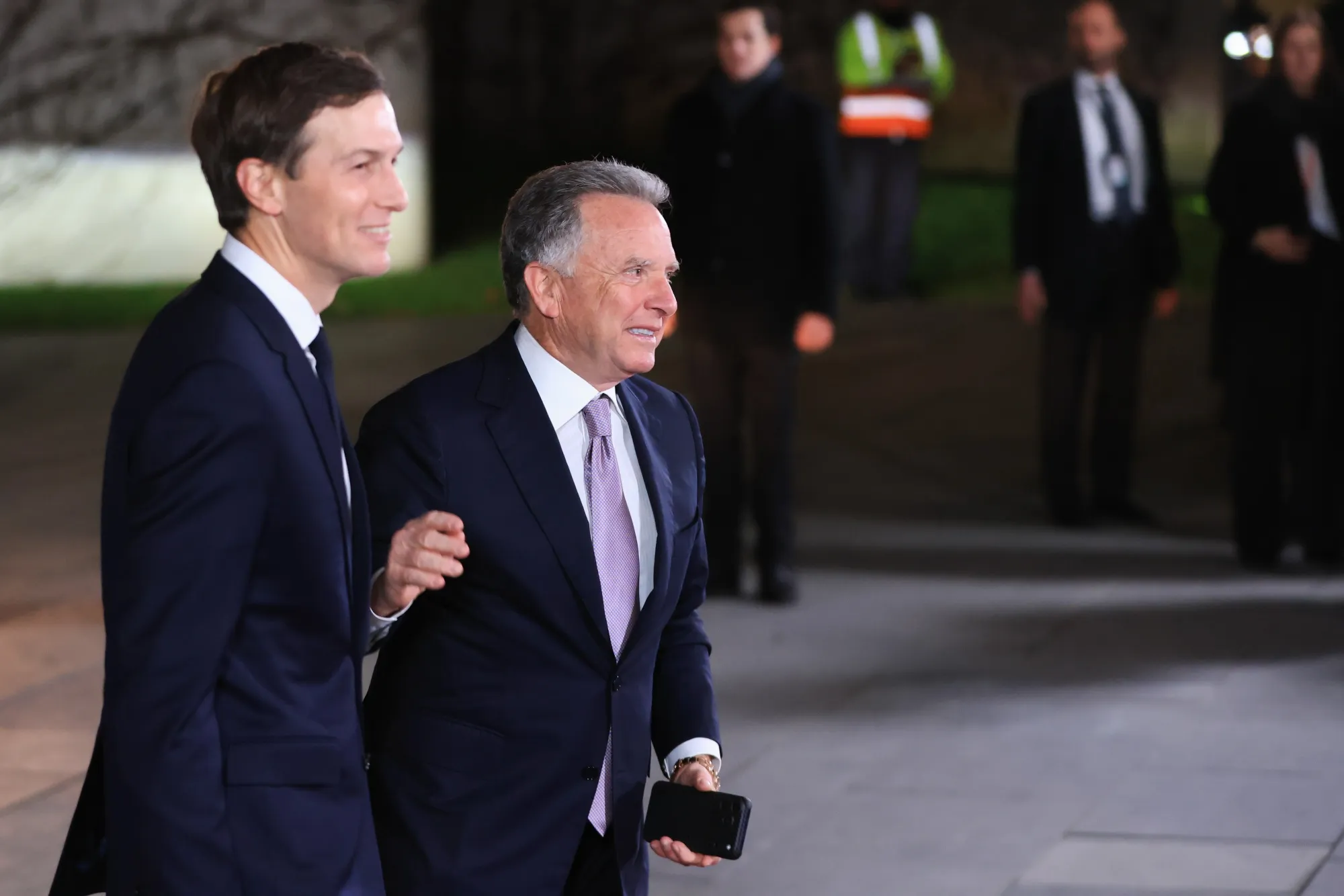
The recent delegation of highly sensitive diplomatic portfolios to commercial real estate and private equity figures—specifically Jared Kushner and Steve Witkoff—represents a radical departure from traditional American statecraft. Operating as primary interlocutors with entrenched adversaries such as Iran and the Russian Federation, these figures have substituted the institutional weight of the Department of State with a transactional, corporate philosophy. The strategic consequences of this shift demonstrate that while private capital operates on leverage, international security relies on permanence.
This deficit in traditional statecraft became explicitly apparent during critical non-proliferation talks with the Islamic Republic of Iran in Geneva and Islamabad. Guided by a real estate logic of swift concessions for material return, the American delegation reportedly proposed the provision of nuclear fuel packages in exchange for an immediate cessation of domestic uranium enrichment.[1] This overture fundamentally miscalculated the ideological terrain. For Tehran, domestic enrichment is not a commercial bargaining chip but an unyielding tenet of sovereign identity—a foundational reality that seasoned diplomats would have anticipated. The ensuing collapse of these transactional talks directly preceded a dangerous escalatory cycle, culminating in coordinated regional military strikes and narrowly averted total war before a fragile ceasefire was established.[2]
Crucially, the deployment of “familiar businessmen”—individuals elevated due to personal proximity and familial loyalty rather than institutional vetting—sends a devastating psychological signal to the global stage. Sophisticated, deeply bureaucratic adversaries interpret the absence of seasoned State Department professionals as an intellectual insult and a profound sign of American unseriousness. It signals that Washington is treating foundational matters of global security as a transient, short-term administration project rather than an enduring national priority.
Consequently, this dynamic invites a deeper analysis of contemporary American strategy: the choice of these specific envoys may not be a symptom of mere amateurism, but rather a hidden, deliberate will to achieve no tangible results. By placing familiar commercial figures at the vanguard, Washington constructs a diplomatic smokescreen. It projects the public illusion of high-level engagement to satisfy domestic audiences, while ensuring the negotiations remain trapped in a perpetual state of suspended animation.
This calculated “lag” serves a dual purpose. For the United States, it preserves a flexible status quo without the binding constraints of formal treaties. For sophisticated adversaries like Moscow and Tehran, who excel at weaponizing economic entanglement, the stagnation provides a window to stall, obfuscating the arena while testing the personal financial pressure points of their interlocutors. While career diplomats are legally and structurally insulated from personal financial stakes, private equity moguls represent a different proposition to adversaries dangling future market integration or access to sovereign wealth funds.[3] By treating complex geopolitical conflicts as corporate mergers, the U.S. approach risks decoupling economic sanctions from broader strategic alignments, deeply alarming NATO allies who fear that long-term European security is being bartered for short-term commercial concessions.
While reports indicate that Witkoff and Kushner have recently sought technical remediation via emergency briefings at the Oak Ridge National Laboratory[4], a brief facility tour cannot substitute for institutional memory, deep technical mastery, or the intricate verification protocols required by actual statecraft. If the United States is to salvage its deteriorating geopolitical positions, it must heed Caesar’s ancient warning. It is not enough for American foreign policy to possess structural power; it must exercise that power through legitimate, traditional statecraft actors whose authority—and immunity from both commercial temptation and strategic bribe—is universally recognized by both allies and adversaries alike.
Footnotes (Sources):
- [1] See diplomatic reporting on the Geneva-Islamabad diplomatic parameters, tracking the transition of arms control proposals from institutional frameworks to ad-hoc private channels (First Quarter, 2026).
- [2] Strategic Analysis of the Middle East Escalation Timeline: Detailing the breakdown of backchannel nuclear talks and subsequent military engagements leading up to the recent regional ceasefires (Spring 2026).
- [3] Institutional oversight reports detailing non-traditional diplomatic channels, strategic corruption vulnerabilities, and economic alignment strategies with sovereign wealth funds (2025–2026).
- [4] Department of Energy technical briefing logs and administrative travel records, Oak Ridge National Laboratory facility access records (June 2026).
© 2026 Argumentum