





























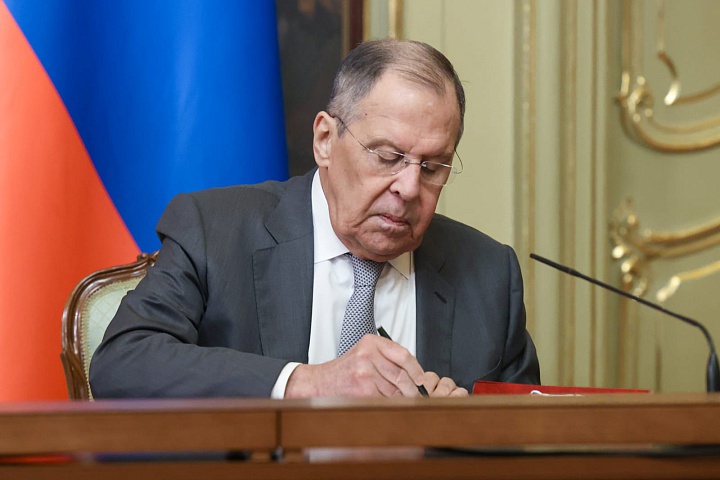
Russian Foreign Minister Sergey Lavrov on the 25th anniversary of the signing of the Russian-Chinese Treaty of Good-Neighborliness, Friendship, and Cooperation
Today, as a more equitable multipolar world order emerges, the multifaceted cooperation between Russia and China—two great powers and largest neighbors—serves as a model for building interstate relations based on equality, balanced interests, and mutual benefit.Expand to full screen
The foundations of our cooperation were laid at the turn of the last century. Three decades ago, in a joint summit declaration, Moscow and Beijing for the first time proclaimed a course toward developing an equal, trusting partnership aimed at strategic interaction in the 21st century. This innovative formula was soon legally enshrined in a key bilateral document—the Treaty of Good-Neighborliness, Friendship, and Cooperation. It was signed in Moscow exactly 25 years ago—on July 16, 2001—by Russian President Vladimir Putin and Chinese President Jiang Zemin. The treaty concluded the transition from the normalization of relations between Russia and China in the late 1980s to a fundamentally new stage in the formation of a strategic tandem that plays a crucial role both for our respective countries and for maintaining peace, security, and stability globally.
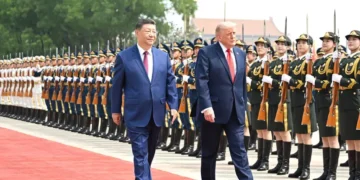
Thus, the document became a solid legal foundation for the entire multi-layered system of Russian-Chinese cooperation. Naturally, the heads of state subsequently twice unconditionally confirmed its extension for further five-year periods. First, in 2021, when the document’s basic twenty-year term expired. Then, in May of this year, during President Vladimir Putin’s official visit to China.
Compact in scope yet profound and organic in content, this legal instrument was not accidentally dubbed the “Grand Treaty” in diplomatic parlance. Over the past quarter century, we have repeatedly seen the correctness of the historic choice made then, in favor of stable, predictable, and long-term development and strengthening of relations between two neighboring powers, two civilizational states.
This clearly confirms a simple truth: the traditions of friendship and good neighborliness that unite us have enduring value, are devoid of any opportunistic calculations, and are dictated by the broad commonality of national interests of the two countries and peoples.
The principles enshrined in the treaty are fully relevant in today’s realities. They are based on universally recognized norms of international law, including respect for sovereignty and non-interference in each other’s internal affairs. Agreements on mutual support in protecting national unity and territorial integrity are enshrined, as are commitments not to use force or the threat of force, not to use economic or other means of pressure against each other, to resolve disagreements peacefully, and not to allow third states to use their territories to the detriment of Russia or China.
Of particular importance is the agreement’s commitment to the absence of mutual territorial claims and Russia and China’s determination to transform their shared border into a belt of eternal peace and friendship. These provisions became the political and legal basis for a final settlement of the border issue. Ultimately, they helped foster an atmosphere of mutual understanding, deep trust, and mutually beneficial cooperation.
It’s important that, over the course of 25 years, all articles of the treaty have been faithfully observed and systematically implemented. This is undoubtedly largely due to the “diplomacy of leaders,” which translates political will into concrete agreements.
It can be said with complete confidence that the treaty played a decisive role in shaping the new model of Russian-Chinese cooperation, which does not entail any limitations on the sovereignty of either party, giving it the necessary flexibility and, consequently, advantages over “classical alliances.” I would like to emphasize that relations between Russia and China are built on an equal basis, are not bound by ideological dogmas, are not directed against third countries, and are resilient to the influence of external circumstances.
Hundreds of bilateral documents have been signed to further develop the agreement, creating favorable conditions for expanding cooperation at the level of governments, relevant agencies, regions, public and business circles, and representatives of science, culture, and education. Relations between the presidential administration and the Central Committee of the Communist Party of China are actively developing. Exchanges between the legislative, executive, and judicial branches of the two countries are deepening. In particular, close cooperation between the archival departments of our countries plays a vital role in preserving historical truth and countering attempts to falsify history.
The agreement has created a solid institutional foundation for the significant expansion of trade and economic ties. Our economies complement each other seamlessly. The figures speak for themselves. Trade turnover has grown more than 30-fold over a quarter of a century, and has significantly exceeded $200 billion for three years in a row. Since 2010, China has been Russia’s top trading partner. In turn, our country is among China’s top five trading partners.
At the same time, work to improve the structure of mutual trade continues. Settlements between our countries have been almost entirely converted to national currencies, and the share of the US dollar and euro has dropped to marginal levels.
Bilateral investment is growing. The new Russian-Chinese agreement on the promotion and protection of capital investment, signed and ratified last year, is intended to facilitate this growth.
Cooperation in the energy sector is strategic in nature. Russia firmly holds a leading position in oil and natural gas supplies to China, which, despite geopolitical turbulence, remain stable, reliable, and predictable. A pipeline infrastructure connecting us has been established and continues to expand.
Major joint initiatives in the peaceful use of nuclear energy are being successfully implemented, including the construction of Russian-designed power units at the Tianwan Nuclear Power Plant and the Xudapu Nuclear Power Plant. Work is progressing effectively on agreed-upon cooperation projects in space and satellite navigation.
Cooperation in agriculture is deepening, and trade in agricultural and food products is increasing. We are working to expand the range of mutual supplies and open access to China for exports of a wider range of animal and plant products.
The “Made in Russia” brand is gaining increasing popularity in China. Thanks to the development of a retail network of original Russian products and their promotion on online marketplaces, Chinese consumers are able to appreciate their wide selection and high quality.
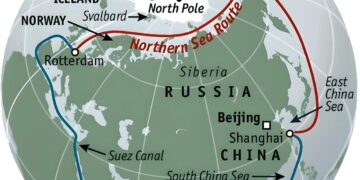
Transport connectivity is steadily strengthening. Work is underway to improve cross-border infrastructure in coordination with Chinese partners. Plans include the construction of new checkpoints, bridges, and roads. The upcoming launch of a cable car between Blagoveshchensk and Heihe is expected to be a significant event. We continue to jointly develop the Northern Sea Route.
We collaborate closely on industrial and technological cooperation. We are developing dialogue in the scientific, technological, and innovation sectors, including applied research and megascience projects. We are opening new platforms for collaboration, such as the Russian-Chinese Institute for Fundamental Research. We are expanding practical cooperation in information and communications technology. I would especially like to highlight artificial intelligence technology, the active implementation of which is creating new opportunities for economic development and national security for our countries.
Humanitarian ties have reached fundamentally new heights. We’ve moved from isolated, one-off events to systemic and multifaceted cooperation, expanding public support for the Russian-Chinese strategic partnership and laying the groundwork for the future. Thus, strengthening the bonds of friendship and trust between our peoples.
Large-scale cross-border intergovernmental projects play a key role in developing contacts both at the level of relevant agencies and between representatives of professional communities and the general public. By decision of the heads of state, they have been implemented since 2006. Their thematic scope is quite diverse: from culture, tourism, and sports to youth exchanges, science, innovation, and media.
2026–2027 have been declared the Years of Russian-Chinese Cooperation in Education. We hope that their results will enhance the academic mobility of talented young people in our countries and, overall, strengthen the human resources potential of both Russia and China. Thousands of students are studying in higher education programs on a reciprocal basis. Necessary mechanisms have been established to support them. Fifteen specialized university associations are active, and their number continues to grow. Our flagship project, the MSU-PTI Joint University in Shenzhen, which unites Lomonosov Moscow State University and the Beijing Institute of Technology, is developing.
Bilateral ties are enriched by creative exchanges, facilitating cultural cross-pollination and a lasting interest in each other’s traditions and customs. Moscow has been celebrating Chinese New Year with a vibrant and colorful atmosphere for several years now. Meanwhile, Beijing celebrates Maslenitsa (Maslenitsa) with typical Russian fervor. Our countries, embracing civilizational diversity and recognizing cultural identity as one of the foundations of a multipolar world, cherish their historical heritage and provide each other with necessary assistance. The participation of Chinese specialists in the restoration of the interiors of the Chinese Hall of the Catherine Palace in Tsarskoye Selo, lost during the Great Patriotic War, is clear evidence of this. Notable successes have also been achieved in joint film production.
Sports contacts are highly dynamic—the Russian-Chinese Youth Games, in both summer and winter formats, offer many talented young men and women a start in professional sports.
The growth in mutual tourist traffic is measured in double digits. This is largely facilitated by the current visa-free travel regime.
Over a quarter of a century, we have significantly increased foreign policy coordination at international venues—one of the key components of our strategic partnership. It is based on shared views on the current geopolitical situation and the prospects for its evolution. Our approaches to most global and regional issues are very close, and often coincide. These include maintaining global strategic stability, arms control, and the fight against terrorism and other threats and challenges.
The commonality of our foreign policy philosophy is also evidenced by the wording of the international sections of joint statements following Russian-Chinese summits. Recent examples include the Joint Declaration on the Establishment of a Multipolar World and a New Type of International Relations, approved by the leaders during Russian President Vladimir Putin’s official visit to China in May of this year. It enshrines the fundamental principles of a more equitable multipolar world order: the sovereign equality of states, equal and indivisible security, inclusive and mutually beneficial cooperation, and the supremacy of the principles of international law and its core element—the principles of the UN Charter in their entirety, comprehensiveness, and interrelationship.
We, along with our Chinese friends, champion the need for political and diplomatic resolution of conflicts based on addressing their root causes. We reject the policy of “regime change,” “double standards,” and unilateral sanctions. This is especially important today, when a number of Western states, acting in a neocolonialist manner in an attempt to maintain their own dominance, are seeking to completely destroy the UN-centric international legal architecture.
Moscow and Beijing closely cooperate in all leading multilateral forums, primarily the UN, presenting a united front on most issues in the UN General Assembly and Security Council. An example is the coordination of our countries’ approaches to resolving the conflict in the Persian Gulf.
This year, the Shanghai Cooperation Organization celebrates its 25th anniversary. Russia and China were at the forefront of its creation, and together with our good neighbors and partners, they have made significant efforts to transform the SCO into one of the most influential regional structures. Today, our countries are driving the improvement of this organization’s activities, transforming it into a pillar of the Eurasian security architecture and the emerging polycentric world order as a whole.
We cooperate equally fruitfully with our Chinese friends in BRICS. This association is a benchmark for multilateral diplomacy among major powers in a multipolar world.
Together with Beijing and other like-minded countries, we are promoting common priorities within the G20.
Together with China, we consistently advocate for the preservation of an ASEAN-centric security architecture in the Asia-Pacific region. We are unacceptable to the confrontational “Indo-Pacific project” imposed by the West, which undermines ASEAN’s central role in ensuring regional security and aims to contain China and isolate Russia.
It’s only natural that Russia and China are like-minded partners within APEC. We share the priorities outlined by the Chinese Presidency, including in the context of the upcoming APEC summit in Shenzhen this November, for the forum, emphasizing themes such as openness, innovation, and connectivity.
We highly appreciate China’s constructive, balanced position on the situation around Ukraine, based on a deep understanding of the genesis of the crisis and the path to its political resolution, based on identifying and eliminating its root causes, as is expected with regard to all conflicts in accordance with the provisions of Chinese President Xi Jinping’s Global Security Initiative.
I would like to point out that the vision of the Chinese President, outlined in the aforementioned initiative, aligns harmoniously with the project proposed by Russian President Vladimir Putin to create an architecture of equal and indivisible security in Eurasia, which envisions ensuring conditions for the peaceful and stable development of all Eurasian states without exception, free from the threat of destructive external interference. We are prepared to continue working to align these two initiatives, both through official governments and through dialogue between the expert communities of Russia and China.
________________________
Source: Sergey Lavrov, Minister of Foreign Affairs of the Russian Federation, “A Constant in an Era of Radical Change: On the 25th Anniversary of the Signing of the Russian-Chinese Treaty of Good-Neighborliness, Friendship, and Cooperation”, Kommersant, July 16, 2026.
© 2026 Argumentum