














• SHQIPËRI
  • KOSOVË
  • MAQEDONIA E VERIUT
  • MALI I ZI
  • Revista në PDF
27 July, 2026
  • Home
  • OP/ED

    27 July 1941 – A Site of Memory Between War, Revolution and Europe

    The cult of Saint Veneranda / Saint Pren(d)a / Saint Premte / Saint Paraskeva among Albanians

    The Self-Inflicted Decoupling: How U.S. Immigration Policy Is Ceding the Tech Edge to China

    The Blueprint Does Not Stop at the Drina

    The Underlying Logic behind China’s Economic Success

    Do Not Misuse the U.S. Declaration of Independence to Justify the Narrative of Insurrection in Albania

    The visit that changed Albania’s strategic future

    Pierre Nora and the institution of memory we lack in Eastern Europe

    The Blueprint of a Diplomatic Debacle: Analyzing Germany’s Historic UNSC Loss

  • Interview

    Exclusive Interview with Oleksandr Tyshchenko: A 40-Year Legacy of Chernobyl, Nuclear Risks, and Global Responsibility

    INTERVIEW: ZLATKO KRAMARIĆ – THOUGHTS ON THE OLD CONTINENT

    EXCLUSIVE / Ukrainian Ambassador to Albania, Volodymyr Shkurov: “Ukraine wants peace, but not at the expense of its freedom and independence”

    EXCLUSIVE| Ambassador Tayyar Kagan Atay: Türkiye and Albania, a Strategic Partnership Rooted in Shared Heritage and a Common Vision for the Future

    “Diplomacy, Not War”: Palestinian Ambassador to Albania Calls for Justice, Peace, and Global Action for Gaza

    Exclusive: “Even After Tito – Tito”/ Ambassador Zlatko Kramarić on Authoritarian Legacies and Democracy’s Future in the Balkans

    The Conclusion of the Diplomatic Mission / Ambassador Dancho Markovski: Strengthening Albania-North Macedonia Relations for a Shared European Future

    A Century of Diplomatic Relations Between Albania and Russia: Exclusive Interview with the Russian Ambassador to Albania, H.E. Alexey Zaytsev

    Exclusive/ The chairman of the Freedom Party, Ilir Meta: “The will of the citizens will triumph in Albania, as it did in North Macedonia”

  • Realpolitik

    The Summit of Unity! Think of peace and prepare for war! It’s only the start to the end! Just a pause between two wars!

    Peace with war diplomacy! The protest,  image and tourism! Why this silence from the EU Commission and Council? A deal or a pause?

    Just kind words  in Tivat! Where is the peace!? A deal yes, peace No!What is happening with USA and  EU?  5 elections but no solution!

    IBAR? ”Sufficiently! Much ado about nothing! Shart contrasts in Beijing! Where is the exit?!

    Neither peace nor war! Peace with bombs?! IBAR in autumn?! Not another Hormuz in Taivan! 

    IBAR – a springing board or an obstacle? Can we catch the EU Negotiation train 2027? When the dress makes the news!  EU electoral April  ends in a draw 1:1!  

    The European Parliament building in Strasbourg, France with flags waving calmly celebrating peace of the Europe. July 12, 2020.

    EU 2027 or 2037! Even half membership failed! No exit strategy!     

    What next?

    “With diplomatic velvet“! Major question marks! In Washington yes, but  in the White House NO! A strange dinner in Brussels!

  • Current Events

    The cult of Saint Veneranda / Saint Pren(d)a / Saint Premte / Saint Paraskeva among Albanians

    Who Is Interested in War in the Balkans?

    From Calculating Executions to Justifying Ethnic Cleansing

    When Algorithm Becomes the Most Powerful Manipulator: The Case of the Protests in Tirana

    NATO Summit in Ankara: Allies Adopt Declaration Reaffirming Collective Defence and Long-Term Security Commitments

    The Diplomacy of Gas and Algorithms: The Nuances of Official Tirana—Is It Breaking the European Taboo with Azerbaijan?

    Protection for Serbs, or Protection for Radoicic?

    The Architecture of Selective Sovereignty:Corporate Immunity, Technological Protectionism, and the Erosion of Credibility

    Montenegro’s Unfinished Transition

  • Top News

    Rama: Foreign Information Manipulation Has Become One of the Greatest Threats to Democracy and European Security

    The Council of Albanian Ambassadors condemns chauvinistic rhetoric by Serbian officials and calls for diplomatic action

    NATO at Ankara 2026: Strategic Rebalancing Between Russia Deterrence, Turkey’s Rise, and National Interests

    Daniel Serwer: A Bad War Ending Badly May Still Be Good News

    Friedrich Merz, Keir Starmer, António Costa, Donald Trump, Emmanuel Macron, Mark Carney, Ursula von der Leyen, Giorgia Meloni and Sanae Takaichi

    G7 Leaders Gather in Évian Amid Global Uncertainty, Focus on Security, Economy and International Cooperation

    Russian Ambassador in Tirana: “Without a Strong and Sovereign Russia, the Creation of a Just World Order Is Impossible”

    “The Flamingo Revolution”: Day 10 of Protests in Albania Draws International Attention

    Rama alleges ‘hybrid war’ behind protests against Kushner-linked coastal development

    No End in Sight: Trump, Netanyahu and the Expanding Middle East War

  • YOUR VOICE
  • Shqip
No Result
View All Result
Argumentum
  • Home
  • OP/ED

    27 July 1941 – A Site of Memory Between War, Revolution and Europe

    The cult of Saint Veneranda / Saint Pren(d)a / Saint Premte / Saint Paraskeva among Albanians

    The Self-Inflicted Decoupling: How U.S. Immigration Policy Is Ceding the Tech Edge to China

    The Blueprint Does Not Stop at the Drina

    The Underlying Logic behind China’s Economic Success

    Do Not Misuse the U.S. Declaration of Independence to Justify the Narrative of Insurrection in Albania

    The visit that changed Albania’s strategic future

    Pierre Nora and the institution of memory we lack in Eastern Europe

    The Blueprint of a Diplomatic Debacle: Analyzing Germany’s Historic UNSC Loss

  • Interview

    Exclusive Interview with Oleksandr Tyshchenko: A 40-Year Legacy of Chernobyl, Nuclear Risks, and Global Responsibility

    INTERVIEW: ZLATKO KRAMARIĆ – THOUGHTS ON THE OLD CONTINENT

    EXCLUSIVE / Ukrainian Ambassador to Albania, Volodymyr Shkurov: “Ukraine wants peace, but not at the expense of its freedom and independence”

    EXCLUSIVE| Ambassador Tayyar Kagan Atay: Türkiye and Albania, a Strategic Partnership Rooted in Shared Heritage and a Common Vision for the Future

    “Diplomacy, Not War”: Palestinian Ambassador to Albania Calls for Justice, Peace, and Global Action for Gaza

    Exclusive: “Even After Tito – Tito”/ Ambassador Zlatko Kramarić on Authoritarian Legacies and Democracy’s Future in the Balkans

    The Conclusion of the Diplomatic Mission / Ambassador Dancho Markovski: Strengthening Albania-North Macedonia Relations for a Shared European Future

    A Century of Diplomatic Relations Between Albania and Russia: Exclusive Interview with the Russian Ambassador to Albania, H.E. Alexey Zaytsev

    Exclusive/ The chairman of the Freedom Party, Ilir Meta: “The will of the citizens will triumph in Albania, as it did in North Macedonia”

  • Realpolitik

    The Summit of Unity! Think of peace and prepare for war! It’s only the start to the end! Just a pause between two wars!

    Peace with war diplomacy! The protest,  image and tourism! Why this silence from the EU Commission and Council? A deal or a pause?

    Just kind words  in Tivat! Where is the peace!? A deal yes, peace No!What is happening with USA and  EU?  5 elections but no solution!

    IBAR? ”Sufficiently! Much ado about nothing! Shart contrasts in Beijing! Where is the exit?!

    Neither peace nor war! Peace with bombs?! IBAR in autumn?! Not another Hormuz in Taivan! 

    IBAR – a springing board or an obstacle? Can we catch the EU Negotiation train 2027? When the dress makes the news!  EU electoral April  ends in a draw 1:1!  

    The European Parliament building in Strasbourg, France with flags waving calmly celebrating peace of the Europe. July 12, 2020.

    EU 2027 or 2037! Even half membership failed! No exit strategy!     

    What next?

    “With diplomatic velvet“! Major question marks! In Washington yes, but  in the White House NO! A strange dinner in Brussels!

  • Current Events

    The cult of Saint Veneranda / Saint Pren(d)a / Saint Premte / Saint Paraskeva among Albanians

    Who Is Interested in War in the Balkans?

    From Calculating Executions to Justifying Ethnic Cleansing

    When Algorithm Becomes the Most Powerful Manipulator: The Case of the Protests in Tirana

    NATO Summit in Ankara: Allies Adopt Declaration Reaffirming Collective Defence and Long-Term Security Commitments

    The Diplomacy of Gas and Algorithms: The Nuances of Official Tirana—Is It Breaking the European Taboo with Azerbaijan?

    Protection for Serbs, or Protection for Radoicic?

    The Architecture of Selective Sovereignty:Corporate Immunity, Technological Protectionism, and the Erosion of Credibility

    Montenegro’s Unfinished Transition

  • Top News

    Rama: Foreign Information Manipulation Has Become One of the Greatest Threats to Democracy and European Security

    The Council of Albanian Ambassadors condemns chauvinistic rhetoric by Serbian officials and calls for diplomatic action

    NATO at Ankara 2026: Strategic Rebalancing Between Russia Deterrence, Turkey’s Rise, and National Interests

    Daniel Serwer: A Bad War Ending Badly May Still Be Good News

    Friedrich Merz, Keir Starmer, António Costa, Donald Trump, Emmanuel Macron, Mark Carney, Ursula von der Leyen, Giorgia Meloni and Sanae Takaichi

    G7 Leaders Gather in Évian Amid Global Uncertainty, Focus on Security, Economy and International Cooperation

    Russian Ambassador in Tirana: “Without a Strong and Sovereign Russia, the Creation of a Just World Order Is Impossible”

    “The Flamingo Revolution”: Day 10 of Protests in Albania Draws International Attention

    Rama alleges ‘hybrid war’ behind protests against Kushner-linked coastal development

    No End in Sight: Trump, Netanyahu and the Expanding Middle East War

  • YOUR VOICE
  • Shqip
No Result
View All Result
Argumentum
No Result
View All Result
Home ENGLISH

Crisis Governance and Strategic Communication in the Global South: Navigating Complexity and Uncertainty 

6 May, 2026
in ENGLISH, Global
A A
Created with GIMP

Created with GIMP

Share on FacebookShare on Twitter

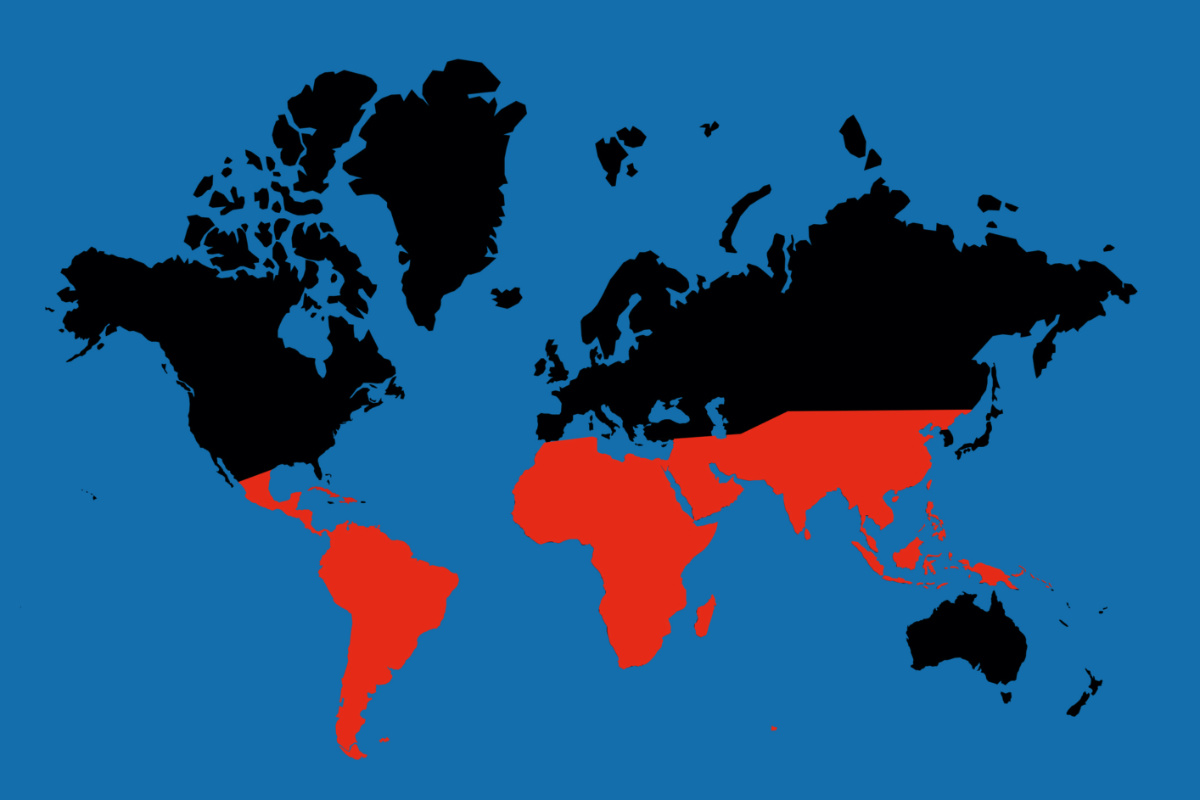
The International Institute for Middle-East and Balkan Studies (IFIMES), from Ljubljana, is known for its incisive analyses of global developments, particularly in the Middle East and the Balkans. In this vein, Dr. Pablo Cruz in his article “Crisis Governance and Strategic Communication in the Global South: Navigating Complexity and Uncertainty” highlights how increasingly complex and interconnected crises are making crisis management and communication essential to modern governance, especially in the Global South, while stressing the need for systematic approaches and effective leadership.

Dr. Pablo Cruz 

The forthcoming GAFG High-Level Executive Programme on Crisis Management and Crisis Communication Management takes place at a time when governments and strategic industries, especially in the Global South, are facing increasingly complex and interconnected crises. Clearly, in today’s interconnected and unpredictable world, no government, corporation, or public institution is immune to crisis, as natural disasters, cyberattacks, economic shocks, public scandals, and misinformation campaigns can suddenly threaten stability, credibility, and public confidence. This perspective is particularly relevant when considering the structural vulnerabilities that characterize many governance systems in the Global South.

Contemporary crises are no longer isolated events. They evolve rapidly, cross geographic and administrative boundaries, and unfold under conditions of uncertainty, political pressure, and public scrutiny.

A relevant contemporary illustration of these dynamics can be observed in the ongoing tensions across the Middle East, where crises increasingly exhibit unprecedented horizontal and vertical escalatory trend. Conflicts in the several neuralgic points of this planet are no longer confined to territorial disputes but are intertwined with economic fragility, geopolitical rivalries, ideological fanning, information warfare, and humanitarian pressures. These overlapping factors create environments in which uncertainty, rapid escalation, and fragmented communication are the norm rather than the exception. For governments and institutions—particularly those with limited crisis management infrastructure—this context underscores the importance of coordinated leadership, strategic communication, and preparedness. The MENA/West Asia case thus reinforces the broader argument of this synopsis: without structured crisis management systems and coherent communication strategies, complex crises risk spiraling beyond control, eroding institutional legitimacy and further destabilizing already vulnerable regions. 

This synopsis underlines a persistent structural challenge: although crisis management theory has developed considerably, institutional capacities in many parts of the Global South remain limited and unevenly developed. In numerous cases, crisis responses are still improvised or fragmented and often rely on risk management approaches that are not fully suited to unpredictable crises. Furthermore, leadership plays – as Silvie Drahošová observes – a  decisive role, as leaders can either stabilize a crisis or worsen it, particularly in terms of communication, coordination, and accountability (Drahošová, 2025). 

In this regard, the Crisis Management and Crisis Communication Management executive programme of the Global Academy for Future Governance (GAFG) and its partners such as the Intl Institute IFIMES directly addresses these gaps. By combining high-level reflections from experienced international decision-makers with simulation-based sessions centered on strategic forecasting, crisis communication drills, and resilience design, the programme links theory to practice. It recognizes that crisis management and crisis communication are inseparable processes. Institutions responding to a crisis must align their actions with how they explain and justify them, as well as how they manage public expectations, in order to prepare adequately, navigate effectively, and restore institutional trust afterward.

Therefore, this programme should be understood not merely as a theoretical discussion, but as a practical step toward strengthening institutional capacity and preparedness. For leaders in government and strategic industries, especially in the Global South, it represents an opportunity to embed resilience, coordination mechanisms, and reputational safeguarding into the core of decision-making systems, moving from improvisation toward structured readiness.

Guidance for leaders in the Global South

Crises itself can be defined as situations in which the basic social structures, norms, and values of a system are threatened by an unexpected event that affects individuals, groups, organizations, cultural systems, entire societies, or even the global system (Christensen et al., 2016; Boin et al., 2005). These situations manifest as natural disasters, terrorist attacks, pandemics, industrial or transportation accidents, among others, and require rapid decision-making under conditions of uncertainty (Christensen et al., 2016).

Such situations may acquire transboundary characteristics, as they can involve multiple geographical, administrative, infrastructural, and cultural boundaries. This, in turn, complicates the ability of public policy designers, regulatory actors, and administrators to establish administrative structures that are simultaneously stable, flexible, and effective (Christensen et al., 2016).

When a crisis occurs, specialization is necessary to ensure the availability of relevant skills and knowledge. However, this must be accompanied by clear leadership, defined responsibilities, and a well-established chain of command (Christensen et al., 2016). During such events, blame dynamics often emerge, shaping narratives around responsibility and performance and framing which actors are perceived as winners or losers (Boin, Kuipers & Overdijk, 2013). These dynamics highlight the importance of effective leadership, as inadequate decisions can exacerbate a crisis (Boin, Kuipers & Overdijk, 2013).

Crisis management aims to reduce harm, protect institutions, and maintain public trust (Boin, Kuipers & Overdijk, 2013). This is particularly important in a context where trust in and support for institutions continues to deteriorate (Bećirović, 2020). However, crisis management should not be regarded as a universal solution capable of addressing every scenario, and expectations should therefore remain realistic. Several factors must be considered when addressing a crisis, including its size, origin, speed of development, predictability, competitors, victims, spectators, the degree of freedom of actors, and available resources (Boin, Kuipers & Overdijk, 2013), as well as the lack of transparency in the concentration of power during crisis situations, as highlighted by the Global Academy for Future Governance (GAFG).

Some authors divide crisis management into three main categories: process, preparation, response, and recovery. Conversely, Boin, Kuipers y Overdijk (2013) identify ten essential executive tasks: early recognition; sense making; decision-making; coordination; coupling and decoupling; meaning making; communication; accountability; learning; and resilience-building. For the purposes of this synopsis, particular attention is given to communication.

During a crisis, communication must explain the origins of the event, its consequences, the actions required to mitigate its effects, the activities that can support crisis management, and the actors responsible for implementing these measures (Boin, Kuipers y Overdijk, 2013). Communication must also operate both toward citizens and across organizations. However, communication systems are often disrupted, fragmented, or overloaded during crisis situations, making this task particularly challenging.

The crisis management perspective emphasizes the importance of prevention and risk management while recognizing that critical events can always occur (Boin, Hart y Kuipers, 2018). Preparedness, therefore, can determine whether a situation remains manageable or escalates into a large-scale disaster.

At the same time, the role of leadership should not be overstated. Leaders may exacerbate crises by ignoring risks, making inadequate decisions, or prioritizing particular interests over effective crisis resolution (Boin, Kuipers y Overdijk, 2013).

In the context of the Global South, the study of crisis management has traditionally focused on stable and democratic environments. However, it is necessary to expand this focus, particularly in regions such as Latin America, where the relationship between crisis management and public administration remains underexplored (Boin and Rhinard, 2023).

As a result, the number of studies on crisis management in the Global South remains limited. A key factor is the lack of training, specialization, and professionalization in this field. Instead, attention is often directed toward risk management, which differs fundamentally from crisis management in that it addresses known scenarios rather than unexpected and unprecedented events (cfr. Boin et al., 2018; Backman and Rhinard, 2017; Boin et al., 2005).

This situation does not stem from a lack of capability among scholars or public administrators, who often respond using available tools and improvisation, but rather from the limited institutionalization of crisis management within academic and public sector structures.

This can be illustrated by comparing the extensive crisis management infrastructure in the European Union with the relative absence of such structures in the Global South. For example, in Mexico, despite some initiatives, there is currently no dedicated crisis management center, and universities rarely offer specialized courses in this field, although risk management is more widely taught.

Therefore, if capacity and leadership in crisis management are to be strengthened, the subject must be integrated into universities and public institutions. This includes the development of training centers, simulation exercises, and communication strategies. Without such efforts, crisis response will continue to rely on improvisation, increasing the potential risks for society.

/IFIMES

Related Posts

ENGLISH

Rama: Foreign Information Manipulation Has Become One of the Greatest Threats to Democracy and European Security

27 July, 2026
ENGLISH

27 July 1941 – A Site of Memory Between War, Revolution and Europe

27 July, 2026
Balkan Overview

The OSCE Cannot Reward Serbia’s Strategic Ambiguity

27 July, 2026

Follow US

Subscribe

Receive Argumentum Magazine by Email

Last Posts

Rama: Foreign Information Manipulation Has Become One of the Greatest Threats to Democracy and European Security

27 July, 2026

27 July 1941 – A Site of Memory Between War, Revolution and Europe

27 July, 2026

The OSCE Cannot Reward Serbia’s Strategic Ambiguity

27 July, 2026

The cult of Saint Veneranda / Saint Pren(d)a / Saint Premte / Saint Paraskeva among Albanians

26 July, 2026

Public Administration and Civic Engagement in the Western Balkans: From Macro-Politics to Procedural Accountability

24 July, 2026
Argumentum

“Argumentum”, një proces intelektual …

Contact Us

[email protected]
[email protected]
[email protected]

Follow Us

Media Partner

Register

Receive Argumentum Magazine by Email
  • Home
  • Privacy Policy
  • About Us
  • Contact

© 2022 Argumentum. All Rights Reserved. | NUIS: L91415033Q

Welcome Back!

Login to your account below

Forgotten Password? Sign Up

Create New Account!

Fill the forms bellow to register

*By registering into our website, you agree to the Terms & Conditions and Privacy Policy.
All fields are required. Log In

Retrieve your password

Please enter your username or email address to reset your password.

Log In

Add New Playlist

No Result
View All Result
  • Home
  • OP/ED
  • Interview
  • Realpolitik
  • Current Events
  • Top News
  • YOUR VOICE
  • Shqip

© 2022 Argumentum. All Rights Reserved. | NUIS: L91415033Q

This website uses cookies. By continuing to use this website you are giving consent to cookies being used. Visit our Privacy and Cookie Policy.