






• SHQIPËRI
  • KOSOVË
  • MAQEDONIA E VERIUT
  • MALI I ZI
  • Revista në PDF
4 June, 2026
  • Home
  • OP/ED

    The Blueprint of a Diplomatic Debacle: Analyzing Germany’s Historic UNSC Loss

    Cyber Attribution, Corruption, and the False-Flag Question in Albania’s 2022 Alleged Iranian Cyberattack

    Between Russia, Iran and Europe: Azerbaijan as a balancing power in the South Caucasus

    The Zero-Tariff Gate: Sovereignty as a Service in the Sino-African Corridor

    Albania vs. the Sea/ Marginal Notes on A. Leka’s Novel The Hidden Side of the Albanian Socialist Garden

    May 9 and the long shadow of a Letter: Is Europe still Schuman’s Project?

    The Arbnesh of Zadar: A living memory of Albanian identity on the Adriatic coast

    Science Diplomacy and Academic Freedom: A strategic nexus for contemporary diplomacy

    Serbia and Kosovo between new regional alliances and old geopolitical patterns

  • Interview

    Exclusive Interview with Oleksandr Tyshchenko: A 40-Year Legacy of Chernobyl, Nuclear Risks, and Global Responsibility

    INTERVIEW: ZLATKO KRAMARIĆ – THOUGHTS ON THE OLD CONTINENT

    EXCLUSIVE / Ukrainian Ambassador to Albania, Volodymyr Shkurov: “Ukraine wants peace, but not at the expense of its freedom and independence”

    EXCLUSIVE| Ambassador Tayyar Kagan Atay: Türkiye and Albania, a Strategic Partnership Rooted in Shared Heritage and a Common Vision for the Future

    “Diplomacy, Not War”: Palestinian Ambassador to Albania Calls for Justice, Peace, and Global Action for Gaza

    Exclusive: “Even After Tito – Tito”/ Ambassador Zlatko Kramarić on Authoritarian Legacies and Democracy’s Future in the Balkans

    The Conclusion of the Diplomatic Mission / Ambassador Dancho Markovski: Strengthening Albania-North Macedonia Relations for a Shared European Future

    A Century of Diplomatic Relations Between Albania and Russia: Exclusive Interview with the Russian Ambassador to Albania, H.E. Alexey Zaytsev

    Exclusive/ The chairman of the Freedom Party, Ilir Meta: “The will of the citizens will triumph in Albania, as it did in North Macedonia”

  • Realpolitik

    IBAR? ”Sufficiently! Much ado about nothing! Shart contrasts in Beijing! Where is the exit?!

    Neither peace nor war! Peace with bombs?! IBAR in autumn?! Not another Hormuz in Taivan! 

    IBAR – a springing board or an obstacle? Can we catch the EU Negotiation train 2027? When the dress makes the news!  EU electoral April  ends in a draw 1:1!  

    The European Parliament building in Strasbourg, France with flags waving calmly celebrating peace of the Europe. July 12, 2020.

    EU 2027 or 2037! Even half membership failed! No exit strategy!     

    What next?

    “With diplomatic velvet“! Major question marks! In Washington yes, but  in the White House NO! A strange dinner in Brussels!

    From a great ‘apple of disaccord’ to a  point of  cooperation! A bad start! The strange absence in Davos!

    5 lessons from the American 3 January! Don’t count the chicken before they are hatched! Will NATO freeze in Greenland? Wrong diplomatic messages!

    German Chancellor Friedrich Merz, European Commission President Ursula von der Leyen, Ukraine's President Volodymyr Zelenskiy, U.S. Special Envoy Steve Witkoff and Jared Kushner, son-in-law of U.S. President Donald Trump line up for a family photo opportunity at the Chancellery in Berlin, Germany, December 15, 2025.    REUTERS/Lisi Niesner/Pool

    A Strategy that could change the world! Europe in Berlin! Why an historic compromise? Only charm diplomacy in Athens!

  • Current Events

    Serbia – China 2026: Technological partnership, geopolitical positioning and a new phase of the Chinese presence in the Western Balkans

    The Digital Protectorate: How the EU AI Act Codified Silicon Valley’s Monopoly

    The 28th MFC Annual Conference in Durrës / Sulaj: Microfinance remains a key instrument for financial inclusion

    Serbia at the Crossroads of EU Integration and Geopolitical Balancing: IFIMES Analysis

    Tirana – €20 Million EU–Banking Agreement Boosts Albanian SMEs

    The Myth of Independence: How Chinese Efficiency is Rewriting the Constitution of Modern Geopolitics!

    Europe Yesterday and Today: Why 9 May Still Matters

    “EU4Municipalities II” Project, a Strategic Investment for Strengthening Municipalities and Accelerating Albania’s Path towards the EU

    Eight Years in the Service of Identity: The Journey of the Montenegrin Community in Albania

  • Top News

    No End in Sight: Trump, Netanyahu and the Expanding Middle East War

    Tirana – €20 Million EU–Banking Agreement Boosts Albanian SMEs

    “EU4Municipalities II” Project, a Strategic Investment for Strengthening Municipalities and Accelerating Albania’s Path towards the EU

    Albania, Italy deepen defence ties with naval shipbuilding deal

    U.S. Embassy: Iran-Linked Groups May Target Americans and Iranian Opposition in Albania

    The Council of Albanian Ambassadors disappointed with the voting of the draft law on the foreign service in the parliamentary committees.

    Prime Minister Edi Rama Addresses Israel’s Knesset in Historic Special Session

    Kazakhstan’s Strategic Reform Agenda: Stability, Modern Governance, and Responsible Diplomacy

    Trump Invites Rama to Peace Board, Prime Minister: Proud of Albania

  • YOUR VOICE
  • Shqip
No Result
View All Result
Argumentum
  • Home
  • OP/ED

    The Blueprint of a Diplomatic Debacle: Analyzing Germany’s Historic UNSC Loss

    Cyber Attribution, Corruption, and the False-Flag Question in Albania’s 2022 Alleged Iranian Cyberattack

    Between Russia, Iran and Europe: Azerbaijan as a balancing power in the South Caucasus

    The Zero-Tariff Gate: Sovereignty as a Service in the Sino-African Corridor

    Albania vs. the Sea/ Marginal Notes on A. Leka’s Novel The Hidden Side of the Albanian Socialist Garden

    May 9 and the long shadow of a Letter: Is Europe still Schuman’s Project?

    The Arbnesh of Zadar: A living memory of Albanian identity on the Adriatic coast

    Science Diplomacy and Academic Freedom: A strategic nexus for contemporary diplomacy

    Serbia and Kosovo between new regional alliances and old geopolitical patterns

  • Interview

    Exclusive Interview with Oleksandr Tyshchenko: A 40-Year Legacy of Chernobyl, Nuclear Risks, and Global Responsibility

    INTERVIEW: ZLATKO KRAMARIĆ – THOUGHTS ON THE OLD CONTINENT

    EXCLUSIVE / Ukrainian Ambassador to Albania, Volodymyr Shkurov: “Ukraine wants peace, but not at the expense of its freedom and independence”

    EXCLUSIVE| Ambassador Tayyar Kagan Atay: Türkiye and Albania, a Strategic Partnership Rooted in Shared Heritage and a Common Vision for the Future

    “Diplomacy, Not War”: Palestinian Ambassador to Albania Calls for Justice, Peace, and Global Action for Gaza

    Exclusive: “Even After Tito – Tito”/ Ambassador Zlatko Kramarić on Authoritarian Legacies and Democracy’s Future in the Balkans

    The Conclusion of the Diplomatic Mission / Ambassador Dancho Markovski: Strengthening Albania-North Macedonia Relations for a Shared European Future

    A Century of Diplomatic Relations Between Albania and Russia: Exclusive Interview with the Russian Ambassador to Albania, H.E. Alexey Zaytsev

    Exclusive/ The chairman of the Freedom Party, Ilir Meta: “The will of the citizens will triumph in Albania, as it did in North Macedonia”

  • Realpolitik

    IBAR? ”Sufficiently! Much ado about nothing! Shart contrasts in Beijing! Where is the exit?!

    Neither peace nor war! Peace with bombs?! IBAR in autumn?! Not another Hormuz in Taivan! 

    IBAR – a springing board or an obstacle? Can we catch the EU Negotiation train 2027? When the dress makes the news!  EU electoral April  ends in a draw 1:1!  

    The European Parliament building in Strasbourg, France with flags waving calmly celebrating peace of the Europe. July 12, 2020.

    EU 2027 or 2037! Even half membership failed! No exit strategy!     

    What next?

    “With diplomatic velvet“! Major question marks! In Washington yes, but  in the White House NO! A strange dinner in Brussels!

    From a great ‘apple of disaccord’ to a  point of  cooperation! A bad start! The strange absence in Davos!

    5 lessons from the American 3 January! Don’t count the chicken before they are hatched! Will NATO freeze in Greenland? Wrong diplomatic messages!

    German Chancellor Friedrich Merz, European Commission President Ursula von der Leyen, Ukraine's President Volodymyr Zelenskiy, U.S. Special Envoy Steve Witkoff and Jared Kushner, son-in-law of U.S. President Donald Trump line up for a family photo opportunity at the Chancellery in Berlin, Germany, December 15, 2025.    REUTERS/Lisi Niesner/Pool

    A Strategy that could change the world! Europe in Berlin! Why an historic compromise? Only charm diplomacy in Athens!

  • Current Events

    Serbia – China 2026: Technological partnership, geopolitical positioning and a new phase of the Chinese presence in the Western Balkans

    The Digital Protectorate: How the EU AI Act Codified Silicon Valley’s Monopoly

    The 28th MFC Annual Conference in Durrës / Sulaj: Microfinance remains a key instrument for financial inclusion

    Serbia at the Crossroads of EU Integration and Geopolitical Balancing: IFIMES Analysis

    Tirana – €20 Million EU–Banking Agreement Boosts Albanian SMEs

    The Myth of Independence: How Chinese Efficiency is Rewriting the Constitution of Modern Geopolitics!

    Europe Yesterday and Today: Why 9 May Still Matters

    “EU4Municipalities II” Project, a Strategic Investment for Strengthening Municipalities and Accelerating Albania’s Path towards the EU

    Eight Years in the Service of Identity: The Journey of the Montenegrin Community in Albania

  • Top News

    No End in Sight: Trump, Netanyahu and the Expanding Middle East War

    Tirana – €20 Million EU–Banking Agreement Boosts Albanian SMEs

    “EU4Municipalities II” Project, a Strategic Investment for Strengthening Municipalities and Accelerating Albania’s Path towards the EU

    Albania, Italy deepen defence ties with naval shipbuilding deal

    U.S. Embassy: Iran-Linked Groups May Target Americans and Iranian Opposition in Albania

    The Council of Albanian Ambassadors disappointed with the voting of the draft law on the foreign service in the parliamentary committees.

    Prime Minister Edi Rama Addresses Israel’s Knesset in Historic Special Session

    Kazakhstan’s Strategic Reform Agenda: Stability, Modern Governance, and Responsible Diplomacy

    Trump Invites Rama to Peace Board, Prime Minister: Proud of Albania

  • YOUR VOICE
  • Shqip
No Result
View All Result
Argumentum
No Result
View All Result
Home ENGLISH

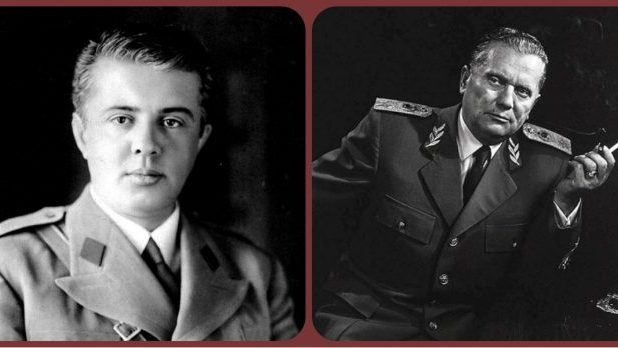
TITO AND HOXHA: PARALLEL AUTOCRACIES AND DIFFERENT MODES OF REPRESSION

11 December, 2025
in ENGLISH, English OP/ED
A A
Share on FacebookShare on Twitter

By Zlatko Kramarić*|ARGUMENTUM

Introduction: A Diplomat’s Perspective and the Myth of “Soft Titoism”

During more than six years in Albania, I frequently heard, from serious and highly educated interlocutors, extremely positive evaluations of Tito’s Yugoslavia. On several occasions, I sensed a kind of wistful admiration, as if they considered that I had lived in a “more democratic” country than Albania under Hoxha. This perception is understandable: compared with the extreme model of totalitarian isolation Albanians endured for decades, Yugoslavia appeared more open, culturally diverse, and economically dynamic.

Yet I considered it my responsibility to point out that such a perception is based on selective memory and mythology rather than a full historical analysis. Yugoslav reality was not idyllic; Tito was not a democrat. He was a more sophisticated and skilful manipulator than Hoxha, capable of sustaining an international image of openness while maintaining full internal control. His break with Stalin in 1948 served primarily the consolidation of personal power rather than democratization. The resulting system can be described as anti-Stalinist Stalinism: the rituals and institutional mechanisms of Stalinism persisted, albeit under the ideological framework of “self-management,” “non-alignment,” and “Yugoslav exceptionalism.”

The following analysis integrates all these aspects — postwar repression, secret police, political prisons, assassination of émigrés, censorship, economic policies, and migration — and situates them in a comparative framework with Hoxha’s Albania.

I. Postwar Violence and Consolidation of Power

1. Mass killings and the Yugoslav “Red Terror” (1944–1946)

Immediately after the war, the Yugoslav communist leadership conducted extensive purges. Although the exact number of victims is still debated, there is broad consensus that tens of thousands were executed in extrajudicial procedures, mass executions, and staged trials[^1]. This initial phase of the “Red Terror” laid the foundation for the later regime: eliminating real and potential opponents, punishing class enemies, and creating a climate of fear.


II. Secret Police and the Machinery of Control

1. OZNA – UDBA – SDB: Evolution of Repressive Structures

Founded in 1944, OZNA became the core of a powerful security apparatus that later institutionalized as UDBA and the State Security Service (SDB). Its functions included monitoring political opposition, intellectual and cultural circles, émigré communities, infiltrating organizations, and preventive repression[^2]. Unlike Hoxha’s Sigurimi, which relied on blunt, omnipresent terror, Yugoslav security services employed sophisticated, flexible, and internationally oriented methods.

2. Assassinations of Political Émigrés

From the 1960s to the 1980s, Yugoslav security services carried out numerous assassinations and covert operations against Croatian, Albanian, Serbian, and other émigrés in Western Europe. The case of Stjepan Đureković in Germany is the most well-known[^3], but it is only one of many. Similar practices existed in Bulgaria and other communist states[^4].

III. Prison Camps and Political Incarceration

1. Goli Otok as a Paradigm

After the 1948 conflict with Stalin, Goli Otok became the central institution of political punishment. It combined physical punishment, psychological pressure, and ideological “re-education”[^5]. This institution illustrates how the Yugoslav regime could apply repression internally, even while projecting a softer international image.

2. Later Political Prisons and Controlled Dissent

Though formal labor camps ceased after the 1950s, the system continued to punish dissent. Intellectuals and student activists in 1971 and 1981, as well as figures like Mihajlo Mihajlov, were subject to prosecution and surveillance[^6].

IV. Verbal Criminalization, Censorship, and the “Boundaries of Permissible”

  • criminalization of criticism of socialism and “the person and work of Tito” (Article 133)
  • oversight of publishing houses and editorial boards
  • filtering cultural production through political control and self-censorship

Although certain zones of relative freedom existed (film, literature, theater), all had invisible boundaries[^7].

V. The Economic Model: Growth on Credit and Later Collapse

1. The Boom Years (1950–1970)

Opening to the West brought investment and loans. Many Albanians remember Yugoslav standards during this period, reinforcing the myth of long-term prosperity[^8].

2. Debt, Inflation, and Crisis (1970–1980)

By the mid-1970s, the system relied increasingly on foreign debt. This led to inflation, shortages, unemployment, and rising internal tensions[^9].

3. Gastarbeiter Policy as a Political and Economic Safety Valve

Issuing passports and encouraging temporary labor migration abroad reduced social pressures, generated foreign exchange, and partially released domestic political tension[^10].

VI. Tito vs. Hoxha: Differences in Style, Similarities in Structure

1. Hoxha’s Albania: Isolationist Totalitarianism

  • total autarky
  • elimination of intellectual elite
  • ideological rigidity
  • repression without economic relief mechanisms
  • Stalinist monolithism[^11]

2. Tito’s Yugoslavia: Sophisticated Authoritarian Modernization

  • the appearance of pluralism within a one-party system
  • non-alignment as geopolitical legitimation
  • controlled cultural freedoms
  • secret police with international reach
  • modernization financed through debt
  • a “soft” but pervasive cult of personality[^12]

3. Core Argument

Both regimes were authoritarian; Tito’s model was a soft-power version of Stalinism, while Hoxha’s was rigidly orthodox. The difference was stylistic, not essential.

VII. Conclusion: Why the Myth of Tito Persists

Albanian nostalgia for Tito stems from contrast with their own harsher historical experience. A full analysis must include:

  • postwar mass killings
  • political prisons and forced labor camps
  • censorship
  • verbal criminalization
  • assassinations of émigrés
  • economic instability

Only in this holistic context can we understand that Titoism was an authoritarian system with a European façade — more sophisticated than Hoxha’s, but undemocratic.

[^1]: Jozo Tomasevich, War and Revolution in Yugoslavia (Stanford: Stanford University Press, 2001), 202–215. – Detailed account of postwar killings, statistical estimates, and regional differences.
[^2]: Rory Yeomans, ed., The UDBA Papers (London: Routledge, 2016), 45–67. – Organizational structure and methods of secret services, including domestic and foreign operations.
[^3]: Marko Attila Hoare, “The Assassination of Stjepan Đureković,” Journal of Contemporary History 37, no. 3 (2002): 443–472. – Case study of émigré assassination in Germany.
[^4]: Tzvetan Todorov, Totalitarianism in Eastern Europe (Princeton: Princeton University Press, 2003), 88–102. – Comparative example of Bulgaria.
[^5]: Martin Previšić, History of Goli Otok (Zagreb: Naklada Ljevak, 2010), 34–56. – Conditions in the camp, psychological and labor regimes.
[^6]: Sabrina Ramet, The Three Yugoslavias (Bloomington: Indiana University Press, 2006), 215–230. – Intellectual repression and student protests.
[^7]: Ibid., 233–240. – Boundaries of permissible discourse in culture; self-censorship.
[^8]: Susan Woodward, Balkan Tragedy: Chaos and Dissolution after the Cold War (Washington: Brookings Institution Press, 1995), 52–60. – Economy of Yugoslavia in 1950s–1960s.
[^9]: Ibid., 61–70. – Inflation, debt, and the onset of crisis in 1970s.
[^10]: Jasna Dragović-Soso, State and Society in Yugoslavia (Cambridge: Cambridge University Press, 2002), 111–125. – Gastarbeiter policy and passport issuance as political mechanism.
[^11]: Bernd J. Fischer, Albania at War, 1939–1945 (New York: Columbia University Press

*Zlatko Kramarić is a Croatian publicist, author, and diplomat, currently serving as Ambassador to Albania. Formerly a university professor and politician, he is known for his work in literature, cultural studies, and regional history.

/Argumentum.al

© 2025 Argumentum

Related Posts

ENGLISH

The Blueprint of a Diplomatic Debacle: Analyzing Germany’s Historic UNSC Loss

4 June, 2026
Current Events

Serbia – China 2026: Technological partnership, geopolitical positioning and a new phase of the Chinese presence in the Western Balkans

1 June, 2026
ENGLISH

IBAR? ”Sufficiently! Much ado about nothing! Shart contrasts in Beijing! Where is the exit?!

1 June, 2026

Follow US

Subscribe

Receive Argumentum Magazine by Email

Last Posts

The Blueprint of a Diplomatic Debacle: Analyzing Germany’s Historic UNSC Loss

4 June, 2026

Serbia – China 2026: Technological partnership, geopolitical positioning and a new phase of the Chinese presence in the Western Balkans

1 June, 2026

IBAR? ”Sufficiently! Much ado about nothing! Shart contrasts in Beijing! Where is the exit?!

1 June, 2026

How Alkida Lushaj is redefining democratic inclusion globally

31 May, 2026

Cyber Attribution, Corruption, and the False-Flag Question in Albania’s 2022 Alleged Iranian Cyberattack

30 May, 2026
Argumentum

“Argumentum”, një proces intelektual …

Contact Us

[email protected]
[email protected]
[email protected]

Follow Us

Media Partner

Register

Receive Argumentum Magazine by Email
  • Home
  • Privacy Policy
  • About Us
  • Contact

© 2022 Argumentum. All Rights Reserved. | NUIS: L91415033Q

Welcome Back!

Login to your account below

Forgotten Password? Sign Up

Create New Account!

Fill the forms bellow to register

*By registering into our website, you agree to the Terms & Conditions and Privacy Policy.
All fields are required. Log In

Retrieve your password

Please enter your username or email address to reset your password.

Log In

Add New Playlist

No Result
View All Result
  • Home
  • OP/ED
  • Interview
  • Realpolitik
  • Current Events
  • Top News
  • YOUR VOICE
  • Shqip

© 2022 Argumentum. All Rights Reserved. | NUIS: L91415033Q

This website uses cookies. By continuing to use this website you are giving consent to cookies being used. Visit our Privacy and Cookie Policy.